Language

Why my husband is throwing socks at the TV during the Covid-19 crisis

My husband has special ‘throwing socks’. They are a rolled-up pair of woolly hiking socks. He does not hike. He used to throw a slipper at the television, and I feared he would graduate to a whisky glass. So I introduced the socks, like a sort of dog toy. The latest target has been the podium at government television briefings that says: ‘Stay home.’ My husband correctly regards this as an Americanism for ‘Stay at home’. The Oxford English Dictionary does not list the phrase, but it occurs 17 times in quotations illustrating the use of other words, and each is, I think, from an American source, except one from a Caribbean song: ‘Brown-skin gal, stay home and mind baby.

How ‘barley’ cropped up

‘Why can’t you write about something wholesome?’ asked my husband, in a flanking move. He was in a bad mood because his offer to come out of retirement to save the NHS had not so much been rebuffed as received with uneasy amusement. It so happened that I had been rereading something that might fit the strange category of wholesomeness demanded. It was The Shell Country Alphabet by Geoffrey Grigson (1905-85). Grigson really knew about the countryside, from the Stone Age onwards, and the writers who delighted in it, from Thomas Tusser to Cecil Torr. Anyway, Grigson’s entry for barns explains that the word derives from the Old English for ‘barley-house’, bere-ern.

Why ‘housewife’ is no more demeaning than ‘husband’

My husband tried to identify in the 2011 census as ‘housewife’. Luckily I grabbed the form when he had dozed off and put him down as ‘economically inactive’. At bottom, housewife is no more demeaning than husband. Husband is compounded of the elements hus, ‘house’, and bond, ‘householder’. Housewife has the elements house, ‘house’, and wife, ‘woman’. (Woman itself comes from wife, meaning ‘woman’ and man, meaning ‘human being’.) These words have a rich history. Housewife is now almost impossible to use. Yet Housewives’ Choice, on the wireless from 1946 to 1967, when the Light Programme was abolished, attracted audiences of eight million.

Why we can’t count toast

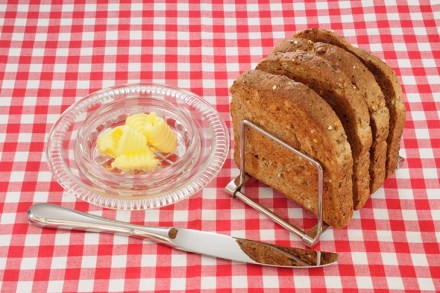
‘Somebody loves me,’ said my husband, waving a copy of The Spectator above his head as though pursued by wasps. ‘Don’t be silly, darling,’ I said, refusing to feed his appetite for vicarious fame. A kindly reader had written, wondering if he was well, since I hadn’t mentioned him for a couple of weeks. He was more than well; he was well and truly infuriating, nursing his whisky and occasionally saying ‘Fine wines’, before falling silent until another pair of words spilt out, such as ‘Rare earths’, or ‘French cheeses’. These were his quibbles after I’d explained that some nouns in English are uncountable. Much food is uncountable: bread, butter, toast.

The best foreign language films to watch on Netflix

With South Korean film Parasite taking home the Best Picture gong at this year’s Oscars, it’s clear that foreign language films and series are having a bit of a moment. Keen to polish your language skills whilst devouring a good box-set at the same time – or just looking to sound more cultured at your next dinner party? Either way, you won’t regret getting stuck into these subtitled Netflix dramas: Fauda https://www.youtube.com/watch?v=_2rm_4e3iYQ Following hot on the heels of Homeland (which also began life in Israel), Israeli terorrism thriller Fauda – which means ‘chaos’ in Arabic – has been a bit of a global smash for Netflix.

What were the words that defined 2019?

‘Come off it,’ said my husband when I told him that upcycling was the word of the year. His response did not chime with the spirit of the Cambridge Dictionary in naming it: ‘We think that our fans resonated with upcycling not as a word in itself but with the positive idea behind it.’ I prefer words in themselves. But what was the dictionary to do? It posts a Word of the Day on Instagram, and upcycling received more ‘likes’ than any other Word of the Day. Over at Collins Dictionary, they noticed a hundredfold increase in the use of climate strike in 2019, and made it the Collins word of the year. Last year, it had been single-use, an adjective qualifying plastic. One notices a trend towards environmental terms.

A young Rwandan scholar left a profound impression on me

In the Rwandan Genocide Memorial gift shop I bought a handy Kinyarwanda–Kiswahili–English phrase book. The tipping point in the decision to buy it were the phrases ‘This gentleman will pay for everything’, ‘Would you like to dance?’ and ‘What do you call this?’ Our Genocide Memorial museum tour was the sobering prelude to a cycling tour of the volcanoes in the northwest of the country. With this phrase book in my possession, I now felt equipped to deal with almost any situation should I become detached from the rear of the peloton and lost. In the event, however, I kept up because every hour or so there was a rest stop to take on fluid and allow the laggards to catch up.

American English must be the most carelessly spoken and written dialect on Earth

From our US edition

This article is in The Spectator’s December 2019 US edition. Subscribe here. Kemmerer, Wyoming Before 1965, when immigrants to the American Republic came almost exclusively from Europe, the largest white ethnic group in this country was of German stock. It may still be so, though I am unaware of recent statistics that demonstrate the fact. Certainly, a linguistically sophisticated visitor arriving here today from Europe might easily arrive at that conclusion. The now ubiquitous ‘Yah!’ is phonetically indistinguishable from ‘Ja!’, and while ‘Yah-wohl!’ has yet to be widely heard in American streets, connoisseurs of the American language in the 21st century would hardly be surprised should it crop up there.

american english ‘OK, here it is, “Brexit” … Apparently it means “Brexit”…’

Where did ‘aconite’ spring from?

‘What,’ asked my husband teasingly, by way of an early Christmas game, ‘connects wolf’s-bane with Woolwich Arsenal?’ It took me a little time, but I got there via aconite. Ovid put its origins most vividly. When Cerberus was dragged by Heracles from Hades, triply barking as the steel chain was twisted round his necks and averting his eyes from the glare of day as he came up through a cave on the shore of the Black Sea, the monstrous dog dropped slobber on the ground, from which grew the poisonous flower aconite. We now call this kind of aconite wolf’s-bane, for its lethal properties. Keats wrote: ‘Go not to Lethe, neither twist/ Wolf’s-bane, tight-rooted, for its poisonous wine.

What exactly is a narwhal?

A point that many people mentioned amid the horror and heroism of the attack at London Bridge was the enterprising use of a narwhal tusk taken from the wall of Fishmongers’ Hall to belabour the murderous knifeman. I am surprised to find that the first person known to use narwhal in English was good old Sir Thomas Browne, in the discussion of unicorns’ horns in his Pseudodoxia Epidemica or Vulgar Erroures, where he correctly declares that ‘those long Horns preserved as pretious rarities in many places, are but the teeth of Narhwales’. Narwhal tusks are spirally grooved, and Browne observed that the long horn preserved in his day at St Denis in Paris ‘hath wreathy spires, and chocleary turnings about it’. That was in the edition of 1650.

Where did ‘decuman’ come from?

‘What made you chase that hare?’ asked my husband with rare geniality. John Ruskin was to blame. He asked James Russell Lowell where he found decuman, meaning ‘big wave’. The line ‘Spume-sliding down the baffled decuman’ came in Lowell’s ‘The Cathedral’ (1870) about Chartres. Lowell was Longfellow’s big-beardy successor as professor of belles-lettres at Harvard. Though fellow members of the Fireside Poets, both fearlessly translated Dante and Homer. Lowell had no idea where decuman had come from. Ovid and Lucan used decumanus, he found, of a wave, but not absolutely, as a noun. Finally he unearthed it as a noun in Du Cange’s dictionary, citing ‘one of the Latin Fathers, I forget which’.

From Pliny to poetry: the history of ‘ictus’ and ‘ductus’

‘I know the difference between ictal and icteric,’ said my husband proudly, reminding me of Tweedledum in Through the Looking-Glass. He explained, accurately enough, that ictal was to do with strokes and icteric with jaundice. But he hadn’t heard about the bird. Pliny in his Natural History says that there is a bird called ikteros (icterus) from its colour of yellowish green, like jaundice. If someone with jaundice looks at it, the patient will recover and the bird die. Pliny thinks it the bird called in Latin galgulus, and this has been identified as the wodewale, woodwall, witwall or golden oriole. On the unjaundiced side of things, ictal derives from the Latin ictus, a stroke, and here there is something that the dictionaries omit, for no good reason.

What’s the different between ‘while’ and ‘whilst’?

‘Why is whilst only ever used in letters?’ asked my husband, casting aside an argumentative letter from his sister written in curly script and blue ballpoint. Why indeed? It cannot be wrong to use whilst, any more than amongst or amidst. But it goes with a certain register of genteel speech that can merge into officialese or hypercorrectness. Whilst, amongst and amidst started off by displaying what is called the adverbial genitive. English still shows the genitive through the suffix s (‘Dot’s charm’), and the apostrophe used with it is a mere spelling convention. In any case, s was added to words such as all way to indicate their function as adverbs: always. Similarly the adjective toward (meaning the opposite of untoward) became an adverb as towards.

Letters: What would be the point of a second referendum?

Another referendum? Sir: Matthew Parris’s article ‘What question should a second referendum ask?’ (26 October) occasioned a wry smile from me this morning. His first question — whether Britain should remain in or leave the European Union — has already been asked and answered, at great expense and trouble, in 2016. The only logical reason why it should be re-asked is if the first time it was asked was illegitimate in some way. But it was only after the result was known that questions were raised about its legitimacy. At the time, not a breath was raised. However, I do like Mr Parris’s second question. We shouldn’t have a second referendum, but if we do let’s make the choice ‘deal or no deal’.

An ‘I’ for a ‘my’: why we’re terrified of getting our grammar wrong

Jonathan Agnew recently described off-the-record interviews as those where you agree that it’s ‘between you and I’. Last month, Jess Phillips tweeted that she had ‘read a few wild accounts of Boris Johnson and I in the lobby’. And a Times journalist wrote about someone who had ‘made Jenny and I feel so welcome’. All three are articulate, intelligent people. And yet all three wrote ‘I’ where they meant ‘me’. It’s happening more and more. The only explanation can be self-doubt. Give any of these people a second to think about it, and they’ll reply that yes, of course they should have said ‘me’. It’s easy to work out: just remove the other person from the sentence.

Trump uses provocative terms because he wants to provoke

From our US edition

We should be bored by now — perhaps we are. Certainly, the anger against Donald Trump’s tweets isn’t quite as vociferous as before. We are used to @realdonaldtrump now. Three years in, who cares if he sounds presidential? But the media outrage machine still limbers up, on demand, at every provocation. Today’s doozy: Trump compared the Democratic attempts to impeach him over Ukraine to a ‘lynching’. Sure enough, the media explainers did their job. Lynching, we are told by every wired copy monkey who has to file 600 words to their line editor, is a ‘racially charged/loaded term’ that refers to — here I quote the BBC — ‘historic extrajudicial executions by white mobs mainly against African Americans.

provocative

How the language of blackjack crept into Brexit

In the Times, Janice Turner wrote that she had been watching Remainers and Leavers ‘like degenerate gamblers, double down, bet all their chips to bag the purest prize, then throw in the farm and their firstborn child. Anything but fold.’ There is much doubling down at the moment. Beatrice Wishart, a Lib Dem MP, said that the Scottish government should ‘face up to the situation they are in and double down on recruitment efforts’. I think she just meant double. Double down is a phrase from blackjack, an American casino card game resembling pontoon. It entails a player doubling his stake in return for only one more card from the dealer. It is not just the behaviour of degenerate gamblers.

What’s the word for a word that’s been used only once?

It is easy to speak a sentence never spoken before since the world came fresh from its mould. It’s not so easy to say a word unsaid by any other lips. In its second edition (1989) the Oxford English Dictionary recorded numbskullism with a single illustrative quotation, from Anne Seward, a younger contemporary of Samuel Johnson’s from Lichfield, who wrote of the numbskullism of George I and George II. In a revision of 2000, the OED adds a citation from a video game newsletter. Any old body could use it now. There remains numskullity, unattested since Jeremy Bentham used it in 1779 — until now, that is. Since English employs a gamut of suffixes, there is hardly a limit to the words to whichism ority could be added.

Sweaty Betty, Acne: the fashion for nasty brand names

On my way to a party in Ealing I saw a shop called Pan Rings. A mental image popped up of a saucepan with marks from milk round the sides. It is, in fact, a jewellery shop. Fashion outlets happily attract attention with negative names. Nasty Gal was founded in 2012 and has I think been taken over by Boohoo. Nasty is a word that Swift used in poems of scatological curiosity. In one, Celia’s ‘basin takes whatever comes: / The scrapings of her teeth and gums, / A nasty compound of all hues, / For here she spits, and here she spews’. One of Swift’s resolutions for becoming old was: ‘Not to neglect decency, or cleenlyness, for fear of falling into Nastyness.’ Swift’s Celia might like the sportswear shop Sweaty Betty.

How did BBC’s Late Night Line-Up get its name?

The title of the television review and discussion programme Late Night Line-Up is a curious one. I’d be interested if anyone knows how it was chosen. After the throaty sax notes of Gerry Mulligan’s Blue Boy, Joan Bakewell would leggily engage earnest folk in chatter long after the pubs had closed. Did the guests smoke? I can’t remember, but it was all very b&w. BBC iPlayer has a small selection on show, including a discussion of two Man Alive documentaries on homosexuality with Maureen Duffy, then writing a novel set in the Gateways club in Chelsea, popular with lesbians, Michael Schofield, fresh from his researches for The Sexual Behaviour of Young People, and an anonymous woman doctor. The presenter was Michael Dean.