Language

The elementary misuse of ‘alumni’

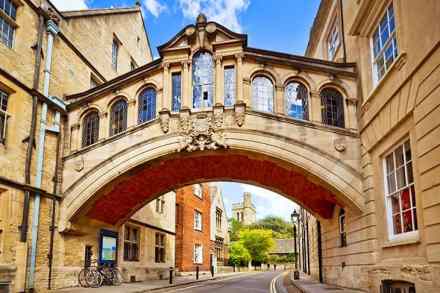
My husband is forever being sent magazines from his Oxford college inviting him to give it money. I suggest he should ask it to give us money, since it has much more than we do. But the clever men at Oxford, as Mr Toad called them in his song, seem to have lost the use of their wits. The rot became apparent in 1988, with the publication of the university magazine: ‘This is the first appearance of the university alumni magazine, Oxford Today.’ What did they mean by alumni magazine? Of course they knew that alumni is the plural of alumnus. But why tack a plural noun on to magazine? If it had been a student or graduate magazine, the noun used attributively (student, graduate) would remain in the singular. That is how English works.

The art of the non-apology

'Johnson apologises for lockdown garden party' announced the Times on Wednesday. But did he? It’s quite a skill, the non-apology, and our Prime Minister is a non-apologiser par excellence, the Nureyev of not really meaning it. Academics working in conflict resolution have analysed what makes a good apology and come up with six elements: expressing regret, explaining what went wrong, acknowledging responsibility, declaring repentance, offering repair and requesting forgiveness. In response, I offer you here six ways to make sure your apology is as empty of content as a wine bottle after a Downing Street garden party: Make it conditional Or what the comedian Harry Shearer calls an 'Ifpology' (as in I’m sorry if…).

The mechanics of ‘backlash’

‘Lashings of ginger beer?’ asked my husband when I mentioned backlash. He thought the phrase came from Enid Blyton, though it occurred only in the television parody Five Go Mad in Dorset, first shown in 1982 — 40 years ago, for heaven’s sake. Backlash, now in vogue, is often misused. The Guardian wrote about ‘the mass protests in the light of the George Floyd murder and the backlash to this movement’. That usage seems correct. But when it said that Chanel ‘recently faced a backlash online for the contents of their Christmas advent calendar’, backlash was the wrong word. The metaphor backlash comes from mechanics. It is pretty much a dead metaphor, since some who use it think it has to do with lashing a back.

Why is Microsoft offended by ‘Mrs Thatcher’?

The interregnum between incumbents is a well-known and often elongated process in the Church of England. I have recently witnessed this one because my wife is churchwarden of one of the three churches (we Catholics operate under a different system) in the benefice. Interregnums are arduous for all church volunteers and tend to erode parish life. It is remarkable how much there is for churchwardens to do. Dioceses tend to demand and obstruct rather than ease and encourage. Luckily, we are blessed with an excellent archdeacon who cherishes parish life and has declared there will be no more closures of churches in the district; but the bureaucratic flow of dos and don’ts (mainly don’ts) is considerable.

The doctor is mad

From our US edition

I have been writing a lot about the politically inspired perversion of language. The name “Orwell” crops up in any such discussion, as does the word “Newspeak,” that twisted mode of language that Orwell outlined in the appendix to Nineteen Eighty-Four. The goal of Newspeak, Orwell said, was to replace standard English with a sharply diminished patois whose linguistic poverty was its prime political advantage. By reducing the suppleness of language, the elites who controlled society hoped also to reduce dissent — not only the activity of dissent, but also the thoughts and emotions that guided it. This has been a perennial dream of budding totalitarians, from the French Revolution to the varieties of communist tyranny.

medical

Joe Biden and the realities of the N-word

From our US edition

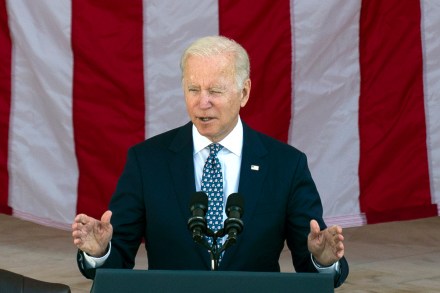
“If you didn’t vote for Biden, you ain’t black,” tweeted 2020 Florida Republican congressional candidate Lavern Spicer on Thursday, “I guess you’re a negro.” Spicer, who is black, was referring to President Joe Biden’s latest gaffe. Delivering his first Veterans Day address at Arlington National Cemetery to a nation reeling from the baleful effects of his failed presidency, and amid historically low approval ratings, Biden referred to the 1940s black baseball player Satchel Paige as “the great negro,” apparently because Paige could still competitively play at age 47. https://twitter.com/ForAmerica/status/1458851297378119684 Biden’s history with race is, at the risk of using a woke euphemism, troubled.

n-word

The real ‘scallop’ war: how do you pronounce it?

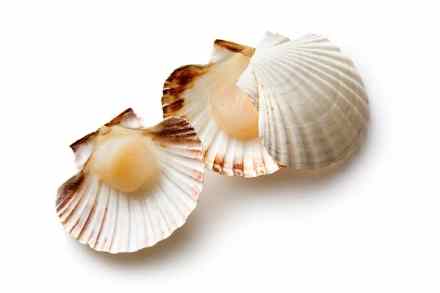
‘You say scallops and I say scallops,’ sang my husband in his best Ginger Rogers accents. Since we both pronounce the bivalve to rhyme with dollop, there was a certain lack of contrast. There has been a scallop war with France in past days. Though both French and English enjoy them on the plate, it is the French in the 15th century who provided us with the name, escalope. We just knocked the beginning off the word. Our cockle too, from at least a century earlier, is from the French word that gives them coquilles St Jacques. (Mussel is from Latin musculus, ‘muscle’, which also gave the word mus, ‘mouse’, from the obvious resemblance.) The scallop shell was an ideal emblem, easy to find at Santiago de Compostela, for pilgrims to pin on their coats.

Who owns the language?

The mayor of London, Sadiq Khan, is giving local residents £25,000 grants to enable them to change the names of the roads in which they live. Some Londoners, I believe, find it uncomfortable to live in a street which has a name redolent of colonialism. Fair enough. I hope, though, that Sadiq will also give grants to right-wing white neighbourhoods of the capital so that the residents there can change the names of roads to make them more redolent of colonialism — such as Cecil Rhodes Avenue, or Zulus 0 British Army 5 Crescent. Or perhaps install a name which commemorates the mayor himself, such as Vacuous Dwarf Close. This war on history, tradition, rationality, logic and complexity (known in short as ‘woke’) continues apace.

Can men be witches?

‘No, darling, I certainly wouldn’t call you a witch,’ said my husband. ‘You’re not thin enough.’ The Oxford English Dictionary has just published a new entry for witch. It is less dismissive of old women. The former version spoke of a ‘repulsive-looking old woman’. Now it is ‘a term of abuse or contempt for a woman, especially one regarded as old, malevolent, or unattractive’. In that sense it is still definitely a woman. But what has lexicographers in a ferment of excitement is the decision to undo the division of the main entry for witch into male and female. Before the Conquest it had only been formally distinguishable in the nominative singular: wicca (masculine) and wicce (feminine).

Can a criminal really be ‘prolific’?

The BBC made a documentary about a man sent to prison for being the ‘most prolific rapist in British legal history’, in the words of Ian Rushton, the deputy chief crown prosecutor for North West England. To my ears, it sounds weird to call a rapist ‘prolific’. It sounds no better to refer to ‘one of the country’s most prolific serial killers’ as the Sun did last weekend. The difficulty is that the word still carries connotations of its Latin origin prolificus, ‘capable of producing offspring’. The Latin word was in use in Britain from the 14th century, and the English form developed only in the 17th century.

What exactly is the ‘festive season’?

‘Here you are, darling,’ I said to my husband. ‘These lines might have been written for you: “Drinke, quaffe, be blith; oh how this festive joy / Stirs up my fury to revenge and death.”’ ‘Very Christmassy,’ he agreed. The lines came from a series of five plays by Shakespeare’s contemporary Thomas Heywood, in which he canters through classical mythology. Here Althea is commenting on her plan to kill her own son Meleager at a feast by consigning to the fire the piece of firewood that magically preserves his life. He feels as though the fires of Etna were in his bosom and dies. It was not of course a family Christmas, which was yet to be invented.

We are in a perfect storm of perfect storms

When my husband’s whisky glass fell off the little table next to his chair on to next door’s cat, which was on an unauthorised visit, provoking it to make a speedy exit, en route scratching the postman, who had for a change that afternoon rung the bell to deliver a parcel instead of putting a little card through the door saying we were out, it was, my husband averred, a perfect storm. He really meant he had fallen asleep and let his copy of The Spectator fall. We are in a perfect storm of perfect storms. ‘A perfect storm has arisen due to a combination of factors relating to Brexit and the pandemic,’ wrote someone in the Times about the petrol shortage. I fear the tempest will blow more perfectly yet.

The problem with ‘bame’

In its coverage of the shuffled cabinet, the BBC added a note: ‘BAME (Black, Asian and Minority Ethnic) is a term widely used in the UK to describe people of non-white descent, as defined by the Institute of Race Relations.’ The Institute of Race Relations was founded in 1958, but in 1972, by its own account, it became ‘an anti-racist thinktank’ and began to focus on ‘direct analyses of institutionalised racism in Britain’. Earlier this year, its director Liz Fekete complained about the government indicating it would abolish, as recommended by the Sewell report from the Commission on Race and Ethnic Disparities, the concept of BAME in data collection.

The link between spick and span, spanking and spoon

From our US edition

I ‘hoovered’ on Saturday (as we say in Britain for vacuuming) while my husband was out ‘exercising’. I don’t know whether he attracts dust, like a piece of amber, or produces it, as if by spontaneous combustion in slow motion. Anyway, when he settled in his chair again, he ran his finger rather annoyingly over the table next to him and said encouragingly: ‘Spick and span.’ It’s a curious expression, since neither part seems to have any meaning on its own. The table wasn’t spick. Nor was it span. The earliest known use of the phrase is by Thomas North in 1571, in his translation of Plutarch’s life of Aemilius Paullus, called Macedonicus not because he came from there but because he beat the Macedonians in battle.

spick

What does Peter Quennell have to do with fish?

When Peter Quennell was sent down from Oxford for consorting with a woman called Cara (by Evelyn Waugh’s account), he joined Sacheverell Sitwell on honeymoon in Amalfi. I don’t know what Mrs Sitwell thought of it. I learnt this odd fact because I was seeing what connection his name had with quenelles, the fashionable dish like rissoles or gefilte fish traditionally made with pike in Nantua in France. Their quenelles are big — no fiddling around with spoons — and covered in crayfish sauce. They may be better eaten on location than tried at home. Anyway, there is no connection. The surname Quennell comes from the Old English cwen, meaning ‘woman’, and hild, ‘battle’.

How Shakespeare became ‘problematic’

‘This crossword is problematic!’ exclaimed my husband, tossing aside the folded newspaper marked with a ring where his whisky glass had rested. He was being facetious, a common register of speech with him when vacancy does not take over. Problematic has acquired new life as a label for something disapproved of and therefore ripe for banning or cancelling. Thus The Tiger Who Came to Tea is ‘problematic’ to an influential pressure group called Zero Tolerance because of its ‘old-fashioned’ portrayal of women and families. Shakespeare too had problematic views on whiteness, according to people at the Globe.

The dramatic evolution of ‘actor’

‘That chap in Line of Duty. That’s what I’d call a bad actor,’ said my husband with vague certainty. He was responding to a remark on the wireless about Iran being a bad actor. Language, as usual, is in a state of transition. Actor is now employed to mean some person, or moral entity, acting in a good or bad way. But if you ask anyone what an actor is, the answer would be a person taking part in a drama, on stage or the equivalent. This goes to show the difference between the main meaning of a word now and the meaning of words from which it originates. Actor in the Oxford English Dictionary, which takes an historical approach, is listed with the first (obsolete) meaning of ‘a person involved in a legal action’.

The timeless appeal of Latin

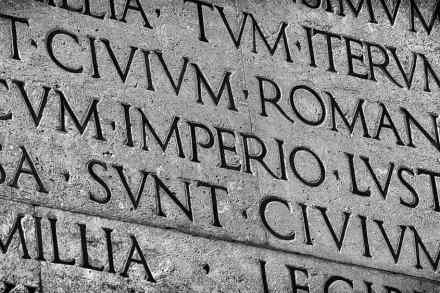
The government’s promise to fund a pilot scheme promoting the teaching of Latin in secondary schools is music to the ears of the charity Classics for All, which has introduced classical subjects into more than 1,000 state schools. Latin has been taken up with especial enthusiasm in primary schools, where word derivations have proved very popular. The ancients loved them too. The Roman Varro (116-27 bc) wrote a 25-volume de lingua Latina (‘On the Latin Language’). Six survive, three discussing etymology, all full of interest because Varro, ignorant of scientific etymology (it developed only from the 17th century onwards), produced total nonsense.

The dirty truth about ‘wash-up’

‘They asked me if I wanted to wash up before we even went in to dinner,’ my husband recalled with mock horror of a visit to America some years ago. He doesn’t get out much. It is true that Americans use wash up differently from us, to mean washing your hands (and perhaps face while you’re at it) rather than the plates after a meal. Of course washing your hands might be a euphemism for that other euphemism of going to the lavatory. Now there is an outbreak of wash-up in management lingo. We must learn to live with it. Annoyingly, management-speak turns perfectly good phrases into weapons of time-wasting theory. Anyway, after some team project, a meeting is arranged to see what went well, what went badly and what could have gone better.

Double dutch: the many meanings of ‘Holland’

The title of the keenly awaited volume of memoirs by John Martin Robinson sounds like a crossword clue: Holland Blind Twilight. Would that be a Dutch kind of unseeing twilight or a drinking-session blind at twilight when Hollands gin is consumed? Of course not! It’s plain enough. Blinds are often made of Holland, a linen fabric. When unbleached it’s brown Holland. Holland came from Dutch Holland in the 15th century. Holland is also one of the Parts of Lincolnshire, the other two being Lindsey and Kesteven. The Parts of Lindsey are divided into Ridings (West, North and South, unlike Yorkshire). A riding is a third, from trithing a Norse affair, or in Old English thriding. One can see how the geographical designations (West, North) collided and lopped off the initial th-.