Labour

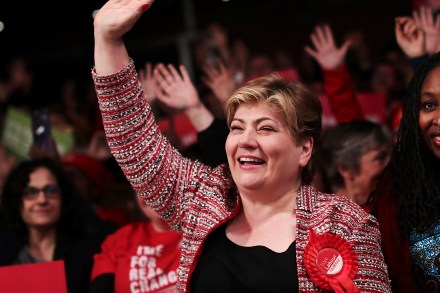
Emily Thornberry for deputy!

From our UK edition

They say revenge is a dish best served cold, but I have a better serving suggestion. How about revenge plated up simmering, every single day, again and again, inescapable and eternal? For surely that is the intended outcome of Emily Thornberry’s plan to – maybe, possibly – run for the position of deputy leader of the Labour party. Even that ‘possibly’ caveat has the air of somebody turning the knife. How she must delight in dangling this ‘I might, I might not’ eventuality before Keir Starmer. Because it was Starmer, after all, who stabbed her in the front after the 2024 election, chucking her unceremoniously out from her shadow position of attorney-general and handing this plum job to his old chum Lord Hermer.

Angela Rayner’s not-so-scandalous ‘third home’

From our UK edition

Angela Rayner, it’s reported, has bought a ‘third home’. The three-bedroom seaside flat on the south coast that she has just acquired for a sum slightly more than £700,000 adds, the Mail on Sunday reports excitedly, to her ‘burgeoning property empire’. Pre-burgeoning, be it noted, her property empire consisted of a single house in her constituency of Ashton-under-Lyne. The Candy Brothers, even post-burgeoning, she is not. Papers get to call it a ‘third home’ because she has the use of a ministerial apartment – ‘grace and favour’, obviously, to make it sound extra posh – in Westminster, but she’s not exactly going to be flipping the place in Admiralty House for a profit when she leaves office.

Can Reform beat the blob?

From our UK edition

Shortly after he was elected as Britain’s youngest council leader last month, 19-year-old George Finch of Reform UK had a conversation with Monica Fogarty, the chief executive of Warwickshire county council, about which of them was really running the show. In Finch’s telling, this was a watershed moment: he offered a ‘professional working relationship’ but the relationship quickly soured. ‘I know you’re trying to get rid of me,’ Fogarty said, according to Finch. ‘Well, you can’t get rid of me. The way it works around here is: your councillors play ball.’ Finch allegedly replied: ‘Are you joking? You have to work with us. It’s not the other way around. We’ve been put here by the electorate. You haven’t.

Can the left get its act together?

From our UK edition

Jeremy Corbyn and Zarah Sultana have finally launched their new party, but it's off to a bumpy start. They unveiled 'Your Party', but had to quickly clarify that was not in fact the new party's name, and that will be decided on by a member's vote. He also had to play down claims of a split already. However, if the so-called Gaza independents join forced with Sultana and Corbyn, the organisation that's not called Your Party could have enough MPs to outnumber Reform UK. What does it mean for the left – and can they get their act together? Elsewhere, Tim discusses the slightly more organised Reform UK, the subject he wrote about in this week's magazine – and how it's no longer a case of can they win, but can anything stop them.

How Labour governments always end

From our UK edition

Couldn’t we just skip to the end? I’m old enough to have seen this so often: must I sit through each dreary succeeding scene again? Parties in government are animals: they have natures; their natures do not change; they are incapable of being different animals; and what follows, follows. A Labour government finally runs out of money and enters a period of slow-motion disintegration, ending in a chaos of finger-pointing and blame-shifting, still whimpering about social justice as the bailiffs move in. Already the suspense has gone. There will be many twists and turns, probably over years rather than months, before this government pulls apart at the seams; but, honestly, knowing where we’re going, I do ache to fast-forward. I’m 75.

The inside story of how Labour is dealing with Iran

From our UK edition

16 min listen

This week, our new political editor Tim Shipman takes the helm and, in his cover piece, gives us the inside track on how Labour is dealing with Iran, Donald Trump and the prospect of escalating war in the Middle East. He writes that this could be the moment when all of Keir Starmer’s chickens come home to roost: his well-curated international image is at risk of crumbling as global crises present greater challenges; his hands are tied by legal advice from the controversial Lord Hermer; the Chagos Islands are being drawn into the US’s retaliation plans; and there remains the looming threat of backbench rebellion over Labour’s national security strategy. Tim is joined by James Heale and Lucy Dunn to discuss what may be Starmer’s biggest test yet.

Kemi’s one chance at recovery? Trussonomics

From our UK edition

You may have noticed that for some while the BBC News people have stopped referring to Reform UK as ‘far right’ or ‘hard right’. That’s not because Nigel Farage has tacked to the left a little on such policies as nationalisation; one characteristic of the left is that if they consider you ‘far right’, they will not commend anything you say, even if they fervently agree with it. You will never gain their favour, even if you join Greta Thunberg on her stupid and narcissistic boat expedition to Gaza and then pronounce your solidarity with all trans folk. This is one of the mistakes often made by people who are right of centre and have said or done something that has aroused the fury of the left-wing mob.

Spring Statement: Rachel Reeves says 2025 growth forecast halved

From our UK edition

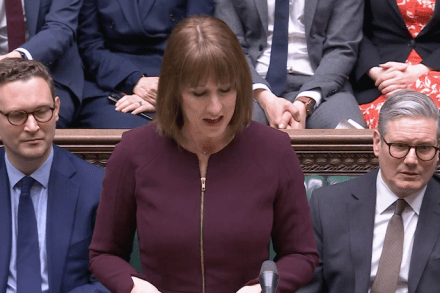
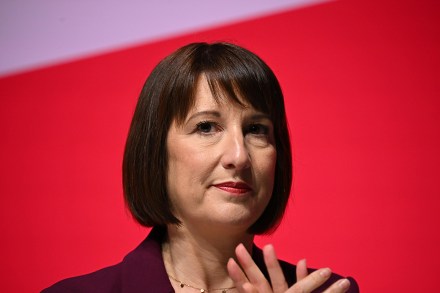
Rachel Reeves delivered some bad news in her Spring Statement: the UK's growth forecast has been halved to 1 per cent for 2025. But the Chancellor revealed that the Office for Budget Responsibility has upgraded its longer-term growth estimates from 2026. Reeves also announced a benefits shake-up and a crackdown on tax avoidance.

The problem with Keir Starmer’s pledges

From our UK edition

Keir Starmer still clearly misses opposition. He spent almost as much of his reset speech complaining about the Tories and the mess he feels they made of things as he did talking about what he is actually doing. It’s almost as though government has turned out to be harder and less enjoyable than even he had predicted. He spent the first few minutes of his speech listing in his usual exasperated tones the ways in which the Conservatives had failed the country, deploying his analogy about tackling damp in a household by using a hairdryer, before saying: ‘Stabilising the economy, fixing the foundations, clearing up the mess – so we can take the country forward with our missions.’ What the Prime Minister actually wants to do is ‘challenging’, he claimed.

Labour can’t help Kamala Harris

From our UK edition

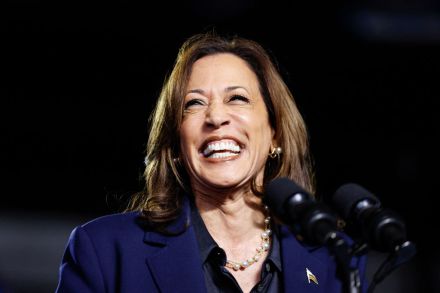
The news that Labour is sending volunteers to assist Kamala Harris’s campaign is an outrage. In what world is it acceptable for a foreign political entity to interfere in the democratic process of a sovereign nation? If the Tories were shipping off their operatives to help Donald Trump, the shrieking harpies would be crying foul, calling election interference. But it favours Kamala Harris, suddenly, the lines of legality and ethics are blurred, if not outright erased.  I don’t like it, clearly, but in some ways it’s laughable Inarticulate, policy-challenged Kamala Harris has bumbled her way through high-stakes interviews, fumbled crucial debates, and remains woefully underqualified in foreign affairs.

Labour’s China pivot, Yvette Cooper’s extremism crackdown & the ladies who punch

From our UK edition

48 min listen

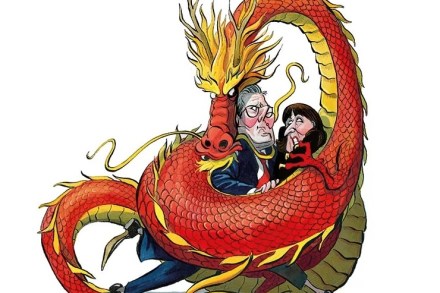
Successive governments have struggled with how to deal with China, balancing them as a geopolitical rival yet necessary trade partner. Recent moves from Labour have sent mixed signals, from the free speech act to the return of the Chagos Islands. Further decisions loom on the horizon. As Rachel Reeves seeks some economic wiggle room, can Labour resist the lure of the Chinese market? The Spectator’s Katy Balls, and visiting fellow at the European Council on Foreign Relations (ECFR) James Crabtree, join the podcast to discuss further (02:05). Plus: as the first issue under The Spectator’s new editor Michael Gove, what are his reflections as he succeeds Fraser Nelson? He reads an excerpt from his diary (19:05).

Does Keir Starmer have a soul?

From our UK edition

One of the main arguments against hereditary peerages is that talent and ability are not always passed down across generations. There is much to this. Students of history will know that all the great dynasties see some kind of falloff in capability. Whether the Habsburgs, the Plantagenets or the Kinnocks, the families produce a man – or occasionally a couple of men – of quality, only to see their heirs and successors squander everything. The same rule exists in a meritocratic age. Someone in a family makes a fortune. The next generation spends it. A generation after that, the family is back to square one. Give or take a generation, and you can follow this rule in all of nature, as well as in the obituaries section of the Daily Telegraph.

Labour’s first 100 days: the verdict 

From our UK edition

This Saturday marks Labour’s 100th day in office. But they are unlikely to be popping champagne corks in Downing Street – even if Lord Alli offered to pay for the Dom Pérignon. This has been a disheartening time for the government and those who wished it well. The promise of dramatic change has been overshadowed by a series of errors, misjudgments and scandals that one would associate more with an administration in its dying days than a government enjoying a fresh mandate, a massive majority and an absent opposition. Ministers might fondly hope voters will have been encouraged by the introduction of legislation to help renters, the abolition of one-word Ofsted judgments or the establishment of Great British Energy.

The sugared-almond theory of economic consequence

From our UK edition

Let me ease you gently into a big and boring-sounding word for a small dishonesty that today corrupts the language of politics. Doubtless we shall be encountering it (though never by name) in Rachel Reeves’s looming Budget. If you step away from levying the new taxes you must then cut the goodies they were to pay for But we’ll start at my mother’s knee. I was five, and she was teaching me reading: an activity I viewed with displeasure. I did, however, like sugar-coated almonds – very much. So Mum undertook to give me one sugar-coated almond for every chapter I read aloud to her from my First Reading Book.

Morgan McSweeney is the new Peter Mandelson

From our UK edition

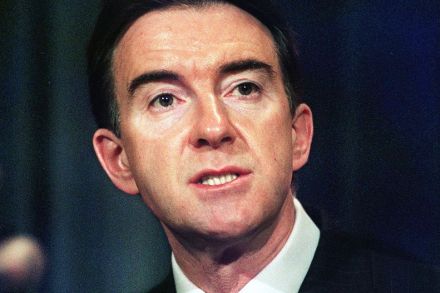
It’s an iron law of politics that when the staffer becomes the story they have to go. Dominic Cummings had to leave Boris Johnson, and Theresa May’s joint chiefs Fiona Hill and Nick Timothy both took the blame for the disastrous 2017 election result. The reshuffle resolves a perplexing political question Lobby journalists leaving Liverpool at the end of Labour conference had concluded that Sue Gray would have to leave the role of as chief of staff to Keir Starmer. Yet her resignation yesterday came as a surprise. This is of a piece with Starmer’s leadership – he doesn’t brief his intentions in advance, but he can often be swift and ruthless. The appointment of Morgan McSweeney as chief of staff is a recognition and a resolution.

Who’d be an MP now?

From our UK edition

Sir Keir Starmer offered a sausage to fortune when he let Lord Alli bankroll half the cabinet. One’s heart does not bleed for those ministers assailed for taking his gifts in cash and kind. They have spent the last few years being mercilessly sanctimonious. But their plight does confirm that being a Member of Parliament has become an ever more disagreeable life and is therefore pursued by people ever less representative of the population. The traditional compensation for MPs’ relatively low salaries was a) some freedom to earn money elsewhere and b) respect. Both have dramatically diminished. Deference meant, for example, that few dared disturb their MP at home at a weekend. Now constituents literally ring them up and demand they unblock their drains (I have been witness to this).

Wes Streeting is convincing, but where’s his plan?

From our UK edition

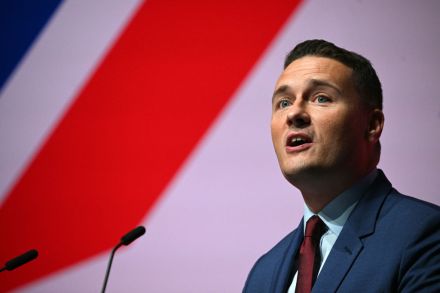
This Labour conference has largely been about Keir Starmer and his ministers making the argument for what they are doing, rather than giving any details of how they plan to achieve it. Wes Streeting’s speech to the hall in Liverpool this morning fitted that pattern. He didn’t announce anything new. Instead, he set out quite how big the challenge was, and made the argument for what Labour planned to do. He told members: We can only deliver recovery through reform. Without action on prevention, the NHS will be overwhelmed. Without reform to services, we’ll end up putting in more cash for poorer results. That’s the choice. Reform or die. We choose reform.

Keir Starmer needs to sell his government

From our UK edition

Keir Starmer has his big speech today at Labour conference and, like Rachel Reeves’s offering yesterday, the Prime Minister plans to strike an upbeat tone while warning he can’t offer ‘false hope’. He will tell the hall in Liverpool that there’s ‘light at the end of the tunnel’ if the government takes ‘tough decisions now’.  He will talk about his project of ‘national renewal’, saying: The politics of national renewal are collective. They involve a shared struggle. A project that says, to everyone, this will be tough in the short term, but in the long term, it’s the right thing to do for our country.

Is Scottish Labour really back?

From our UK edition

Labour’s first conference from government in 14 years might not be taking place against an ideal backdrop, with the Prime Minister and other ministers under scrutiny for accepting designer clobber and other goodies from party donors, but there is an unlikely glimmer of hope in the form of Anas Sarwar. Unlikely, that is, because Sarwar is leader of Scottish Labour and for almost a decade that great clunking juggernaut of electoral inevitability had sputtered to a halt and begun to rust. Reduced to just one seat north of the border and in a distant third place at Holyrood, the Scottish party had become an ominous lesson in how thoroughly Labour could be sidelined by a populist rival. There were times when serious Labour people wondered if the party would ever see majority government again.

What ‘rot’ is Keir Starmer talking about?

From our UK edition

With the elections over, it might be time to reflect on what Sir Keir Starmer means by ‘rot’ in the ‘foundations of this country’. What foundations are those? Political? In the democracy (‘citizen-power’) invented by the Greeks, men over the age of 18 meeting in assembly took all decisions that our politicians take today and, aged over 30, all decisions in the courts. It lasted for 180 years (508-322 bc), but did not survive, being characterised as ‘the rule of the poor, looting the rich’.  The Romans invented republicanism (‘the people’s property’). The Senate, drawn from the elites, both made the laws and occupied the various official positions – legal, financial, military etc. – of government.