Labour party

Labour conference, day two: The Spectator guide

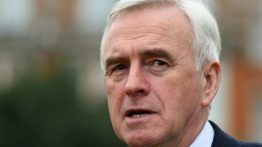
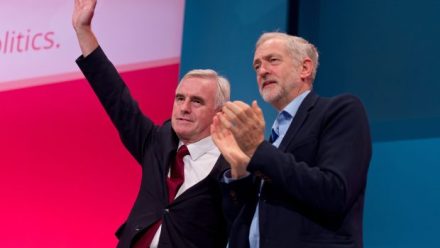
It's day two of the Labour Party conference. Here's the Spectator's guide to what to look out for today: Main conference: 11am: Shadow Chancellor John McDonnell’s speech Fringe events: 9am: ‘You can’t build peace with concrete: ending our relationships with Israel’s illegal settlements' Speakers include: Jeremy Corbyn (possibly); Emily Thornberry 12.30pm: Where Next for Britain in Europe? Speakers include: Chuka Umunna; John Mann 12.30pm: Brexit: Unite against racism and hatred Speakers include: Diane Abbott 12.30pm: How do Labour win the general election? Speakers include: Angela Eagle 2.30pm: The case for Labour to back electoral reform Speakers include: John McDonnell 5.30pm: What does Brexit mean for students?

How long will the brittle peace at Labour’s conference survive?

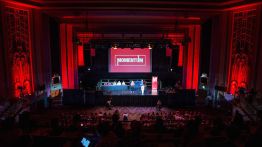
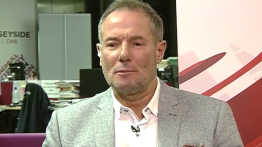
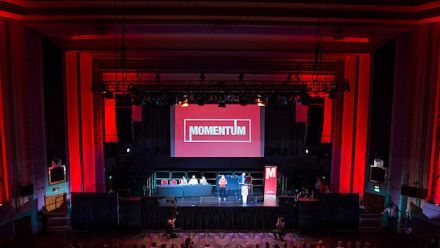
Labour conference is now firmly underway in Liverpool, as is the ‘World Transformed’ festival organised by Corbynite grassroots organisation Momentum. Labour MPs and long-time activists are wandering about in a state of bewilderment at the change forged in their party over the past year, perhaps best embodied by the joyful appearance of former Militant bigwig Derek Hatton in the conference hall. Hatton was wearing a press pass, which will leave Corbynistas bewildered: aren’t they supposed to hate journalists? Everyone is trying to appear to be terribly nice to one another now that Corbyn has his even bigger mandate.

WATCH: Tristram Hunt lays into Corbyn at Progress rally

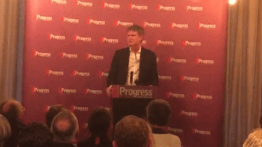
Well that didn't last long. After Jeremy Corbyn was re-elected as Labour leader on Saturday, Corbyn sceptic MPs appeared to put their differences to one side as they took to the airwaves to claim that Corbyn could be Prime Minister. At tonight's Progress rally at conference, that facade was lifted. MPs including Liz Kendall and Ian Murray took to the stand to vow that they would not be pushed out of the party as they slammed the threat of deselection. However, it was Tristram Hunt's speech that caught Mr S's attention.

Reason for cheer at Momentum’s rival conference

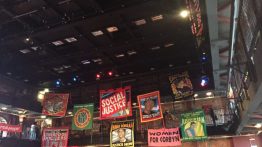
While the mood at Labour Conference is notably low this year, across town at Momentum's 'The World Transformed' festival the crowd can be described as buzzing. Although Mr S's taxi driver dropped him off while remarking that after the leadership result 'the Monster Raving Loony party has as much chance of winning power as Labour', the attendees at the Momentum event are in a jubilant mood now their leader has been returned. Well-to-do socialists are spending the day splashing out on 'Tories are vermin' mugs, reading the Morning Star and giving out leaflets explaining that the Jewish Labour Movement has 'used the charge of anti-Semitism to attack the new movement'.

Derek Hatton makes a return to Labour conference

Earlier this month, Derek Hatton told Mr S of his dismay after the former deputy leader of Liverpool Council’s application to attend this year's Labour conference was denied. Although he had just wanted to attend in the capacity of a journalist, the former Militant member -- who was expelled from Labour 29 years ago -- was told this was not possible: ‘The Liverpool Echo asked me to write a conference diary but I was told two weeks ago the application had been declined. It wasn’t even for a political journal – it was for the Liverpool Echo. It’s not surprising though with the way the party are excluding people at the moment.’ Now with Corbyn's mandate increased it seems times are a'changing.

Bust-up over influence of Scottish Labour

Now that Jeremy Corbyn has won, the fight moves to the jungle of Labour Party rules, regulations and procedures. Whoever controls these controls the party. Last Tuesday, for example, an eight-hour session of the party’s governing National Executive Committee (NEC) concluded that Scotland and Wales should each have their own member on the NEC. This seemed a bizarre, almost trivial outcome: so much argument and such a paltry outcome? The answer is simple: if the Corbynistas want to proceed with a purge of the Labour Party they’ll need a majority on the 33-member NEC. At present, power is balanced - but if there were Scottish and Welsh members then the moderates would have the balance of power. The moderates managed to win this argument.

Labour’s conference, day one: The Spectator guide

Jeremy Corbyn promised to wipe the slate clean following Labour's fractious leadership race. Now that he's officially clinched victory, it's time for the party to try and do just that at Labour's annual conference, which kicks off at 11am today. Here, The Spectator has put together a guide of the main events to look out for. This is what's on today: 11am: Labour’s conference starts The NEC’s chair Paddy Lillis speaks shortly afterwards Fringe events: 5.

What Jeremy Corbyn can learn from Clement Attlee

History teaches no lessons but we insist on trying to learn from it. There is no political party more sentimental than the Labour party. The stone monument of Labour history is Clement Attlee’s 1945–51 administration, so any biography of the great man is, inevitably, an intervention into the present state of the party, even if it comes supported with all the best scholarly apparatus. The last major biography of Attlee was Kenneth Harris’s official work, more than 30 years ago, in 1982. There is a neat symmetry to the fact that Harris was writing during the last occasion that the Labour party decided to join hands and walk off a cliff.

Labour women attack Theresa May as ‘no sister’. How very un-feminist.

The Labour Party is in a sour mood at present, that much we already know. Usually, most of the sourness expressed by MPs is directed at their own party comrades. But this afternoon, at the Labour Women’s Conference, speaker after speaker decided to turn fire on Theresa May. Angela Rayner congratulated her on being the second female Prime Minister of this country, but said ‘I cannot celebrate her arrival’. Kezia Dugdale attacked both May and Nicola Sturgeon for not being real feminists, saying: ‘Look at Theresa May - she has the audacity to wear a ‘this is what a feminist looks like’ T-shirt.

Now Corbyn has triumphed, Labour’s real civil war begins

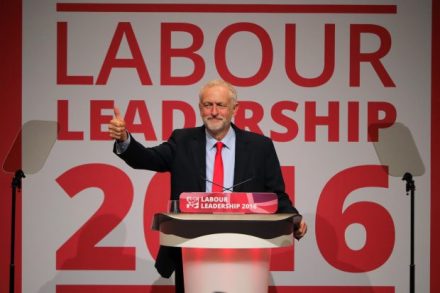
Jeremy Corbyn has never been in a stronger position as Labour leader than he is today. A leadership contest that was meant to topple—or at the least, weaken him—has ended up solidifying his position. His Labour critics came for him, and he defeated them. He garnered 61.8 percent of the vote in this leadership contest, even more than he received last year. He won a majority among full members, something he just failed to do in the first round last time. He can, justifiably, say that the Labour membership have seen the leadership he is offering, and voted for more of it. Corbyn might have said, to his critics, ‘let’s wipe that slate clean’ in his victory speech. But this isn’t going to happen: there’s simply too much bitterness on both sides.

This Labour leadership contest has represented an intellectual surrender to Corbynism

The Labour leadership result isn’t announced until 11.45am today. But whatever the result—and no one seems in much doubt what it will be, this contest has represented an intellectual surrender to Jeremy Corbyn and the ideology he represents. Isabel Hardman and Marcus Roberts discuss Corbyn's victory on Coffee House shots I argue in The Sun this morning, that his opponents surrendered right at the start of the contest. Owen Smith was offered up as a more competent and media savvy leader rather than as the antidote to Corbynism. Smith himself emphasised that the party owed Corbyn ‘a debt of gratitude for helping Labour rediscover its radical roots’. He stressed, ‘I am just as radical as Jeremy Corbyn’.

Diary – 22 September 2016

'Are you here to seek political asylum?’ asked a clever young student after my lecture at the National University of Singapore. It has certainly not been a great start to the political year: the Boundary Commission abolished my constituency and Jeremy Corbyn’s office declared me a ‘non-person’ by placing me on a list of 13 undesirable MPs deemed to have insulted the Dear Leader. In many ways, Singapore felt a good place to be. Here the role of the Workers’ party is not really to challenge the ruling People’s Action party for power: they play the part of perpetual opposition. Which is eerily close to where Labour is heading.

Corbyn’s NHS plans reveal why Labour is doomed

The NHS was the defining issue of the Labour leadership campaign because both candidates knew it had the power to get their supporters fired-up. But only Jeremy Corbyn wilfully ignores the differences between his supporters and the wider electorate. His post-election flagship policy, after all, is the removal of private sector involvement in the NHS. And with the thoughtful, dispassionate hand of shadow health secretary Diane Abbott grasping the rudder, Labour's course appears well and truly set. Unfortunately for the dwindling part of the Labour party still keen on governing, voters - as opposed to Labour activists - don’t actually tend to care whether they are looked after by the NHS or a private service.

Jeremy Corbyn promises to ‘wipe the slate clean’

Yesterday evening, Jeremy Corbyn released a statement saying that: ‘As far as I am concerned, the slate will be wiped clean this weekend’. He promises, if re-elected, to ‘reach out and work with all Labour MPs to form a broad and effective opposition’. The statement shows how confident the Corbyn camp are of winning, I haven’t found anyone in the last few days who doesn’t think he has won and relatively comfortably. It is fair to say, though, that not all of his critics will take this supposed peace offering at face value. Word is that we shall see some of those who resigned return to the front bench once this contest is over. I know of one prominent figure in the Owen Smith campaign who is keen to rejoin the shadow Cabinet.

The party’s over

This leadership contest was meant to topple Jeremy Corbyn, or at the very least weaken him. It has ended up strengthening him. The Corbynites will be now emboldened to go after all those who stand in their way, from the general secretary and the deputy leader to party staff and regional organisers. They are tightening their grip over the party from top to bottom, something the Blairites never did. Alarmingly for the moderates, the party could be beyond saving by 2020. Even the Parliamentary Labour Party, a bastion against Corbynism, could be pushed hard to the left at the next election. Candidate selection will enable Momentum and co. to oust some of their most determined foes.

Corbyn has won – again. This could be the end of the Labour party

Those of us on the left should imagine how our political rivals felt when watching Jeremy Corbyn's latest victory speech. English Conservatives and Scottish Nationalists do not wake at 3 a.m., drenched in sweat, worrying about how they can defeat Jeremy Corbyn. Like a drunk who punches his own face, Corbyn beats himself, leaving Labour’s rivals free to do what they will. For English leftists, however, trying to salvage what they can from the wreckage of their party, the apparently simple question of how to take on the far left appears impossible to answer. Commentators throw around the ‘far left’ label without stopping to ask what it means. You begin to understand its echoing emptiness when you look around and notice Corbyn has no good writers on his side.

The quiet patriot

History teaches no lessons but we insist on trying to learn from it. There is no political party more sentimental than the Labour party. The stone monument of Labour history is Clement Attlee’s 1945–51 administration, so any biography of the great man is, inevitably, an intervention into the present state of the party, even if it comes supported with all the best scholarly apparatus. The last major biography of Attlee was Kenneth Harris’s official work, more than 30 years ago, in 1982. There is a neat symmetry to the fact that Harris was writing during the last occasion that the Labour party decided to join hands and walk off a cliff.

How open borders killed the Labour party

Barring a most spectacular Mossad operation - and I wouldn't put it past them - Jeremy Corbyn will be re-elected Labour leader on Saturday. There is almost nothing Labour moderates can do about this now but accept the annihilation facing them at the next election; even then, party members may still re-elect Corbyn, or choose someone from a similar background, maybe even someone more left-wing if such a thing exists. There is nothing that can be done because the make-up of the Labour Party has now changed. Last year former Labour councillor Michael Harris wrote a fascinating piece on how the party has effectively allowed itself to be taken over. There is a new left-wing political party in Britain which, for now, is called the Labour party.