Labour party

Brown’s mindset on full display

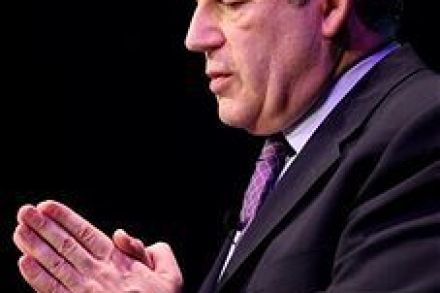
Labour high command will be very satisfied with Brown’s performance on Marr this morning. There was far less of the tetchiness that we usually see from Brown in interviews and by being invited to talk about the ash cloud and the government’s response to it at the beginning, Brown was able to assume some of the aura of his office as Prime Minister. The interview saw the debut of Brown’s latest rewriting of history. Apparently he has always been for bringing in the liberals (exact quote to follow when the BBC release the transcript) and a ‘progressive consensus’. This will come as a shock to anyone who has read Paddy

Mandelson contra Cameron

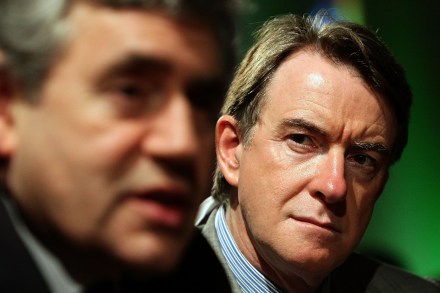
So far as the Tories are concerned, Peter Mandelson is the political equivalent of an itch that you can’t scratch: irritating, elusive and impossible to ignore.  And he’s at it again today, with an article in the Independent on Sunday chiding the Tories’ over their Big Society agenda.   It’s not the “agenda of abandoment” attack that Mandelson made a few days ago.  But, rather, a return to the “cross-dressing” territory of last year.  As Mandelson puts it, “[Cameron’s] tightly knit group of associates has simply pinched a few ideas from our campaign manual, rather than fundamentally reforming the party to make it fit for office.”  And he even tries

The Enthusiasm Gap

As James says, we’re going to need to wait a few days before we can be sure if the Lib Dem surge has legs but, yes, right now something is happening. The headline figures for the three polls we’ve seen since Clegg’s coming-out party are: ComRes: Con: 31 (-4) Lab: 27 (-2) Lib: 29 (+8) ICM: Con: 34 (-3) Lab: 29 (-2) Lib: 27 (+7) YouGov: Con: 33 (-4) Lab: 28 (-3) Lib: 30 (+8) That’s all striking enough but so too is this finding from the Independent on Sunday’s ComRes poll: Only 53% of self-proclaimed Labour voters say their preferred election outcome is a Labour majority. By contrast 67%

The impediment to a Lib-Lab coalition

Certainly, the Lib Dems’ current joy will prove transient; but for the first time since 1983 this is a three party race. As Pete notes, Labour see Nick Clegg as the surest means to keep the Tories out of office. Even before the debate, the normally cerebral Andrew Adonis was penning passionate articles appealing to Lib Dem support. Since the debate, the love-bombing campaign has become indiscriminate .   Love isn’t all you need. Labour will need nous to make the most of the opportunity Clegg has presented. Over at Spectator Live, Will Straw argues that Labour should ‘play the long game’ by being obsequious whilst airing the few differences

Responding to the Lib Dem surge

We’ve had the insta-polls and that eyectaching YouGov poll, and now we get the political reaction to Thursday’s TV debate.  Interviewed in the Times, Alan Johnson plays up what Labour and the Lib Dems have “in common,” and opens the door on a potential coalition.  While, in the Telegraph, David Cameron sets about Lib Dems policies – attacking, for instance, the “flimsy backing” to their plan for making the first £10,000 of income tax-free These different responses to the Lib Dem surge are stiking, if predictable.  Labour see Clegg as an opportunity: an opportunity to whitewash Brown’s mechanical performance in the TV debate, and to keep the Tories out of

So what’s changed?

The question is: how much has really changed after last night?  And the answer is hard to pin down.  There are the plastic, surface changes, of course.  Nick Clegg may now be recognised by more that one-third of the nation.  His party will probably come under greater scrutiny from the media and his opponents.  And the leaders’ debate is here to stay; a defining feature of this election which will become a standard feature of future contests. But what about deeper change?  Well, I can understand the argument – made punchily by Gideon Rachman here – that this will increase the likelihood of a hung Parliament.  That’s probably true.  But

The novelty of Clegg wins it for him

“I agree with Nick”, said Brown – and, as it turned out, so did most of the people YouGov polled. Brown lived right down to expectations, Cameron lived up to them (but didn’t exceed them). Few would have had any expectations from Clegg: what we political pundits know to be his clichés will be heard for the first time in many living rooms tonight. Each used tactics we’re familiar with. Brown opened his verbal machine gun, and sought to mow down the audience (they surrendered early on). David Cameron was fluent, articulate – as anyone who has followed politics had come to expect. But dazzling? No. He was subdued, seemed

Eddie Izzard – Brilliant Britain

I’d watch anything over a party political broadcast, anything except Piers Morgan. But Eddie Izzard’s Labour broadcast (below) promised to be different. What a letdown it proved to be, just like any other bland effort. The jokes are marginally funnier than an aneurism, and the message is negative, despite the ‘brilliant Britain’ theme. The ad is a manifestation of Labour’s problem. Izzard offers nothing beyond morbid fear of Tories, Thatcher and money. (Incidentally, I recall a chummy Brown cosying up to the Handbag on the steps of No 10 not so long ago. Did she bite him?) Because Labour cannot represent change, it must guard its record. Izzard defends Labour

What Do We Really Want from a Labour Government?

After reading Seumas Milne and Timothy Garton Ash in the Guardian and then looking at the advert for the New Left Review on the back of the London Review of Books (“Good Riddance to New Labour”), I do wonder what these people want from a centre-left government. God knows I have been critical of New Labour — I’ve had a pop at its record on civil liberties, education, radical Islam, prisons. I could go on. This government has lacked imagination and it has failed to be bold enough. But between 1997 and 2008 Britain became more tolerant and more confident. Hell, it has almost became a modern European nation. It

Brown’s signature parade

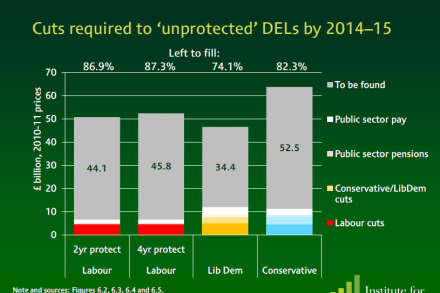
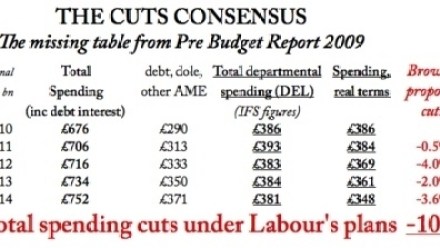
Only 58? Labour’s last letter attacking Tory spending cuts this year had 60 economists’ signatures attached to it. Their latest, released today, has only 58. Number 10’s signature-marshalling skills are clearly on the wane. I sincerely hope that the Tories don’t marshal some economists of their own. The last time that happened, back in February, we witnessed the low point of the fiscal debate – with both sides using a bunch of academics as a substitute for a proper conversation with the public. And, lest we forget, Guido’s handy graph reminds us just what those economists were and are quibbling over anyway. This is a phoney war, so it’s little

Rod Liddle is Right

Why, as Rod asks, has so little attention been paid to the story about Labour sending 250,000 women leaflets suggesting that if they get cancer they’d probably die under a Conservative government? I was in Ireland at the weekend and so didn’t see the Sunday Times story but as far as I can see, what follow-up there’s been on the BBC and elsewhere has been remarkably restrained. To recap: Labour has become embroiled in a row about the use of personal data after sending cancer patients alarmist mailshots saying their lives could be at risk under a Conservative government. Cards addressed to sufferers by name warn that a Labour guarantee

The Lib Dems Lose a Voter

I had my first experience of frontline canvassing in a marginal at the weekend, when I visited my mum in the west country for a few days. She lives in a village in Nick Harvey’s North Devon constituency, a key target seat for the Tories. As a lifelong Labour and former activist she is torn between wasting her vote on the Labour candidate or voting tactically to keep out  the Tory, Philip Milton. On Monday we found some Lib Dem canvassers on the doorstep and very cheery in that way Lib Dems have to be. They explained why it made no sense to vote Labour in North Devon and the

First poll since all the manifesto launches has the Tories ahead by 9 

The figures from YouGov’s daily tracker have just been released, and they have the Tories on 41 percent (up 2), Labour on 32 (up 1), and the Lib Dems on 18 (down 2) – so a lead of 9 points for Cameron & Co.  It’s worth noting, as well, that the Tory manifesto comes out on top in supplementary questions about which has the best policies, which is most honest and which is the best for the country.  But, to my eye, the most striking result is that relatively low level of support for the Lib Dems.  I imagine that they’d certainly hope for better as they continue peddling their

Brown demolishes himself with untimely ‘admission’

Sorry is the hardest word and Gordon Brown stil hasn’t said it. But, everyday brings surprises. His ‘admission’ about his errors is the first time I’ve ever agreed with his economic analysis. In short, even Brown knows he’s not what he’s cracked up to be. Making such an admission at this stage of the election cycle is extraordinary. The intention may have been to make Brown look human. In which case, he’s succeeded, but to his detriment. Brown looks Biblically fallible. Labour’s campaign rests on one deduction. Gordon Brown built an era of prosperity; then Gordon Brown saved the country from a recession that originated in America; therefore Gordon Brown

How Charlie Whelan killed New Labour

Last summer, The Spectator received a letter from Charlie Whelan’s solicitors complaining about this post – where we mention their client’s spot of bother with his colleagues at Unite. Carter-Ruck were instructed on one of the no-win-no-fee deals: it cost Whelan nothing to sue, but could cost us £thousands to defend. So the lawyer’s letter is, by itself, an effective form of intimidation. A magazine with a small budget obviously faces huge pressure to do what he wanted: apologise, pay up and (suspiciously) undertake not to pursue the story any further. Under the circumstances, The Spectator could do only one thing. Our full investigation into Charlie Whelan is the cover story of tomorrow’s magazine

Follow the money | 14 April 2010

Looking at the papers this morning and watching the news last night, you realise what a benefit in the image stakes the Tory cash advantage gives them. The Tories can afford to hire out better venues than the other two parties. So while Labour launched their manifesto in hospital and the Lib Dems theirs at Bloomberg, the Tories used Battersea Power Station which provided them with much better visuals. We saw the same dynamic on the day the election was called: Labour’s event was in Downing Street, the Lib Dem one in an office and the Tory one on the terrace of County Hall looking over to Parliament The Mirror’s

Labour’s response to the Tory manifesto

Anyone else think that Labour’s latest poster is like a negative of the Tories’ “Vote For Me” effort?  White text on a black background, instead of black text on a white background.  A picture of Cameron, instead of Brown.  I mean, the only thing that isn’t swapped over is the tone: both go on the attack, rather than presenting a positive vision. Labour’s message here is that the Tories’ Big Society manifesto washes its hands of the people.  Which echoes the caricatures – “an agenda for abandonment” – that Peter Mandelson wheeled out yesterday, and which you can expect to hear again and again between now and polling day.  The

Children of Maggie

I was going to say that Labour have gone negative but, actually, their campaign has, for any number of understandable reasons, been negative all along. Still, that reached a new low (or height) this evening with this advert, broadcast in Scotland only: It’s impressively dishonest on many levels, not least because any decisions taken on Scottish NHS or education funding will be made in Edinburgh, not by any Conservative government in London. True, the block grant could be squeezed but this is true regardless of who is in power in London or who’s running Holyrood. Indeed, one could make an argument that for any number of political and symbolic and