Labour party

Prism controversy will deepen coalition divisions over the snooper’s charter

GCHQ’s use of the US monitoring system Prism is threatening to turn into a major political row. Douglas Alexander is demanding that William Hague come to the House of Commons to explain what GCHQ was doing and what the legal basis for it was. But this controversy is going to have an effect on coalition relations too. It is going to intensify Liberal Democrat opposition to the measures included in the Communications Data Bill. This comes at a time when David Cameron has decided, as he made clear in the Commons on Monday, that the measures in it are needed. In the United States, the Obama administration is pushing back against criticism of the programme.

Labour’s localism epiphany

Just because Labour has been taking a big dose of reality this week doesn't mean the party is now refusing to make the most of any botch job by the Coalition. So we've come to the funny situation where the Opposition party famed for its centralised approach to planning which failed to build enough homes in any year is taking the high ground on housebuilding. The Telegraph reports that Shadow Communities and Local Government secretary Hilary Benn now believes 'local communities should decide where they want new homes and developments to go and then give their consent in the form of planning permission' and that 'we have to make localism work'. Labour would tear up the Coalition's hated National Planning Policy Framework, Benn told the newspaper. This is extraordinary.

How Ed Miliband avoided open warfare on welfare

For months, right-wing politicians and commentators have been licking their lips waiting for the Labour party to face up to reality. We all assumed that the sort of speeches delivered by Ed Balls and Ed Miliband this week, in which the two men abandoned the party's commitment to universalism and promised to cap welfare spending, would send Labour into orbit. There was even a revolt in the Commons which appeared to be a harbinger of doom about Labour and welfare. So where's the open warfare? Sure, Peter Hain spent most of Monday having a grump into various cameras and microphones about the winter fuel payment. But the party has stayed remarkably peaceful. The answer is the amount of groundwork that Ed Miliband and his team did for this speech.

This poster is why Number 10 is so confident Clegg will stay solid on union curbs

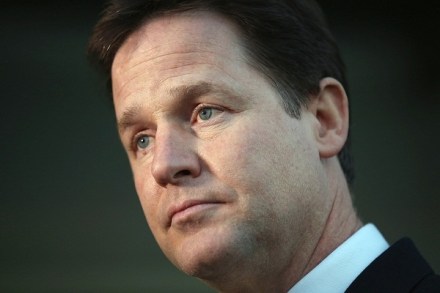
Given all the coalition tensions over Clegg supposedly reneging on his promise to back childcare reform, it is surprising how confident Number 10 is that he’ll stay the course on the curbs on the trade unions in the lobbying bill. When I asked one senior figure there why they were so sure that the Lib Dem leader wouldn’t change his mind, I was told to remember that every time Clegg went back to Sheffield and his constituency he was met by a Unison-backed poster branding him as ‘Cleggzilla’. This source continued, ‘If you’re on the receiving end of that you’re all too aware of union power. That pain is very real.

The political centre just moved, to the right

Today must count as one of the most encouraging days for the centre right in British politics in recent times. Labour’s apparent abandonment of universal child benefit is a massive blow to the 1945 settlement. It is akin in significance to when Labour began to accept the privatisations of the Thatcher era. Now, there’s no intellectual difference between declaring that better off pensioners won’t receive winter fuel payments and that better off mothers won’t receive child benefit. But in symbolic terms, the difference is huge. The winter fuel payment is a recent addition to the welfare state, introduced by the last Labour government. It is not fundamental to it.

How Labour’s change of heart on welfare will help the Tories

That Labour wouldn't scrap the Coalition's cuts to child benefit for higher earners isn't a surprise. It is just one of the many admissions that the party will need to make in the next few years about policies it has bitterly opposed. This week's admissions that the party couldn't safeguard winter fuel payment and that it will also introduce a cap on AME welfare spending don't just represent an attempt to face up to reality, and to show voters that it is prepared to do so. They are also an attempt to see how far the rest of the Labour party can be pushed before the open revolt that everyone has been muttering darkly about begins. So far, the response hasn't been too bad.

Michael Gove gets his way with GCSEs…in the end

You just can’t keep Michael Gove down. After beating a very public retreat by u-turning on plans to replace GCSEs earlier this year, he’s announced today the all-new I-level qualifications. I-Levels will be graded 1-8 — with a current A* roughly equal to a 7 — and will take on much of his English Baccalaureate plans, including a greatly reduced significance on coursework and limited resits. The Baccalaureate was a rare defeat for the most fervent of cabinet ministers. Back then, he told the Daily Mail his exam reforms were a ‘step too far’, but it now appears Gove was still determined to get his own way. Following the GCSE English marking disaster last summer, the secondary exam systems has been waiting for a radical rethink and toughening up.

The political battle over A&E will get nastier before the problem is solved

Today's row about Accident and Emergency has little to do with the issue itself, and far more about one party trying to prove a point about the other. Those rows are the most vitriolic, the most hard-fought, and to the outside world, the most pointless. The King's Fund today finds waiting times are at their worst level for nine years. What's going wrong? Each side has its own theories. But what's significant is that each side is trying to use this row to steal that coveted 'party of the NHS' title. This was abundantly clear from Andy Burnham's response to the report, written in what appears to be a spitting rage.

The significance of Ed Balls’s speech, and what it means for Ukip

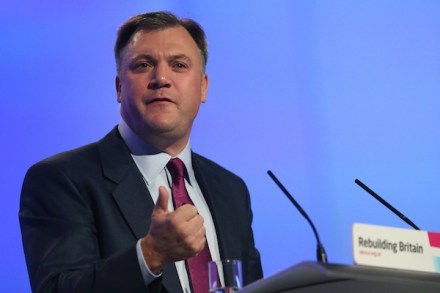
Ed Balls’s speech today is significant for two reasons. First, it implied that a Labour government in 2015 would not spend more on current spending. But, rather, it would borrow more to fund higher capital spending—what Gordon Brown used to calling ‘borrowing to invest’. This, I take it, means that a 2015 Labour government wouldn’t introduce the five point plan for the economy that Balls has previously outlined. The second was the announcement that Labour would stop winter fuel payments to higher and top rate taxpayers. This will save about a £100 million a year, which is hardly enough to give Labour a reputation for fiscal rectitude. But it does concede crucial ground on universality.

Ed Balls steels himself for spending review battle

Ed Balls has had plenty of warning about how politically dangerous this month's spending review will be for him. James reported in April that George Osborne planned to use the settlement (when he eventually gets it) to prod the Labour party. But perhaps it's also the party's inability to make polling hay from the Tories in crisis over the past month that has provoked not one but two big policy speeches from the Labour leadership this week. The concession that Balls will give in today's speech about universal benefits no longer being automatically justifiable has attracted the most attention.

Michael Gove’s campaigning masterclass

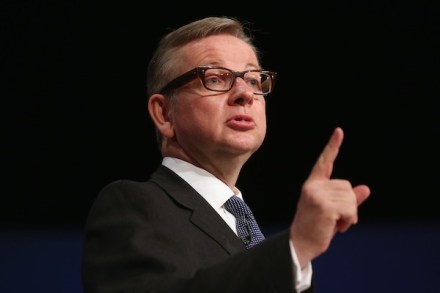
In the past few weeks, the Tories have been so busy fighting each other that they appear to have forgotten about the Opposition party. But now, while things are quieter in the parliamentary recess, senior figures are starting to take the fight back to Labour. Michael Gove has written a barnstormer of an Op-Ed in today's Telegraph which marks the start of this onslaught with quite some gusto. He describes Ed Miliband as 'as clearly defined as a blancmange in a hurricane' and pokes fun at his recent Google Big Tent speech about Willy Wonka and Mr Burns. 'With less than two years before the general election, the Opposition has so little of weight to say that it makes a hole in the air seem substantial,' he writes.

What Labour wishes the OECD said about Plan A – and what it actually said

Labour is apparently thrilled with the OECD's assessment of the UK economy, released today. The think tank cut its growth forecasts from 0.9 per cent to 0.8 for 2013 and from 1.6 per cent to 1.5 per cent for 2014, while warning of 'strong headwinds' from the eurozone. So Chris Leslie, the Shadow Financial Secretary to the Treasury seized on the report, saying: 'The OECD has once again cut its growth forecasts for the UK economy, warning that youth unemployment is too high and that weak growth means wages are not keeping up with price rises.' His colleague Rachel Reeves said it was 'time for the government to listen and act on growth'. If you're the sort of person who gets their news from Labour press releases, you might be dancing around your sitting room shouting 'Plan A isn't working!

Ed Balls tries to shake off child in a sweetshop spending image

Anyone reading Sam Coates' interview with Ed Balls in today's Times might be forgiven for chucking their newspaper on the floor with a chuckle, muttering about the hypocrisy of a Labour shadow Chancellor lecturing George Osborne on borrowing. Balls warns that the government's plans to offer Royal Bank of Scotland shares to the public will add billions to the deficit. He tells the newspaper: 'A giveaway or loss-making firesale at the current share price would and billions to the national debt at a time when poor economic growth already means borrowing isn't coming down.' But this is an attempt by Balls to appear fiscally responsible while making the case for 'good borrowing' elsewhere.

Gay marriage easily passes third reading vote in the Commons

After all the parliamentary back and forth yesterday, gay marriage passed third reading by the comfortable margin of 366 to 161. Tory sources are briefing that fewer of their MPs voted against at third reading than second reading, though we’ll have to wait for the division lists to confirm that. We probably now have only a couple more Commons votes left on this; there’ll be on any amendments made to the bill by the House of Lords. The atmosphere in the House as the result was read out did not seem particularly historic. There was some clapping from the Labour front bench, but the Treasury bench didn’t join in and it rather petered out. But, I suspect, that in years to come this will be remembered as one of the more significant things that David Cameron did in office.

Lord Mandelson gives Miliband two big tasks

There is always something quietly devastating about a pronouncement from Lord Mandelson. Today more polls reveal the Labour party is failing to make headway when the Tories are in an almighty flap, and the New Labour peer gave his tight-lipped, politely-delivered prescription on the Marr Show for how Ed Miliband can salvage things: 'I think that Ed Miliband has two tasks. He has one, to continue building up his economic credibility and confidence people have in Labour's ability to manage the public finances and people's own money. He has made a very good start at doing that.

Labour is the party that should be worrying about its record on cities

Last month, in a rare and refreshing piece of pre-local election commentary written outside the Ukip prism, author and urbanist Leo Hollis stated that the government does not understand cities. His argument amounts to the claim that, because Labour has a stranglehold on city councils, the coalition’s efforts to engage with cities and their leaders are a shallow, meaningless attempt to force an economic ideology onto self-sustaining left-wing communities. Hollis is wrong; ask the people leading our urban communities how they feel and they’ll tell you the opposite. The Conservative party has has taken up the mantle, connecting with the people and the industries that matter to the future of our cities, while a complacent Labour leadership appears to have forgotten its heartland.

Will the draft EU referendum bill calm Tory tensions?

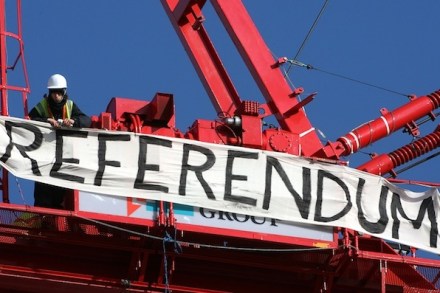
The last few days have seen the Tory party losing its collective head. Number 10 hopes that the publication of a draft referendum bill will begin to restore order. If this bill had been published by the leadership a week ago, it would have looked like a bold move. Today, it appeared panicky. But it is now out there, and any Tory backbencher who comes high up in the private members bill ballot on Thursday has a chance of guiding it through. I suspect if a vote could be won on second reading, the parliamentary dynamics of this debate would change yet again. What’ll be intriguing is to see how much the Tories campaign on this. David Cameron has already sent out an email to party supporters.

Diane Abbott to turn Labour’s attention to a ‘crisis of masculinity’

Diane Abbott has been thinking long and hard of late about how Labour responds to the family. She offers the next instalment of her ideas in a speech to think tank Demos on Thursday, and will argue that rapid social and economic change has caused a 'crisis of masculinity' in Britain which manifests itself. Coffee House has been offered a preview of that speech, which marks a significant shift in the way Labour talks about the family. Abbott believes the Conservatives have occupied this debate for too long, and wants her party to make families and fathers a priority. As a single mother and a left-wing feminist, her intervention is an attempt to reclaim this territory.

Tory EU turmoil allows Labour and Lib Dems to develop strong message discipline

The dizzy behaviour of the Tory party on Europe is allowing its opponents to develop an incredibly strong message discipline. This is ironic because the Labour party has its own European fault lines running through it, its own backbenchers calling for a referendum, and even some calling for a referendum bill before Cameron gets in. But the Conservative to-ing and fro-ing on the subject enable both parties to say that instead of arguing about Europe in the House of Commons, they plan to 'focus on jobs and growth'. Norman Lamb made this point on the Today programme, saying: 'The Lib Dems' focus is on jobs and growth.

The Speccie at the heart of Ed Miliband’s operation

‘Red Ed’ invited the great and good of the media into his Westminster den for hummus and natter last night. No one knew what they were celebrating. Poor local election results? His rescue of a cyclist? Christmas? Who cares; no hack ever passed up a free drink. Ed glided through the room, flirting with friend and foe in an easy manner that does not translate to television. And, unlike Cameron and Clegg, Ed is not one for an early bed. He stayed right to the bitter end, even after the wine and beer had dried up, just as he did at last year's Spectator summer bash. Incidentally, the Labour leader has a soft spot for The Spectator. There, on his is desk, in pride of place, was our Parliamentarian Award.