Labour party

‘Weak, weak, weak’ Labour will have to avoid looking panicked on any referendum pledge

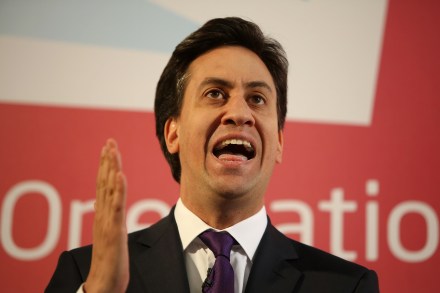
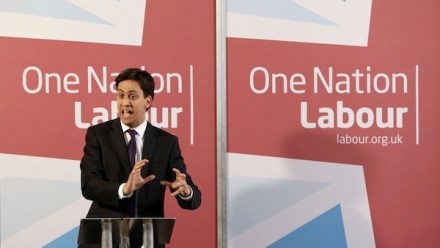
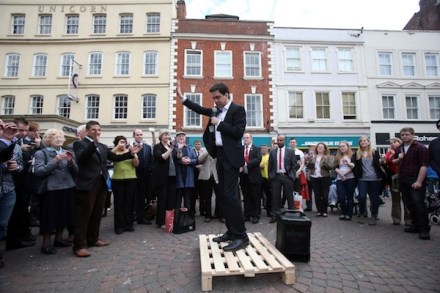
David Cameron's statement on the European council was another example of how easy it is at the moment for the Tories to portray Ed Miliband as a weak leader. He made it perfectly clear what he wanted those watching to take away by stealing Tony Blair's 'weak, weak, weak' line in 1997 when attacking John Major (which is well worth watching again). Today the PM told the Commons that Ed Miliband's position on Europe could be summed up in three words: 'weak, weak, weak'. He said: 'What I thought was interesting about the right hon. Gentleman’s response was that we heard not a word about the referendum that we are going to discuss and debate on Friday. I think I know why. The right hon.

‘Who governs Labour?’ is perfect new Tory attack line on Miliband’s weakness

A row in Labour over union influence that doesn't benefit the Tories in some way is as rare as hen's teeth. But the latest revelations about Unite's attempt at 'transforming Labour' (as reported by Rachel Sylvester in her explosive Times column) are even more of a gift to the Conservative party than usual because they feed perfectly into the line of attack the party has chosen. As Coffee House reported recently, Lynton Crosby told Tory MPs that he wanted to focus on Miliband's weaknesses as leader, identifying clear weak spots rather than the 'he makes the coffee' line. That the unions are enjoying such success in stitching up the selection process contributes to that impression of weakness, particularly if Miliband finds himself unable to do anything decisive.

Pro-referendum MPs to plot for Labour and Lib Dem manifesto commitment

MPs from all parties who want a referendum are meeting this week to discuss how to get a pledge into the Labour and Lib Dem manifestos, I hear. The All-Party Parliamentary Group for an EU referendum will meet tomorrow, partly to look ahead to James Wharton's Private Member's Bill on Friday, but also to draw up a strategy for a referendum commitment from the other two parties. Speaking alongside Wharton at the meeting will be Labour's Kate Hoey and Lib Dem John Hemming, who backed John Baron's Queen's Speech amendment. Labour donor John Mills, who the Times reports this morning as warning that his party could lose the next election because it hasn't offered voters a choice, will also speak.

Miliband’s EU referendum dilemma

Friday’s vote on James Wharton’s EU referendum bill is going to push the whole Europe question right back up the political agenda. The Tories will try and use it to highlight their support for a vote and the opposition of the other major parliamentary parties. It will be very hard for Ed Miliband to go into the next election opposed to a referendum. It would look like he was opposed to giving the public a say. I also suspect that it will become almost politically impossible to oppose a referendum after the European Elections in 2014. Patrick Wintour reports today that Labour is toying with the idea of either amending the Wharton Bill to back an instant In / Out vote or committing to one within the six months of the next election.

Spending review – a response from a Labour marginal

The Spending Review was a political device that the chancellor clearly hoped would get him through to the end of this parliament. But if the spin doesn’t match the realities of life, I don’t think the public will buy it. A big risk for both governing parties is that high increases in the cost of living define the next election. The Liberal Democrats cling to their £10k personal tax allowance as the policy that will get them through the general election in 2015, and the dry-run coming in next year’s local elections. 10k’s a natty round number that’s easy to remember, and I would be the first to admit that straight forward practical solutions that the public can understand are important in politics.

The Tories can’t attack Labour without undercutting their own arguments

One thing that was noticeably absent yesterday was Tory crowing about Labour having signed up to the coalition’s current spending plans. Instead, George Osborne’s response to Balls concentrated on whether Labour would borrow more. Given the Osborne-Balls relationship, you might have thought that the Chancellor would have relished the idea that Balls had been forced into an intellectual surrender. But the Tory leadership is acutely aware that going on about Labour having accepted their spending limits undercuts their argument that it is the same old Labour party, addicted to spending and borrowing. So instead they’ve chosen to argue that Labour’s pledges of fiscal rectitude simply aren’t credible.

George Osborne’s big idea

What are the Ashes? This question was put to former England cricket captain Ted Dexter, the guest of honour at the launch last night of the writer and broadcaster Simon Hughes’s latest book. Dexter replied that the Ashes is an idea; the terms of engagement that had united two sporting nations in rivalry for nearly 150 years. Few things in life are more durable than a simple idea. The idea of ‘austerity’ drives our political debate and yesterday's spending review has extended the life of the idea deep into the next parliament. It is a political concept rather than a purely economic issue.

Exclusive: partisan EU referendum campaign dampens Labour support

The Tories are putting off Labour MPs from backing their Private Member's Bill on an EU referendum with an overly partisan campaign, Coffee House has learned. John Cryer, who chairs Labour for a Referendum, tells me that he won't be voting for the Bill because the Conservatives have turned it into a party political campaign to shore up their own position, rather than one that genuinely promotes a referendum. He says: 'I'm not voting for it, I'm abstaining. I think the way the Tories have approached it is very party political. I can understand it in a way because they want to be in a position where they are offering people a choice, they want to try to push other parties on that policy.

Focusing on borrowing means mutually-assured humiliation for Labour and the Tories

Strangely, both sides at Treasury questions today wanted to talk about something that does their own party no favours at all to mention. The Labour whips had sent their loyal backbenchers out in force to ask about Friday's borrowing figures, while George Osborne and Conservative colleagues were very happy indeed to talk about how much the Opposition would have to borrow, too. Labour wanted to tell off the government for borrowing more. The government wanted to remind Labour that it would borrow even more.

Michael Gove’s fantasy Labour education team

Michael Gove and his colleagues have enjoyed poking Labour on education policy recently. His catty letter exchange with Stephen Twigg last week left Twigg with the victory for style with a supremely bitchy reply, while Gove won on substance (largely because he asked whether Labour's education frontbench possessed any). Today he tried to assemble his own fantasy Labour education team as he took questions from MPs in the House of Commons chamber. Kate Hoey gave him a forthright prod about the delay in a school converting to an academy in her constituency. Gove didn't really answer her question, instead saying: 'I'm very grateful to the honourable lady.

All three parties should publish ‘red lines’ for 2015 coalition negotiations

Both Ed Miliband and Nick Clegg delivered speeches to their party faithful today about being realistic about 2015. Miliband's speech, briefed as 'tough', was the latest in his series of attempts to tell voters that they can trust him: he wouldn't borrow more than this government… well, no more 'day-to-day spending', which is his way of saying he would actually borrow more for capital projects. Clegg wanted to tell his councillors that they can't see May 2015 as the month when they all get to breathe a sigh of relief and return to their local authority fiefdoms without any of the inconvenience of their party being in national government too.

The Tories can steal voters Labour has abandoned

Russell Brand made a good point on Question Time last night. If a party derives half of its funding from a group of people, it’s not going to do anything to annoy that group. He was speaking in the (incorrect) premise that the Tories are bankrolled by the banks, bit his overall conclusion was spot on. Ed Miliband’s Labour Party takes about 80% of its funding from the trade unions, which distorts the way it sees the world. With each major battle, Labour is not becoming the party of change. It is becoming the party of the bureaucratic empire, anxious to strike back. This opens up new electoral territory, which I look at in my Telegraph column today. Ed Miliband is taking his party on a distinct direction, and has proven that he is capable of transcending the Blair/Brown era.

Labour is after the Tories’ localism crown

Stephen Twigg is, as he probably expected, coming in for a bit of flak on his U-turn on free schools this morning. Labour's Shadow Education Secretary has launched his own plan for 'parent academies', which Toby Young and James Kirkup have had some fun with here. But he is basically doing what Lord Adonis has long hoped the party would do, accepting that free schools are a variant of the last Labour government's academies programme anyway. He just needed to find a new brand that wouldn't send the teaching unions into orbit. But what's interesting is that Twigg also devoted large sections of his speech to trying to steal the localism crown from the Conservatives.

Someone has got to win the next election

It is easy to make a case for why all three main parties should do badly at the next election. After five years of austerity, who will vote for the Tories who didn’t in 2010? And how will they stop those dissatisfied with the compromises of coalition from sloping off to Ukip? As for Labour, why would the public want to put them back in charge just five years after booting them out? This question has special force given that the Labour leadership is so identified with that failed belief that boom and bust had been ended. Then, there’s the Liberal Democrats—they’ve alienated their left-leaning supporters and lost their status as the protest party of British politics. Oh, and they’ve broken one of their most memorable pledges: no increase in tuition fees.

Tories toast Labour abstention plan for EU bill

From being all over the shop in the past few months when it came to message discipline, the Tories have gone into overdrive in the last two days after the launch of the Let Britain Decide website on James Wharton's EU referendum bill. It's now difficult to see the wood for the tweets on how the Tories are the only ones who will #letBritaindecide, and that has got a great deal worse now that Guido has published a leak of Labour's whipping arrangements for the vote. He’s too weak and he’s too scared to #LetBritainDecide @ed_miliband orders Labour to abstain from EU referendum vote letbritaindecide.

The Tory plan to beat Miliband

The Tories are chuffed with yesterday's Prime Minister's Questions (the knockabout, that is, not the serious bit), and with Labour's continuing struggle to make any impact in the polls. Earlier this week, Lynton Crosby spoke to the parliamentary party about how they should aim to beat Miliband. He told them that while Miliband is a weak leader, the way to beat him is to highlight his areas of weakness, rather than his personal flaws. This means that the party will be focusing on how Labour is faring on welfare and the economy, rather than mocking Miliband for making his colleagues coffee (which is a line David Cameron really should drop).

Why Michael Gove is the best leader Labour never had

Michael Gove received a surprising amount of support from the opposition benches when he unveiled his GCSE reforms in the Commons on Monday. Among those Labour MPs saying they welcomed his proposals were David Blunkett, Barry Sheerman and, most unexpectedly, Diane Abbott, who said that they would particularly benefit working-class and black minority ethnic children. ‘Mr Speaker, I’m in love,’ said the Secretary of State for Education. ‘The honourable lady is absolutely right. If I had been a member of the Labour party, I would have voted for her as leader.’ Listening to this exchange, I couldn’t help but turn this hypothetical on its head: if Michael Gove had been a member of the Labour party, would Diane Abbott have voted for him as leader?

How should Labour deal with the teaching unions?

While dealing with the teaching unions is a simple stand-off for Michael Gove, spare a thought for poor old Stephen Twigg, Labour's shadow education secretary, who has to work out how on earth to deal with the NUT and NASUWT habit of opposing everything. There is a palpable sense of frustration on the Labour frontbenches about the way the two largest unions in particular behave. Twigg has made clear that he does not support strike action planned over a general raft of discontent over many different issues, and he has opposed the work-to-rule industrial action promoted by these unions too. On performance-related pay, the unions behave as though Voldemort is coming soon to a school near you, while Labour is merely unconvinced that it's the great saviour of educational excellence.

Ed Balls: Labour will include pensions in its welfare cap

Ed Balls has just told Andrew Neil on the Sunday Politics that Labour will include pensions in their welfare cap. This opens up a major dividing line with the Tories who have been clear that George Osborne will exclude pensions from his spending cap. I suspect that Balls and Ed Miliband will now be badgered with questions about whether, if necessary, they’ll cut pensions — or not up-rate them — to meet the cap. Given the power of the grey vote in British politics (Labour estimates that one in every two voters in 2010 was over 55) they are going to come under massive pressure to rule this out. But, strikingly, Balls was not prepared to do this on  Sunday Politics. He even drew attention to the amount of welfare payments which go to the over-60s.