Kremlin

Can the Kremlin afford to fix Russia’s oil crisis?

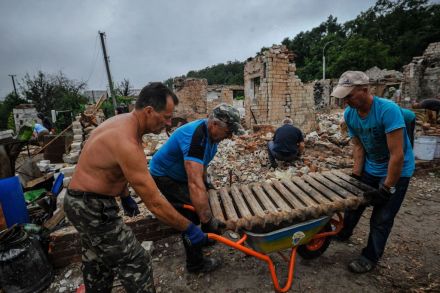
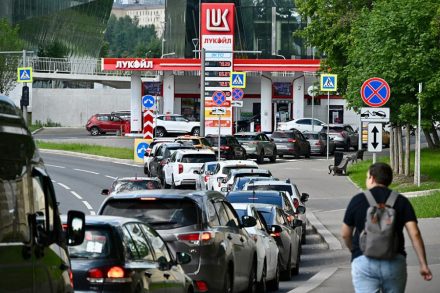
For a country that pumps roughly nine million barrels of oil a day – the third highest of any country in the world – Russia has managed to achieve something genuinely remarkable: it cannot keep its own gas stations stocked. More than half of its regions are now reporting shortages, the consequence of a Ukrainian drone campaign that has struck with increasing frequency and precision at the refinery infrastructure on which the country's civilian economy depends. The sometimes hours-long lines that have appeared – even in Moscow, for what may be the first time in the war – carry a symbolic weight that no amount of official reassurance from the Kremlin has managed to dispel. How this has come about is obvious enough.
oil

The Kremlin’s secret plans for post-war Russia

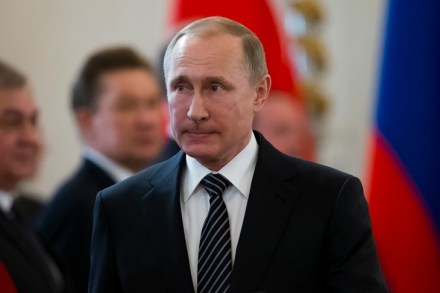
A top-level Kremlin policy document discussing post-war political planning and how to neutralize potential ultranationalist discontent has been leaked to the Russian investigative site Dossier Center. Entitled "Images of Victory," the paper gives a rare insight into the inner workings of Russia’s political machine. Crucially, it shows that while the Kremlin remains officially indifferent to peace talks, behind the scenes apparatchiks are working hard on selling an inevitable stalemate to the Russian people by dressing it up as a species of victory. The document was leaked before President Trump's announcement today of a three-day ceasefire between Russia and Ukraine.

Putin

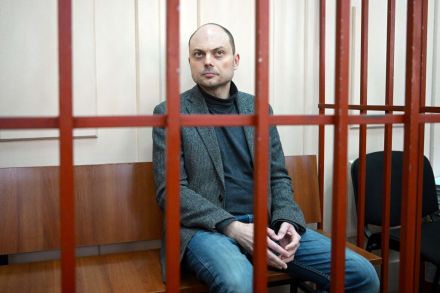
The valiant Vladimir Kara-Murza

Vladimir Kara-Murza dies hard. He has withstood not one but two poisoning attempts by Vladimir Putin's government. He has withstood the targeting of Russia's officials. And he has borne the ramifications of the West's turn away from confrontation with a regime he understands for its villainy. Now, Kara-Murza is facing what could be a final challenge — a trial against him based on the 2022 laws against "misinformation" about the Russian military in the Ukraine war, by an authoritarian regime bent on silencing all its critics and sending them into the dark quiet of a cell where they will end their days. Kara-Murza is forty-one, the father of three, a former advisor to assassinated Putin critic Boris Nemtsov and a longtime advocate against the regime.

vladimir kara-murza

Putin’s Syria problem

From our UK edition

For Vladimir Putin, Syria has been the gift that kept on giving. His 2015 military intervention propelled Russia back to the top diplomatic tables of the world — a startling comeback for a country that had spent two decades languishing in poverty and contempt on the margins of the world’s councils. At home, the war took over as a booster of Putin’s prestige just as the euphoria over the annexation of Crimea was being eroded by economic bad news caused by low oil prices and sanctions. In the Middle East, Russia was able to show both friends and enemies that it was once again able to project power every bit as effectively as the Soviet Union had once done.

Are sanctions against Russia actually working?

Six months ago this week, the United States and its European allies enacted one of the most comprehensive, stringent sanctions regimes against a major economy in history. Russia’s unprovoked invasion of Ukraine on February 24 not only shocked the West’s sensibilities, but pushed Washington and Brussels to take actions that would have been unthinkable only a few weeks prior. As far as the West is concerned, Vladimir Putin’s Russia is nothing less than a dangerous pariah state — and its aggression against a neighboring country meant it had to be treated as one.

Who poisoned Roman Abramovich?

From our UK edition

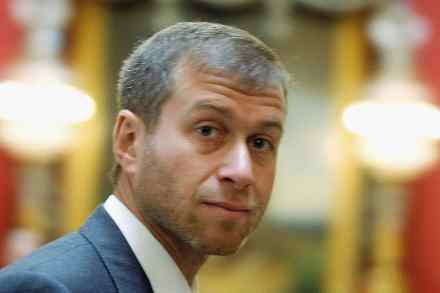
Russia is now 33 days into a war it expected would last 72 hours. Given the relative failure of the invasion, it is surprising anyone in the Russian security establishment has much time to spare for side projects. Yet, yesterday’s news that the Russian oligarch Roman Abramovich was poisoned during informal peace negotiations with the Ukrainians would suggest otherwise. While details are murky, according to the investigative journalism collective Bellingcat, billionaire Abramovich was engaged in shadow negotiations in the Ukrainian capital, Kyiv, earlier this month when he and his two Ukrainian interlocutors fell ill. The men later received medical treatment in Istanbul. Since the story broke, there has been a heady mix of clarifications, confirmations and counter-accusations.

Will Iron Felix scare Moscow’s protesters?

From our UK edition

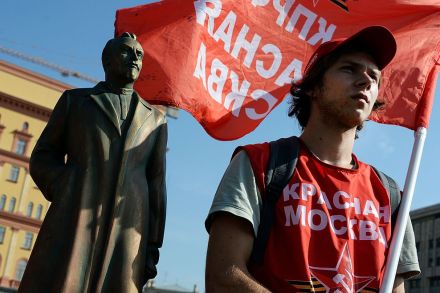
While in the West, the debate seems to be about which statue to topple next, in Russia it’s rather different. Felix Dzerzhinsky – ‘Iron Felix,’ founder of the Bolshevik secret police – looks like he may be coming home, thirty years after his statue was pulled down from its place in front of the KGB’s Lubyanka headquarters. Dzerzhinsky, a Polish aristocrat turned revolutionary, was charged by Lenin in 1917 to form what was then called the All-Russia Extraordinary Commission to Combat Counter-Revolution and Sabotage – rather more concisely known as the Cheka after the Russian initials for ‘extraordinary commission’ – and lead it into the coming civil war.

How have the Russian oligarchs got away with swaggering around London for so long?

From our UK edition

A decade ago I commissioned an article about Vladimir Putin’s business cronies. Among other lines of enquiry, it sought to finger ‘a coterie of wealthy and politically influential industrialists, many believed to be former or current secret service officials’ who allegedly had shareholdings in Russian companies which, if we or anyone else had been able to prove that they were controlled by the president, might have evidenced a personal Putin fortune of tens of billions. Sensibly, The Spectator’s lawyer would not let me publish — but the US Treasury has now done its own version of the job by imposing sanctions on seven oligarchs and 17 senior Russian officials who are believed to form the innermost presidential clique.

There’s still no smoking gun in the Trump-Russia story

From our UK edition

Political scandals sometimes throw up deliciously eccentric minor characters. Trump-Russia — a scandal or merely a crisis, according to taste — now has one: Rob Goldstone. He is described as a British former tabloid journalist, a music promoter, former Miss Universe pageant judge, and friend of the Trumps. Facebook videos reveal a short, tubby man with a northern accent and voice that seems a couple of octaves too high for his bulk. Twitter photos show him in a black shirt with a shiny gold tie; or holding velvet loafers up to his double chin, the word ‘Sex!’ embroidered on the toecaps; or wearing a gold baseball hat bearing the legend ‘CUNTY’. (Urban Dictionary: ‘Cunty, adj, conceited, cocky, acting like a bitch on the rag.

Licence to kill | 12 January 2017

From our UK edition

As I read the last chapter of this book, news broke that the Russian ambassador to Ankara, Andrey Karlov, had been shot multiple times at close range by an off-duty Turkish police officer. Despite shocking live footage of the incident, it was unclear immediately whether this was political assassination or terrorist attack, or who was ultimately behind it. The assassin was quickly ‘neutralised’. Speaking from the Kremlin, Putin praised the slain ambassador, ordered security at Russian embassies to be stepped up, and said he wanted to know who had ‘directed’ the gunman’s hand. This is the crucial question. Not who the killer was, but for whom he was acting and with what intent.

Russia’s puritan revolution

From our UK edition

Last weekend a group of young activists turned out on a Moscow street to protest against western decadence. They were a hard-faced bunch, standing defiantly in military poses and wearing uniforms bearing the logo ‘Officers of Russia: Executive Youth Wing’ as they blocked access to an exhibition by American photographer Jock Sturges that featured images of nude adolescents. ‘We are here to protect people from paedo-philic influences,’ one Officer of Russia told journalists — while another protester sprayed the offending photographs with urine.

Diary – 29 September 2016

From our UK edition

Monday night’s US presidential debate should convince a majority of American voters that Hillary Clinton is their only credible choice for the White House. Yet it may well fail to do so, in the new era of ‘post-truth politics’. The historian Sir Michael Howard suggests that on both sides of the Atlantic, we are witnessing a retreat from reason, an attempt to reverse the onset of the 18th-century Age of the Enlightenment, which banished superstition and religious faith as a basis for reaching conclusions. The progress of Donald Trump supports his thesis. I have just spent a fortnight in southern California, researching a book on the Vietnam war, and saw everywhere manifestations of Trumpery.

Putin and the polygamists

From our UK edition

Homosexuality may not be tolerated in today’s Russia, nor political dissent. Polygamy, though, is a different matter. Ever since news broke this summer of a 57-year-old police chief in Chechnya bullying a 17-year-old local girl into becoming his second wife, Russian nationalists and Islamic leaders alike have been lining up to call for a man’s right to take more than one wife. Most vocal has been Ramzan Kadyrov, the flamboyant 38-year-old president of Chechnya (part of the Russian Federation), who advocates polygamy as part of ‘traditional Muslim culture’. Veteran ultranationalist politician Vladimir Zhironovsky has long held that polygamy is the solution for ‘Russia’s 10 million unmarried women’.

How Putin turned Russian politics into reality TV

From our UK edition

‘We all know there will be no real politics.’ A prominent Russian TV presenter is speaking off the record at a production meeting in 2001. ‘But we still have to give our viewers the sense that something is happening. They need to be kept entertained. Politics has got to feel … like a movie!’ When Peter Pomerantsev, a Brit of Russian descent, sat in on this meeting he had recently graduated and moved to Moscow to work as a TV producer. A decade in Russian television has now provided him with the material for his chilling first book. Nothing is True… is more than an evocative travelogue or an insight into a new system of authoritarian control, although it is both of these.

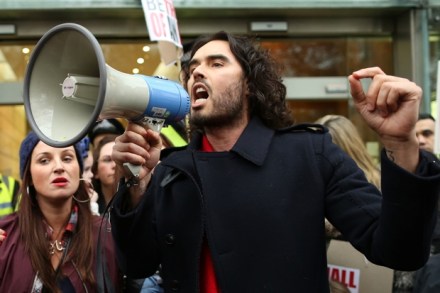
The Kremlin thinks Russell Brand is good news. Does that not worry him?

From our UK edition

An interesting story in today’s papers: ‘Russia’s last politically independent TV station will be forced to close at the end of this month after the state-owned company that transmits its signal said it would be taken off the air.’ This comes at the same time, as our cover story last week showed, as Putin’s propaganda station in London – Russia Today – has increased its operations and profile within the UK. Unlike the Kremlin, I am generally in favour of as diverse a media as possible.

Russia Today is Putin’s weapon of mass deception. Will it work in Britain?

From our UK edition

Anyone making the journey to Westminster by public transport will be confronted by a series of posters warning them about the state of British media. The word ‘redacted’ is in large letters, and readers are advised to look up a website for ‘the ad we can’t show you here’. If you do, you see a picture of Tony Blair advocating war. ‘This is what happens when there is no second opinion,’ the webpage says, advising people to ‘question more’. This is how Russia Today, the Kremlin’s fast-growing English language broadcaster, is selling itself: as the challenger to an out-of-touch establishment. At a time when there’s a widespread distrust of political elites, it’s not a bad line.

Leviathan: the anti-Putin film the Russians tried to ban that’s tipped for an Oscar

From our UK edition

The funny thing about a film like Leviathan, which many expected to win the Palme d’Or at Cannes earlier this year (it didn’t), is that suddenly an awful lot of people become experts in things they knew nothing about before reading the press notes. Some people may be familiar with the Bible’s Book of Job, of course, and with Leviathan, the sea monster used to demonstrate to Job the futility of questioning God. Several may even have read Thomas Hobbes’s tome of the same name about conceding power to the state. A few may genuinely be well-versed in both. A big pat on the back to them. They read a lot.

Regardless of the impact on our economy, Putin must be stopped

From our UK edition

Walking around London this lunchtime with my family, my stomach tightened as it struck me that we may conceivably now be sliding towards a war with Russia. A war with consequences that could end up destroying everything we value. Not physical assets – they can be replaced – but those we love and hold dear. The poverty of the West’s response to Putin’s aggression in Ukraine is breathtaking. Sanctions are announced, then re-announced, in the hope that perhaps the crisis on our borders may just resolve itself, with Putin deciding he has tweaked our tail enough. Such an outcome, however desirable, is pie in the sky. Let’s be clear that Putin holds the West, its leaders and its values in contempt. We are weak; he is strong.

After the horrific tragedy of MH17, Europe must wake up to the threat posed by Vladimir Putin

From our UK edition

How many more civilian planes need to be shot down over European airspace before Europe’s leaders get serious about the threat posed by Vladimir Putin’s Russia? As the smoke clears from Thursday’s horrific downing of a Malaysian Airlines jet traveling from Amsterdam to Kuala Lumpur, many will try to deflect blame from landing squarely where it should: on Russian President Vladimir Putin. ‘Airliner tragedy in Ukraine shows US & EU erred by not pushing to keep Ukr[aine] as neutral buffer state, not potential EU/NATO member,’ tweeted Stephen Walt, a prominent voice of the ‘realist’ school of foreign policy and a leading apologist for the Russian government.

The conflict in Crimea will be the downfall of Putin

From our UK edition

Earlier this year, Owen Matthews discussed in the Spectator how the conflict in Crimea will be the making of Ukraine and the end of Vladimir Putin: David Cameron says that Russia’s annexation of Crimea ‘will not be recognised’. Ukraine’s Prime Minister Arseniy Yatsenyuk promises that ‘we will take our territory back’. They are both misguided. Let Crimea go: it will be the making of Ukraine and the end of Vladimir Putin. Without Crimea, there will never again be a pro-Moscow government in Kiev. Ukraine will have a chance to become a governable country — a strongly pro-European one with a Russian minority of around 15 per cent. Putin will have gained Crimea but lost Ukraine for ever.