Kremlin

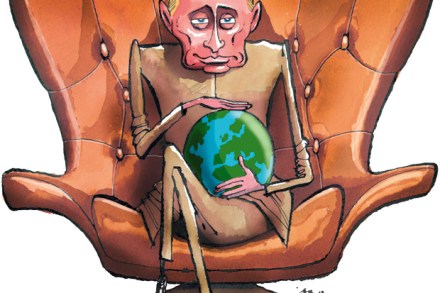
Vladimir Putin knows what he stands for. Do we?

From our UK edition

Possibly because his oratory is no match for his much-displayed pectoral muscles, the speeches of Vladimir Putin are seldom reported at length in the West. But as a means of understanding the manoeuvres in eastern Ukraine this week, there is no better starting point than the speech he made to the Duma when the Russian parliament annexed Crimea. Lest anyone thinks his words have been enriched by an over-imaginative reporter, the translation is provided by the Kremlin itself.
Crimean notebook: ‘They’ll have to break all my bones to make me a Russian citizen’

From our UK edition

Vladimir Putin still swears that there are no Russian troops in Crimea, so their mission is to say as little as possible as they invade this holiday region in their unmarked uniforms and vehicles. It is remarkable how soon you get used to shouting questions at these heavily armed special forces soldiers while they pretend not to be Russians. They tend not to take the bait: the most you’ll get out of them is a curt ‘Nyet’. I wandered up to an officer who seemed to be in charge of seizing a Ukrainian naval base in the old Tartar capital of Bakhchisaray. He wore all black, his face hidden by a balaclava and his vest stuffed with nasty-looking weapons. ‘Can we talk?’ I asked.

Vladimir Putin’s new plan for world domination

From our UK edition

[audioplayer src="http://traffic.libsyn.com/spectator/Untitled_2_AAC_audio.mp3" title="Anne Applebaum and Matthew Parris discuss how far we should let Putin go"] Listen [/audioplayer]It’s been a generation or so since Russians were in the business of shaping the destiny of the world, and most of us have forgotten how good they used to be at it. For much of the last century Moscow fuelled — and often won — the West’s ideological and culture wars. In the 1930s, brilliant operatives like Willi Muenzenberg convinced ‘useful idiots’ to join anti-fascist organisations that were in reality fronts for the Soviet-backed Communist International.

Secrets of the Kremlin

From our UK edition

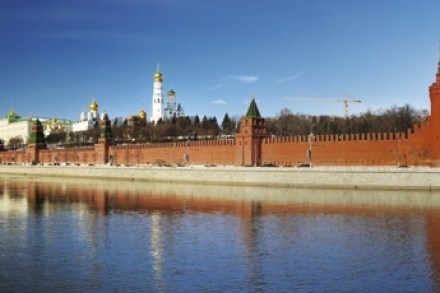
A building bearing testimony to the power of eternal Russia; a timeless symbol of the Russian state; a monument to Russian sovereignty. To the modern eye, the Kremlin fortress seems as if it had always been there, as if it had never changed and never will. All of which is utter nonsense, as Catherine Merridale’s fascinating history reveals: the story of this famous compound is not one of continuity, but of construction, destruction and reconstruction. Every reincarnation of the Russian state over the centuries — and there have been many — has been accompanied by a corresponding reincarnation of the Kremlin. Its history is thus a metaphorical history of Russia, as Merridale understands very well.

Russian Roulette, by Giles Milton – review

From our UK edition

Had Onan not spilled his seed upon the ground, he might have invented invisible ink. The possibility had not occurred to me until I read this account of the start of Britain’s intelligence services. Even then the implications seemed so startling as to be barely credible — that the entire trade in espionage, including the serried ranks of Cheltenham’s GCHQ, the massed battalions at Fort Meade’s National Security Agency, the MI5s, 6s and other shadowy digits, not to mention literature’s denizens, from Ashenden and Greenmantle to James Bond and George Smiley, owed its origin to solitary sex. Yet the source given on page 48 of Russian Roulette appears impeccable.

Thatcher didn’t really save Britain. She allowed Britain to save itself.

From our UK edition

Thatchermania has died down now, and I’ve personally stayed out of it. The quality of commentary from people around at the time has been outstanding, not least  The Spectator’s own Charles Moore. The Thatcher drama is one where I can’t even claim to have been a spectator. I was not into politics when I was young, not listening to Budget speeches on the school bus like the young George Osborne. Strife didn’t hit us much in the Highlands. I once crossed a picket line with my mum when teachers at my school, Nairn Academy, went on strike. She was a special needs teacher there and didn’t talk much about it, except to say she didn’t believe pupils should be made to suffer in disputes between adults.