Journalism

How I got under Macron’s skin

From our UK edition

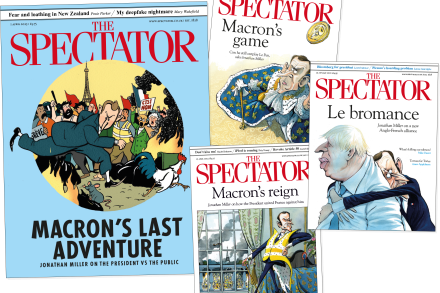
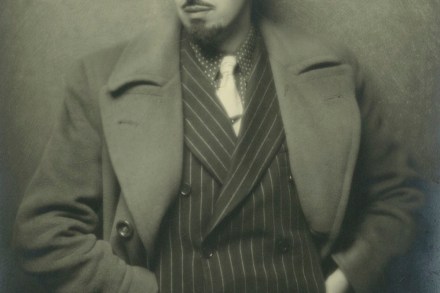
The journalist Jonathan Miller, a cherished Spectator contributor, died last week at his home in Occitanie, France. Below is an extract from the memoir he had only just completed, Shock of the News: Confessions of a Troublemaker. Here he explains how he came to write about French politics and culture for the magazine. I t was Andrew Neil who prodded me from my lethargy. Andrew lives on the posh Provençal side of the Rhône while we’re on the plouc side nearer Spain. I’m more likely to run into him in England or New York than France. But we keep in touch by email. When Emmanuel Macron began his manoeuvres for the presidency, I sent a gossipy email to Andrew explaining why I thought he might win, and how peculiar he was.

Collateral damage: Vulture, by Phoebe Greenwood, reviewed

From our UK edition

Sarah Byrne is covering her first war and, after a slow start, things are finally picking up. Sweating in her flak jacket and undersized helmet, the twentysomething British freelancer is aiming for a scoop. One of her contacts might be persuaded to arrange a visit to ‘terror tunnels’, the headquarters of a Palestinian network whose activities Israel cites as justification for bombing Gaza City. Fed up with ‘monkey journalism’, Sarah wants to move on from recycling press releases to proper reporting. At the same time, she keeps asking herself what she is doing here. Do these people dragging bodies from under the rubble of their houses need yet another ‘misery merchant’ pestering them with trite questions?

Tim Franks goes in search of what it means to be Jewish

From our UK edition

It’s hard to classify this thought-provoking book – part memoir, part philosophical exploration, but mostly a deeply researched family history. And what a history that is. Tim Franks, born in 1968, has been a BBC reporter for almost two decades, and now presents Newshour on the World Service. So he knows how to tell stories about other people. But the events here concern himself, and many of them are heartbreaking, as he searches for an answer to the question of what comprises identity and to what extent we are products of our ancestors.

What Mark Twain owed to Charles Dickens

From our UK edition

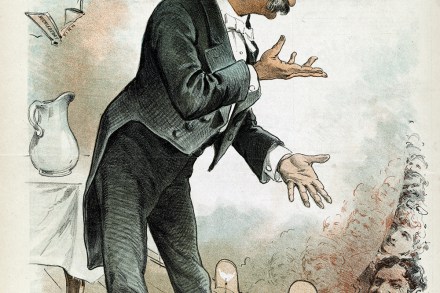
You know Mark Twain’s story. You’ve got no excuse not to; there have been so many biographies. Starting in the American South as Samuel Clemens, he took his pen name from the call of the Mississippi boatmen on reaching two fathoms. His lectures, followed by his travel pieces and novels, enchanted America and then the world. As a southerner, his principled stance against slavery gave him moral authority. The famous ‘Notice’ to The Adventures of Huckleberry Finn – ‘Persons attempting to find a motive in this narrative will be prosecuted; persons attempting to find a moral in it will be banished’ – was swept aside, so that persons like H.L. Mencken could straightfacedly describe it as ‘the greatest novel ever written in English’.

The unbearable smugness of the White House Correspondents’ Dinner

From our UK edition

Polls occasionally appear which reveal the extent to which people trust – or rather don’t trust – journalists. In one last year, something called the Edelman Trust Barometer found that just 31 per cent of the British public said they trust the media, a fall of 6 per cent in a year. This puts the media class at a level of trust somewhere between politicians and burglars in the public’s eyes. Still, any British hacks reading this can console themselves with one thing: at least most of our media does not cloak itself in the mantle of the utmost righteousness and hold itself out as some sort of priestly class. The same poll discovered that only 39 per cent of the American public trust journalists.

Farewell to the Fleet Street I loved

From our UK edition

Filthy, foetid and fraught with danger. A magnet for hooligans, hard drinkers, a few saints and plenty of sinners. And that was Fleet Street before the newspapers moved in. This ancient thoroughfare, in use since Roman times, is one of London’s most famous occupational streets, much as Jermyn Street is known for its tailors and Harley Street its medics. The difference is that Fleet Street is inexorably linked to newspapers despite the fact journalists have not pounded its pavements for decades, the trade having moved on to Wapping and beyond at the tail end of the last century. Now Fleet Street is on the cusp of another new era, with plans to replace many of its historic buildings with modern office blocks.

The Kirsty Wark Edition

From our UK edition

30 min listen

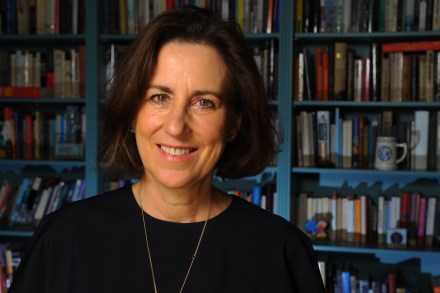
Kirsty Wark has worked for the BBC for almost 50 years and is one of the UK’s most recognisable broadcasters. In 1976 she joined BBC Radio Scotland as a graduate researcher. Having produced and presented several shows across radio including The World At One and PM, she switched to television, and went on to present shows such as Breakfast Timeand The Late Show. However, she is best known for presenting BBC Newsnight for over 30 years, which saw her interview key political and cultural leaders. Having stood down after the 2024 election, she now presents Front Row, The Reunion, and documentaries like Icons of Style.

The Lindsey Hilsum Edition

From our UK edition

34 min listen

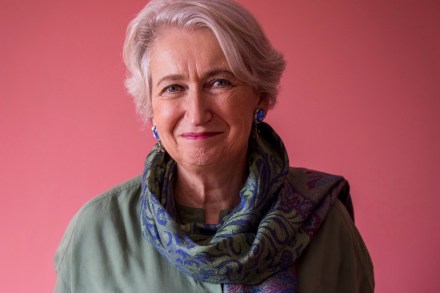
Lindsey Hilsum is the International Editor for Channel 4 News, where she has worked for over 25 years. Having started her career as an aid worker in Latin America, she transitioned to journalism, and she has now reported from six continents for over three decades. She has covered many major conflicts including Kosovo, Iraq, Syria, Ukraine and across the Middle East during the Arab Spring. Her third book I Brought the War with Me: Stories and Poems from the Front Line is out now. On the podcast Lindsey tells Katy Balls about starting out her career in Guatemala and in Kenya, what it was like being the only English-speaking journalist in Rwanda when the genocide broke out in 1994, and why she is drawn to studying human behaviour in extreme situations.

Satire and settled scores: Universality by Natasha Brown reviewed

From our UK edition

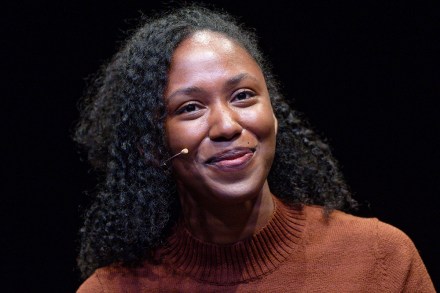
In 2023 Natasha Brown published an article taking the reader behind the scenes of two interviews that she had given to newspapers in Australia and Spain while promoting her debut novel, Assembly. The point was to expose sleight of hand in the resulting write-ups, to say nothing of shabby conduct more generally. One interviewer, eager for her ‘to admit that I was influenced by two television shows which aired after my novel went to print’, asked, a propos of nothing, if she had a boyfriend. ‘It’s not clear whether this question came from the creased printout he regularly consults,’ wrote Brown, acidly.

Is Keir Starmer really Morgan McSweeney’s puppet?

From our UK edition

Every government has its éminence grise.  The quiet, ruthless man (or occasional woman) operates in the shadows, only to be eventually outed when the boys and girls in the backroom fall out among themselves or when someone pens a memoir. Think Peter Mandelson, Nick Timothy, Fiona Hill and Dominic Cummings. The authors of Get In, both lobby journalists, have produced a detailed insider account of the rise of Keir Starmer, as seen through the eyes of those inhabitants of the political underworld whose names rarely surface in the public prints. In this case, the focus is on one alleged strategic genius, a man in his late forties with the memorable name of Morgan McSweeney, referred to throughout by the somewhat sinister moniker of ‘the Irishman’.

From the archives: the Kay Burley Edition

From our UK edition

20 min listen

Kay Burley announced her retirement from Sky News this week, after 36 years, having presented more than a million minutes of live television news – more than any other presenter in the world. To mark the occasion, here’s a special edition of Women With Balls – from the archives – when Kay Burley joined Katy Balls in 2019 to talk about how she ‘knocked the rough edges’ off her accent, her love of Jane Fonda, and why the BBC couldn’t afford her these days.

The exquisite vanity of the male sports writer

From our UK edition

A good place to catch the highbrow sports journalist in action is the ‘Pseuds Corner’ column of PrivateEye, where he (and it’s always a ‘he’) regularly appears. Here you will discover that to contemplate Manchester City’s mid-season loss of form is ‘like sitting in Rome in 410 and watching the Visigoths pour over the horizon’, warm to the spectacle of Liverpool’s Virgil van Dijk ‘striding about the place like the 17th Earl of Egham with a quiver of pheasants over one shoulder’, or learn that the mothers of the former Everton manager Sean Dyche and the French national coach Didier Deschamps both worked in the textile industry, which may explain their sons’ ‘common emphasis on durability and craft over flamboyance and novelty’.

On the front line of the tennis magazine wars

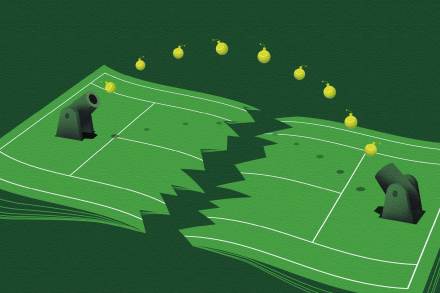
The issue appeared without fanfare at the 2017 US Open giftshop: a bright-red background offset an Impressionist yet unmistakable painting of Yannick Noah hitting a forehand, dreadlocks flaring. And with that, publisher Caitlin Thompson and editor-in-chief Dave Shaftel — an unlikely journalism pair who had met bonding over the poor state of tennis media — announced the launch of Racquet magazine, a journal that would explore the lifestyle, culture, history and zeitgeist behind modern tennis. In his first editor’s letter, Shaftel more or less laid out his and Thompson’s grand plans. “We don’t think of the game as a country club sport lumped in with golf and healthy only in the suburbs,” Shaftel wrote.

tennis

Welcome to the era of personality media

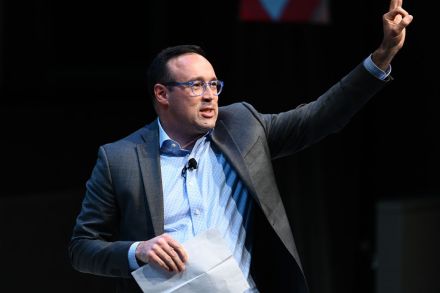
Several high-priced journalists have begun experimenting with selling themselves instead of a corporate media brand. Chris Cillizza and Mark Halperin have both started Substack ventures without having the branding back-up of CNN or Bloomberg. The pair follow in the footsteps of Megyn Kelly, who has been enormously successful in launching her own brand. Don Lemon has been confined to social media as well.Last year, Washington Post tech reporter Taylor Lorenz left corporate media behind to create her own outlet, although I would argue her audience and branding were separate from that of the Post.

Norman Lewis – a restless adventurer with a passion for broken-down places

From our UK edition

The travel writer Norman Lewis, the son of a Welsh psychic medium, died in Essex in 2003 at the age of 94. In his darkly comic autobiography, Jackdaw Cake, he relates how, in 1937, his mother built a spiritualist church in the north London suburb of Enfield as a sort of Taj Mahal memorial to her late husband (who was a retail pharmacist as well as a psychic). Enfield is not a likely pocket of the paranormal, but the Enfield Beacon of Light is still going strong. During its table-rapping and other spook-dabbling sessions no one is allowed to make jokes about striking a happy medium. Spiritualism is dead serious. Lewis’s humdrum upbringing in Edwardian Enfield – aspidistras, astral-planing – was far removed from the social privilege of most literary travellers.

The unfulfilled life: Ask Me Again, by Clare Sestanovich, reviewed

From our UK edition

Eva, the protagonist of Clare Sestanovich’s debut novel, is a young woman struggling to find her place in the world. Over an unspecified period, anchored by references to the Occupy Wall Street movement and Donald Trump’s first election victory, we follow her from her adolescence in Brooklyn, through friendships and heartbreak at an ‘excellent college’, to journalism in Washington and nannying in Los Angeles. Despite her probing of everything (it’s no accident that all the chapter headings are questions), Eva receives few answers and doesn’t follow the usual bildungsroman path of self-discovery.

Scroll model: confessions of a clickbait writer

From our UK edition

Working on a ‘trending’ news desk is the journalistic equivalent of being a battery-farmed hen. When I was still at university, I wrote pieces for one of the most-visited clickbait news sites in the UK, which boasts 300 million followers worldwide. My brief was to pump out a 400-word article in 45 minutes, every 45 minutes, for nine hours straight. My fee for these 12 articles was £125 in total (£13 per hour or, more saliently to a student, a pint for 250 words). All of you will have come across clickbait online. Some of you might even admit to having clicked on it.

Why won’t David Lammy help Jimmy Lai?

From our UK edition

As I write, the Foreign Secretary, David Lammy, is flying to China. So I am only guessing when I say that I expect he will ‘raise’ the case of Jimmy Lai, the newspaper publisher, businessman and Democratic party supporter, a British citizen. Mr Lai has now been imprisoned in Hong Kong for four years with his numerous trials not yet completed. ‘Raise’, yes, but not as in ‘do anything about’ the situation. So far, the best the Foreign Office has done is to ‘request consular access’ to Mr Lai.

The journalist’s journalist: the irrepressible Claud Cockburn

From our UK edition

No one should be put off reading Patrick Cockburn’s remarkable biography of his father by its misleading subtitle. ‘Guerrilla journalism’ doesn’t do justice to its subject. The suggestion of irregular warfare from the left underrates Claud Cockburn’s great accomplishments in mainstream politics and journalism and doesn’t begin to embrace the romantic and daring complexity of his life and career. By late 1931, his eyewitness reporting at the start of the Great Depression convinced him that Marx was right Indeed, it is the journalist son’s signal achievement to have surmounted left-wing cliché and written a fascinating and subtle portrait of a paradoxical career.

CBS: from the Tiffany Network to the cheap discount bin

Once upon a time, in a land faraway, CBS was called the “Tiffany Network.” The network’s glittering jewel was its news division. This is the story of that division’s decline and fall, driven by partisan goals and leftist ideology. CBS News gained its fame in the 1940s, under the leadership of Edward R. Murrow, who not only painted a vivid word-picture of London during the Blitz, but also recruited the best broadcast journalists in the business. For decades, they formed the core of CBS News, first on radio and then on television. That tradition continued through the 1960s, when tens of millions of Americans turned to Walter Cronkite for an honest report of the day’s news. If the newscast included editorial comments, as it sometimes did, they were offered by Eric Sevareid.

CBS