Journalism

How Politico’s Playbook went from must-read to spam

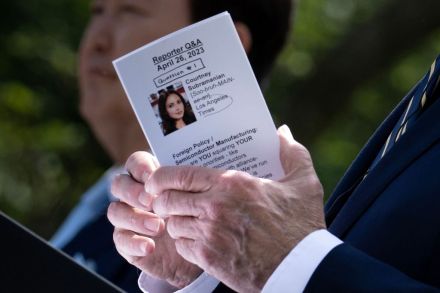
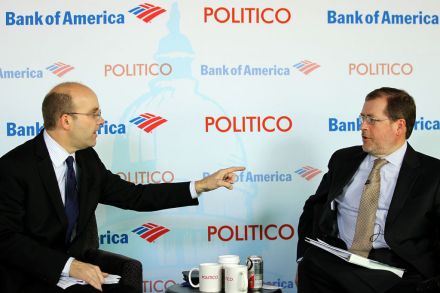
Imagine one day you walk into your local watering hole and find out that all of your favorite bartenders have been hired away. In their place are new “cocktail specialists,” who are too busy flirting with one another to actually help customers. When they finally pour you a drink, they are awfully stingy with the booze. You briefly grieve over an overpriced vodka soda and then vow to never go back to that awful place. That’s more or less how I feel about Politico’s Playbook, the newsletter that was once the go-to morning read for Washingtonians. Reporters, lobbyists, government employees and politicians used to consume the daily newsletter before their first cup of coffee.

playbook

Jan Morris’s ‘national treasure’ status is misleading

From our UK edition

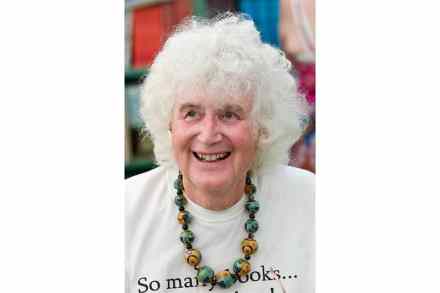
Almost two years after the death of Jan Morris, the jaunty travel writer and pioneer of modern gender transition, her first post-humous biography has arrived. (I follow Paul Clements in using the feminine pronoun throughout.) It is lively and well written, but it’s not the finished product. It lacks access to the private papers of its subject and her wife Elizabeth. That extra layer of insight into a fascinating but elusive personality must doubtless await the authorised life by Sara Wheeler. In the meantime, Clements deserves plaudits. He has worked his personal knowledge and existing sources well.

Wanted: an assistant online editor for The Spectator

From our UK edition

The Spectator is growing fast. In the last few years, our sales have doubled and are now over 100,000. Most of our readers now turn to our website regularly, some several times a day, for analysis of the day’s events. What started out as a blog has now become a seven-day live digital comment operation and we’re recruiting accordingly. We have come far with a three-person digital team. We’re now looking for a fourth, full-time assistant online editor (to work with us here in 22 Old Queen Street) and also experienced journalists who may be available for shift work, either in the office or remotely.

A.N. Wilson has many regrets

From our UK edition

‘Spare thou them, O God, which confess their faults.’ A.N. Wilson seems, on the surface, to have taken to heart the wise words of the Anglican general confession. Aged 71, he looks back on his life and career and records his regrets and failures both private and professional. His major concern is the failure of his marriage, at the age of 20, to Katherine Duncan-Jones, the Renaissance scholar. Katherine, ten years his senior, was a distinctive Oxford figure, recognisable by her sideways limp and for riding a wicker-basketed sit-up-and-beg bicycle. In later years they reconciled and met weekly for lunch. Wilson records Katherine’s sad, slow descent into dementia, which mimics that of one of his chief mentors, Iris Murdoch.

Taylor Lorenz is a crybully

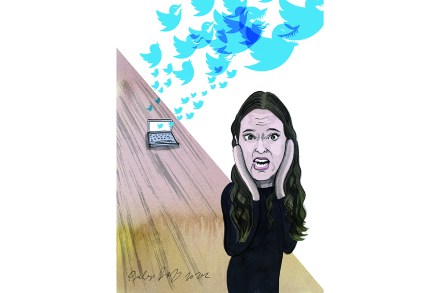
The Washington Post is one of America’s most revered news organizations. Once led by Katharine Graham, an era-defining media CEO, and edited by news legend Ben Bradlee, the Post is famous for the Watergate-era journalism of Bob Woodward and Carl Bernstein, which made it the nation’s political paper of record. Today, one of the Post’s most high-profile employees is an internet-culture reporter named Taylor Lorenz. Her involvement in numerous scandals involving reporting errors, frequent falsehoods, violations of journalistic norms and troubling online interactions call into question whether outlets like the Post can continue to function effectively as the Fourth Estate in the age of online clout-chasing and click-based news.

Lorenz

Do ‘ordinary Russians’ support the war?

From our UK edition

There was a whiteboard in the BBC Baghdad bureau for noting down phrases we hoped to ban from the airwaves. It had nothing to do with political correctness or self-censorship. This was all about self-improvement. The list of words was titled ‘Not Martha Gellhorn’, in honour of the veteran war reporter who wrote so well – especially when compared with us. We were perfectly aware of our shortcomings, though, and strove to do better, with the whiteboard serving as an aide memoire. It helped keep the prose fresh when deadlines were hectic, and when the temptation was to reach for the cliché closest to hand.

The price of courage: On Java Road, by Lawrence Osborne, reviewed

From our UK edition

Lawrence Osborne’s novels are easy to admire. They tend to deal with characters trapped in morally questionable situations and their backdrops, from Macau to Greece, are often glamorous and exotic. Like any British novelist who deals with morality in foreign places, he gets compared with Graham Greene, but On Java Road, his sixth novel, owes much to Patricia Highsmith too. At its heart is a crime – the disappearance of a young woman in contemporary Hong Kong – but this, as much as anything, is a structural device on which to hang an examination of moral courage. What, Osborne asks, is required to protect democracy when doing so comes with great risk?

Elon Musk let me back on Twitter

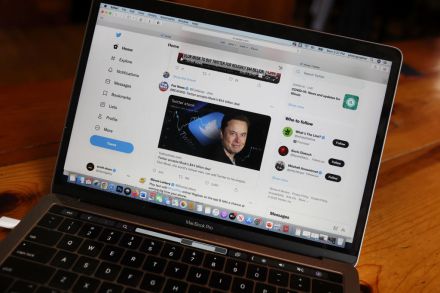
After an almost four-year lifetime suspension, Elon Musk let me back on Twitter, with a new account, @PeterMVanBuren. I could again read the "takes" of people smart enough to have a Blue Check (I do not) including those whose points of view I usually don't share. Here is what I've learned. Progressives are insane. They have lost their minds. They are certain every event which they do not personally support is the End of Times. I started back on Twitter the week after Justice Alito's draft opinion overthrowing Roe was leaked, and right away was blasted by Blue Anon stuff like "The Supreme Court is a Tool of Tyrants" and "Time for Canada to Offer Gender Asylum to American Women.

Fascinating exhibitions – clunky editorialising: Breaking the News at the British Library reviewed

From our UK edition

In The Spectator office’s toilets there are framed front covers of the events that didn’t happen: Corbyn beats Boris; ‘Here’s Hillary’; Jeremy Hunt wins the Tory leadership contest. The British Library has something similar at its Breaking the News exhibition. The difference is that these ones actually made it to the newsstand. It’s enough to make any passing journalist break into a sweat. ‘Titanic sinks, no lives lost’, reported the Westminster Gazette in April 1912; ‘King Louis XVI dodges the guillotine’, we are told in the 1793 issue of the London Packet. The Sunday Times’s 1983 Hitler diaries hoax appears in this hall of infamy.

In praise of amateurs

From our UK edition

Two weeks ago in St Moritz I ran into both Nicolas Niarchos and Nikolai von Bismarck, two talented young men and Old Harrovians whose parents are friends of mine. This week I was proud to read the former’s byline and to see the latter’s pictures from the warzone in Ukraine. Good on them, the Fourth Estate could do with talented amateurs rather than world-weary pros. But don’t get me wrong. By amateurs I mean those who write and photograph for the love of their craft, not because it’s their job. I’ve always insisted that the amateur is superior to the pro because he or she glories in the execution of a stroke, a swing, an athletic contest or an artistic endeavour. The pro calculates the odds, whereas the amateur goes for glory. Ditto in wartime reporting.

The reporter who covered up the Ukrainian famine

Now would seem to be an excellent time for the Pulitzer Committee to withdraw the award it bestowed on Walter Duranty in 1932 for his reporting on events in the Soviet Union. I know I am far from the first to call on the Pulitzer Committee to withdraw the award. I know as well that the Pulitzer Committee responded to one such call in 2003 by declaring that it could find no “clear and convincing evidence of deliberate deception” in Duranty’s 1931 reports from the Soviet Union published in the New York Times in 1931. Those thirteen reports on which the original award was based, admits the Pulitzer statement, amount to work that “measured by today's standards for foreign reporting, falls seriously short.” And time has moved on, etc., etc.

walter duranty

Mexico is no country for journalists

From our UK edition

I’m writing this on my last day in Mexico City, having accompanied my 18-year-old daughter here for the first week of a six-month stay. She’s hoping to become fluent in Spanish before embarking on a degree in languages in September. My mission was to help her find a flat in a nice part of town and a job so she can support herself, and between us we just about managed it, thanks to the help of the local expat community. Mexico City reminded me of being in New York in the mid-1990s, where being British and having the modern-day equivalent of letters of introduction meant an entire social network opened up before you.

Why we still need the BBC

From our UK edition

My first posting as a BBC foreign correspondent was Belgrade in the mid-1990s. Serbia was led by Slobodan Milosevic, practically the only Communist ruler in eastern Europe not to have been overthrown. He survived by reinventing himself as a nationalist, though he kept the Communists’ secret police. Our secretary was accosted one day by a couple of them, nasty-looking thugs in black leather jackets. ‘State Security,’ said one, pushing her into a doorway. They wanted her to inform on me. If she didn’t, they would see to it that her elderly father stopped getting his pension. She told them to get lost, a brave thing to do. To Serbian State Security, I had to be a spy, or at least on the UK government payroll.

What Chris Wallace does next

Chris Wallace stunned the world of news media this weekend by announcing his resignation from Fox News and its staple show, Fox News Sunday. What he did next shocked some further and didn’t surprise others at all: he joined CNN+, a new streaming service coming next year from Jeff Zucker’s dramatic infotainment network. The move is hardly a bombshell given Wallace’s recent run-ins with the MAGA faithful, both on and off the network. It comes on the heels of a contentious election where Wallace lost control in the first presidential debate. Some see Wallace’s departure as an indictment of the direction in which Fox News is heading editorially.

chris wallace

Anthony Holden is nostalgic for journalism’s good old bad old days

From our UK edition

After a career spanning 50 years, 40 books and about a million parties, Anthony Holden has written a memoir. Based on a True Story is bookended by touching accounts of his childhood and old age. Born in 1947, Holden grew up in Southport. His adored grandfather, Ivan Sharpe, played football for England, winning gold at the 1912 Olympics. In later life he was a sports writer, and would take the young Holden to the press box at Liverpool or Everton, tasking him with noting down the game’s statistics. Holden dates his journalistic ambitions to the early thrill of ‘seeing my numbers in print in the very next day’s edition of the Sunday Times’. In 2017, Holden suffered a stroke that left him wheelchair-bound.

Netflix’s Chappelle of hate

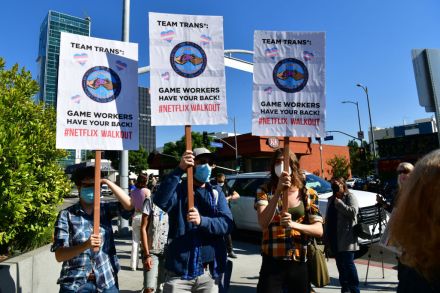
The difference between what I call accuracy and right-side norms within newsrooms is simple. Accuracy norms require journalists to get to the truth. Right-side norms require journalists to prove they’re on the “right” side of controversies. If this includes obscuring or spinning certain facts, so be it. For reasons ranging from politicization to the gutting of smaller and traditional outlets, most American journalism now adheres to right-side norms. Consider the Dave Chappelle controversy. If you don’t yet have an opinion about the jokes Chappelle makes about transgender people in his Netflix special, The Closer, watch it to get them in full context. There’s been enough bloviating about the jokes themselves.

Netflix
lévy

What Bernard-Henri Lévy sees for the West

I meet Bernard-Henri Lévy at his apartment in central Paris on a chilly autumn afternoon. Considerations of security prohibit me from revealing its location. A French Jew who is a public and vocal enemy of both Islamism and some of the world’s worst regimes, Lévy is both perhaps the most important public intellectual in Europe, and a man with enemies. I have come to ask him about the future of the West — if, that is, he feels there will be one. Lévy, internationally known by his initials BHL, is a philosopher who has been at the heart of French — and international — society for half a century. But he remains an idiosyncratic figure.

Exclusive: the New York Times stole my story

Question: When is a New York Times exclusive not a New York Times exclusive? Answer: On Sunday, when America’s paper of record stole my scoop. It sounds bizarre, but it’s true. Last February, I revealed top-secret details of the killing of the Iranian nuclear scientist Mohsen Fakhrizadeh in the pages of London’s Jewish Chronicle, the world’s oldest Jewish newspaper. Among the revelations — given to me by impeccable sources that I know well — were that the top Tehran official had been killed by Mossad using a remote-controlled gun that weighed one ton and had been smuggled into Iran piece by piece over several months.

new york times

The stories that are too good to check

From our UK edition

Last weekend, Rolling Stone ran a story about an interview an emergency room doctor had given to a local news station in which, according to the TV reporter, he’d said hospitals in his state were so swamped with patients who’d overdosed on ivermectin that gunshot victims were struggling to be seen. For context, ivermectin is an anti-parasitic drug used for deworming horses that has been touted by vaccine sceptics as an effective prophylactic against Covid-19. For boosters of the Covid vaccines, this story was manna from heaven. Here were a bunch of hicks so dumb they were stuffing themselves with horse pills rather than getting jabbed, with predictably disastrous results. There was only one problem — it wasn’t true.

Journalism’s class problem has gotten worse

It’s very unlikely that I’d be a reasonably successful journalist today if I hadn’t come from an upper-middle-class family. Fresh out of college, I got a series of non- or low-paying internships. It wasn’t until spring of the following year that I found a staff position with benefits (and a salary of $33,000, which at the time seemed like plenty to live on). Because my parents provided financial support and because I had no debt, I was able to gain the experience and connections that helped launch my career. Somewhere, surely, there is a 37-year-old who is very similar to me and who wanted to be a journalist, but who is now doing something else because it just wasn’t feasible, financially.

class