John ruskin

The art of flowers

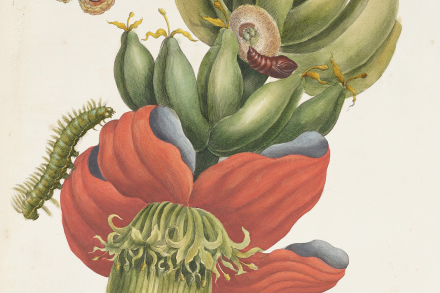
Multi-sensory exhibitions are old hat, but in the case of In Bloom – How Plants Changed Our World at Oxford’s Ashmolean Museum, it feels just right to sit in a space given over to flowers with the sound of gurgling water in the background, mingled with the cries and chirrups of birds. At intervals there are scent stations where you can smell damask rose or green and black tea from flower-shaped chalices. From the ceiling hang swathes of green muslin. I could have stayed here all afternoon. Right in front of me were also two delicious studies of tulips to illustrate the Dutch craze of the 1630s. Frankly, if it came to a choice of two-tone tulips or Bitcoin as a way of squandering money, I know which I’d prefer.

Me, myself and the i

Misuse of myself "should be a capital offence," suggests Oliver Duff, the editor of the i Paper. "As reflexive pronouns, myself and yourself require a prior subject (I, you)," he says. I applaud the prospect of a general massacre of abusers of the English language, but by Mr. Duff’s criterion, Shakespeare and Richardson, Ruskin and the great lexicographer Samuel Johnson himself should have been slaughtered. Historically, myself began not as a reflexive pronoun but as an emphatic, and as an emphatic it is often still used. Other constructions allow it too. In a letter in 1782, Johnson wrote that "both Williams, and Desmoulins and myself are very sickly." There it is used as part of a compound subject.

myself

The notorious feud between John Ruskin and James Whistler

From our US edition

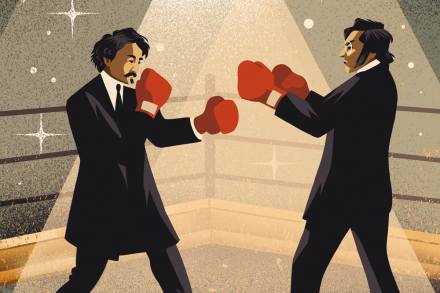
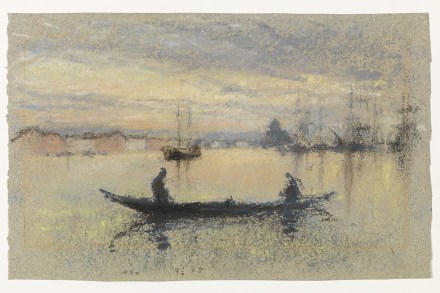
It was too dark to see, and the painting was upside down. In 1877 John Ruskin, the leading art critic of Victorian England, attended an exhibition that included paintings by the American-born artist James Abbott McNeill Whistler. He hated them — and said so. In print. “I have seen, and heard, much of Cockney impudence before now; but never expected to hear a coxcomb ask two hundred guineas for flinging a pot of paint in the public’s face.” Whistler sued. The following year the argument came to court, on a dark day in a gloomy and gaslit courtroom. The canvases that Ruskin had so disliked were propped up against a wall and barely visible; one was the wrong way up, and another was dropped unceremoniously onto an elderly gentleman’s balding head.

ruskin

The splendour and squalor of Venice

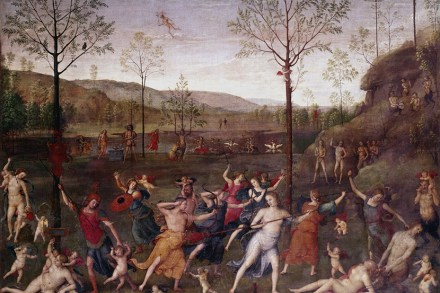
Hard by the Rialto, in a densely packed and depressingly tacky quarter of Venice, the church of San Giovanni Cristosomo houses one of Giovanni Bellini’s most luminous and exquisite paintings. ‘I Santi Cristoforo, Girolamo e Ludovico di Tolosa’ is known to locals as ‘the Burger King Bellini’, after the fast food outlet opposite the church door. In any other city, the picture’s exquisite handling of light and complex mingling of Christian piety with Renaissance Neo-platonism would grant it a museum of its own, but in Venice its principal spectators are weary tourists in line for a Whopper. Martin Gayford’s paean to Venice as ‘a huge, three-dimensional repository of memory’ is constantly alert to such anomalies.

In praise of chastity

New York It’s party time in the Bagel, or at least private party time. Yours truly is an extra man nowadays as my wife and I have been separated by pandemic restrictions for six months. Alexandra is in London, quarantining after visiting two little blond things in Austria for my fourth grandchild Theodora’s first birthday. I am doing dinner parties non-stop in the Bagel, as if I were a gaywalker back in the 1970s. Actually, I’ve been seeing a lot of old friends who have thrown dinners for Lita and George Livanos. We have mostly been the same crowd, as New York society types have gone the way of wooden sailing boats and tennis players wearing all whites.