Jews

Heavy-handed satire and schmaltz: American Pickle reviewed

American Pickle is a comedy based on a short story by Simon Rich, originally published in the New Yorker, and I was sold on the synopsis alone: ‘An eastern European Jew falls into a vat of pickles and is brined for 100 years before emerging in modern-day Brooklyn.’ It’ll be a fish-out-of-water film like Crocodile Dundee, I thought. But more Jewish. And it felt like I’d been waiting all my life for a film like Crocodile Dundee, but more Jewish. In fact, where have the more Jewish versions of Crocodile Dundee been until now? You think: an entire factory left un-redeveloped for 100 years? It’s prime real estate, isn’t it?

For Jews in Occupied France, survival was a matter of luck

Late in his life, I asked my uncle René about his exploits in wartime France. What I knew was that my family left Paris in 1940, around the time a great-uncle was shot dead in the street by a German army officer. They headed south to the Mediterranean, where my two uncles organised a network of safe homes for fugitives to lie low in until they could be smuggled out. When I asked for details, René clammed up. ‘Those were terrible times,’ he muttered, ‘not worth remembering.’ The Guardian writer Hadley Freeman was more successful in tracing her uncles’ activities in France, set off on her trail by a shoebox

The shame of Labour's liberal supporters

There are many reasons why I am suspicious of the Conservatives’ current lead in the polls. The Tories may have peaked too soon. Labour voters flirting with the Liberal Democrats could return the more they see of Jo Swinson. Many Conservative target seats, while Brexity, have voted Labour since there was a Labour Party to vote for. Landlines still dominate over mobile phones in the sampling methodologies of some pollsters, under-reflecting younger and poorer voters. Labour supporters and Remainers are more likely to turn out than Tories and Brexiteers and a million more voters have joined the roll than did prior to the last election, which just reeks of young

‘Utterly betrayed’: Britain’s Jews are now politically homeless

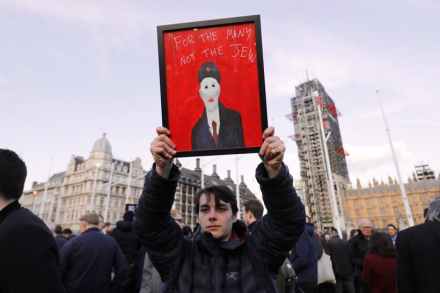
We Jews have evolved to be neurotic; so neurotic that, in certain circumstances, the Syrian border feels slightly safer than Muswell Hill. I’ll take Muswell Hill. Polls say that only 7 per cent of British Jews will consider voting for Labour on 12 December, while 47 per cent of British Jews will consider leaving the country if Labour win. I’d rather fight Dave (generic name) from the Labour Representation Committee than Dave from Hezbollah (likewise generic). But I shouldn’t joke; and nothing feels funny any more. Things are always OK until they aren’t. Jews have fled Labour since Ed Miliband’s time. In 2010 we were split quite evenly between Labour

Do Jews think differently?

Sixteen years into a stop-go production saga, I got a call from the director of The Song of Names with a suggested script change. What, said François Girard, if one of the two protagonists was perhaps, er, not Jewish? My reply cannot be repeated. I was, for a minute or so, completely speechless. My novel, winner of a 2002 Whitbread Award, is the story of two boys bonding in wartime London. One is a refugee violinist from Poland, the other a middle-class kid of average abilities. ‘I am genius,’ says Dovidl to Martin. ‘You are — a bit everything.’ Beyond bomb sites, their friendship is rooted in a common heritage.

Why did the Soviets not want us to know about the pianist Maria Grinberg?

Only four women pianists have recorded complete cycles of the Beethoven piano sonatas: Maria Grinberg, Annie Fischer, H. J. Lim and Mari Kodama. I’ve written before about the chain-smoking ‘Ashtray Annie’ Fischer: she was a true poet of the piano and her Beethoven sonatas are remarkably penetrating — as, alas, is the sound of her beaten-up Bösendorfer. Lim produced her cycle in a hurry when she was just 24; it’s engaging but breathless. Kodama’s set, just completed, is a bit polite. Which leaves Maria Grinberg (1908–78), whose recordings remain just where the Soviet authorities wanted them. In obscurity. That is shameful — and not because she was the first woman

The probe into Labour's anti-Semitism gives hope to Britain's Jews

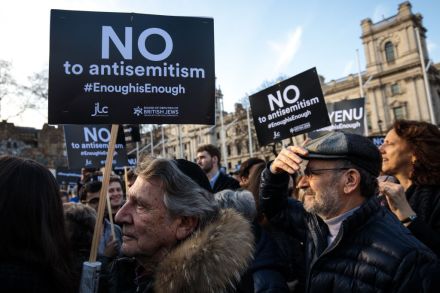
The Equality and Human Rights Commission’s announcement last week that it is to formally investigate Labour over anti-Jewish racism is an hour of great shame for the party. It is also, finally, a moment of hope for British Jews. The public body set up, with chilling irony by the party it is now to probe, has seen evidence of the institutional anti-Semitism that Jews have been making complaints about for four long years and decided that it is credible enough to investigate. Its decision makes Labour only the second political party in British history to face a formal racism inquiry. The first? The British National Party.  Finally Britain’s Jews are feeling as though

Disappointed of north London

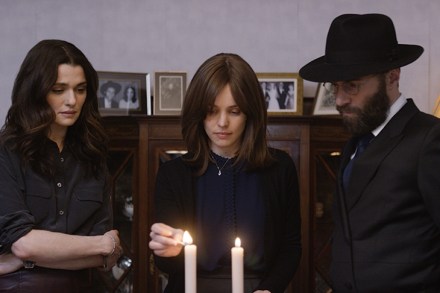
Disobedience is an adaptation of Naomi Alderman’s novel about forbidden, lesbian love in orthodox Jewish north London, starring Rachel Weisz and Rachel McAdams and I so wanted to root for the film and its characters. Go for it, women! Smash the patriarchy that says you must always be the object of sexual desire and never the subject! I’ll put you up, if needs be. I have a spare bedroom and it’s all yours! But while this should be a searing, Brokeback Mountain-style drama about love, longing and repression it just plods along, often clumsily. I didn’t root or not root as in the end it was impossible to much care.

Cries and whispers | 15 June 2017

There’s a moment in A Boy in Winter where a young Ukrainian policeman has to escort his town’s Jewish population to a churned-up field under the watchful eyes of his new Nazi masters. It’s November 1941 and Mykola has been told that all he has to do is relieve the Jews of their luggage and move them along. He assumes that they know what’s coming to them. In his mind, the Germans are ‘bastards’ but no worse than his former Soviet occupiers, who burned his family’s fields and grain stores as they fled eastwards. So Mykola has deserted the Red Army and joined the auxiliary police under the Germans, the

About a boy | 17 November 2016

Indignation is an adaptation of Philip Roth’s 2008 novel and amazingly, for an adaptation of a Philip Roth novel — see the recent dog’s dinner that was American Pastoral, for example — it may even be worth two hours of your time. (Depending on what you would otherwise be doing with that time; I wouldn’t wish for you to cancel that hip operation or similar.) It stars Logan Lerman as Marcus Messner, a 19-year-old Jewish boy from Newark who, in 1951, escapes the Korean war and the over-anxious clutches of his parents by winning a scholarship to a college in Ohio. Marcus, at the outset, is a good Jewish boy

The troubling truth is that anti-Semitism in Britain is alive and well

Growing up as a Jew in England, I’ve always felt proud of my heritage. The ugly spectre of anti-Semitism seemed a thing of the past – and it felt safe to share my faith and ancestry with the world. But not any longer. It’s not difficult to see why. In the first half of 2016, there was an 11 per cent spike in the number of anti-Semitic incidents. Britain might still be one of the safest places in the world to be a Jew, but Jews here are increasingly becoming a target. Last year saw the third-highest annual total of anti-Semitic hate incidents in the UK ever recorded. The same

Thinking of Israel

‘Here is a story from the winter days of the end of 1959 and the beginning of 1960,’ announces the opening sentence of Amos Oz’s challenging, complex and strangely compelling new novel. The story itself is easily summarised. At its centre is Shmuel Ash, a rather woebegone young man who abandons his university studies in Jerusalem when his girlfriend leaves him and his father withdraws his financial support. At a loss for what to do next, Shmuel takes up a job which requires him to live in a rickety, isolated house surrounded by an air of almost hermetic secrecy; and to provide tea, company and, most crucially, conversation for an

Strangers in their native land

Though it seems to begin as an affectionate memorial to his maternal grandparents, a testimonial to a rare and perfectly happy marriage, Their Promised Land by Ian Buruma has a deeper purpose. The cache of letters to and from Winifred (‘Win’) and Bernard (‘Bun’) Schlesinger is the pre-email, daily correspondence of two people who could not bear to be apart, yet were separated for years at a time by both world wars. Although his grandparents died in 1984 and 1986, this artful volume reveals a good deal about the world we live in today. Born and brought up in posh Hampstead comfort, with plenty of servants, before moving to a

Why are children in Guernsey extolling Islam to their parents?

I have never been to the island of Guernsey. This is a large world and we have a finite amount of time on it and must make our decisions about where we visit based on necessarily limited information. We cannot know everything. I have never been to Japan, for example, because I do not wish to be crushed to death by a mass of jabbering humanity, nor take part in unpleasant sadomasochistic sex acts, nor watch people disembowelling themselves in order to affirm their masculinity. I realise that this is not all that Japan has to offer. There is also sushi, for example, and buttock-clenched politeness. I could get both

No end to the Final Solution

David Cesarani, Research Professor of History at Royal Holloway University of London, died at the age of 58 on 25 October 2015. The book now appears without its author, a kind of huge mausoleum for an astonishing enterprise. Cesarani wants to change our view of the Holocaust and to close the yawning gap between popular understanding of this history and current scholarship on the subject… to challenge the traditional concepts and periodisations … the term itself. He substitutes the ‘Final Solution’ for the Holocaust, but that Nazi term has become an alternative name for the Holocaust, which remains after 900 pages entirely unchallenged. The first 235 pages take the persecution

If you believe the internet, I was the Israeli army’s answer to Jason Bourne

One of the strangest and, in a weird way, best things to have happened to me in the past year was the emergence of a firm conviction among a quite large collection of internet weirdos that I spent my youth fighting for an elite unit of the Israeli army. It started after a boozy pre-Christmas lunch almost exactly a year ago, when a woman tweeted me. I vaguely recalled that she had tweeted me before, probably about Jews or bankers or Palestine or Dolphin Square or Jimmy Savile, all of which I get quite a lot and normally ignore. This time, though, she had a question. She wanted to know

Sins of the fathers | 19 November 2015

This is a documentary in which three men travel across Europe together, but they’re not pleasurably interrailing, even though there are often times they probably wished they were. For two of them, Niklas and Horst, the journey is about confronting their fathers, who were high-ranking Nazi officials responsible for the deaths of millions of Jews, while for the third, the eminent British human-rights lawyer Philippe Sands, it means visiting the place where his grandfather’s family was exterminated. This place, Galicia, which straddles the modern-day border between Poland and Ukraine, is the exact place my own grandmother’s family were murdered. Her father lost every one of his seven siblings. She lost

One événement after another

The great conundrum of French history is the French Revolution, or rather, the sequence of revolutions, coups and insurrections during which the nation was repeatedly destroyed and recreated. How is it that a heap of cobblestones, furniture and overturned vehicles — handcarts in 1848, 2CVs in 1968 — erected at particular points on the Left Bank of Paris can bring down a régime whose domain extends from the North Sea to the Mediterranean? As Baudelaire observed when Napoleon’s nephew conducted a coup d’état in 1851 and installed himself as supreme leader, it seemed that ‘absolutely anybody, simply by seizing control of the telegraph and the national printing works, can govern

‘It’s always wrong to starve’

‘My mother and father named me Aron, but my father said they should have named me What Have You Done, and my uncle told everyone they should have called me What Were You Thinking.’ So begins, with bitter Jewish humour, this involving book set largely in the Warsaw ghetto. There is a hint of unnerving pastiche in this, but it is a sentence that finds an echo in the compassionate words of Jim Shepard’s hero, Janusz Korczak, in the final sentence of the book. Korczak was a real figure, a paediatrician who ran an orphanage in Warsaw, moved with it into the ghetto and, despite being offered several chances of

The lives of others | 14 May 2015

‘I call Zelma Cacik who may be living in London,’ says the announcer, in the clipped RP accent of the BBC in the 1940s. ‘I call her on behalf of her 16-year-old cousin…’ The voice betrays no emotion, no feeling, it’s so matter-of-fact, but the script spares no punches as it tells the cousin’s story in blunt statements of fact. She was born in Poland, separated from her family when she was 12 and made to work in a munitions factory while her parents, her sisters and brother were sent to Treblinka extermination camp. Twelve names in all are called out on the archive radio programme from 1946, one of