Jews

The real reason the left hates Israel

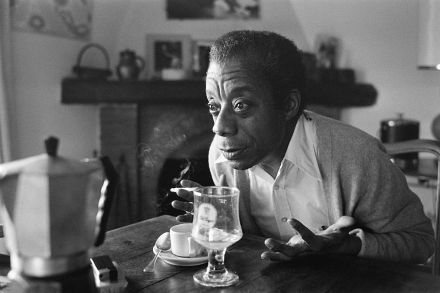
‘Listen to what the man on the left of the camera has to say about Israel, the man who is addressed as Nick,’ a radical Corbynista friend suggested to me the other day in a social media message designed to change my mind about the Middle East. It’s part of a sustained campaign on his part which dates back at least ten years and is usually conducted with good grace, if never accord. So I listened to what this chap Nick had to say, with growing hilarity. Not because of what he said – which was what you might expect from a rank anti-Semite, but because of who he was.

The world destroyed by madness: Howl, by Howard Jacobson, reviewed

Rarely has such a short title worked harder than Howl, which Howard Jacobson takes from Allen Ginsberg’s incantatory 1955 poem. ‘I saw the best minds of my generation destroyed by madness,’ Ginsberg wrote, a line that both prefaces Jacobson’s novel and sums up the author’s own angry anguish at the current madness in the corner of the Middle East that both Israelis and Palestinians call home. Make no mistake: Ginsberg’s poem puts the howl into Howard, who has written a characteristically crisp and deeply personal response to Hamas’s 7 October 2023 attack – the massacre in the Negev Desert. Jacobson’s proxy is Dr Ferdinand Drexler MBE, the novel’s acerbic first-person

Caught between Hitler and Bomber Command – the Berliners’ cruel predicament

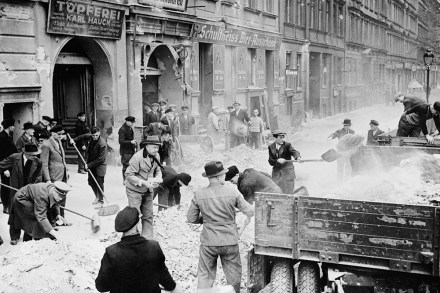
Can you be a true, thoroughgoing patriot and still want your country to lose in a war? It’s a dilemma that faced countless thoughtful people in the past century who lived under totalitarian regimes, and I know is torturing many Russians today. It’s the stark question at the centre of Ian Buruma’s subtly nuanced and beautifully written book about the lives of Berliners in the second world war as their city was being destroyed by a combination of aerial bombardment and the manic cruelty of their own leaders. Buruma follows disparate groups of Germans – some ardent Nazis, a very few silent dissidents, a small number of surviving Jews and

Am I a Zionist?

The death of Quentin Deranque is strangely under-reported here. He was a 23-year-old beaten up in Lyon on 12 February by supporters of the main party of the left, Jean-Luc Mélenchon’s France Insoumise (FI). He had been part of a group escorting what the BBC website calls ‘far-right feminists’, helping them protest against the visit to a university by a far-left politician. There was a fracas in the street with masked opponents connected with the Young Guard, a leftist FI-related group declared illegal last year. Deranque died of his injuries two days later. One of those arrested is a special adviser to an FI deputy. I noticed on the news

Why won’t the BBC use the word ‘Jews’?

I was intrigued to learn from the BBC Today programme on Tuesday that ‘buildings across the UK will be illuminated this evening to mark Holocaust Memorial Day, which commemorates the six million people murdered by the Nazi regime more than 80 years ago’. Who were these unfortunate ‘people’, I wondered? Just anyone at all? Was it a wholly indiscriminate spot of slaughter? I have some vague memory that it was one race in particular that was singled out for extermination, but the BBC dared not say their name. In fact, the sentence I quoted is wholly inaccurate: the ‘six million’ figure relates only to Jewish people. If you include the

From riches to rags: The Effingers, by Gabriele Tergit, reviewed

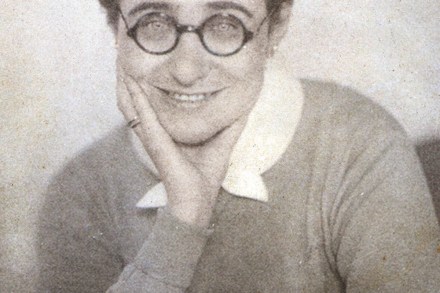
Sometimes the term ‘lost masterpiece’ proves to be little more than a publisher’s puff. At other times, however, a long-buried book that is dug up, dusted down and branded a classic is worthy of the accolade. That applies to Gabriele Tergit’s The Effingers. Originally published – and then promptly overlooked – in the author’s native Germany in 1951 and recently rediscovered and reappraised there, the novel, a vivid chronicle of German Jewish life over the course of 70 years, now appears in English for the first time. Opening in 1878, Tergit charts the progress of siblings Paul and Karl Effinger as they leave their provincial hometown in the south of

There was no escaping the Nazis – even in sleep

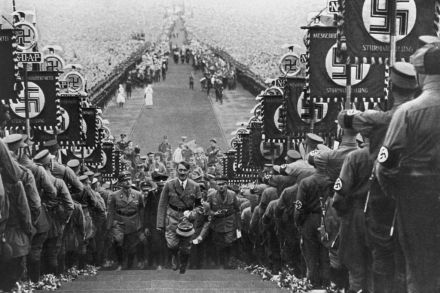
Soon after Hitler came to power in 1933, Charlotte Beradt, who as a Jewish journalist and a communist had been barred from publishing, found her sleep wracked by nightmares that unmistakably reenacted the terrors of the Nazi regime. Deprived of her regular employment, her own dream experiences prompted the subversive if dangerous idea of recording the dreams of her fellow citizens. ‘I began to collect the dreams that the Nazi dictatorship had, as it were, dictated,’ she wrote. Citing a dictum of a Nazi official that in Hitler’s Germany no one has a private life except while asleep, the material she collected demonstrated how dreams ‘as minutely as a seismograph’

The world is now inexorably divided – and the West must fight to survive

In The Builder’s Stone, Melanie Phillips reminds us forcefully that we must never forget how 7 October 2023 changed the world. On that day Hamas terrorists from Gaza invaded southern Israel and brutally raped women and butchered or burned alive 1,100 Jewish men, women and children. They also dragged 250 Israelis, including three-year-old twins, grandparents and young women whom they had already attacked, into Gaza as hostages. They filmed it all on their body cameras, and perhaps the most terrifying thing they recorded was the glee with which they carried out these atrocities. Phillips, a British writer who lives in Jerusalem and London, has spent many decades fighting Goliaths. Like

A helpful suggestion for Taylor Swift’s boyfriends

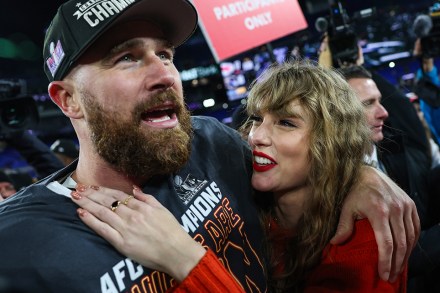
Sir Mark Rowley should not resign. We must try to break our habit of getting rid of each Metropolitan Police Commissioner before his/her term is complete. He has done nothing iniquitous or seriously incompetent. He is, however, systematically wrong about the right to protest, elevating it over the much more important right of the general public to own the streets. His parlaying with self-appointed Muslim community leaders privileges them. The weekly Gaza marches in London are effectively mobile no-go areas. This was confirmed by the altercation between Gideon Falter and the police sergeant who told him he was ‘openly Jewish’. It was true that Mr Falter had willed such an

How depressing when people over-identify with their ethnicity

I am a Jew. I live in a council estate in London where considerably more than half of my neighbours are Muslims. These people aren’t my friends, but we get along fine: I pick up their parcels; we coordinate complaints to the council about the strange, blue-tinged fluid that sometimes drips from everyone’s ceilings, as if someone in the penthouse had decided to fill their flat with jelly. Elsewhere, our distant cousins are doing terrible things to each other. It’s increasingly hard to imagine a world in which these distant cousins can live together, intermingled but mostly minding their own business – but that’s exactly what we do every day

The dirty war of Sefton Delmer

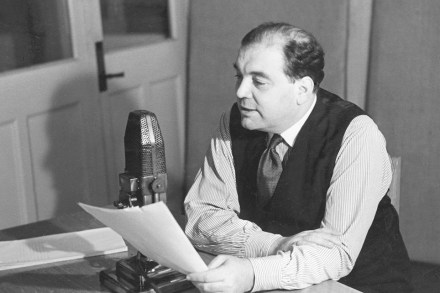
There is an obvious problem with trying to judge who ‘won’ a propaganda war. Unlike its physical counterpart, there is virtually no real-world evidence either way, and everyone involved has spent years learning how to spin, manipulate and outright lie about reality to try to shape it into what they want. As a result, it remains the conventional wisdom – among those who think of such things, at least – that despite their eventual and total defeat in the second world war, it was the Nazis who won the propaganda war of their era. Fake letters from dead German soldiers to their parents reported thatthey had survived, deserted and were

Prejudice in Pennsylvania: The Heaven & Earth Grocery Store, by James McBride, reviewed

If chicken soup is balm for the soul, then James McBride’s eighth book, set in 1930s Chicken Hill, a neighbourhood in a small town in Pennsylvania that is home to Jewish, black and other immigrant people, is its literary equivalent. There is something nourishing about The Heaven & Earth Grocery Store, a warm story about the power of community in the face of prejudice that both salutes the American dream while exposing it as a sham. Like much of McBride’s previous work, which includes four other novels, a biography of James Brown and his 1996 memoir, A Black Man’s Tribute to His White Mother, about his Jewish mother, Ruth, The

Why are so many young people anti-Semitic?

The surest way to work up a crusade in favour of some good cause is to promise people they will have a chance of maltreating someone. To be able to destroy with good conscience, to be able to behave badly and call your bad behaviour ‘righteous indignation’ – this is the height of psychological luxury, the most delicious of moral treats. Aldous Huxley, Crome Yellow Anti-Semitism ­– the socialism of fools – is a shapeshifter supreme. The oldest hatred has taken many forms, and is enjoyed by Christians and Muslims, communists and fascists alike. Now it can add another string to its bow. Anti-Semitism has become deeply fashionable. You might

The faked passports which saved countless lives in the second world war

In the summer of 1942, the Polish poet Władysław Szlengel made a detour into light verse with ‘The Passports’: ‘I would like to have a Uruguayan passport/ Oh, what a beautiful land it is/ How nice it must feel to be the subject/ Of the land called Uruguay…’ Successive quatrains hymned the joys of Paraguayan, Costa Rican, Bolivian and Honduran citizenship before the final stanza declared that it was only with one of these citizenships that ‘one can live peacefully in Warsaw’.  The joke was serious. Szlengel was a Jewish man living in the Warsaw ghetto; and as Roger Moorhouse’s absorbing new book describes, Latin American passports were, or could

The Anne Frank story continues

The first time a friend told me that Hitler had the right idea about the Jews I was six. Most of my classmates agreed, and quoted their parents in evidence – from which I conclude that anyone who suggests that they don’t understand how the Holocaust happened is either a fool or a liar. It was a team effort by popular demand. If the Germans had won the war, no one would have felt bad about it. But the Germans lost. How awkward. Anne was freezing, starving and dressed in rags. ‘They took my hair,’ she said. Then she disappeared It became necessary to convince non-Jewish Europeans that mass-murdering Jewish

The Osnabrück witch trials echo down the centuries

Absent mothers resonate in the latest offerings from two heavyweights of French literature. Getting Lost is the diary kept by the prize-winning novelist Annie Ernaux while she was having an affair with a married man in 1989. Ernaux has already written a novel about this relationship. Now we have a more immediate and intimate account. Meanwhile, the octogenarian feminist and literary theorist Hélène Cixous continues her own brand of écriture féminine in Well-Kept Ruins. For the uninitiated, Cixous’s stream of consciousness is like reading Molly Bloom with a PhD from the Sorbonne, a raft of awards and a keen eye for cognitive dissonance. Cixous’s new book hinges on her arrival

Is T.S. Eliot’s great aura fading?

For much of his life T.S. Eliot was surrounded by an aura of greatness: people accepted it, and behaved accordingly. That kind of consensus is not helpful for a writer or his works, as Eliot himself clearly saw, observing that nobody had ever written anything significant after winning the Nobel Prize for Literature – true at the time and mostly true since. His work is now in the position of Hamlet when he wrote a famous essay on the play: that the universal agreement of its greatness had hidden an understanding of its failures, its strangeness and what it couldn’t do. We take the greatness of Eliot’s poetry pretty much

Why Jews don’t count to the ‘anti-racists’

Suppose you explain to someone spouting racist, sexist, or otherwise discriminatory ideas that they are prejudiced. You may begin by giving them the benefit of the doubt. You tell them you are sure they do not realise how badly they are behaving. You assume they are decent people at heart who have merely made a mistake they will be more than happy to rectify once you set it out. Then you attempt to enlighten them. You tell them why they are prejudiced and why their prejudices lead to hatred and death. You tell them repeatedly, again and again, until your arguments become so familiar you can mouth them in your

The journalists who scripted the golden age of Hollywood

When talkies appeared in 1927, Hollywood went searching for talkers to write them. It turned to men like Herman J. Mankiewicz: to journalists. The greatest screenwriters of the golden age were journalists first; unlike novelists, they thrived in Hollywood — at least professionally. Good films and good journalism need brevity; novels don’t. Reading about F. Scott Fitzgerald struggling at MGM, 12 years after The Great Gatsby, is brutal, like trying to watch a man learn to walk. The film Mank, by David Fincher, tells the story of how Mankiewicz and Orson Welles created Citizen Kane — for which they shared an Oscar for the screenplay in 1942 — and how

Enjoyable but hardly classic Alan Bennett: The Outside Dog & The Hand of God reviewed

The season of Alan Bennett’s Talking Heads continues at the Bridge. In The Hand of God we meet Celia, a posh antiques dealer, who befriends old maids in the hope of acquiring their valuables cheaply. Like everyone in her trade she uses play-acting and mind games to give her the advantage while haggling. If her enemy falters, she pounces. A man visits her shop and becomes visibly excited by a framed drawing which Celia hoped to flog for £30. Spotting his eagerness, she trebles the price. He pays up and hurries out. Later she learns that the drawing was by an old master whose style she failed to recognise. Millions