Japan

People need to calm down about Nigel Farage’s bitcoin wheeze

There’s a Tube strike in the old-fashioned style as I write – and you’ll understand the irritation, mine and that of restaurateurs across London, when I add that I’ve just cancelled a table at Noble Rot in Greek Street because my companion can’t face struggling into town. The loss of trade on these days, of which more are planned for May and June, is immeasurably damaging for an already fragile urban economy. More irritating still is the fact that behind the disruption is disharmony between unions: RMT members, just under half the driver workforce, are striking against Transport for London’s proposal of a four-day week (plus extra days off in

Two Tokyo misfits: Hooked, by Asako Yuzuki, reviewed

Following the enormous success of Butter’s English translation in 2024, it seemed inevitable that another of Asako Yuzuki’s novels would surface in the UK. Nairu pachi no joshikai (The Nile Perch Women’s Club), published in 2014, has now become Hooked. Billed as a literary thriller about female friendship, loneliness and obsession, it is a deeply strange, unsettling read. The novel follows Eriko, a high-flying project manager, and Shoko, a slacker housewife blogger, who both struggle with life – or, rather, with the behaviour expected of Japanese women. Both have achieved a level of acceptance socially (Eriko in her career, Shoko in her relationship), but they find the pursuit of ‘gal

Japan’s fascination with Andrew Mountbatten-Windsor

The Japanese are fascinated by the scandal concerning the aristocrat formerly known as Prince Andrew. The main themes resonate powerfully. The concepts of duty, shame and being a burden to one’s family are deeply woven into Japanese culture and so embedded in the language that it is hard to express yourself without touching on them. There are at least four expressions for ‘black sheep of the family’ in Japanese and one of the very first kanji I learned was for the word ‘muru-hachibu’ (eight against one) which means ‘sent to Coventry’ (shouldn’t that be Norfolk now?).   There might also be a sense of ‘there but for the grace of god’ relief for the Japanese in watching a fellow constitutional monarchy floundering. It reminds them how unlikely a scandal of that nature and magnitude would be in their 2,000-year-old monarchy. For 80 years on from a point when the

Nintendo and the plumber who conquered the world

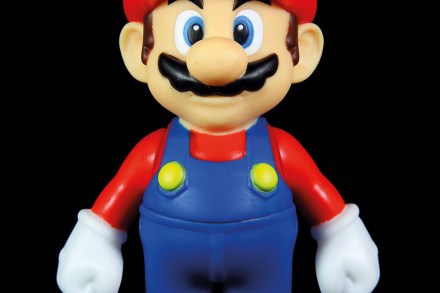
It’s not more than a parlour game, perhaps, to speculate about history’s most crucial inventions. One invention often makes the next possible. Electric light revolutionised human productivity, allowing us to work well beyond sundown. The combustion engine and later the turbine engine collapsed our sense of distance, putting other continents within a day’s travel. We’re still debating what the internet’s done; how social media offers the double-edged sword of instant communication and addressability for good and ill; how it encourages the avatarisation of ourselves as online presences. We’re both ourselves online and not quite ourselves, entirely embodied and yet psychically elsewhere. But then again, we’ve always experienced this on some

The new freakish shopping trend

On the fourth floor of Selfridges, in London, is the children’s toy department. Most of the vast space is given over to soft toys – mounds of synthetic fur, thousands of little beady eyes – and when I visited last Saturday afternoon the customers were almost all adults. I spent two hours there, standing by a tower of little Paddington bears, watching the shoppers in the queue for the till, and it was eye-opening. Almost no one was buying for a child. I saw two Chinese women with white toy lambs, a 17-year-old boy with a dragon, what looked like drug dealers queuing for Pokémon cards, and a genuinely troubling

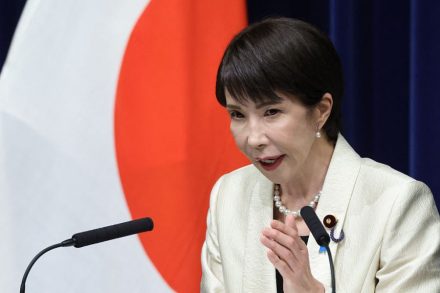
Japan’s female leader is a bright beacon, but do her sums add up?

My scepticism towards soaring markets with unconvincing fundamentals was nurtured by working in Tokyo in the mid-1980s, when the Nikkei index took off like a rocket. Shamelessly boosted by traders and analysts alike, share prices rose to absurd heights before crashing in the early 1990s and taking with them any notion of Japan as the next great economic power. The Nikkei took 34 years to regain its 1989 peak of 38,916. Since passing that benchmark, the index has roared upwards again – despite Japan’s chronic problems of stagnant growth, ballooning public debt, sclerotic corporate leadership, expensively ageing population and fears of inflation. This week the Nikkei broke through 57,000 in

The strange economics of Japan’s all-you-can-drink pubs

Imagine going into an English pub and slapping a tenner down on the bar. ‘All I can drink, please,’ you say. ‘Certainly sir,’ says the barman. ‘You’ve got two hours.’ ‘Right then,’ you say. ‘I’ll start with a pint.’ Ten minutes later: ‘Whisky, please, no ice.’ Shortly afterwards: ‘I think I’ll have a Bloody Mary.’ Then: ‘Pint of that there. The green one. Please.’ Shortly afterwards. ‘Large white wine.’ And so the night wears on. You can have absolutely anything you like: cocktails, double G&Ts, rum and coke, Jack Daniels and Jack Daniels. Two hours is enough to render you senseless. You have drunk the equivalent of £100 of booze

Japan, the land of the rising wine industry

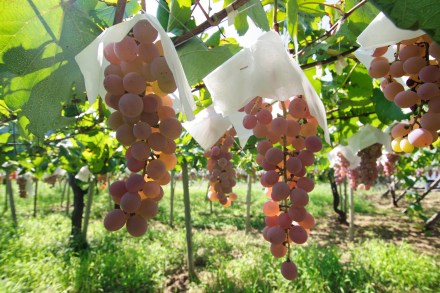
Travel to Hokkaido, Japan’s northernmost island, and I imagine one of the last things you’d expect to find is a Frenchman making wine. But tucked away in Hakodate, Etienne de Montille, a ninth-generation winemaker from the 300-year-old Domaine de Montille in Burgundy’s Côte de Beaune, is challenging preconceptions about Japanese wine. The de Montille family has been synonymous with Burgundy for centuries, but Etienne decided in 2016 to try something different, setting up vineyards in both Hokkaido and Santa Barbara, California.  ‘I was touched by what I saw,’ Etienne told the Japan Times last year. ‘[Unlike in France] where we have the proper winemaking infrastructure, there isn’t a formal school for winemaking in

Global fish stocks have been perilous for decades – so why is still so little being done?

The great American activist Aldo Leopold once argued that to be a modern environmentalist was to suffer a world of wounds as you endured the losses inflicted on one cherished organism after another. No one, then, can suffer more anguish than the campaigner for the world’s fishes. In this wide-ranging, heartfelt, meticulously assembled account of our oceans Rose George shows why. She tells us that there are four million fishing vessels worldwide, the most appallingly efficient belonging to China, the EU, Taiwan, Japan, Russia and the USA. It is primarily these giant industrial regimes that have driven four-fifths of the planet’s fishes to the edge of sustainable limits. Much of

An escape from investment banking to the open road

A beguiling cinema advert back in the 1970s showed a young man with a series of doors closing around him with resounding clunks. First, he was hemmed in by the boredom of school, then work, and finally a mortgage – but as soon as he got the keys to his first motorbike, he could hit the open road and escape to freedom. Vroom, vroom. I seem to remember the initial scenes were in grim black and white, but when he got the bike everything switched to vibrant colour – although that may be false memory syndrome. He salutes other bikers with majestic waves – until he realises this makes him

How to drink sake

There is a fellow called Anthony Newman who is fascinated by drink, as a consumer, a producer and an intellectual. That said, he spent some years supplying Australians with craft beer, which does not sound very intellectual. But he insists he paid for his own passage and was able to return without a ticket of leave. While living in Oz he visited Japan, and found himself captivated by many aspects – not least sake, the rice wine which is its national drink. Nearly 90 per cent of sake is consumed locally. Anthony decided the potential export market was enormous. I have heard it persuasively argued that Japan is the most

Why Japan doesn’t care about having its first female leader

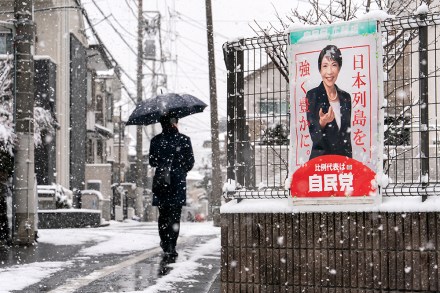
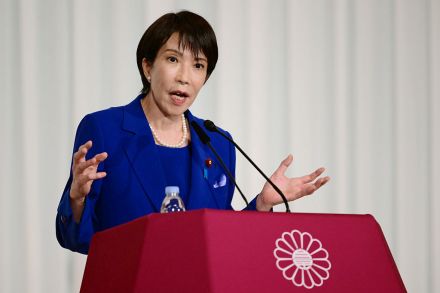
Japan is to have a female prime minister. Well, probably. Sanae Takaichi, the 64-year-old conservative veteran, has at the third attempt won the presidency of the Liberal Democratic Party (LDP) – which brings with it the bonus of being prime minister. Or at least it usually does. The LDP are currently in a coalition government, so Takaichi’s appointment will need to wait a couple of weeks to be confirmed at an extraordinary session in the diet (the national legislature). You might think the Japanese, feminists especially, would make something of having their first female prime minister, but the news has elicited not much more than a shrug here. There has

Could a ‘futurehood’ revolution save Britain?

As the collapse of birthrates accelerates across the developed world, even our language is struggling to keep up. Over nine years of demographic research, I’ve resorted to coining my own vocabulary just to describe what’s unfolding. ‘Birthgap’, for the widening gulf between generations – too few young to support too many old. ‘Yesterlands’, for once-thriving communities now quietly hollowing out. ‘Retronomics’, for the slow yet continuous un-ravelling that follows demographic decline, as nations are forced to retrofit their economies to fit their shrunken societies. Lately, I’ve been searching for another missing word – this time, to capture the invisible sense that a society still believes in its own tomorrow. The

The concept of ‘the West’ seems to mean anything you like

A hundred years ago, T.S. Eliot wrote to Geoffrey Faber, for whose publishing company he had just started work, complaining: ‘The Defence of the West… is a subject about which everyone thinks he has something to say.’ Plus ça change? Back then, people were coming to terms with a war that had shown the West to be neither as unified nor as civilised as had been assumed. A century on, American isolationism, demographic decline, mass immigration, Islamism and a slow but decisive shift in global economic gravity are giving commentators the opportunity to bloviate endlessly about the decline/suicide/end/decay/of the West. But what exactly it is that we are defending or

What’s next for Taiwan?

When Portuguese traders sailed past a verdant, mountainous land on the fringe of the Chinese empire in the mid-16th century, they named it Ihla Formosa – ‘beautiful island’. But Kangxi, the third emperor of the Manchu Qing Dynasty, was less impressed when his naval forces captured it in 1683, scoffing: ‘Taiwan is no bigger than a ball of mud. We gain nothing by possessing it, and it would be no loss if we did not acquire it.’ Beautiful or not, Taiwan was a pirates’ lair, inhabited by tattooed head-hunters and best left alone. Yet the Qing clung on to Taiwan for two centuries, with Chinese settlers gradually displacing the indigenous

The merchant as global reporter

Joad Raymond Wren’s ambitious history of early modern European news, capacious in structure, monumental in volume, is named for a witticism by John Earle (c.1601-65). The author of Microcosmography, a compilation of satirical ‘characters’ whose obvious modern heir is Victoria Mather’s ‘Social Stereotypes’, was arguably the funniest member of mid-17th century England’s most likeable clique, the Great Tew Circle. Wren more than once returns to Microcosmography’s comparison of the nave of St Paul’s, where London’s freshest newsletters were to be procured, with the commercial buzz of the Royal Exchange, with news replacing goods and hard cash as a potentially fruitful alternative currency. Wren is a recovering academic, expert in the

Could Japan soon be governed by chatbots?

Tokyo Could Japan be the world’s first -algocracy – government by algorithm? The concept has been flirted with elsewhere: in 2017 a chatbot called Alisa challenged Vladimir Putin for the Russian presidency. But there is reason to believe that if any major country is going to replace its politicians with AI, it will be Japan.  The citizens of Yokosuka in Kanagawa have had a remarkably lifelike AI avatar of their mayor, Katsuaki Uechi, at their service for over a year now. It (he?) speaks perfect English with a slight Japanese accent, with Uechi’s facial features manipulated to make it look as if he is pronouncing the words correctly. The avatar

The stigma still surrounding leprosy

One of the earliest leper hospitals in Britain was built in London near the beginning of the 12th century by Queen Matilda, the wife of Henry I. It was a benign combination of housing, hospital and chapel, with patients free to come and go as they wished. Matilda started a fashion among the wealthy, so that by 1350 there were more than 300 such hospitals across the kingdom. Far from lepers being shunned and feared as outcasts, therefore, their treatment for much of the medieval period was enlightened. ‘The mythology of the “medieval leper” seems no more real than that of the vampire or ghoul,’ writes Oliver Basciano. The author

Remembering Hiroshima 80 years on

In October 1945, towns and cities across the United States celebrated ‘A Tribute to Victory Day’ in celebration of the United States’s military victory over Nazi Germany and imperial Japan. The biggest event was held in Los Angeles and broadcast live across the country. In scenes ‘reminiscent of the pre-war Nazi rallies at Nuremberg’, Iain MacGregor writes, more than 100,000 people crammed into the Memorial Coliseum to watch the ‘cinematic legend’ Edward G. Robinson lead a massive cast on giant stage sets recreating key moments of the defeat of the Axis powers. For the evening finale, in the glare of searchlights, three Boeing B-29 Superfortresses flew low over the stadium

With Jun Tanaka

25 min listen

Jun Tanaka is a Japanese-British chef with over 30 years’ experience in some of London’s most famous restaurants, including La Gavroche, Restaurant Marco Pierre White and The Square. In 2016 he opened the Ninth, which was awarded a Michelin star two years later. On the podcast, Jun tells Lara why the smell of baking brings back early food memories, how Japanese packed lunch is superior to English packed lunch, and why, in his view, you still can’t get a good ramen in London.