Itv

The Netflix revolution

There have been two revolutions in television during my lifetime. The first happened in 1975 when Sony launched its Betamax video system — which allowed viewers to record shows and see them when they wanted. Of course, Betamax was found to be clunky and unreliable and it was soon replaced by VHS but, without realising it, the networks had lost control of their audience. No longer would we watch the films they wanted us to watch when they wanted us to watch them. Never again, as the technology spread, would the whole nation come together as one to find out what the newscasters had been up to on Morecambe and Wise. The second revolution has been even more profound — and it’s happening right now. It can be defined in one word: Netflix.

Digging for the truth

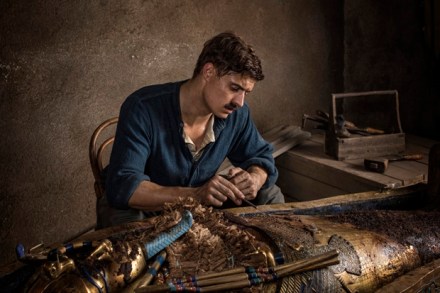
The discovery of Tutankhamun’s tomb may well be one of the 20th century’s great stories — but naturally that doesn’t mean a television drama won’t want to jazz it up a bit. Or, in the case of ITV’s lavishly produced but distinctly corny Tutankhamun, quite a lot. The programme gives us a Howard Carter younger and considerably hunkier than in real life. It throws in a couple of smitten hotties to emphasise the fact. Above all, it transforms Carter into the archaeological equivalent of a maverick TV cop: a man who doesn’t play by the rules, isn’t afraid to follow wild hunches but, by God, gets results.

Super Norma

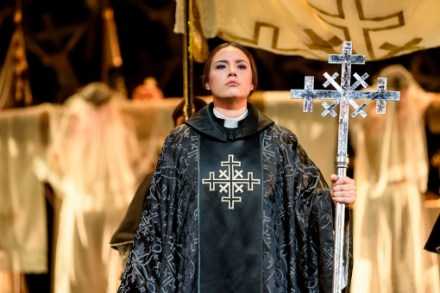
The Royal Opera has opened the season with a triumph, and in one of the most difficult of operas, Bellini’s Norma. Not only is the work itself extraordinarily demanding on its three leading singers, but it is the one opera which is now so indelibly linked to one singer that all later performances are defined by whether they are in the same mould or whether they are resolutely different. One can’t envy listeners who have never heard Callas, in one or another of her many recordings of Norma, because it is so overwhelming an experience, but it would make life less disappointing than it already tends to be. I preferred not to go to Bartoli’s recent performance in Edinburgh, having heard her interpretation on CD.

Victoria’s secret: none of it’s true

Did you know that Queen Victoria might never have married Prince Albert had it not been for an amazing stroke of luck on a woodland walk in Windsor Great Park, involving the queen’s beloved spaniel Dash. Dash, as good fortune would have it, managed to break his leg on a handy knife that someone had left lying around. And the hitherto remote and stuffy German princeling, carelessly ripping yet another of his shirts (the second in about a week) to create a makeshift bandage, splinted Dash’s leg with such tender care that flighty Emma knew at once that cold, disapproving Mr Knightley was the man for her. And that, I’m afraid, is why I’m not going to be watching another minute of this silly, facile, irresponsible series.

Fashion shoot

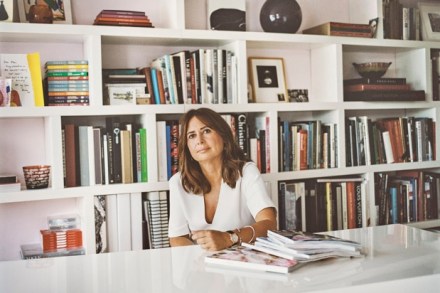
With documentary-makers these days, it can be hard to tell the difference between faux-naivety and the real thing. (Personally, I blame Louis Theroux.) Take BBC2’s Absolutely Fashion: Inside British Vogue (Thursday), directed and narrated by Richard Macer, who often seems suspiciously dazzled by whatever he sees: the editor’s office! The editor’s chair! He also has a tendency to proudly offer observations that aren’t necessarily as startling as he thinks: that the magazine appears to be largely run by women, for instance. But where it’s even trickier to decide whether he’s faking or not is when his off-screen voice anxiously wonders whether Alexandra Shulman, the editor in question, wants him there at all — because she so obviously doesn’t.

Diary – 14 July 2016

I first met a boyish, sunny Tony Blair more than 20 years ago. Our encounters have always been slightly tense since I reported some clumsy remarks he made about tax when he was still an apprentice PM — and he reacted much as Andrea Leadsom did against the Times last week (though via A. Campbell rather than Twitter). On Wednesday afternoon at Admiralty House he is a stricken caricature of how he was: painfully thin; waxy skin; astonishingly terrible teeth. He is a brilliant actor but not that good: he has been tormenting himself over Chilcot. But he isn’t sorry for the invasion, as he told me, and would do it again if circumstances repeated. His journey from fêted hero in 1997 to perhaps the most isolated man in Britain is a national tragedy.

What the papers say: Did ‘Operation Batter Boris’ go too far?

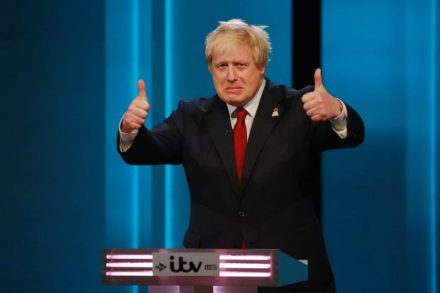
The takeaway point from last night's EU referendum showdown was the extent of the personal attacks on Boris. The former Mayor of London came under repeated fire during the debate - with his Tory colleague Amber Rudd leading the charge. But did she go too far? And is there a chance the intention of targeting Boris could end up backfiring? Here's what the papers had to say: Anyone reading The Sun's coverage of the debate will probably end up feeling sorry for Boris. The article tells how Boris 'suffered relentless abuse' over his apparent ambitions to be the next PM. It also goes on to say Rudd 'reeled off Government lines of attack on the economy'.

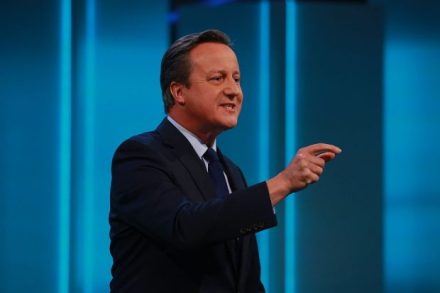
EU referendum TV debate – Leave and Remain face off in ITV showdown

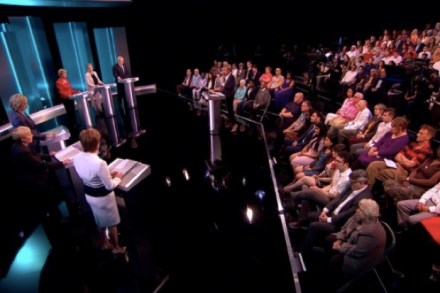
Fraser Nelson, James Forsyth and Isabel Hardman review the ITV debate: Welcome to Coffee House's coverage of ITV’s EU referendum debate. Boris Johnson, Andrea Leadsom and Gisela Stewart made the case for Brexit, and Nicola Sturgeon, Angela Eagle and Amber Rudd argued for Britain to stay in the EU. Here's our commentary from the debate, as well as all the audio and video highlights. Here's Isabel Hardman's summary of the various speeches: OUT: Boris Johnson: 7/10 - stayed calm under non stop personal onslaught. Still didn't offer much of a detailed sense of what Brexit would look like.

Ukip’s David Coburn cries BBC bias… over ITV debate

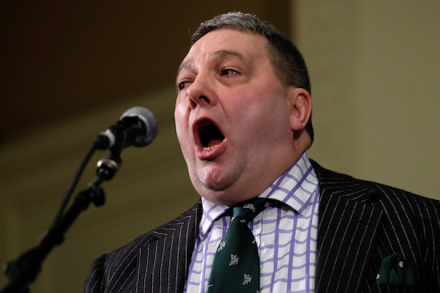
Nowadays it's difficult for the BBC to air anything without facing some accusation of bias. As well as the well documented strand of right-wing bias and EU bias, there's now anti-Corbyn bias -- with the BBC's Nick Robinson even accusing his employer of the latter. Last night things got so bad in the EU debate with David Cameron and Nigel Farage that the Beeb were accused of pro-EU bias once more. Ukip's David Coburn took to Twitter to vent that the 'BBC Knew the questions in advance' and 'chose which audience members speak' so Remain had an easier ride. Alas, the Scottish MEP concludes that 'Cameron still lost despite Aunties best efforts': https://twitter.com/DavidCoburnUKip/status/740309016534863872 Only there's a catch... last night's debate was on ITV, not the BBC.

How the papers reacted: Farage ‘destroyed’ as Cameron is ‘taken to task’ during live EU showdown

David Cameron and Nigel Farage both avoided making any disastrous blunders during last night's TV showdown and for that reason alone they'll be pleased with their performances. Those in the 'Leave' camp especially were concerned about what Farage might do or say when he took to the stage. On the basis of last night's showing, however, they need not have worried too much (albeit for the moment he told a woman watching to calm down). But as with last week's EU events involving the Prime Minister and Michael Gove, much of the press coverage doesn't focus on the two politicians who took the stage. Instead, it's those in the audience who made life difficult for Farage and Cameron who get much of the attention. So what did the papers make of who came out on top?

Warning: top-performing funds are highly likely to contain tobacco

Axa will no longer invest in the tobacco industry: the French insurance giant will sell €184 million of shares and gradually reduce its €1.6 billion bond holdings in the sector. No surprise, given Axa’s role as a health insurer and the oft-repeated statistic that smoking kills six million people a year; indeed, you might think any health-related investor would have taken the decision years ago. Except that cigarette-makers have been stellar stock market performers since the beginning of the century: British American Tobacco’s shares have multiplied in value a dozen times while paying rich dividends, and Imperial Tobacco (now Imperial Brands) has been almost as good.

Singing Ireland into being

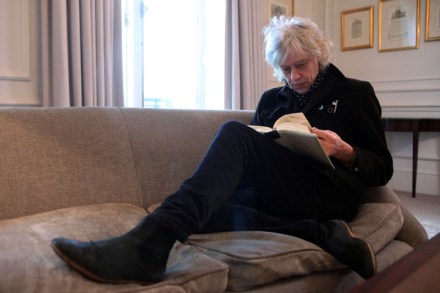
In recent years there’s been a fashion for arts documentaries presented by celebs rather than boring old experts — presumably on the grounds that knowledge and insight are no match for vague enthusiasm and a touch of showbiz glamour. (In a particularly gruesome episode of ITV’s Perspectives, Pop Idol winner Will Young established his credentials for discussing the life and works of René Magritte with the words, ‘I’ve been collecting bowler hats for 12 years now.’) Even so, one channel you might have expected to hold out against such frivolity is BBC4, the natural home of resolutely untelegenic academics telling us stuff they really know about. But then on Sunday came Bob Geldof on W.B.

Just what the doctor ordered

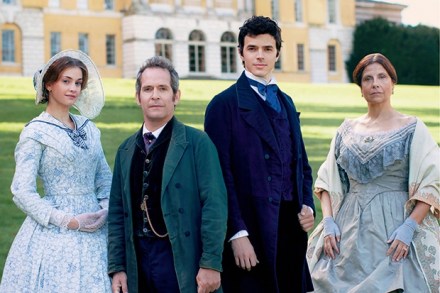
Every now and then, a costume drama comes along that’s so daringly unconventional as to make us re-examine our whole idea of what the form can achieve. ITV’s Doctor Thorne, though, isn’t one of them. Instead, Julian Fellowes’s adaptation of Anthony Trollope observes the usual rules with almost pathological fidelity. Extras dance gamely in ballrooms, scheming matriarchs stand in the way of sweet young lovers and characters express deep fury with the words, ‘Good day to you, madam.’ In the first scene, we even had a handy refresher on the genre’s use of hats as a social signifier. (Basically, toppers for the toffs, peaks for the proles.

I’m a Celebrity is like The Simpsons: good if you’re thick; even better if you’re not

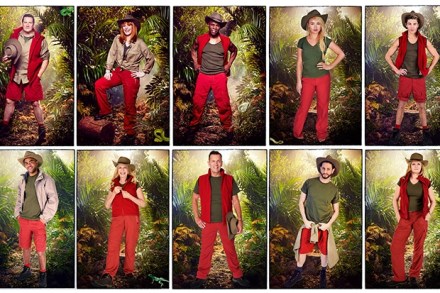
The best bit in I’m A Celebrity... Get Me Out Of Here! (ITV) will be when the prisoners finally revolt and turn on their evil captors, Ant and Dec. The sparky Geordie comedy duo will be imprisoned in a semi-submerged, rat-infested cage like the one in The Deer Hunter, fed on a diet of liquidised kangaroo bottom and wombat testicle, and released only to participate in a series of amusing challenges, such as a recreation of the Lemmiwinks episode from South Park, involving two giant funnels, a bunch of inserted eucalyptus leaves and a pair of ravening koalas. Though it hasn’t happened yet I’m going to keep watching every night, just in case. I wish it weren’t so. It’s such a terrible waste of life.

DVF worship

Girl is back for half-term so I’ve been able to watch nothing but crap on TV this week. Some of you will say, ‘Oh come on! You pay the bills, so you get to control the remote.’ But that’s not how things work when you’ve got a teenage girl at home. Especially not one whose ankle you have been responsible for breaking. So crap, I’m afraid, is what I’m going to have to review. Not, it must be said, that the crap has all been crap. House of DVF (E! Online), for example. I’ve mentioned it before and the reason I’m mentioning it again is the matchless insights it offers into the strange and terrifying world of womankind.

Talk of the devil | 24 September 2015

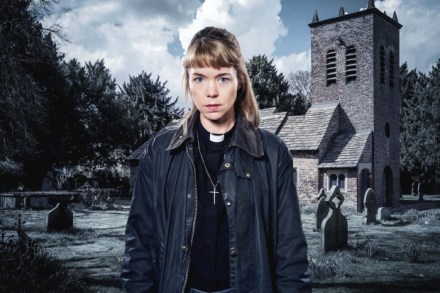
For years, Ian Fleming was famously self-deprecating about the James Bond books. (‘I have a rule of not looking back,’ he once said. ‘Otherwise I’d wonder, “How could I write such piffle?”’) Towards the end of his life, though, he finally produced an essay in their defence — proudly pointing out, among other things, that however fantastical the plots may become, they’re always carefully rooted in a world recognisable as our own. Of course, this is not something that can necessarily be said of all the Bond films — but it certainly applies to ITV’s new three-part thriller Midwinter of the Spirit (Wednesday), based on the novel by Phil Rickman. It also explains why the programme already feels so promising.

Tales of the unexpected | 24 September 2015

Two significant anniversaries, each very different but both reflecting the BBC’s mission and the reasons for its continued success. From Our Own Correspondent has been on air for 60 years, reporting on events across the world not just as news but to fill in the back story to the headlines. Instead of bombs and bullets, we might find ourselves listening to a Russian-born piano teacher in Gaza who at last finds a grand piano and begins entertaining her neighbours with Chopin.

Serial thriller

For keen students of China, this week’s television provided yet more proof that Deng Xiaoping’s decision to open the country to the West has had consequences that he’s unlikely to have foreseen. He probably couldn’t have predicted, for example, that one day a former Bond girl would travel the country finding almost everything ‘thrilling’. Or that a bloke who made his name in a British makeover show would proudly explain to a group of Chinese journalists that ‘I’ve got the sunglasses, I’ve got the big hair — all [sic] of these things are what you’d expect from a celebrity.

Are you being funny?

Monday saw the return of possibly the weirdest TV series in living memory. Imagine a parallel universe in which Are You Being Served? had starred Laurence Olivier, John Gielgud and Janet Suzman, and you might get some idea of what ITV’s Vicious is like. Alternatively, I suppose, you could just watch the thing and realise that no, you’re not drunk — you really are seeing Derek Jacobi, Ian McKellen and Frances de la Tour acting their socks off in a sitcom that would have been considered rather creaky in 1975. Jacobi and McKellen play Stuart and Freddie: a pair of gay actors who’ve been living together for decades despite the fact that their main mode of communication is to trade personal insults while the studio audience laughs dutifully.

Ruth Davidson, Scotland’s Iron Lady, could be just what the Tories need

Nicola Sturgeon has been described as a rock star politician. In Tuesday’s STV debate she looked like one who is suffering from second album syndrome. Having impressed a UK-wide audience in the seven-leader ITV debate last week, her reception at the Scottish version was far more muted, with some instant polls suggesting a narrow victory for Scottish Labour leader Jim Murphy. A dispassionate observer might place Sturgeon third, behind Murphy and an impressively plucky Ruth Davidson. It takes something to stand before a Scottish audience, where the Tory brand isn’t just toxic but radioactive, and earn applause for making the case to reintroduce prescription charges.