Italy

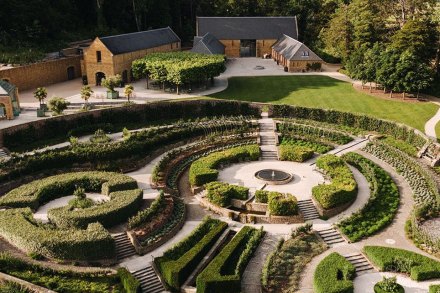
‘You can stare at a cow you will soon eat’: The Newt, Hadspen, reviewed

From our UK edition

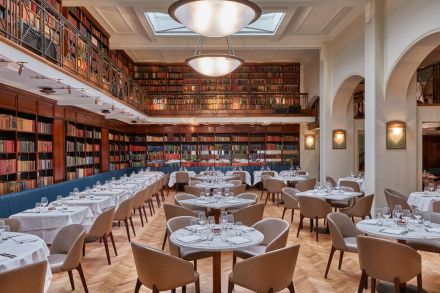
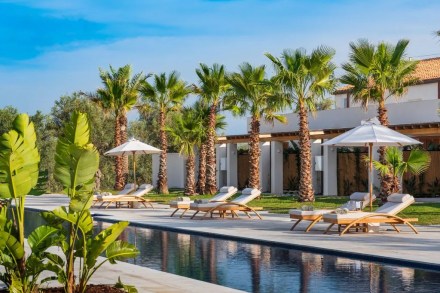
The Newt is an idealised country house in Somerset which won the World’s Best Boutique Hotel award last year. It is small, beautiful and mind-meltingly expensive, even for the Bruton Triangle and its mooing art galleries. Poor Somerset! It never wanted to be monied enough to have a triangle, but the rich make their own mythology. Since they paint every-thing grey – and now green, I learn at the Newt – they need it. A triangle fills the day. The Newt is for people who think that Babington House is stupid (it is) and though the Newt has its own issues – like the King, its taste is almost too immaculate – you never feel that the chief executive of a media conglomerate will bounce past you on a space hopper eating a fishfinger sandwich and shouting into an iPhone.
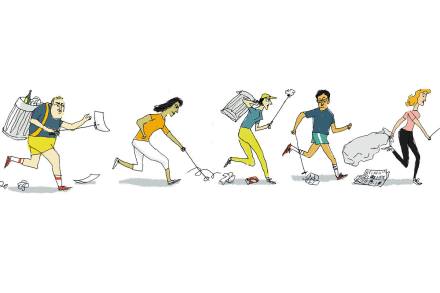
Plogging: Europe’s bizarre eco-friendly fitness craze

The first finisher crossed the line sweaty, tired and almost black with dirt, his white Decathlon shirt turned gray and his standard-issue blue gloves transformed into a deep midnight. He dragged behind him a refrigerator-sized plywood box, piled high with swollen rubbish bags and secured with a hooked rubber bungee cable — where he grabbed that, nobody knew. Yet José Luis Sañudo Lamela’s smile was wide, and he laughed heartily when onlookers and fans expressed amazement at his feat. But despite Lamela’s assuredness that he would take home top billing in the annual World Plogging Championships, one man outdid him — if not in diversity of goods, in pure heft.

plogging

‘Is it France? I don’t know’: Hôtel de Crillon, Paris, reviewed

From our UK edition

Hôtel de Crillon sits on the Place de la Concorde, a vast square renamed for bloodshed, then the lack of it – it was the Place de la Révolution, with knitting and bouncing heads. Now it is placid, and the Crillon is the most placid thing in it. No one does grand hotels like the French, except perhaps the Swiss, who have nothing better to do. Hôtel de Crillon was one of twin palaces commissioned by Louis XV before the French butchered his grandson and his wife outside them: it looks like Buckingham Palace but prettier and with possible PTSD. It has been a hotel for 115 years and next to it our Ritz and Savoy look grubby, needy even, but they were built for the bourgeoisie. They have a different kind of grandeur, a kind I prefer.

‘I pity MPs more than ever’: the Cinnamon Club, reviewed

From our UK edition

The Cinnamon Club appears on lists of MPs favourite restaurants: if they can still eat this late into a parliament. It lives in the old Westminster Library on Great Smith Street, a curiously bloodless part of London, and an irresistible metaphor wherever you are. When once you ate knowledge, you now eat flesh, but only if you can afford it. Now there is the Charing Cross Library, which lives next to the Garrick Theatre, and looks curiously oppressed. Perhaps soon it will be a falafel shack and knows it. There is also the Central Reference Library, which could be a KFC, and soon will be. Public spaces are shrinking. They will all be online soon, and we will see how that goes. (It will be bad.) The Cinnamon Club, which identifies as ‘fine dining’, seeks finesse. What for?

Dangerous secrets: Verdigris, by Michele Mari, reviewed

From our UK edition

In everyday life – on a garden path, flowerpot or lettuce – I back rapidly away from slugs. I didn’t expect to confront them in literature, but in Michele Mari’s Verdigris they are present in abundance, from the first line: Bisected by a precise blow of the spade, the slug writhed a moment longer: then it moved no more... slimy shame transformed into splendid silvery iridescence.  So, not a novel for one who shrinks from gastropod molluscs, you would think. Yet I quickly found myself drawn into a remote corner of rural north Italy in 1969 where a lonely, bookish boy, Michelino, spends long summers with his emotionally unreachable grandparents.

Eating my way through Sicily

I arrived home six pounds heavier after three weeks in Sicily. That is the weight of a gallon of milk. Eight cans of beer. Or a small Yorkshire Terrier. I could try blaming the Cerebrus heatwave on my filthy granita habit and lack of almost any bodily movement (and it didn’t help) but the reality is this: Sicily is the fantastical realm they say it is and stupendously beautiful. And the food is even better.  Roman, Arab, French, Greek and North African influences spectacularize every meal. Almond milk granita is spooned into glistening brioche rolls before you can wipe the sleep from your eyes. Chocolate cannoli appear out of nowhere at breakfast. Arancini oozes globs of molten cheese in a manner that’s, quite frankly, sexy.

sicily

‘The lasagne is perfect’: Hotel La Calcina, Venice, reviewed

From our UK edition

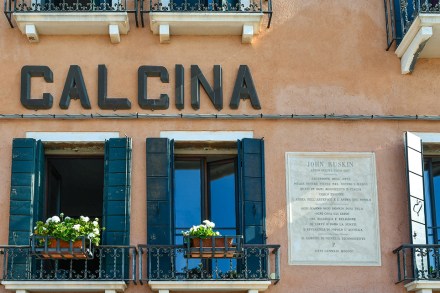
Pensione La Calcina is one of John Ruskin’s houses in Venice. He stayed here in 1877, after completing The Stones of Venice and going mad, and there is a plaque for him on the wall: a stone of his own. It is next to the Swiss consulate on the Zattere, but never mind them. I think the Zattere is for people who have tired of Venice. It has a view to the Giudeccacanal, and the waterbus to the airport: to the exit. You can breathe here. I am staying in San Marco, where I can’t. My son falls from a water gate into a canal, and Italian grandmothers tut at us, and we get sick, which my friend says is ‘very chic in Venice’. Before we get sick, we eat at La Calcina.

The marvelous Montalbano

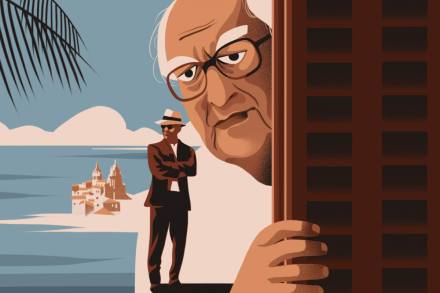
I visited Sicily in May 2005, when the airlines were still requiring all checked luggage to be left unlocked. After the flight from Paris touched down at Palermo, my wife and I went to collect our luggage at an apparently quiet and unrushed airport to discover my suitcase opened partway and an expensive dressing gown missing. Eighteen years ago, il Commissario Salvatore Montalbano was quite unknown to me. Otherwise, I should have immediately thought of the Sinagra family at the eastern end of the island, though the word “mafia” did come to mind as I rezipped the bag.

Montalbano

Mount Etna and a museum with rooms

“There is too much Nutella in the cornetto.” Not the words you hope to hear while trudging up the craggy slope of the most active volcano in Europe, in the wrong footwear. Clouds of black dust kicked up into my nostrils. A white butterfly posed starkly against dried black lava.  “Come, ragas, I want to show you something. These are lava bombs. I am standing on thiiiiiiick liquid. The lava! It went splat-ta! Like pizza dough!” Our guide Vincenzio gesticulated at his bedraggled group, inwardly asking themselves why they’d volunteered to tackle Mount Etna in a heatwave. “A big mama. She-” A robotic siren interrupted Vincenzio mid-flow, screeching from a startled septuagenarian’s Nokia. A teenager patted down his jean pocket, confused.

mount etna

Can Italy reverse its falling birth rate? 

From our UK edition

Anne McElvoy is on the road again, exploring the state of modern Europe. Following her Radio 4 programme, The Reinvention of Germany in April, the Politico journalist has travelled to Padua, in northern Italy, where reactions to the rise of the right-wing populist Giorgia Meloni appear to vary. Is the 46-year-old PM a breath of fresh air – the best chance Italy has for a future – or a hypocritical dyed-in-the-wool traditionalist? The reinvention (or rather restoration) of Italy is very much Meloni’s goal. Clinging to the familiar principles of faith, flag and family, she has eschewed measures that would allow those born in Italy to define themselves as Italian, ostensibly believing that to be Italian is to have Italian blood.

‘We must defend our territory’: on the frontline of Europe’s migrant woes

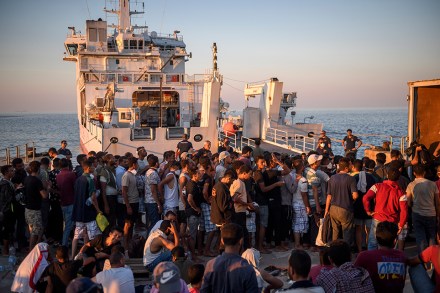
Lampedusa, Italy The motorcade carrying Italy’s prime minister is being held up by a wild-eyed pirate. With a bushy black beard, sun-blasted face, tattooed forearms and a single earring, he stands in front of the convoy of a dozen police cars, extending a flattened palm. Blue lights flash, engines idle and somewhere behind blacked-out windows sit Giorgia Meloni, the prime minister, and her important guest, Ursula von der Leyen, president of the European Commission. The pirate is Giacomo Sferlazzo, leader of the protests that began on the island of Lampedusa after around 100 small boats carrying migrants arrived there on a single day in September. Really he’s a local musician, professional puppeteer and, as he describes himself, a Marxist-Leninist follower of Antonio Gramsci.

lampedusa

Politicians can’t win on illegal migration

From our UK edition

It is eight years now since The Spectator sent me to Lampedusa to see the boats coming in. That was at the start of the 2015 migrant crisis. The island, which is home to just 6,000 locals, had just buckled under the weight of another 1,300 arrivals. I followed them to Sicily and then on up and across the continent. If I may be self-referential for a moment, it was on Lampedusa that I realised the scale of the problem and got the opening lines of my resulting book, The Strange Death of Europe: ‘Europe is committing suicide. Or at least its leaders have decided to commit suicide. Whether the European people choose to go along with this is, naturally, another matter.

You have to be truly incompetent to eat badly in Paris

From our UK edition

Paris has enough great restaurants to maintain its claim to be the world capital of gastronomy. That said, Parisian residents insist that these days, it is possible to eat badly in their city. Yet I still think that this would require especial incompetence. In Brussels, a strong second in the pecking order, it would be even harder. There is a splendid establishment called Comme Chez Soi. Almost 100 years old, it has established a worldwide reputation without losing contact with its roots. The last time I was there, I observed a couple of ladies-who-lunch, Brussels fashion. There was no question of a watercress salad on a bed of lettuce leaves, washed down with Perrier water.

Don’t cry from pleasure: chef Ciccio Sultano’s Sicily 

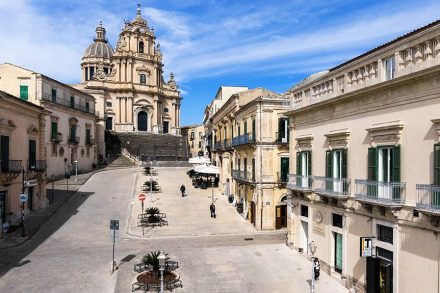
The Cerberus heatwave is as fierce as they said it would be. I feel like I’m being microwaved on a low heat, my phone hot to the touch inside my pocket. A friend and I heave suitcases into the imposing stone lobby of a.d. 1768, then slump on chairs, dizzy. A palatial, historic residence hidden in plain sight, I’m gratefully swallowed up by its high ceilings and cool shadows. We’ve navigated Italian roads (and road rage) from Catania to Ragusa Ibla in 107.6 degrees Fahrenheit to seek out one hotel, and one man: Ciccio Sultano.  Our month-long road trip through southern Italy is finishing in the late Baroque towns of UNESCO World Heritage Site Val di Noto, collectively rebuilt after a huge earthquake on January 11, 1693.

sicily

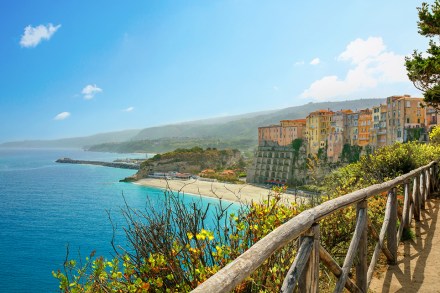
A perfect slice of Calabria 

From our UK edition

The Romans wrote the history, or at least the myths. But long before Romulus murdered Remus, the Mediterranean – the Great Sea – was the principal conduit of civilisation. The Greeks spread their wings across the wine-dark seas, to the extent that even later Romans accepted that much of southern Italy was actually Magna Graecia. The Greek settlements included the city of Sybaris. Although it was destroyed around 2,500 years ago, it has passed into the language. Sybaritic – the very word is expressive – denotes ease and pleasure, the beauties of nature amid the adornments of art and architecture: champagne and dancing girls. Sybaris is in Calabria, the toe of Italy. In more recent times, history has not been kind to the region.

Thankfully, Tony Blair was nowhere near my Sicilian holiday

From our UK edition

Sicily is far removed from the gracious suavities of Tuscany. With the souk-like atmosphere of its markets and obscure exuberance of life in the old Cosa Nostra towns, the Mediterranean island is halfway to Muslim Tunisia. The British Tuscanites who descend on the hills around Florence during the summer holidays as part of their ‘Toujours Tuscany’ dream – Tony Blair, Sting, David Cameron – are thankfully nowhere in evidence. In our post-Godfather world no history of Sicily would be complete without mention of the Mafia. The word is said to derive from the Arabic mahyas, meaning ‘aggressive boasting’: for almost three centuries until the Norman Conquest of 1061, Sicily was an Islamic emirate.

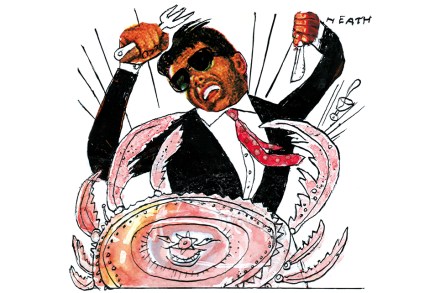
Italy is under attack from a killer crab

From our UK edition

Italy is under maritime siege by a foreign invader known as the granchio blu (blue crab). Like some terrifying alien that lies undetected for decades in a hideous secret lair, untold millions of the crustaceans (whose shells can grow up to nine inches wide) have suddenly emerged and are causing havoc in the country’s delicately balanced marine environment.  The blue crab arrived in Italy from America in the late 1940s in the -ballast tanks of merchant ships, but no one talked about it much until the past couple of years, during which its numbers have exploded. Some blame global warming, but the blue crab is not especially bothered by water temperature one way or the other. It lives in a whole range of climates, from Nova Scotia all the way down to Argentina.

Inside the traditional art revolution

More and more often lately, people are rejecting tired modern art. They often find solace in the art of the past; online accounts admiring “traditional art” have amassed hundreds of thousands of followers, but they act as online repositories for a bittersweet recognition: what once was, no longer is. But the kind of art they seek, involving detail, meaning and skill, still exists, and it is growing. The cultural hegemony of contemporary, abstract art is slowly beginning to crack; through those cracks we can see new art surfacing. As I have become increasingly disillusioned with the state of politics, an observation from Ernst Jünger, the German philosopher and skeptic of the extreme politics of his day, rings true to me.

art revolution Milano Painting Academy

Handsiness or assault? Fondling in the post-#MeToo era

“If I wanted to, I could have had sex with people all the time,” said Kevin Spacey in court this week. Cockburn isn’t sure how the disgraced actor thought that would land during his cross examination for his London court case, where he pleaded not guilty to a dozen charges that include sexual and indecent assault counts and one count of causing a person to engage in penetrative sexual activity without consent. During his time in the witness box, the House of Cards actor had his final chance to convince jurors that he never assaulted anyone. The outcome of this case could affect whether he’s able to make a career comeback after sexual misconduct accusations. It isn’t exactly going swimmingly so far.

kevin spacey

What happened to Italian football?

From our UK edition

Neither Sandro Tonali nor AC Milan wanted to part ways. The young midfielder is from the outskirts of the city, has been a fan since boyhood and his dad’s an ultra. He wanted to become a Rossoneri icon like his hero Gennaro Gattuso. The top brass at Milan saw him as a future captain. Tonali was instrumental to the club winning Serie A ­– Italy’s top league – last year and reaching the European Champions League semi-final two months ago. Milan’s legendary manager from the 1990s, Fabio Capello, says Tonali is ‘the recipe to win’ and that he could have played in ‘the great Milan teams’ from 30 years ago.