Italy

Richard Dawkins, Nicholas Farrell, Mary Wakefield, Lisa Hilton and Philip Hensher

From our UK edition

33 min listen

On this week’s Spectator Out Loud: Richard Dawkins reads his diary for the week (1:21); Nicholas Farrell argues that Italy is showing the EU the way on migration (6:33); Mary Wakefield reflects on the horrors, and teaching, of the Second World War (13:54); Lisa Hilton examines what made George Villiers a favourite of King James I (19:10); and a local heroin addict makes Philip Hensher contemplate his weight (27:10).  Produced and presented by Patrick Gibbons.

Meloni’s migration strategy is working – and the rest of Europe is watching

From our UK edition

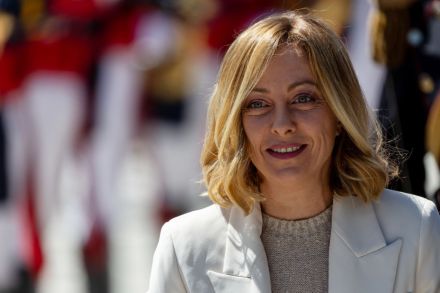
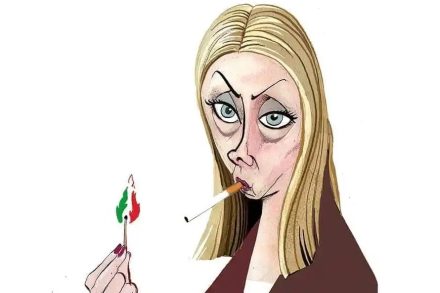
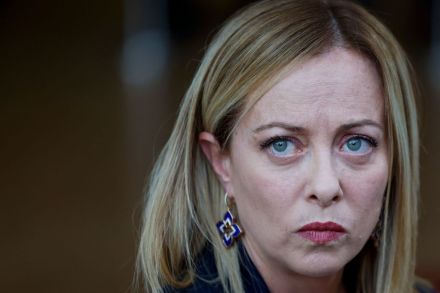
Giorgia Meloni, Italy’s first female Prime Minister, has this week achieved what the Tories failed so fatally to do with their doomed Rwanda scheme. Thanks to her determination and charm, Italy has become the first European nation to successfully offshore illegal migrants to a non-EU country. However bogus the claims of migrants, once they’re in the EU it’s virtually impossible to deport them  Under Meloni’s scheme, migrants picked up by Italian naval and coastguard vessels from small boats in the Sicilian Channel will be ferried directly to Albania, 750 miles away. They will not set foot in Italy. It is potentially a game-changer, particularly as voter fury across Europe forces politicians to do something to stop illegal migrants.

Should I grow old gracefully – or disgracefully?

From our UK edition

Now that I’m about to turn 70, I’m wondering: shall I grow old gracefully, or disgracefully? Everyone I know, young and old, tells me that I must go disgracefully (and that’s how they plan to go, or so they say). It seems that growing old gracefully has gone out of style – especially for women – but maybe it’s time for a revival? After a life of doing right and responsible things, you can now let your hair down – if you have any left What’s the difference between the two? Growing older gracefully is about letting go of the pleasures of youth – sex, drugs, rock ’n’ roll or whatever vice you prefer – for the more restrained and dignified delights of maturity. You dress, act and talk in an age-appropriate way. No trainers. No jeans.

Hotel hopping in Rome

Summer in Rome. Expectation: breathe the soul of the classics, soak up the history, feel the romance. Reality: breathe in the AC, soak in a pool of sweat, feel ever so slightly unhinged. My plans to indulge in Italy’s time-honored tradition of la passeggiata — strolling around looking stylish, gelato in hand — were quickly nixed by the Cerberus heatwave. Dreams of meandering around perhaps the world’s most famous open-air museum gave way to lying recumbent with a handheld fan. Jumping from the relative cool of a sleeper-train carriage onto the platform at Termini station felt akin to opening an oven door and climbing in. Red alert warnings were issued as the mercury soared toward 119°F.

Rome

A visit to the world’s worst capital city

From our UK edition

Nouakchott in Mauritania is often referred to as the ‘worst capital city in the world’. That may be a little harsh, but it is difficult to recommend it to Spectator readers as a must-visit destination. The heat is savage, the poverty endemic, corruption is off the scale and this west African country is one of the last on Earth where you can still find hereditary slavery. Which is why I’m here. Troubles begin on arrival. A succession of three police officers grill me in the airport. Why have I come to Nouakchott, who am I working for, who am I planning to meet, why, what are their telephone numbers, what am I going to talk to them about, where am I staying? They are flummoxed by the word ‘historian’.

The era of ideological, overreaching and omnipresent government

It was a law of classical political philosophy that democratic polities devolve inevitably into tyrannical ones. This law is being validated in the twenty-first century, as liberal democracy creates societies antithetical to both liberalism and democracy by shaping citizens of a character for which neither was designed nor developed. In a parallel development over the past decade or so in Europe and the United States, liberals and democrats view their response to the problem as “reaction,” pure and simple, against the sort of thing they have been fighting since 1789. Only it is not reaction; it is apparently something new in history.

government

Italians are beautiful – but not on this beach

From our UK edition

When Pope Francis complained recently about too much frociaggine (faggotry) in the Catholic Church, he certainly struck a chord in our house here at Dante’s Beach near Ravenna. Nudism used to be illegal on pain of up to three years in prison, but the nudists simply ignored the law We live a mile inland from one of the last stretches of Adriatic coast not lined by umbrellas and concrete but by sand dunes and pine forests. It is a spiaggia libera (free beach) as well, and so belongs to everyone. However, the most beautiful bit cannot be used by the silent majority: it has been stolen by a small minority of highly trained nudists, mostly gay. People who prefer to avoid mass nudity have had to go elsewhere. Many would call it Heaven though Dante himself would beg to differ.

Pure Puccini: an opera lover’s melodramatic family history

From our UK edition

‘If a horse is born in a stable, does it bark like a dog?’ By the time the Duke of Wellington’s famous question (‘If a man is born in a stable, does that make him a horse?’) made its way down to the young Michael Volpe, growing up in a fractured Italian family on the ‘streets and railway tracks... estates and football terraces’ of 1970s west London, it was mangled almost beyond recognition, bent and twisted into a surreal new shape. But the spirit of Wellington’s question remained, burrowing into a boy with one foot in the stable and one beyond, his very name a contradiction of identity: the blandly Anglicised, Sunday-best ‘Michael’ at odds with the sly, sinuously Italian ‘Volpe’ – fox.

Meloni and her lieutenants plan their takeover of Europe

Cosenza, Italy On a dreary afternoon in May, hundreds of well-dressed Italians crowded into a regal government building in Cosenza, aptly named The Provincial Palace of the Hall of Mirrors. It was a campaign event for Fratelli D’Italia, Italy’s ruling political party. The supporters listened attentively for more than two hours. The mood was triumphant and the politicians spoke as if victory was inevitable. They spoke about a plan for when, not if, the right assumed greater power in Europe.  “This confidence is due to the fact that we, as Italy, have acquired centrality in a very important way,” said Giovanni Donzelli, the party’s national organization manager.  “This centrality is all thanks to the great work done by our leader Giorgia Meloni.

Meloni

Admit it – Italian food is rubbish

From our UK edition

Every year I’m summoned to a gathering which I strive to avoid. My first cousin, who loves a boozy party, assembles the extended clan in an Italian restaurant for a convivial lunch. I fear that my list of excuses – ‘back pain’, ‘gout’, ‘baptism in Scotland’, ‘last-minute undercover journalism assignment’ – is wearing a bit thin and I’ll have to show up this year. No sane human could feel fondness for a cuisine whose leading dish, pizza, can’t be eaten with a spoon It’s not my relatives that I dislike. It’s the stuff on the plates. No sane human could feel any fondness for a cuisine whose leading dish, pizza, can’t be eaten with a spoon.

What’s behind Giorgia Meloni’s abortion position?

From our UK edition

Like drowning men clutching at straws, Giorgia Meloni’s opponents are trying ever more hopelessly to justify their claim that she is a far-right threat to democracy. It’s not that Meloni has stopped being far right since she became Italy’s first female prime minister 18 months ago. It is just that – despite all the apocalyptic warnings about her – she wasn’t far right to begin with. The new law is not an assault on the 1978 law that made abortion legal in Italy. Meloni as a premier has proved to be much more like a Mediterranean version of Margaret Thatcher than the heir to Benito Mussolini – which many of her opponents still call her. As a result, she and her party, Fratelli d’Italia, which tops the polls by a large margin, remain very popular.

Bar-hopping, Venetian style

It’s a mist-steeped weekday morning in the Dorsoduro district. The kind when the rising lagoon licks at the old stones as if trying to devour the city, footsteps echo mournfully between peeling palazzi and even the marble statues seem to hang their heads. But not too early nor too dismal, it turns out, for wine. In Osteria Al Squero — named after Venice’s oldest boatyard, which it faces across the narrow canal — the lights are on. A huddle of Venetian men stands beneath the wooden beams with their grocery bags and small dogs, enjoying un’ombra. It means “shade” in Italian but also, here in the Veneto, a small glass of vino.

Venetian

My life of genteel poverty

From our UK edition

Every year at the beginning of April, I tell myself I must top up my Isa before the 5 April deadline. And all my friends tell me I must. My financial adviser tells me I must. Articles in the press and adverts on social media tell me I must. And every year on 6 April I ask myself: why didn’t I top up my Isa? Yes, I know investing in an Isa is the smart, sensible thing to do – so why haven’t I done it for the past ten years? Every year I have an excuse. Capitalism is about to collapse; it’s government-sanctioned tax avoidance; I should give the money to some worthy group of activists. But the real reason is fear. I can face almost anything – childhood trauma, root canal work, prostate examinations – but when it comes to personal finances, I’m a coward.

Under the Italian sun, the insects are stirring

From our UK edition

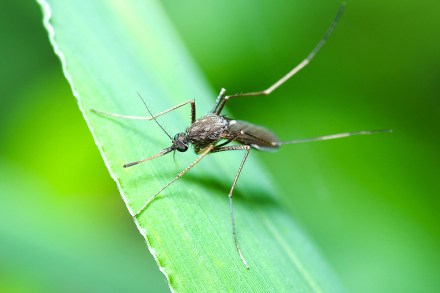
The sun was setting on the first day of spring and I felt unusually happy as I fed the donkey. Winter, along with the fog and all the rest of it, had gone at last. But then from somewhere near my right ear I heard a small whining sound that for a moment I did not recognise. It was the first mosquito of the year. And I remembered how biblical it all gets round here under the Italian sun, insect-wise. Sometimes I wish I’d stayed up in the Apennines where there were no mosquitoes, just giant wasps There are a whole host of insects and other things, real, imagined, and in between, that prey on the bodies and minds of me, my wife Carla and our six children.

‘You can stare at a cow you will soon eat’: The Newt, Hadspen, reviewed

From our UK edition

The Newt is an idealised country house in Somerset which won the World’s Best Boutique Hotel award last year. It is small, beautiful and mind-meltingly expensive, even for the Bruton Triangle and its mooing art galleries. Poor Somerset! It never wanted to be monied enough to have a triangle, but the rich make their own mythology. Since they paint every-thing grey – and now green, I learn at the Newt – they need it. A triangle fills the day. The Newt is for people who think that Babington House is stupid (it is) and though the Newt has its own issues – like the King, its taste is almost too immaculate – you never feel that the chief executive of a media conglomerate will bounce past you on a space hopper eating a fishfinger sandwich and shouting into an iPhone.

Plogging: Europe’s bizarre eco-friendly fitness craze

The first finisher crossed the line sweaty, tired and almost black with dirt, his white Decathlon shirt turned gray and his standard-issue blue gloves transformed into a deep midnight. He dragged behind him a refrigerator-sized plywood box, piled high with swollen rubbish bags and secured with a hooked rubber bungee cable — where he grabbed that, nobody knew. Yet José Luis Sañudo Lamela’s smile was wide, and he laughed heartily when onlookers and fans expressed amazement at his feat. But despite Lamela’s assuredness that he would take home top billing in the annual World Plogging Championships, one man outdid him — if not in diversity of goods, in pure heft.

plogging

‘Is it France? I don’t know’: Hôtel de Crillon, Paris, reviewed

From our UK edition

Hôtel de Crillon sits on the Place de la Concorde, a vast square renamed for bloodshed, then the lack of it – it was the Place de la Révolution, with knitting and bouncing heads. Now it is placid, and the Crillon is the most placid thing in it. No one does grand hotels like the French, except perhaps the Swiss, who have nothing better to do. Hôtel de Crillon was one of twin palaces commissioned by Louis XV before the French butchered his grandson and his wife outside them: it looks like Buckingham Palace but prettier and with possible PTSD. It has been a hotel for 115 years and next to it our Ritz and Savoy look grubby, needy even, but they were built for the bourgeoisie. They have a different kind of grandeur, a kind I prefer.

‘I pity MPs more than ever’: the Cinnamon Club, reviewed

From our UK edition

The Cinnamon Club appears on lists of MPs favourite restaurants: if they can still eat this late into a parliament. It lives in the old Westminster Library on Great Smith Street, a curiously bloodless part of London, and an irresistible metaphor wherever you are. When once you ate knowledge, you now eat flesh, but only if you can afford it. Now there is the Charing Cross Library, which lives next to the Garrick Theatre, and looks curiously oppressed. Perhaps soon it will be a falafel shack and knows it. There is also the Central Reference Library, which could be a KFC, and soon will be. Public spaces are shrinking. They will all be online soon, and we will see how that goes. (It will be bad.) The Cinnamon Club, which identifies as ‘fine dining’, seeks finesse. What for?

Dangerous secrets: Verdigris, by Michele Mari, reviewed

From our UK edition

In everyday life – on a garden path, flowerpot or lettuce – I back rapidly away from slugs. I didn’t expect to confront them in literature, but in Michele Mari’s Verdigris they are present in abundance, from the first line: Bisected by a precise blow of the spade, the slug writhed a moment longer: then it moved no more... slimy shame transformed into splendid silvery iridescence.  So, not a novel for one who shrinks from gastropod molluscs, you would think. Yet I quickly found myself drawn into a remote corner of rural north Italy in 1969 where a lonely, bookish boy, Michelino, spends long summers with his emotionally unreachable grandparents.

Eating my way through Sicily

I arrived home six pounds heavier after three weeks in Sicily. That is the weight of a gallon of milk. Eight cans of beer. Or a small Yorkshire Terrier. I could try blaming the Cerebrus heatwave on my filthy granita habit and lack of almost any bodily movement (and it didn’t help) but the reality is this: Sicily is the fantastical realm they say it is and stupendously beautiful. And the food is even better.  Roman, Arab, French, Greek and North African influences spectacularize every meal. Almond milk granita is spooned into glistening brioche rolls before you can wipe the sleep from your eyes. Chocolate cannoli appear out of nowhere at breakfast. Arancini oozes globs of molten cheese in a manner that’s, quite frankly, sexy.

sicily