Italy

My heated argument about Italy’s birthrate

Dante’s Beach, Ravenna We were having dinner in the Osteria del Tempo Perso (the Hostelry of Lost Time). It is in the old city which in the 5th century was the last capital of the western Roman empire as, besieged by various types of barbarian, the final fall drew ever nearer. I was drinking again. The rules are simple: I can drink when abroad, defined as anywhere outside the province of Ravenna, which I rarely leave; or else when anyone foreign – i.e. non-Italian – comes to visit, which is even rarer. My younger brother Simon, the KC, had come for a long weekend with his second wife Cyrena, two of his four children from his first marriage, Sam (33) and Rufus (28), and his stepdaughter, Jemima (22).

Italy is now stuck in the legal dark ages

Giorgia Meloni has suffered the first significant defeat of her three-and-a-half-year premiership. The Italians have roundly rejected her plans to reform Italy’s sclerotic judicial system – even though those plans were in the election manifesto that persuaded so many of them to vote for her. It is unlikely now that any Italian government will attempt such a reform for another generation. Italy is condemned to remain a country where the motto in every court in the peninsula – "La legge è uguale per tutti" (the law is equal for all) – is but a sick joke.

italy

Has Giorgia Meloni really turned against Donald Trump?

I often think that the dissemination of news is like a game of Chinese Whispers. Giorgia Meloni, for instance, has not condemned the US-Israeli war on Iran. Yet such esteemed exponents of the noble craft of reportage as the Times of London and the Daily Beast are adamant that she has. Even Meloni – President Donald Trump’s favorite EU leader and closest European ally – has turned against the President, or so they are saying. Proclaimed the Times: "Giorgia Meloni comes out against Trump’s ‘illegal’ war on Iran." Crowed the Daily Beast: "Trump humiliated as key right-wing ally slams his deadly war." There was only one aspect of the war that Meloni condemned in her speech: the killing of civilians No, as a matter of fact, no she has not.

European culture is being Americanized

Did Mariah Carey mime or not when she headlined the opening ceremony of the Winter Olympics in Milan? That was the main takeaway from last month’s jamboree. Organizers have since suggested that the US singer did indeed lip-sync to Domenico Modugno’s “Nel Blu, dipinto di Blu” and the song that followed, her very own, “Nothing is Impossible.” “The technical, logistical and organizational complexities of an Olympic ceremony are not comparable to a live performance by a single artist,” said a spokesperson for the organizing committee.    Was there also a linguistic complexity in the decision? Perhaps Carey didn’t feel confident singing live in Italian in front of 75,000 spectators in the San Siro Stadium, plus the 9.

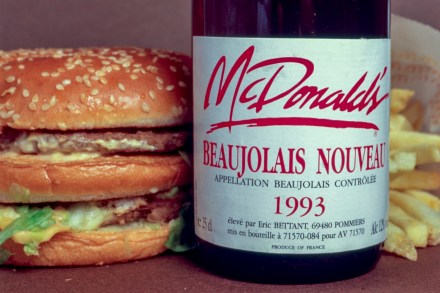
Une bouteille de beaujoulais nouveau à côté d'un repas McDonald's, France, 1994. (Photo by Robert DEYRAIL/Gamma-Rapho via Getty Images)

Le Sirenuse: the loveliest hotel in the world

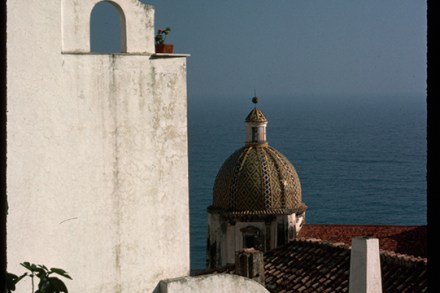
Look out from the balcony of your room at Le Sirenuse and you’ll see the trio of rocks jutting out of the Tyrrhenian Sea that gave the hotel, one of the last true greats in the world, its name. The three jagged islets form an archipelago, which is said by the Greeks to have been the home of sirens whose enchanting songs lured sailors to their deaths. Le Sirenuse, a scarlet palazzo wedged into the cliff-face of Positano, boasts similar powers of attraction. In a place known around the world for its beauty, Le Sirenuse stands out. It has developed a reputation as the loveliest hotel in the world; somehow, it exceeds that billing.

A glutton’s guide to Venice

I have been writing about restaurants that are in or near cultural landmarks: museums, opera houses, historic sites. This column is an exception, as it is about one of the few restaurants in the world that is a cultural landmark in its own right: Harry’s Bar. It is an even more remarkable fact given that the restaurant is in the midst of probably the most culturally dense city in Europe, Venice. I must declare that I have eaten at Harry’s at least once, sometimes twice, on every one of the many trips I have made to Venice since 1977. I love it. Not everyone does – or maybe it’s more accurate to say that not everyone gets it. I took a friend there on his first visit and he complained that “the chairs are too low, the drinks are too small and the prices too high.

venice

A chef’s twist on the Feast of the Seven Fishes

My Italian-American family gathers every Christmas Eve to cook a Feast of the Seven Fishes. And every year, it’s always just a little disappointing. Sorry, Mom. While the Feast must include seven distinct seafood dishes, there’s no correct way to prepare it. It’s entirely open to personal preference or family tradition and typically relies on whatever fish is readily available in the American northeast. Still, a touch of gourmet precision can help refine some of Nonna’s age-old recipes. The Feast is a quintessentially Italian-American tradition – one rooted ostensibly in Old World Catholicism and the abstention from meat until Christmas Day. Yet there’s very little record of it ever taking place in Italy.

Are America’s women heading for the exit?

Life is apparently so disagreeable in Donald Trump’s America that 40 percent of women aged between 15 and 44 want to leave. That is four times higher than the 10 percent who wanted to quit the US in 2014. According to Gallup, which conducted the poll, nearly half the nation’s younger women have “lost faith in America’s institutions.” This disenchantment accelerated after the Supreme Court’s 2022 decision to overturn Roe v. Wade, which enshrined the constitutional right to abortion. Younger American men are bearing up better. Only 19 percent share women’s distaste for the Donald, a 21 percent differential which is the largest recorded by Gallup since it began asking the question in 2007.

Women

Franco Zeffirelli’s slice of paradise in Positano

If you say the name Franco Zeffirelli to anyone under about 40, you’re likely to be met with bemusement. Find any opera or film lover over that age, however, and you will be greeted with a warm exclamation – “Ah!” – followed by a recitation of the Italian director’s greatest achievements. From his emergence in international culture in the 1960s with his seminal film of Romeo and Juliet to his legendary work on stage with such operatic titans as Maria Callas and Plácido Domingo, Zeffirelli became synonymous with tasteful, intelligent productions of the classics, all of which made him, for a time, the best-known cultural figure in Italy. It is fair to say that Zeffirelli, who died in 2019, didn’t always get it right, personally or politically.

Live-translation AirPods are the future

I have arrived in Naples, Italy, after an arduous flight from a chaotic London Gatwick Airport. I’m settled in a glamorous top floor apartment in the Quartieri Spagnoli – the romantic old “Spanish Quarter” – where Vespas fizz over cobbles and laundry hangs across alleys like flags of endless surrender. Most importantly, I’m clutching my Apple AirPods3 in their shiny new capsule. Because I’ve come here to do a grand, futuristic experiment using their much-heralded “live translate” function. Does it really work as smoothly as Apple says? Can I actually slot them in my ears and have them translate the Italian speaker in front of me, in real time? Is it really like the sci-fi Babel Fish from The Hitchhiker’s Guide to the Galaxy?

How Giorgia Meloni became Donald Trump’s EU whisperer

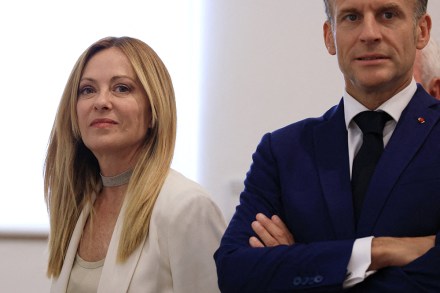
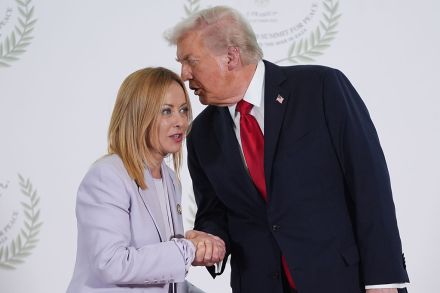
Henry Kissinger once complained: “Who do I call when I want to speak to Europe?” Today the answer would be Giorgia Meloni, Italy’s first female Prime Minister, who has emerged as the most important leader in the European Union. No Italian leader has filled this unofficial role before: it is usually reserved for the heads of the bloc’s two largest economies, Germany and France. Yet Meloni has capitalized on the weakness of their leadership. French President Emmanuel Macron may delude himself that he is Napoleon or Jupiter, but in reality he is the deeply unpopular head of a lame-duck government. To borrow a phrase from Donald Trump, he doesn’t “have the cards.” Meanwhile, Germany’s Chancellor, Friedrich Merz, heads up a flimsy coalition.

Meloni
authentic

Why I’m ditching ‘authentic’ travel

I’ve always heard Americans describe the food in Rome as “authentic,” though maybe that’s only relative to our three square meals of Little Debbies, reconstituted meat and freeze-dried astronaut food. The things we eat are not authentic food. But abroad, authenticity means anything sourced locally and served by a very small old woman with limited English. If a nonna told me she’d fished anchovies out of the Trevi Fountain and plucked chicory from cracks in the sidewalk, I’d swoon and think: they really know how to do it right in Europe. Authenticity, to me, also means a little discomfort. Bones in your rabbit stew. Lugging a suitcase up a dirt road. Getting pickpocketed.

How much hope did Trump offer Meloni?

In early March Donald Trump said Elon Musk was doing “an amazing job.” Last week he said Governor Gretchen Whitmer of Michigan was doing an “excellent job.” On Thursday it was the turn of Italian prime minister Giorgia Meloni during her meeting at the White House. Trump declared that she was “doing a fantastic job.”  What Trump found so fantastic was never specified, but he tossed a variety of bouquets in Meloni’s direction. Not least was his vow that “there will be a trade deal, 100 percent” with the European Union. It was qualified, however, by Trump’s claim that he’s in no rush to strike a deal with Ursula “the West no longer exists as we knew it no longer exists” von der Leyen, the president of the European Commission.

meloni

Amanda Knox’s new memoir asks what lies next

The question at the heart of Amanda Knox’s latest memoir Free: My Search For Meaning is a simple one: what are the life prospects for an exoneree? It follows 2013’s Waiting to be Heard, which detailed the Seattle student’s imprisonment in Italy before and after a wrongful murder conviction, and her fight for justice. For anyone who was asleep under a boulder at the time, Knox is the gauche American student who became the target of a media firestorm following the brutal murder of her British roommate Meredith Kercher in Perugia, Italy, in 2007. She was convicted of the crime alongside her boyfriend Raffaele Sollecito in 2009 and freed on appeal in 2011. (Kercher’s actual murderer, Rudy Guede, was convicted in a fast-track trial in 2008, and released in 2021.

amanda knox
prodi italian europeans

Why are Europeans so untroubled by their ignorance of America?

Laramie, Wyoming Americans are infamous on the eastern side of the Atlantic for knowing little or nothing about European culture, history and politics – and for being proud of the fact, as Richard Hofstadter, the late Columbia historian, described in them in Anti-intellectualism in American Life, the winner of the Pulitzer Prize for non-fiction in 1964. Much less widely recognized is how little Europeans know about America, Americans and their own civilization – an ignorance that troubles them not at all, perhaps because they seem to be unaware of the fact.

The Versaces have left Versace

Donatella Versace was never supposed to be a fashion designer. She had no formal fashion education and was happy working on the business and styling of Versace as her brother, Gianni, built his house into Milan’s most opulent. But, in 1997, a madman brutally murdered him — and someone had to keep his legacy and brand alive. And so Donatella did. Over the almost 30 years that followed — struggling through grief, business troubles and addiction — she has released more than 100 collections, grown the brand into a multi-billion-dollar giant and did so aggressively, without selling out its style or quality. Her recent Fall /Winter 2025 collection was an eccentric, fabulous celebration of those decades, pulling exuberantly from the Versace archives.

donatella versace

Rome is ready for its close-up

Rome Like a Parioli matron shedding her curlers, pins and hairnet in anticipation of a major family celebration, Rome’s monuments are emerging from shrouds of cladding and scaffolding ready for their close-up. The angels and river gods of the Ponte Sant’ Angelo and the Piazza Navona shine as blinding white as the day they emerged from Bernini’s workshop. The ancient granite basins of the Piazza Farnese fountains shimmer with an ethereal bluish light. The big occasion is the Papal Jubilee year of 2025, expected to draw a whopping 32 million visitors. That’s more than ten times Rome’s population, and half as many visitors again as in a normal year. If you’re planning a visit, do it soon before the city is entirely swallowed by crowds.

Rome
Venice

An escape from Venice

Those who have visited Venice in the summertime will have witnessed the masses who descend into the heart of the labyrinthine islands, clogging their historic stone arteries and beautiful atria in a gormless and sclerotic trance. Meandering along the canals can always lead to some duomo or piazza that merits a standstill and an upward gawp. If you’re at all like me, after sweating through those tight streets with other tourists, one day certainly feels like enough. So it went on my recent visit. After popping my head in for as much of the Biennale that was still on display, a Bellini at Harry’s, lunch at Staffa and an inspiring visit to the Fondazione Querini Stampalia, I decided to get in the car and leave.

I can’t stand Stanley Tucci

I love Italian food, and I love food writing and TV shows, so you might think I’d love Stanley Tucci. And yet I find him creepy and his recipes are rubbish. I can’t be the only one. The actor, who I first saw in the brilliant film Big Night, about a Jersey Shore Italian-American restaurant, is probably best known for The Devil Wears Prada, a film I adore. His character in that film did wind me up, but it took a while before Tucci himself got on my nerves. I suppose it began with him coming over all chef, like he’s the new Anthony Bourdain. I kept being told to watch his TV series where he travels around Italy, but the sight of his smug face on my screen turned out to be more than I could bear.

Stanley Tucci

The secrets of Super Tuscans

I suspect that most readers, asked to name the most important red-wine grapes of Italy, would focus mainly on Nebbiolo, Barbera and Sangiovese, the most widely planted grape in Italy. Lovers of Sicily might also mention Nerello Mascalese and Nero D’Avola. What if I told you that some of the most spectacular wines in Italy were made from the Cabernets (Sauvignon and Franc) and Merlot? Have I gotten lost in the Médoc? No, I am in Tuscany, ancient home of the Etruscans, northwest of Rome. To be specific, I am in Bolgheri, a few miles from the Ligurian coast. On a clear day, if you cast your eyes south, you might just see Napoleon padding around the island of Elba plotting his escape. Everyone has heard of “Super Tuscans.” Not everyone knows the story of their origin.

Tuscans