Israel

Can Iran help keep King Bibi in power?

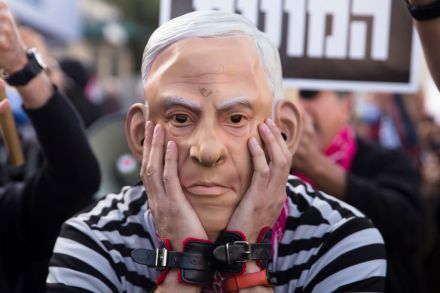
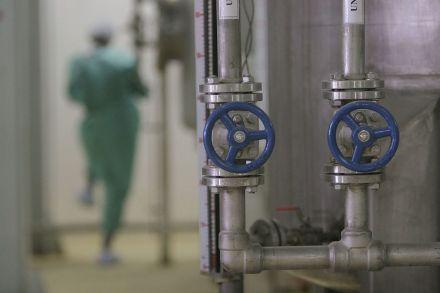
Benjamin Netanyahu has a problem: he doesn’t have sufficient support to form a coalition. With 20 days left to complete this near impossible task, he is desperate; and, when backed into a corner, Netanyahu looks to Iran as his saviour. The timing of the recent explosion in Iran’s Natanz’s nuclear facility – and particularly the fact that Israel has done little to dispel the notion that it was to blame – suggests that the motivation was at least partially political.  This isn't to say the attacks on Iran aren’t normally motivated by interests of national security. The threat of a nuclear-capable Iran is substantial: according to Iran, the Natanz nuclear site holds thousands of advanced centrifuges.

Israel’s shadow war with Iran explodes into ‘nuclear terrorism’

If time flows at an even pace, then history does not. Joe Biden may still be new in the job, but he finds himself at the centre of a war between Israel and Iran in everything but name. After a comparative lull, events are not so much accelerating as whirling around the president, drawing him inexorably in. Last night, Iranian officials reported that the Natanz uranium enrichment plant – a lynchpin of its nuclear programme – had been the victim of what they described as 'nuclear terrorism'. According to US officials quoted in the New York Times, an explosion destroyed the independent power system that supplied the centrifuges for enriching uranium.

The West’s shameful Iranian capitulation

On a sweltering day in July 2018, German police pulled over a scarlet Ford S-Max hire car that was travelling at speed towards Austria. The driver, Assadollah Assadi, the third secretary to the Iranian embassy in Vienna, was arrested at gunpoint and taken into custody. Although unusual, there was a good reason for detaining the diplomat: Assadi had used his immunity to smuggle a bomb on a commercial airliner from Tehran to Austria, intending to carry out what would have been one of Europe’s worst atrocities in recent years.

Can Boris beat the vaccine passport rebels?

No prime minister wants to be dependent on the opposition to get the government’s business through the House of Commons. But it is likely that Boris Johnson will be in this position when it comes to ‘Covid status certificates’, other-wise known as domestic vaccine passports. More than 40 Tory MPs have already signed a pledge to oppose them, and the government’s majority is 80. ‘It is just down to Starmer. If he whips against, Boris will lose,’ says one of the leaders of the Tory rebellion. The policy has hit a nerve in the Conservative party. The view in government is that these MPs are unlikely to change their minds. They won’t be assuaged by promises to limit the scheme to mass events or anything like that.

Britain’s vaccine success was supposed to lead to freedom. What happened?

In November, when cases were surging and a second lockdown was under way, Boris Johnson made a big promise: things might look bleak, he said, but the ‘scientific cavalry’ would arrive. It duly did, with a vaccination programme that became the envy of Europe. The mood of the country lifted. Today, Britain is still on course to become the first country in Europe to vaccinate its way out of the pandemic — and lockdown. The economy can reopen in time for summer: truly a great escape. Science achieved the seemingly impossible. Produced in record time, Covid vaccines are proving more effective than most predicted. In Britain, cases and deaths have fallen by 95 per cent since the latest peak, a stunning descent.

In Israel, vaccine passports are already redundant

Jerusalem The vaccination centre where I got my jabs was in the cavernous foyer of the Jerusalem Arena, Israel’s largest indoor sports venue. Through the locked glass doors, I could see the seats where my 15-year-old and I spent so many hours cheering on our basketball team. Putting my ear to the door, I could hear the players practising. Last week, we were finally back in the stands after a year’s absence. Fans were allowed in, at quarter of the arena’s capacity. After showing my season ticket, I was then asked for my ‘green pass’, which proves I have been vaccinated. My son, too young for vaccination, had to queue outside for a quick Covid test before joining me.

What Britain can learn from Israel’s vaccine passports

Boris Johnson’s announcement about vaccine passports was met with criticism from backbenchers on both sides of the political spectrum. The scheme was described as potentially ‘discriminatory’ with warnings that it may lead to a ‘two-tier’ Britain. Labour leader Keir Starmer even said the use of vaccine passports is ‘not British.’ Given the deep suspicion towards national identification cards, this did not come a surprise. But if the government eventually chooses to use vaccine passports, some lessons from Israel’s experience may be helpful.

Don’t count Bibi out just yet

Elections are supposed to settle things. That's the idea, at least. Politicians argue, take decisions and pursue the policies they want to, but there comes a day when they have to answer to the public and face their judgment. A day after Israel's fourth parliamentary election in two years, no verdicts are forthcoming, not even in Prime Minister Benjamin Netanyahu's corruption trial. The votes are still being counted, but it looks once again to be an awkward draw. Neither Netanyahu nor his rivals are expected to be able to form a governing coalition. Elections in Israel have become like the difficult season of a long-running comedy, when the producers try to introduce quirky new characters without changing the core format too much.

Is time up for King Bibi?

In the run-up to its fourth election in two years, Israel is enjoying its vaccine success story. The number of seriously ill Covid patients is in decline, the R rate is slowly falling and the economy has started to reopen. But prime minister Benjamin Netanyahu is not reaping the rewards. Support for Netanyahu's party, Likud, although still the largest, has shrunk significantly since the last elections where it won 36 seats. Blue and White, which won 33 seats, has since crashed and burnt due to brilliant political manoeuvring by Bibi (and a staggering lack of political sophistication by leader Benny Gantz). Yet Likud is expected to only win 30 seats in this week's snap election. For Bibi, the vaccination programme has been a double-edged sword.

The growing alliance between Central Europe and Israel

In 2018, the Czech President Miloš Zeman promised in a speech on the 70th anniversary of the founding of Israel to do everything in his power to move the Czech embassy to Jerusalem. Last week, Czech Prime Minister Andrej Babiš finally opened an official diplomatic office in the Holy City. With Israeli leader Benjamin Netanyahu claiming that Israel has ‘no greater friend in the Eastern hemisphere’ than the Czech Republic, the move has underlined Central Europe’s divergence from the EU when it comes to the Israeli-Palestinian conflict. The official Czech Embassy still remains in Tel Aviv – but the nation has gone against EU policy by becoming the bloc’s second member to open an official diplomatic branch in Jerusalem.
Israel’s changing global fortunes

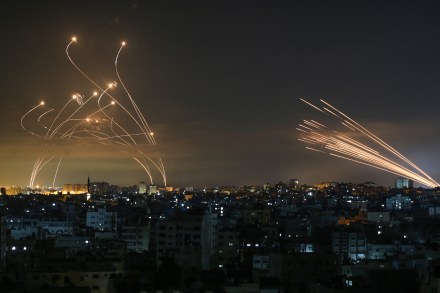
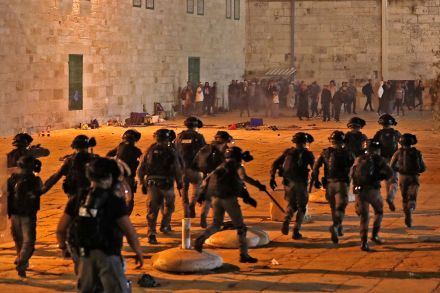
Israel has been working closely with other countries and international companies, developing and producing vaccines against Covid-19. At the same time, the Middle Eastern country is rapidly improving relations with its Gulf neighbours, the latest evidence being the appointment of a new UAE ambassador to Israel. A major shift has taken place in Israel — 20 years ago the country was under siege from terrorists, with bus bombings rocking Jerusalem and terror attacks in the heart of Tel Aviv. Just a few years ago Israel was fighting a major war in Gaza against Hamas, a war that is the subject of an inquiry by the International Criminal Court. For many years Israel has attempted to re-brand itself using public diplomacy and showcasing its tech sector and vibrant society.

Corruption affects everything in Palestine – even vaccines

Visit certain parts of the West Bank and you’ll encounter mansions owned by senior officials in the Palestinian Authority (PA). By any standards – let alone those to which ordinary citizens are accustomed – they are impressive, with arches, colonnades and tall windows. If you’d been watching them in recent weeks, you might have seen vaccines being quietly delivered to these residences in unmarked cars, having been skimmed off the supply intended for medical workers. Those, at least, were the allegations made by a number of Palestinian human rights and civil society groups. Last week, the Palestinian health ministry was forced to come clean.

The moral debate over Covid jabs for children

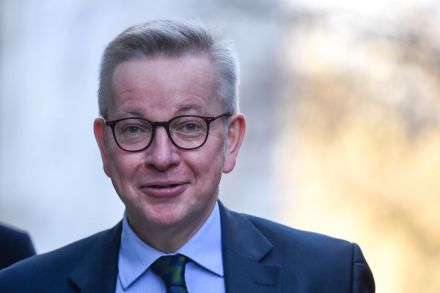
Israel has the world’s attention, becoming the first country to achieve mass vaccination. What it does now may be followed worldwide. The first big development has been the use of immunity ID cards which give vaccinated Israelis access to gyms, indoor restaurants and — soon — holidays in Greece. Britain is preparing to follow suit, with Michael Gove considering UK vaccine certificates ahead of the great unlocking on 21 June. He’s widely expected to come out in favour of IDs in some form. But the other idea attracting interest in Whitehall is Israel’s plan to vaccinate children. Israel’s deputy health minister Yoav Kisch has said those aged 12 to 16 could start to be vaccinated next month, pending regulatory approval.

Iran doesn’t hate Israel

The decades since the Islamic revolution have weighed heavy on the people of Iran. Living in fear, under extreme levels of surveillance and oppression, ordinary citizens have seen their quality of life plummet and their horizons shrink, as their country became an international pariah. Those who dared to protest have been brutally repressed by regime goons with knives, axes and heavy weaponry. And while forced to suffer the deprivation of draconian sanctions, hardworking families could only look on as their despotic leaders splurged billions of dollars on military meddling overseas. When the senior Hamas leader Mahmoud al-Zahar boasted in December that the regime had given him £15.8 million of government money, Farsi social media lit up in rage.

Is Israel’s green pass the key for lifting lockdown?

Coronavirus rates in Israel right now are among the highest in the world. But that didn't stop the Israeli government from lifting its strict lockdown and, yesterday, reopening most of its retail economy. Non-essential shops, shopping centres, libraries and museums reopened to the general public after being closed for more than six weeks, despite the fact that daily cases and hospitalisation numbers remain at pretty much the same levels as when the lockdown began. The streets were packed as people tried to catch up on nearly two months' worth of shopping. The reason – or, perhaps, the justification – for this reopening is Israel's successful vaccination programme.

Does this Israeli study support Britain’s one-dose strategy?

Is the British approach of prioritising first doses of Covid vaccines and not promising a second dose until 12 weeks later compromising our ability to fight the disease? It is not a moot point, with several EU figures asserting that it is a risky route to take. As I wrote here a couple of weeks ago, as far as the AstraZeneca/Oxford vaccine is concerned, what evidence we have supports the practice of delaying a second dose until 12 weeks after the first one; the vaccine is more effective that way. However, a question mark has continued to hang over the Pfizer/BioNTech vaccine. There is limited data on the most effective dosing regime in this case because the phase 3 trials did not experiment with delayed doses – everyone involved was given a second dose 21 days after the first.

Revealed: how Mossad eliminated Mohsen Fakhrizadeh

The Mossad is not known for its touchy-feely approach. Whether it was the kidnap of Adolf Eichmann in the sixties, hunting down and executing the Black September terrorists in the seventies and eighties, or dispatching a Hamas chief while disguised as tennis players in a Dubai hotel in 2010, the agency has built a reputation as the most feared secret service in the world. Yet its underlying moral imperative in this most morally difficult of professions must not be overlooked. Former Mossad chief Meir Dagan used to show spies about to embark on a mission a photograph of his grandfather kneeling in front of Nazi soldiers before they shot him. This sense of ethical purpose has always been at the heart of the agency, even when it has been driven to play dirty.

What’s the problem with BBC Arabic?

It’s easy to forget that your BBC licence fee does not only fund content that you and your family consumes. In addition to the output aimed at domestic audiences, your annual payment of £157.50 funds a host of foreign language services aimed at projecting British impartiality and soft power overseas. The largest of these is BBC Arabic. Launched as a radio station in 1938, it was the first of the BBC’s non-English experiments, and the most successful. Today encompassing television, radio and online, the channel reaches more than 40 million people every week. That’s both an influential audience and a shedload of British money.

The ICC is playing politics by targeting Israel

Sovereignty, that old-new friend, is in vogue again thanks to Brexit and the advances made by nationalists across Europe and the United States. Those of us who lament these developments should not regret the reassertion of national sovereignty, for it is intimately linked to democracy and self-determination and provides domestic legitimacy for the kind of liberal, cooperative world order we wish to see. If you want a strong international community, you need to have strong, confident nation-states in which people believes their country can be active in the world without losing its sense of self.

Could an Israeli-Saudi peace deal be imminent?

The Israeli-Saudi peace deal is, to coin a phrase, oven-ready, a source close to the negotiations told me this week. After many months of covert meetings, the detail has been agreed and the Israelis are ready to commit. All that’s needed is for the Saudis to sign on the dotted line. This means that an alliance could be sealed within six months. Of all the Arab-Israeli peace agreements, a Saudi deal would be the most significant. The Gulf kingdom is a huge country that comes close to bordering Israel, and, as such, is of great strategic weight. It is the largest economy in the Middle East. And as the custodian of Islam’s two holiest sites – Mecca and Medina – it is a serious contender for the title of leader of the Muslim world, and the main counterweight to Iran.