Israel

Joe Kent’s resignation was an act of political positioning

Reflecting on the resignation of Cyrus Vance, James Thomson, the American historian and journalist, wrote in the Washington Post that the former secretary of state “has done us all a great public service.” In doing so, Thomson argued, Vance gave “new life and spine to a somewhat rare and weak convention in our nation: resignation in protest of an issue of principle.” The year was 1980. Vance had resigned in protest over the Carter administration’s decision to authorize Operation Eagle Claw, the ill-fated mission to rescue American hostages held in Iran after the Islamic revolution. The mission ended ignominiously. President Carter pulled the plug after equipment failures and a deadly helicopter collision killed eight service members. Vance was vindicated.

Joe Kent

The right’s Israel fracture

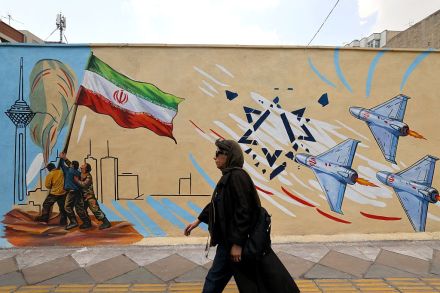
As the joint American-Israeli military campaign in Iran continues, President Trump’s coalition is starting to exhibit some cracks. The war in Iran has emerged as a proxy battle over a broader, long-simmering conflict within the right about Israel. And the fight over Israel is, in some important ways, a proxy battle about Jews in general. Big picture, what we’re seeing now is that the traditional divisions on the right between paleoconservatives and neoconservatives, between hawks and doves, are being reshaped into a battle over Israel specifically. It’s a very difficult subject; this issue has become highly emotional and personal for those on both sides, and even in my world, it’s set friends against one another. How far do the emerging divisions go, and how should we respond?

Israel wants to destroy Hezbollah once and for all

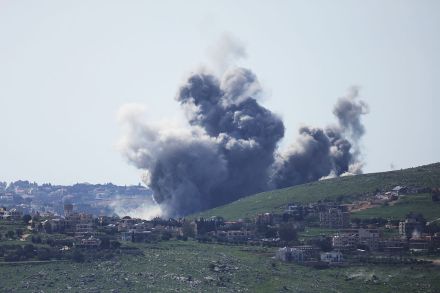
At around 2:30 a.m. on March 2, Israel bombed Beirut’s mostly Shia southern suburbs in response to a Hezbollah rocket attack on northern Israel. The road heading into Beirut from South Lebanon and the city’s southern suburbs was jammed with cars filled with Lebanese fleeing further reprisals. Some 52 civilians were killed and 154 injured, a hefty butcher’s bill even in this part of the world. Most Lebanese are happy Hezbollah has been defanged, even if they wish it wasn’t thanks to Israel Hezbollah’s actions were a demonstration of their ongoing support for Iran, but goading Israel was a cataclysmic miscalculation.

Is this Trump’s Sarajevo moment?

Here we go again. Switch out Saddam Hussein for the Ayatollah Khamenei and Ahmed Chalabi for Reza Pahlavi and you have a fresh war for regime change in the Middle East, this time with Israel as America’s sidekick. With Operation Epic Fury, the American and Israeli bombing of Iran and push for regime change, the self-proclaimed “President of Peace” runs the risk not only of triggering wider upheaval in the Middle East, but also globally. Is this a new Sarajevo moment? With Trump’s own generals having warned him that attacking Iran could be a debacle, he may have torched his own presidency Unlike George W. Bush in 2003, who worked to bolster domestic and international support for attacking Iraq, Donald Trump has disdained the slightest effort to justify his war publicly.

iran

Trump launches a remote-control regime-change war on Iran

"We’re going to destroy their missiles and raze their missile industry to the ground," said Donald Trump, as he stood at the lectern in his white USA cap and announced the launch of a "massive and ongoing" military operation against Iran.  "It will be totally, again, obliterated." He had to say "again" because he has insisted over and over that Iran’s nuclear facilities had been "utterly obliterated" last summer, after Operation Midnight Hammer.  But the objective of these latest midnight or very early morning strikes, conducted again by US and Israeli forces working together, is already far broader than the wiping out of weapons of mass destruction – whether that be uranium enrichment sites or Iran's ballistic missile capabilities.

Will Trump ‘totally obliterate’ Iran’s nuclear program – again?

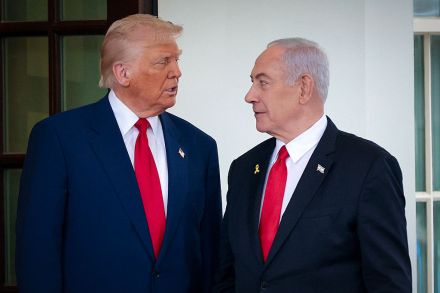
Donald Trump spent much of the second half of last year boasting about the total and utter success of his military strikes on Iran. “As you know,” he said in August, “we took out the nuclear capability of Iran, and to use the term that people try to dispute without any knowledge, it was obliterated.” Iran’s nuclear program, he assured the world, had been set back by “decades.” Yet yesterday, just six months on, there he was again – meeting Israel’s Benjamin Netanyahu once more to discuss the urgent need to prevent Iran from developing a nuclear weapon.

Iran is out of good options

Over the last week, the USS Abraham Lincoln aircraft carrier, additional F-15 fighter planes and naval vessels carrying sea-launched cruise missiles have been making their way to the Middle East in what can only be described as a bid by President Trump to squeeze Iran into submission. In case anybody doubted this is what Trump was after, he took to Truth Social early in the morning to send the Iranians a message: give me what I want or face bombing the likes of which you’ve never seen. "A massive Armada is heading to Iran. It is moving quickly, with great power, enthusiasm, and purpose,” Trump wrote. "Hopefully Iran will quickly “Come to the Table” and negotiate a fair and equitable deal – NO NUCLEAR WEAPONS – one that is good for all parties.”What deal is Trump referring to?

Iran

The hypocrisy of the Maduro fan club

Finally, the left has found a "kidnap victim" it cares about. Having spent more than two years making excuses for Hamas’s savage seizing of 251 Israelis, having violently torn down posters of those stolen Jews, now the activist class has suddenly decided that abduction is bad after all. Why? Because a dictator they admire, Nicolás Maduro, has been abducted by the United States. What do we even say about people who get more agitated by the seizing of a 63-year-old corrupt ruler than they do by the abduction of a nine-month-old Jew? That was Kfir Bibas, kidnapped along with his mother and his four-year-old brother during Hamas’s carnival of fascist violence on October 7, 2023. They were later murdered.

maduro

Do politics matter at all?

It is likely that the ordinary man, not being an ideologue, would agree as he grows older with Arthur Balfour’s famous epigram: “In politics nothing matters very much, and few things matter at all.” This is only partly to do with sub specie aeterni, etc. For the rest, there is the simple recognition that politicians always make politics (and the questions and policies with which they concern themselves) out to be much more substantial and consequential than they actually are.

balfour

Jared Kushner’s international friendships with benefits

In 1998, the conservative intellectual and moralist Bill Bennett published a book, The Death of Outrage: Bill Clinton and the Assault on American Ideals. Bennett had to rush the book out after “I did not have sexual relations with that woman” changed to: “Indeed, I did have a relationship with Miss Lewinsky that was not appropriate.” But the Death of Outrage is almost too quaint a title to capture the age of Donald Trump, especially now that his son-in-law Jared Kushner is back as his closest foreign policy advisor. Trump told reporters who questioned Kushner’s role: “I have Jared. Find anybody more capable.

No, America isn’t fundamentally flawed

What has gone wrong for Americans? To listen to an increasing number of politicians and pundits on both sides, from Tucker Carlson to Alexandria Ocasio-Cortez, from Nick Fuentes to Zohran Mamdani, the answer seems to be: everything. Americans are unable to get a job; to afford the necessities of life; to get married or have children; to find religious meaning or form friendships. And all of this can be laid at the feet of corrupt institutions and a corrupt system. This conspiracy-tinged, vitriolic take on the American system is a lie. Yet it contains a grain of truth. Our institutions have been led self-servingly by a coterie who disdain American values.

Sun, sand, slaves: an influencer’s trip to Qatar

The lure of the junket can tempt even the hardiest of media souls. For Twitter influencers who’ve never heard of an ethical standard, much less adhered to one, they’re catnip. That’s why this week Cockburn has witnessed the embarrassing spectacle of several right-wing personalities shilling for the government of Qatar. Rob Smith, an Iraq War vet who bills himself as “influential, not an influencer,” described his Qatari vacation as “eye-opening.” He also sounded very Baghdad Bob by saying he’s “helping to keep America strong by understanding and highlighting the unique and mutually beneficial military and financial partnerships that we share with Qatar.” Smith says he asked “tough questions,” yet underwent a barrage of criticism.

Qatar
Truth

Is there such a thing as right-wing art?

This has been adapted from a speech titled “The Myth-Maker as Nation-Builder,” which was delivered by Jonathan Keeperman, who runs publishing house Passage Press, at the National Conservatism Conference 2025. As W.B. Yeats once said: “There is no great literature without nationality. There is no great nationality without literature.” People often ask me whether it is possible to produce right-wing art, or otherwise to use art to engineer a more nationalist politics. But this strikes me as backward thinking. Culture is the field in which a people encounters the shared symbols and language that make political life possible. Art, done well, discloses the deeper truths a people already carry within themselves. Art therefore does not produce the nation; it reveals the nation.

Israel is turning the screws on Hezbollah

The killing of Lebanese Hezbollah military chief Haytham Ali Tababtabai by Israel this week reflects how much the balance of power between Jerusalem and the Iran-backed Shia Islamist group has shifted since the year-long war between the two in 2023 and 2024. Yet, paradoxically, Tabatabai’s killing also shows that nothing has been finally settled between the two enemies. While Hezbollah has now been shown to be much weaker than Israel, it nevertheless remains stronger than any internal faction in Lebanon, including the official Lebanese government.

hezbollah lebanon

Will Israel bring back the death penalty for terrorists?

For years, there was a broad consensus in Israel that there was no benefit to reintroducing the death penalty. But now, Prime Minister Benjamin Netanyahu’s government is reportedly considering supporting a bill which would bring back capital punishment for convicted terrorists. The bill, which has passed its first reading in the Knesset, would introduce the death penalty for those who murder Jews – specifically, Palestinian terrorists. It would not apply to Jews who commit acts of terrorism and murder Palestinians. And it would not apply if Israeli Arabs, who are full citizens, are murdered. The bill is being promoted by Itamar Ben-Gvir, the minister of national security, who in 2007 was convicted of incitement to racism for chanting “Death to Arabs.

The global cottage industry gaming America’s culture wars

It is the 9/11 of the blue ticks, the Hindenburg of the grifters, the dotcom bubble of the slop-peddlers. The influencer industry has been left reeling by a new function on X which allows readers to see the location from which any given account is operating. The latest update makes it possible to establish when and where an X account was set up and whether it has changed its name since then. A sensible measure, you might think, but not if X is where you make your living and do so by inserting yourself into other countries’ internal politics. There are no firm figures on how many earn a crust this way but even the most cursory glance through the Hellsite Formerly Known as Twitter will tell you the number isn’t insignificant.

X

Why Trump and Israel differ on Turkey’s involvement in Gaza

As the Gaza ceasefire struggles into its second month, a significant difference between the position of Israel and that of its chief ally, the United States, on the way forward is emerging. This difference reflects broader gaps in perception in Jerusalem and Washington regarding the nature and motivations of the current forces engaged in the Middle East. The subject of that difference is Turkey.  The Turks have expressed a desire to play a role in the “international stabilization force” (ISF), which, according to President Donald Trump’s 20-point plan, is supposed to take over ground security control of Gaza from the IDF (and Hamas) in the framework of the plan’s implementation.

turkey gaza

The Heritage Foundation’s exodus of experts

Under Kevin D. Roberts, the Heritage Foundation is unraveling the remarkable legacy Edwin Feulner built. Once known as “the intellectual backbone of the conservative movement,” Heritage’s moral and philosophical clarity has yielded to confusion, populism and personality-driven politics. The damage to Heritage’s mission and credibility is becoming irreparable. Much of the recent outcry focuses on Roberts’s decision to maintain Heritage’s partnership with Tucker Carlson after Carlson’s now-infamous interview with Holocaust-denier Nick Fuentes.

Kevin Roberts heritage foundation

The Israel-Lebanon ceasefire is in danger of shattering

It’s been almost a year since Israel and Hezbollah, the Lebanese militia that arguably held more power in Lebanon than the government itself, signed a ceasefire to end a ferocious two-month long war. The deal couldn’t have come at a better time; thousands of Israeli air and artillery strikes had pulverized southern Lebanon, Hezbollah’s traditional base of operations, leading to a displacement crisis and killing close to 4,000 Lebanese. Whole swaths of northern Israel had been vacated due to Hezbollah missile attacks, forcing the Israeli government of Prime Minister Benjamin Netanyahu to spend money on tens of thousands of civilians bunking in hotel rooms. But the agreement is wearing thin. The ceasefire is really a ceasefire in name only. Will it hold?

lebanon

How Israel won the war – and lost the PR battle

Regardless of the ultimate outcome of the Gaza peace deal brokered by Donald Trump, the past two years have seen Israel achieve an unprecedented litany of military accomplishments in the Middle East. The level of damage done to Hamas, Hezbollah and the Houthis is difficult to comprehend. The end of the Assad regime and, with American support, the demolition of the Iranian nuclear program – setting it back years at the least – were steps that many once thought impossible. Israel has emerged from the post-October 7 period unquestionably stronger in every way except one: its support around the globe, particularly among the youngest voices in the West.

Israel