Israel

Joe Biden gives in to the Squad

From our US edition

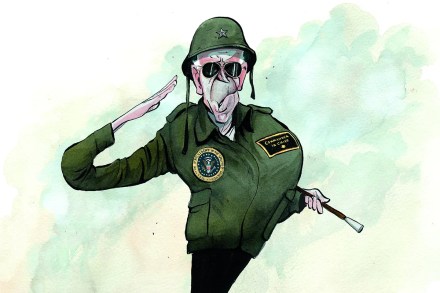
Welcome to Thunderdome. It’s been clear since day one that Joe Biden was more scared of the progressive left than anyone else. His White House was incredibly fearful of a challenge from Bernie Sanders or a Squad member within the 2024 primary and the damage it would do to the Democratic coalition and his own re-election hopes. So the White House swung left — not just on economic policy, where he threw everything behind massive expenditures that pleased leftist politicians, pundits and people who have shrines to FDR in their houses, but on social policy as well, where he embraced the culture war issues of abortion and the trans agenda and hung on tight.
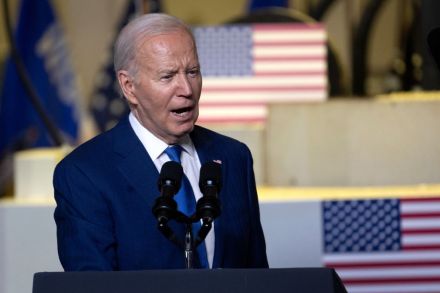
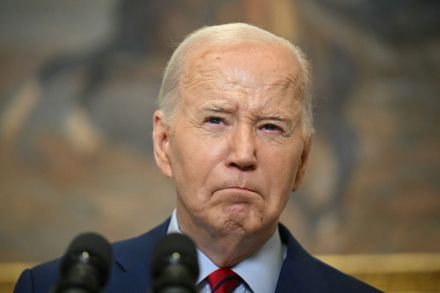
Biden’s Israel betrayal

From our US edition

President Joe Biden has been straddling an incredibly thin line when it comes to his stance on the Israel-Gaza conflict. The president historically has been supportive of the US’s alliance with Israel but his posture has been tested by a vocal pro-Palestinian contingent in the Democratic Party; in the Democratic primaries, they voted “uncommitted” to send a message to their party’s leader and in recent weeks have showed up on college campuses to demand university administrations divest from Israel. Biden has responded by remaining vocally pro-Israel but inching further away from Israel from a policy standpoint.

Biden’s pause of weapons shipments to Israel is another misstep

From our US edition

President Biden just made a strong move against Israel, ordering the US government to stop shipping weapons supplies to the Israeli Defense Forces. It was his fine strategic mind at work, once again.  Usually the public defers to the president and his advisors on foreign policy, unless the issues become very prominent or the president forfeits their trust. Those are the two problems now facing the Biden administration. The war in Gaza is a major issue — and the public has zero confidence in Joe’s strategic wisdom. He lost the public’s confidence on that score after the disastrous withdrawal from Afghanistan and the failed attempts to appease Iran. Now, they are unlikely to defer to his judgment in distancing himself from Israel, America’s greatest ally in the region.

biden weapons

Marjorie Taylor Greene’s strategery

From our US edition

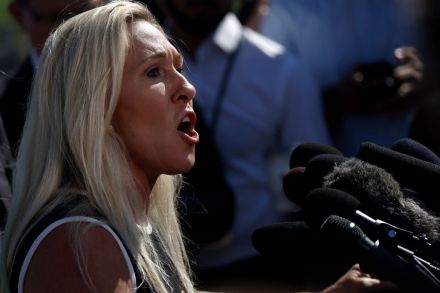
Dumb is dumb. Among the dumbest is a political strategy that harms your own side and infuriates your normal allies, the ones who stand with you on most issues. That describes Marjorie Taylor Greene, who is a master of both bad ideas and bad strategies. She’s a bomb-thrower who lights the fuse, gathers her friends around her and then drops the bomb on her own toes. She illustrated those qualities last week, not once but twice. First, she opposed a House bill on antisemitism, which passed easily with bipartisan support. Her reason was that the resolution could be used to attack believing Christians. To prove it, she dredged up medieval calumnies against the Jews as “Christ-killers,” who handed Jesus over to the Roman authorities.

An explanation of the campus protests

From our US edition

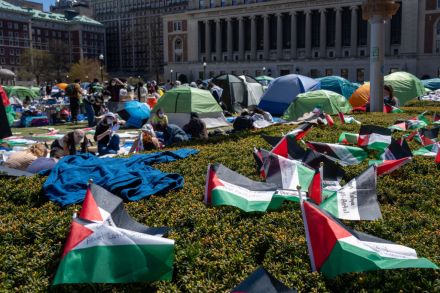
A friend wrote me to ask, “Why is this mess happening on campus?" Here is my response.  Let me offer some thoughts, as a long-time professor, in hopes they spur your own.  Let's begin with something apolitical: young people love expressions of group solidarity. Some protests are like football games, held conveniently in the spring when spirits soar. Let's all join in, especially if it is costless virtue-signaling. And in the absence of any serious punishment, that's what it is.  These demonstrations happen a lot more often when the weather is nice. It's a lot easier to pitch tents on the quadrangle in April or October than in January and February. It’s a lot easier to sit on the Golden Gate Bridge, too.  But why the hatred of Israel and so often of Jews?

campus protest

Will Israel wreck Chicago?

From our US edition

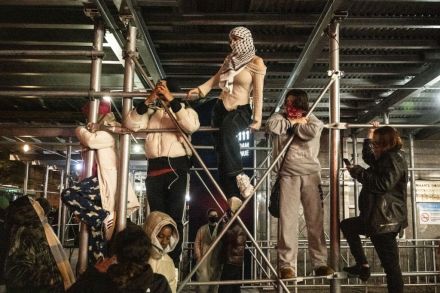
Welcome to Thunderdome. There’s really no question now that Israel will be a major issue driving protests at the summer conventions, particularly at the DNC in Chicago. The scene that’s played out on Ivy League campuses over the past several weeks can easily be transported to the outskirts of the Chicago convention, where media presence alone will be beneficial for protesters and sympathetic Democratic politicians could provide aid and comfort. As someone who enjoyed getting teargassed in Minneapolis in 2008, and was profoundly disappointed at the Rage Against the Machine non-protests in 2016, I’m eager for the test. Tim Stanley shares his thoughts: One: Biden owns the Middle East conflict even as he denounces the casualties.

Congress speaks up on anti-Israel campus protests

From our US edition

Raucous anti-Israel protests at Ivy League Columbia University — which have spread to other campuses following the administration’s crackdown on encampments erected by student activists — are becoming a hot topic on Capitol Hill.Republicans are eager to point out the protests are merely a symptom of the larger rot within academia; college administrators for years tolerated left-wing activists breaking university policy (and often rewarded them for their efforts) while resisting the representation of conservative voices on campus. This posture has allowed radical, hate-filled movements to foment among increasingly progressive student bodies.

foreign aid

Lessons from the foreign aid votes

From our US edition

The past week has presented a fascinating object lesson in the continued tension over the direction of foreign policy and national security in the MAGA era, on what matters and what doesn’t, and who matters and who doesn’t, when it comes to finding a true forward-looking Trump-Reagan fusion. I wrote about this in the context of reviewing the new book by Matt Kroenig and Dan Negrea, who wrote a Ukraine-focused piece for Foreign Policy last week. But that’s just writing, not voting — and this week brought votes that include more useful indicators of what’s going on.

USC’s suppression of the anti-Israel valedictorian is unacceptable

From our US edition

University of Southern California’s 2024 valedictorian, Asna Tabassum, will not be allowed to deliver a speech at the university's commencement ceremony due to, according to the school’s provost, security concerns. The cancellation comes following a wave of criticism over what groups such as US-nonprofit StopAntisemitism labeled “her authoring [of] an antisemitic social media post on her Instagram account.” This is a textbook attack on the principle of free expression in the name of security. The move is designed to avoid controversy and save face by unjustly silencing those whose beliefs and speech differs from that of other, often more powerful, groups.  You don’t have to agree with Tabassum. You may well see her position on Israel-Palestine as radical and impractical.

asna tabassum usc

Britain doesn’t need an Iron Dome

Air defence was in the news this week, after Israel, with the help of allies including the UK, shot down around 99 per cent of over 300 cruise and ballistic missiles and drones fired at it by Iran. The perils of depleted air defences were shown by Russian missile and drone bombardments of Ukrainian energy infrastructure and cities, leading again to many civilian deaths. Eighteen civilians were killed in a Russian strike on Chernihiv. In the wake of the Iranian attacks, Tobias Ellwood, former chair of the House of Commons Defence Committee, told the Telegraph that the UK needs to build ‘a permanent umbrella of security defending our key locations’.

The ayatollah’s birthday surprise

From our US edition

Did Iran’s ayatollah have the worst birthday ever? His eighty-fifth kicked off with a bang, as Israel retaliated after Iran’s unprecedented strike across the Jewish state that featured a failed barrage of lethal drones over the weekend. What comes next from Iran remains anyone’s guess — but the Israeli response, which struck an Iranian military but not nuclear site, served as an undoubted shot across the bow to the largest state sponsor of terrorism. The message was that it can’t attempt to directly attack Israel’s homeland without consequences and that Israel has the capability to attack Iran’s nukes if they so please. Iranian proxies, like Hamas, not only invaded Israel on October 7, but have been plaguing global shipping routes for months.

Inside the new Arab-Israeli alliance

As Jordanian fighter jets shot down Iranian drones heading for Israel on Saturday night, there were joyful cries of Allahu Akbar on the ground as some people lent out of their windows to cheer the drones they thought were getting through. King Abdullah II was depicted on social media wearing an Israeli military uniform complete with the Star of David and he must dearly wish that Israelis would shut up about their ‘new strategic alliance’ with old enemies like Jordan, Egypt and Saudi Arabia. Jordan’s foreign minister was forced into an unconvincing declaration that they would shoot down anyone’s drones, not just Iran’s. Yet, the important fact remains: this is the first time, as far as anyone can remember, that Jordan’s armed forces have fought to defend Israel.

Why does the West protect Israel but not Ukraine?

When Israel and its allies shot down hundreds of Iranian drones and missiles, they demonstrated what an effective air defence looks like. The slow-moving Shahed-136 suicide drones were not hard for the Israeli, Jordanian, British, American and (probably) Saudi air forces to find and eliminate. Even Iran’s cruise missiles were thwarted. It was an overwhelming victory for Israel and a humiliation for Iran. In Ukraine, all this was watched with desperation and even anger. While Israel boasts robust air defence systems and, with its allies, can deploy hundreds of combat aircraft to repel Iran’s attack, Ukraine must ration its defence munitions. Kyiv is forced to choose which cities to protect.

My letter from Chris Packham

I do not know Chris Packham, the BBC nature broadcaster, personally, but he wrote me a letter last month, enclosing a book called Manifesto, The Battle for Green Britain by Dale Vince which, he tells me, ‘has something very important to say at this most important time’. In his letter, Chris says that ‘irrespective of any party politics’, ‘The coming election will be the most important of our lifetimes’ because we are ‘halfway through the last decade’ left to avoid ‘the worst of climate breakdown’. So ‘we must help young voters navigate the new voting rules’. Politics has ‘become the final frontier for a real greener Britain’. What Chris does not mention is that party politics is very important in this most important book.

The Lebanese always return home

Beirut You might have thought that the threat of the Gaza war spiralling into an all-out regional conflagration, along with breathless travel advice from western governments urging their nationals to leave the country, would have deterred Lebanon’s expats from flying home to celebrate Eid al-Fitr this year. Not one bit. Flights, hotels and restaurants were fully booked despite Iran’s drone strike. The Lebanese know that even if there is fighting (and in South Lebanon, there is on an almost daily basis), if it isn’t on your doorstep, there’s no reason to stop the party. The Lebanese know that even if there is fighting, if it isn’t on your doorstep, there’s no reason to stop the party In any case, the Lebanese always think they have the inside track.

Curb your lefty law professors

From our US edition

“I am enormously sad that we have students who are so rude as to come into my home, in my backyard, and use this social occasion for their political agenda,” said hapless University of California Berkeley Law dean Erwin Chemerinsky. Last week, Chemerinsky and his wife, Berkeley law professor Catherine Fisk, were humiliated at a home dinner they hosted for third-year law students when Malak Afaneh, a Palestinian-American student who is co-president of the Berkeley chapter of Law Students for Justice in Palestine, produced a microphone she had brought with her and launched into a speech protesting the dinner and, apparently, her host.

erwin chemerinsky curb
Israel

Israel and the making of nations

From our US edition

A little more than five years ago the Israeli intellectual Yoram Hazony published The Virtue of Nationalism. Its final chapter was particularly poignant. After World War Two and the Holocaust, Hazony explained, two opposing views arose as to how such evils could be prevented from happening again. One side pointed toward the creation of the European Union and held that nationalism must be repudiated and condemned. The other endorsed the creation of Israel as a nation-state for the Jewish people, with a nationalism of its own. Israel is a test case for the survival of nationalism everywhere. That may sound like an exaggeration — surely nationalism has demonstrated ample staying power.

Jerusalem israel

Inside the real Israel

From our US edition

Tel Aviv Like most people, and most Jews, I’ve been experiencing the war in Israel and Gaza from thousands of miles away. I spent the weeks after October 7 with my face glued to my phone, rather than hiding in a shelter as rockets flew above. I experienced every wave of despair, every GoPro atrocity, every moment, hours away in another world; one that wasn’t directly affected by the chaos but was still consumed by it anyway. When the kibbutzim were being destroyed by gleeful Hamas militants, I was at a wedding in Barcelona. When Israel started to fight back, I was safely at my desk doing my work emails, ensconced in the security of distance.

Liz Truss returns – again

14 min listen

It's 18 months since Liz Truss left Downing Street and her new memoir, Ten Years to Save the West, is out. She gave her first interview to Fraser Nelson on Spectator TV, covering why she wants to abolish the Supreme Court, Donald Trump, her husband's warning that her leadership bid would end in tears, and so much more.   We also cover Iran's missile attack on Israel, and what might come next.  James Heale speaks to Katy Balls and Fraser Nelson.  Produced by Megan McElroy.

What Iran’s attack on Israel means for the Jewish state, America and the region 

From our US edition

Iran’s unprecedented attack on Israel Saturday night represents a dangerous escalation for three reasons. The first is its scale, some 300 drones and missiles. Second, it marks the first time the Islamic Regime has launched a lethal attack on Israeli territory from Iran itself, rather than through proxies. Most important of all is the combination of the first two: a major attack launched against Israel from Iranian territory. Although Israel, the US, the UK and, surprisingly, Jordan managed to shoot down nearly all the incoming drones and missiles, it was the thought that counts. And it was a very dangerous thought. Within hours, the Iranian attack changed the region’s strategic landscape.

israel iran