Islamism

Britain’s fatal unwillingness to confront Islamic extremism

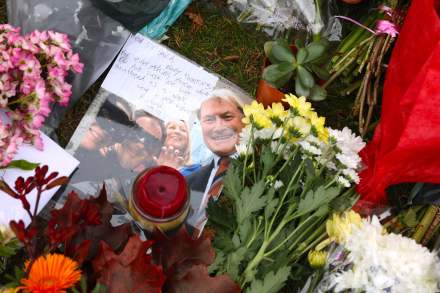
More than any other country in the West, Britain has become practised in the arts of self-deception and subject avoidance. If a politician in France had been butchered by a Muslim of Somali descent, the French media and political class would have gone through a cycle of debate about the ideology that propelled the killer. Government and security sources would have talked about the networks surrounding the suspect. And the whole society would have learned a little more about what might have led to such an outrage. In Britain the situation is otherwise. David Amess was stabbed to death in a church while holding a surgery for his constituents. The man apprehended for his killing is a 25-year-old of Somali descent named Ali Harbi Ali.

The death of David Amess and the narcissism of the discourse

The speed with which tragedy turns into farce these days is quite something. Within minutes of Sir David Amess’s death being announced, social media was filled with sizzling hot takes. The back-and-forth centred on whether the decline in 'civility' and the use of dehumanising language in politics was to blame for the murder of an MP. It recalled nothing so much as the recriminations after Jo Cox’s death, except that the teams here had, as it were, swapped shirts at half-time. Back then, the left more or less directly attributed Jo Cox’s murder to the language used by the partisans of Brexit: 'traitors', 'saboteurs' and so on. Back then, the right accused them of playing politics with a tragedy.

The Bataclan trial is forcing France to confront some difficult questions

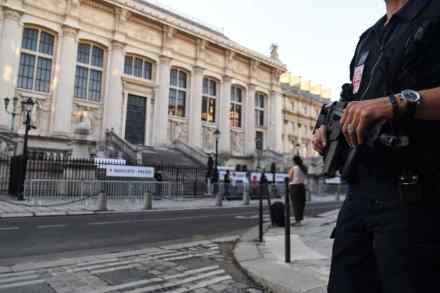
It's a stroke of good fortune for France that Salah Abdeslam is a coward. Had he not been he would have died with the other nine members of the Islamist terror cell (one of whom was his brother) when they attacked Paris on the evening of 13 November 2015. Instead of detonating his suicide vest, Abdeslam dumped it in a dustbin and then called a friend in Belgium and asked to be collected. He spent the next four months hiding in a suburb of Brussels before police tracked him down. It's rare for a potential suicide bomber to be taken alive. In most cases all we have to judge them by is a theatrical video message filmed shortly before their death. The capture of Abdeslam therefore has been a boon. The trial is now in its third week and is expected to last until May.

The West’s Islamist capitulation

On Monday, Tony Blair addressed a military think tank in London and stated that the West should continue to intervene in countries under threat from Islamist extremism. According to the former PM, who led Britain as it joined the American invasions of Iraq and Afghanistan, an isolationist policy would serve no purpose because:  Islamism, both the ideology and the violence, is a first-order security threat and, unchecked, it will come to us even if centred far from us... Its defeat will come ultimately through confronting both the violence and the ideology, by a combination of hard and soft power. His declaration was along the lines of the one he made in October 2015 at the 9/11 Memorial Museum in New York City.

Don’t be fooled: the Taliban hasn’t changed its spots

Has the Taliban really changed its spots? Those who advocate talking to the Taliban make the case that they have. The organisation, they say, has recognised the mistakes it made in the years culminating in 9/11. Others claim that the organisation is now committed to local and national aims, not international terrorism, and that the Taliban have – or can be moderated – via the tool of engagement. All of these approaches seem to share the view there is a disconnect between the west’s reaction to events in Afghanistan, and the reality. But is this really the case?  Pakistan's national security adviser, Dr Moeed W Yusuf, has suggested the time has come to face facts: we need to accept the Taliban has won, negotiate with them and treat them as partners.

China is the latest victim of Pakistan’s Islamist problem

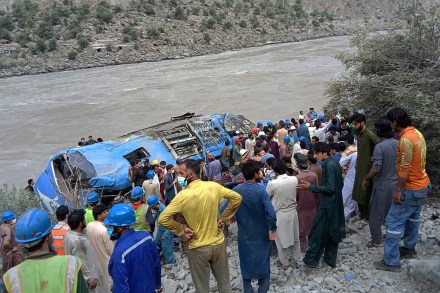
Nine Chinese engineers were killed in an explosion near Pakistan’s Dasu hydroelectric dam last Wednesday. The government initially said that their bus suffered a ‘mechanical failure’ after it plunged into a ravine, but officials eventually admitted that the incident was a terror attack after Beijing decided to send its own investigators. China has now postponed work on the $65 billion (£47 billion) China Pakistan Economic Corridor, a network of roads and infrastructure projects. The programme represents Beijing’s largest overseas investment and is a critical part of its Belt and Road Initiative.

Hamas doesn’t want a Palestinian state

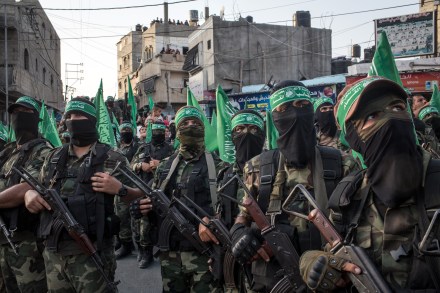
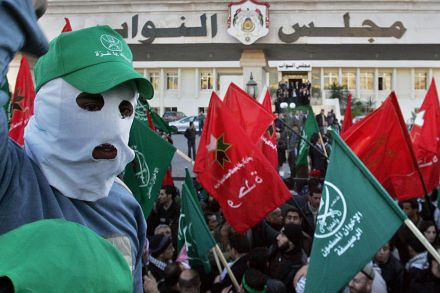
Do Hamas’s supporters in the West know what this organisation really stands for? The reality is that Hamas is no liberation movement in search of a Palestinian nation. Instead, it seeks the destruction of Israel and the establishment of an Islamic empire on its ruins. How do we know? Because senior Hamas leader Mahmoud al-Zahar has said so: Islamic and traditional views reject the notion of establishing an independent Palestinian state… In the past, there was no independent Palestinian state… This is a holy land. It is not the property of the Palestinians or the Arabs. This land is the property of all Muslims in all parts of the world… [Hence] our main goal is to establish a great Islamic state, be it pan-Arabic or pan-Islamic.

Germany’s growing extremism problem

On 2 June 2019, a German politician was found lying in a pool of blood outside his home in Hesse. He had been shot in the head at close range with a .38 Rossi revolver. Walter Lübcke, the 65-year-old leader of Kassel city council, who had been a vocal supporter of Germany's immigration policy, had been assassinated by a German member of the British neo-Nazi group Combat 18. On Tuesday, his killer was sentenced to life in prison. Lübcke’s murder is the most extreme example of Germany’s increasingly alarming relationship with immigration, anti-Semitism, and fanatical politics.

Britain must investigate its Islamist ‘dawa’ networks

A few months ago, William Shawcross was asked by the government to lead an independent review into its anti-terrorism strategy, Prevent, and to ‘consider the UK’s strategy for protecting people vulnerable to being drawn into terrorism’. Ever since his appointment was announced, Shawcross has been attacked by an array of activists who want to minimise any scrutiny of Islamist organisations. The campaign against him has been vicious but it has also been deeply instructive. The opposition has been so intense that it has led some to believe that the UK Muslim ‘community’ is outraged by the independent review. There is a significant difference, however, between Muslims and Islamists. Shawcross is an exceptionally talented man whom I know well.

What the demise of Quilliam teaches us about Britain and Islam

There was much rejoicing among Britain’s Islamists last week when the thinktank and campaigning organisation Quilliam announced that it was closing. The Islamists were pleased because for the 14 years since its founding Quilliam has been the most prominent Muslim-run organisation arguing for a progressive, non-Islamist Islam. The exact reasons why Quilliam has shut down are not clear. The co-founder, Maajid Nawaz, has blamed the difficulties of sustaining a non-profit in the era of Covid. Perhaps it is that, or perhaps it is something else. The group never had an easy ride. But the fact that it didn’t, and that so many prominent British Muslims are celebrating its demise, points to a problem worth noting. I was there in 2007 when Quilliam started.

Imran Khan’s cowardly response to Pakistan’s rape crisis

Pakistan's prime minister Imran Khan has once again blamed women for an appalling rise in rape cases. Khan used a televised question and answer session this week to say that sexual violence was a result of 'increasing obscenity'. Women in Pakistan should remove 'temptation' because 'not everyone has willpower', he added, urging females to cover up to help reduce the sexual violence which has plagued our country. Khan pointed the finger of blame at Bollywood and Hollywood, for spreading ‘vulgarity’. He also repeated the growing divorce tally of the UK as evidence of the ‘ethical plunge’ of the West, which he said is messing up the moral compass of the Muslim world and Pakistan.

The twisted logic of Shamima Begum’s defenders

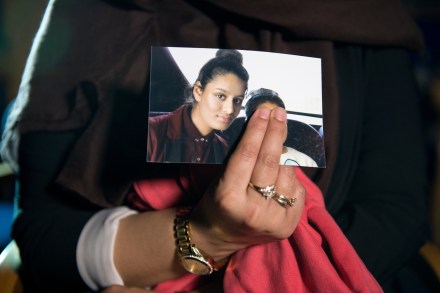
Shamima Begum is back in the news. Firstly because she’s had a makeover. She can be seen on the front page of today’s Telegraph sporting long, flowing locks, trendy shades and Western clothing. Is Shamima the Islamist now aspiring to be Shamima the celeb? Perhaps she’s angling for her own reality TV show: The Real Housewives of Raqqa. But the second reason she’s in the news is because the British-Indian sculptor Anish Kapoor has expressed sympathy for her. He says she’s a victim of British racism. I really wish Sir Anish would stick to what he’s (very) good at — public art installations — and leave the Shamima business alone. Because his comments are risible.

When will Pakistan take a stand against terror?

Last week, Pakistan’s Supreme Court ordered the release of UK born Ahmed Omar Saeed Sheikh who was accused of kidnapping and beheading the Wall Street Journal reporter Daniel Pearl. The verdict came after Sindh High Court overturned the death penalty for Sheikh and three alleged abettors last year, ruling that there was insufficient evidence to find them guilty of murder and stating that they had served their sentence for their role in the kidnapping. The decision has outraged Washington, with Joe Biden’s new State Department chief Antony Blinken dubbing it an ‘affront to terrorism victims everywhere’ and announcing his readiness to prosecute Sheikh in the US.

Are we witnessing the birth of an African Islamic State?

On Monday, 13 soldiers were killed by the Islamic State in northeastern Nigeria. A week ago, just after midnight on Friday morning, a Boko Haram suicide bomber blew up 14 villagers in northern Cameroon. These attacks — passing us by, as they do, in a stream of news and information — are becoming increasingly common in the beleaguered states of West Africa.  At the end of last year, Islamists kidnapped 344 schoolboys in an apparent ransom attempt. While the raid saw a continuation of Boko Haram’s strategy (in 2014 the group kidnapped 276 schoolgirls, to global condemnation) it marked a change in the terror group’s ambitions.

The problem with deradicalisation

Is it possible to 'deradicalise' terrorists? Jonathan Hall QC, the government's terror watchdog, doesn’t think so. He may have a point, but it’s complicated. One of the institutional problems we have is a sort of misplaced arrogance based, in part, on the historic experience of counter-insurgency against violent Irish republicans. Until quite recently, the Ministry of Justice press office referred to our prison deradicalisation processes as ‘world-class.’ Hall himself only recently began looking at our distinctly Heath-Robinson terrorist risk management ‘system’ after London Bridge killer Usman Khan ran rings around it.

Britain is still failing to confront Islamism

How time flies. In March 2014, quite out of the blue, I was commissioned by then prime minister David Cameron to lead an internal review designed to inform and improve the government’s understanding of the Muslim Brotherhood. It’s been six years since I delivered what has become known as the Muslim Brotherhood Review. And on 17 December, it will be exactly five years since Cameron reported on its main conclusions to the House of Commons. I made it clear before I started that if I accepted the commission, I would need the freedom to conduct my own research, travel widely and have proper support within Whitehall. I would look at Islamism in the round, not simply the Brotherhood variety.

French republicanism confounds American progressives

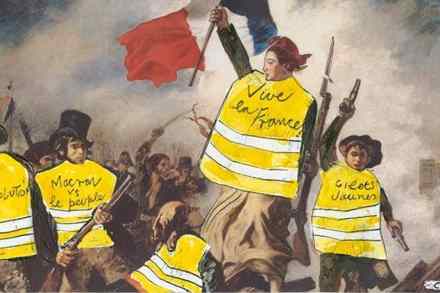
Can an entire country sue for libel? If so, France would have a strong suit against swathes of the American left. The US progressive movement, including the New York Times and Washington Post, has turned on la Republique over its citizens’ habit of getting themselves murdered by Islamists. Most recently, this has included Samuel Paty, a teacher beheaded in the street for showing his students cartoons of the Prophet Mohammed, and three people murdered in a church in Nice. In response, French President Emmanuel Macron has proposed stricter regulations for mosque-financing and an end to home-schooling. And in response to this, much of the American left has lost its mind.

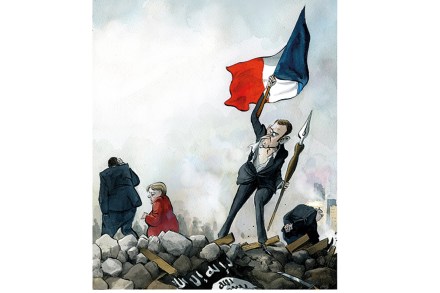
Macron alone: where are France’s allies in the fight against Islamism?

A few years ago, in a Lords debate on the treatment of Christians in the Middle East, the late Rabbi Jonathan Sacks reminded his peers of some famous words of Martin Luther King: ‘In the end we will remember not the words of our enemies but the silence of our friends.’ That reflection may now be going through the head of the French President, Emmanuel Macron. In recent weeks he has been left alone on one of the most dangerous and delicate ledges of our time: that of Islamic extremism. And while he has already incurred the wrath of much of the so-called Muslim world — with French goods disappearing from many Arab supermarkets and Macron condemned from Ankara to Islamabad — it is the silence of everyone else that has been so striking.

Macron is preparing for intellectual battle against Islamism

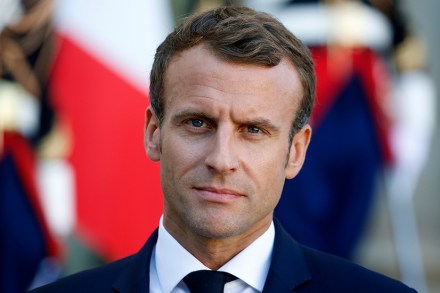
It’s easy to see why so few western leaders have come to Emmanuel Macron’s defence: when they scrutinise extremists, they are accused of being ‘Islamophobes’. Since the French President’s speech last month about Islam in the West, he has been accused — by populist Muslim politicians such as Recep Tayyip Erdogan and Imran Khan, as well as publications that should know better, such as the New York Times — of being anti-Muslim. Yes, he was frank about the dangers of Islamism, but his speech was also a defence of what he called the ‘Islam of the Enlightenment’. Rarely for a political leader, he was able to point not just to the problem but to the alternative too. He understands that Muslims have faced these internal enemies before and won.