Islam

Cameron signs up to muscular liberalism

"State multiculturalism has failed." Angela Merkel put voice to that sentiment last October. Now it David Cameron's turn to do the same. In a speech in Munich today, the Prime Minister has taken a rhetorical torch to Islamic extremism. "Frankly," he says, "we need a lot less of the passive tolerance of recent years and much more active, muscular liberalism." It is, at the very least, a significant political moment. What Cameron is doing here – as explained by Charles Moore and Paul Goodman – is publicly signing up to a philosophy of the world. It is a philosophy that rejects the idea that extremism should simply be contained. Instead, it says that extremism must be fought – and that means engaging in a battle of ideas.

EXCLUSIVE: On the streets of Cairo

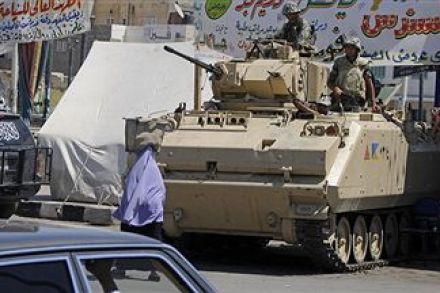
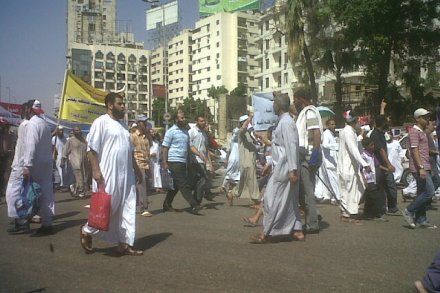
Alastair Beach is on the ground in Cairo. Here is his report for Coffee House: As the imam rounded off his midday Friday sermon, the ring of more than three hundred riot police encircled the worshippers. It was no ordinary congregation. A stellar assortment of Egyptian directors, actors and political bigwigs were assembled in an enormous crowd on the pavement outside the Mustafa Mahmoud mosque in Mohandiseen, Western Cairo. Over the loudspeaker, the imam drew polite applause from the listeners when he praised protestors who had turned out for the initial demonstration in Egypt’s uprising a week last Tuesday. But then he put his foot in it. “Democracy should involve free speech but without the trouble,” he intoned solemnly in Arabic.

Come on Europe; support the freedom you claim to love

The Middle East is being rocked to its authoritarian core, as pro-democracy protesters defy Hosni Mubarak’s regime for the eighth day in a row. They want an end to his 31-year-rule and, to judge by their continued defiance, are unlikely to accept anything else than his departure. The events, however, have placed European governments in a quandary. Should they back the protests? Support what has been a friendly regime? Or sit uncomfortably on the fence, talking about the need to show restraint and start reforms but standing back from actually supporting regime change, in case the transition becomes violent or the outcome problematic? So far, it looks like the EU prefers sitting on the proverbial fence.

The Failure of Realism: Diagnosis Without Any Prescription

These two posts by Melanie Phillips on the situation in Egypt are very useful. Clarifying, even. They merit a response not because it's Melanie and she's a neighbour but because she publishes a view that's more widely held than you might think if you only consulted the broadsheets and the BBC. It may, I think, be summarised as: Barack Obama is throwing Mubarak under the bus and we'll soon have Tehran on the Nile. A lot of people believe this or fear it the most probable outcome. They may, alas, be proven right. I'm struck, however, by their certainty that the Muslim Brotherhood will soon be running Egypt and, furthermore, that the Muslim Brotherhood in power will behave and speak in just the way it has in opposition. Perhaps this too will prove the case.

Glenn Beck: Performance Artist

Even by our good friend Mr Beck's standards this is an impressive, virtuoso display. Twelve minutes out of your day but worth it, I promise you. Pick your own favourite moment. I'm torn between his wondering if Russia might invade western europe (perhaps Putin could run Belgium?) and his suggestion that protests in the UK (tuition fees) and Ireland (no money) are somehow part of a Muslim Brotherhood plot. Also: he says Italy is "on fire" but I think that's only true of Silvio Berlusconi and even then only in a Humbert Humbert sense...

Life on the Nile?

The risks of the status quo are always safer and more appealling than the uncertainties of the new, the unfamiliar and the unpredictable. So it wasn't a great surprise to discover Vice-President Joe Biden saying last night that, all things considered, he wouldn't refer to Hosni Mubarak "as a dictator" or outgoing White House press secretary Robert Gibbs insisting that Washington has no interest in "taking sides" in the struggle between the sclerotic Egyptian regime and the protestors. Depressing, perhaps, but not surprising. Like everyone else, the White House is waiting to see what happens today. Everyone agress that Mubarak's regime is rotten and that the 82-year old dictator (sorry, Mr Biden) cannot endure forever.

Will Mubarak Fall?

A week ago, that would have seemed a foolish question. But after thousands of Egyptians have taken to the streets for two consecutive days of protest, even Hosni Mubarak is beginning to look vulnerable. It has placed the West in a dilemma, in a way that Ben Ali's fall did not. For years, the fear has been that President Mubarak is the lesser of two evils. Though authoritarian, Mubarak's Egypt is a pro-Western state willing to live with Israel and combat Islamist terrorism. On the hand, the Muslim Brotherhood opposition, which shares an ideological wellspring with Al Qaeda, is a grave threat to Western security.

In this week’s Spectator | 27 January 2011

The new issue of The Spectator is out in the shops today – subscribers can read it online, or on Kindle/iPad – and here are a few pieces that I thought might interest CoffeeHousers.   1. The death of meritocracy. Social mobility - or the lack thereof - is a subject that no political party feels comfortable with. And why? For the very good reasons that Andrew Neil outlines in the cover story of this week's Spectator. One vignette is that when Cameron's inner circle convened to discuss the recent school sports fiasco, the conversation turned to who played which positions in the Eton Wall game. If you missed his documentary last night, and even if you didn't, it's a must-read.   2. Why Cameron should adopt a King's Speech strategy.

Blast at Moscow airport

A suicide bomber has killed more than thirty people at Moscow airport. This is the third major terrorist attack on Russian soil in the last year. Islamist groups were responsible for the previous two attacks and, I imagine, will claim proprietorship this one also. It is a telling reminder that the domestic threat faced by Russia and NATO are becoming more aligned, which should lead to greater co-operation between the two in the coming decade. Already, NATO Secretary General, Anders-Fogh Rasmussen (not a man to cower before the pernicious Islamist menace) has said that his organisation will stand together against terrorism.

Extremism – not just violent extremism – is the problem

Charles Moore has an important piece in the Telegraph today criticising Baroness Warsi’s muddle-headed speech [a speech which interestingly doesn't appear on her page on the party website]. In it, he reveals that the Prime Minister himself has been devoting much thought to the question of how to deal with Islamic extremism. Charles writes that Cameron will give a significant speech on the matter in the next few weeks in which he’ll argue that the government and society need to tackle extremism per se, not just violent extremism. This is welcome news. To say that extremism only becomes a problem when it turns violent is to miss the point. If you only ever address the symptoms you’ll never cure the disease.

A bad morning for the government<br />

This morning has not been a good one for the government. There’s been an embarrassing admission that 28 days detention will simply lapse on Monday, the Conservative party chairman is delivering a speech that the vast majority of Conservatives think is muddle-headed at best, and the Prime Minister finds himself in a public debate with the mother of a quadriplegic child. 2011 was always going to be a hard year for the government but what should worry Downing Street is that two of these problems are self-inflicted. The whole counter-terrorism review should have been finished before 28 day detention expired. The fact that it has not been makes the government look like it can’t work to a deadline and is drifiting in a crucial area of policy.

Where Warsi is right and wrong

As ever, the headlines are more sensational than the speech, but marginally so in this case. Baroness Warsi has asserted that Islamophobia is rife and socially acceptable in Britain. It is a peculiarly crass statement for an ordinary politician to have made, but, then again, the gabbing Baroness is a very ordinary politician. Some of her speech is sensible, even unanswerable. She attacks the media and the arts for ‘the patronising, superficial way faith is discussed in certain quarters.’ Questioning faith is the natural and welcome adjunct of a free society, but specific criticism is morphing into general hostility.

Freedom in the desert

When in power, authoritarian regimes can look immovable - even when, in hindsight, they turn out to have been brittle. This seems to have been the case with Zine el-Abidine Ben Ali's Tunisian regime. Weeks ago, nobody would have believed that the Tunisian strongman, who has held power for more than 23 years, could have been chased from office so quickly. A diplomat friend who served in Tunis marvelled at the dictatorship, where information was so restricted that he depended on information from colleagues stationed elsewhere in the region. Ben Ali's rule was apparently total; the opposition was comprehensively suppressed and the population had little scope for expression or assembly.

Winning the argument

Whenever I worry that my instinct for pluralism and debate is drawing me to listen to siren voices, I am reminded of the idiocy of the authoritarian alternative. This week I had the honour of being singled out by the Islamist fellow-travellers of iEngage after I dared to write that such a sectarian organisation should never have been considered to act as the secretariat for the new All-Party Parliamentary Group on Islamophobia. The full letter from the head of iEngage, Mohammed Asif, is available on the organisation’s website.

The ultimate Jewish conspiracy theory

This has to be the ultimate Jewish conspiracy theory story. Why have the Wikileaks disclosures been so soft on Israel? Here is Tariq Shahid from the Palestine Think Tank. I’m hoping it’s a spoof but here’s my favourite section: “Browse through all the news sources available on the latest Wikileaks revelation, and try to find even only one revelation that actually damages Israel, even though so many of the revealed documents are directly or indirectly connected to Middle East politics, and to a large extent to Israeli affairs. Did you find any document among them that either creates difficulties for the government of the Zionist entity, or even slightly embarrasses it?

The strange case of Turkey, Islamic history and V.S. Naipaul

Nobel laureate V.S. Naipaul has pulled out of the European Writers’ Parliament in Istanbul, following pressure from Turkish writers who felt ‘uneasy’ about comments he had made about Islam in 2001. Naipaul compared Islam to colonialism, arguing that both had had ‘a calamitous effect on converted peoples. To be converted you have to destroy your past, destroy your history. You have to stamp on it, you have to say 'my ancestral culture does not exist, it doesn't matter.’ Naipaul’s comments concern the factual context of Islam’s expansion between the 7th and 17th centuries, hence the comparison with colonialism.

How to prevent schools from being hijacked by extremists

The coalition plan to let parents, teachers and voluntary groups set up schools and be paid by the state for every pupil they educate has the potential to transform education for the better in this country. But this policy also requires the government to prevent these freedoms from being abused by extremist groups who want to teach hate. The revelations on tomorrow night’s Panorama about weekend schools that use Saudi textbooks that ask pupils to list the “reprehensible"  qualities of Jews and teach the Protocols of Zion as fact are  a reminder of how serious this threat is.

Neo-isolationism is NATO’s greatest enemy

As NATO leaders gather for a key summit in Lisbon, expect the newspapers to be full of the usual “why bother” commentary. NATO, they will argue, was founded for a different age and is not relevant for dealing with today’s threats – from cyber-attacks to nuclear non-proliferation. It is even struggling to deal with older threats, such as the Taliban insurgency. Most Europeans do not seem to mind. They feel safer than at any time before and worry predominantly about post-material threats, not conventional attack, as a think tank report showed recently. As a result, Europeans are set to spend less on defence. Germany expert Hans Kundnani has an excellent piece on Berlin’s anti-militarism over on ECFR’s new blog.

The importance of teaching British values in schools

One of the websites that the young Muslim woman, Roshonara Choudhry who stabbed Stephen Timms MP mentioned in her police interview was RevolutionMuslim, which now appears to have been taken down. Charles Moore turns his attention to the site in his column today: 'After Choudhry’s conviction, I had a look at RevolutionMuslim. It has put up a list of all MPs who voted for the Iraq war, details of their surgeries and even a link to a supermarket website where you can buy knives. I watched its video, in which a young man praised Choudhry for “taking the matter into her own hands”, and attacked Muslims who collaborate with the infidel. A similar-looking young man featured in press pictures of demonstrators outside the Old Bailey.