Islam

Cairo Diary: The Brotherhood

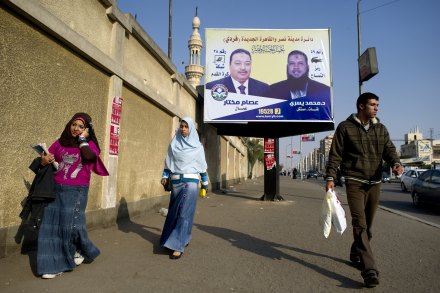
Back in Cairo, I try to find answers to what everyone wants to know. Who are the Muslim Brotherhood? What role will the Muslim Brotherhood play in the future? Even to seasoned observers it seems hard to divine. Their support in the country has never been tested and the constitutional referendum, where the brotherhood was on the winning side, is a poor proxy. What is clear, however, is that they have the organisational muscle the post-Tahrir Square parties lack. And that they are willing to play a long game, rejecting a shot at the presidency for example for fear of a backlash against them. Though some members talk of Turkey’s

Rebel setbacks create an almighty headache for NATO

The Auk and the Desert Fox ride again. As in 1941-2, the military position along on Libya’s northern coastal road is extremely fluid. After the celebrated rebel gains over the weekend, Gaddafi has counter-attacked without remorse. Skirmishes escalated yesterday and now the rebels are in full retreat (£) from the strategically vital oil town of Ras Lanuf, running from Gaddafi’s superior onslaught. It’s apparent that the rebels need heavy arms to secure their gains, let alone beat Gaddafi. As Pete noted yesterday, the west is (rightly) wary of such a move and there’s nothing to suggest that Arab states are any less reluctant. Besides, it is unclear if the UN

Another Libyan question

Far from quiet on Libya’s shifting battlefront. The latest reports are that the rebel advance has stalled, and is now moving backwards in the face of Gaddafi’s overwhelming firepower. Yet as disheartening as this development may be, it is hardly unexpected: America’s General Ham all but described it as an inevitability only a couple of days ago. And so the rebels’ representatives have now made an equally inevitable demand of the politicians congregating in London: arm us, and we can make progress once again. In which case, there’s another question for the pile: to arm, or not to arm? And it is not clear-cut, either way. While the West appears

The rebels press on in Libya, but questions remain

As Nato takes full military responsibility in Libya, the rebels surge onwards in the direction of Tripoli. According to one of the group’s spokesmen, Gaddafi’s hometown of Sirte — some 280 miles east of the capital — fell to their attacks last night; although there are reports, still, of explosions there this morning. In any case, the tidal shift that took hold at the beginning of the weekend is continuing. The rebels are now seizing ground, rather than ceding it. All this is, if not vindication for the Western leaders who pressed for a no-fly zone, then at least encouragement. It suggests that the one-two combination of Nato air support

Web Exclusive: HolyBookers 1 – Facebookers 0

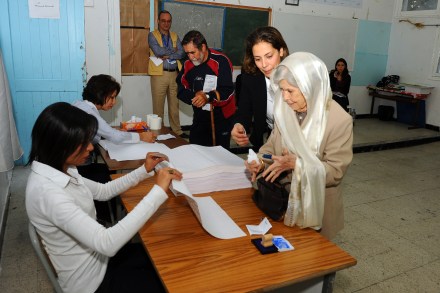
Cairo The Facebook and Twitter revolutionaries are taking a beating at the hands of the Brothers. The results of Saturday’s referendum are now out and they point to a simple truth: the internet was fine as a tool for gathering a few hundred thousand youths in Tahrir Square; but it is largely irrelevant as a means of winning elections across large swathes of Egypt, where three-quarters of the 83 million population have no internet connection at all. On a massive turnout, and in the fairest vote in the country’s modern history, 77 per cent of Egyptians sided with the Muslim Brotherhood in saying “Yes” to a quick and dirty patch-up

The Yemeni domino totters

Call it the domino effect, if you like. After Tunisia, Egypt, and Libya, Yemen is the latest country to drag its rulers to the precipice — and it could push them over, too. The latest news is that several Yemeni generals have joined the protesters in calling on President Saleh to stand down. One source tells al-Jazeera that 90 per cent of the army could do likewise by this evening. The broad consensus is that the current regime is wheezing to a close. So what next? From this vantage point, Yemen is certainly one of those countries where change should be greeted warily. It’s not so much the emerging prospect

Gaddafi defiant as the international coalition prepares his noose

https://www.youtube.com/watch?v=WJl8s8DSYvQ The fog of war lies thick in Benghazi this morning. There are reported explosions and gunfire and Sky News is showing footage of a Soviet-era fighter jet combusting in mid-air over the city; it is not clear if the aircraft was the victim of anti-aircraft fire, air-to-air combat or technical malfunction. Equally, it is unclear if the international coalition’s campaign has begun – leaders will meet in Paris today to finalise diplomatic agreements before mobilisation, but defence analysts say that French and Italian aircraft could already be patrolling Libyan skies.      The Gaddafi regime has been typically deranged in response. Some ministers insist that the ceasefire is real; Gaddafi on the

If we don’t help the Libyan rebels, then the extremists might

The West’s indifference towards Libya may create the very conditions for extremism that we normally seek to avoid. In today’s Times, the war correspondent Anthony Loyd writes (£) from Benghazi about the dangers of an extremist backlash as the pro-democracy forces become disillusioned with the West: “The growing suspicion and anger towards the West offers an unsettling glimpse of the direction that the country’s revolution may take.” This has several potential implications inside and outside Libya. Outside the country, it could provide an opportunity for Osama bin Laden — who has been otherwise marginalised, following the protests in Tunisia and Egypt — to argue that the West’s inaction, and even

How to deal with Bahrain

If you find yourself on the same side of an issue as Iran, it is wise to think carefully what path you have chosen to walk. Today, an Iranian Foreign Ministry spokesman condemned the foreign military intervention in Bahrain to confront the protests as “unacceptable.” To my dismay, I agree with what Tehran says; but, I suspect (and hope), for very different reasons. The grievances driving the Bahraini protests stem from years of discrimination by the Sunni elite of the Shia majority. Evidence of the problem is well-documented. Last year, Amnesty said that the Bahraini authorities had “failed to investigate alleged torture of detainees”. The State Department’s annual human rights

Is Sudan next?

The momentum behind the Arab Spring revolutions appears to have been checked – for now. The Libyan domino hasn’t fallen. But there’s more unrest to come in North Africa. On March 21, a group called Youth for Change will hold mass protests throughout Sudan. Youth for Change (sinister name) are inspired, obviously, by what has happened in Egypt and Tunisia. Their aim, they say, is to ‘to rewrite the constitution with the voice of the people in order to hold national general elections: ‘[We march] to reclaim our dignity as human beings first and second as Sudanese …that has been violated by the regime when it killed thousands of our

Clegg collides with Cameron over extremism

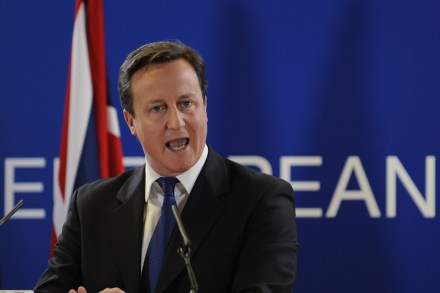
Nick Clegg’s speech in Luton today on extremism is a challenge to large parts of David Cameron’s remarks on the subject in Munich just last month. Indeed, even the venue of the speech can be seen as a rebuke to Cameron who was attacked for giving a speech on Islamic extremism on the same day that the English Defence League was marching in Luton. Cameron’s speech, which was one of the best of his premiership, argued that ‘the ideology of extremism is the problem’ and that terrorism’s ‘root lies in the existence of this extremist ideology’. In the key section of the speech, Cameron declared: “As evidence emerges about the

Queen's gambit

Is Queen Rania of Jordan turning into the Marie Antoinette of Jordan? She is loved in the West, and seen as the very model of a modern Muslim monarch. But in Jordan she’s viewed with increasing resentment. As the Arab Spring shakes thrones all over the Muslim world, Mary Ann Sieghart jetted off there to find out – and the results are in this week’s magazine. I thought CoffeeHousers may appreciate a preview. We all Queen Rania’s her background: a Palestinian beauty, hailed by Oprah as an “international fashion icon,” who speaks up for women’s rights. But, as Mary Ann writes: “If she mingled at parties with Hollywood stars, her

A landmark judgment for the security services on torture

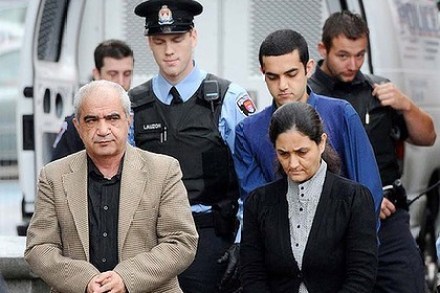
The Court of Appeal made a momentous judgment this afternoon. It was hearing the appeal of Rangzieb Ahmed, the first man to be convicted on terror-related charges in this country, for which he is serving 10 years. Ahmed’s appeal was based on the allegation that British security services had been complicit in his torture and that the evidence for his conviction, gained by Pakistan’s ISI, was obtained by a series of extreme measures culminating in the slow removal of his finger nails. The appeal judges rejected Ahmed’s suit, saying that there was no evidence that his nails had been pulled out or that British officers ordered beatings. Ahmed’s claims had

Eastern promises | 18 February 2011

Events in Bahrain are yet another reminder of why the supposed choice between stability and democracy is a false one. The idea that in the medium to long term backing a Sunni monarchy in a Shiite majority country is a recipe for stability is absurd. If this was not enough, by backing the minority monarchy the West is ensuring that, for obvious reasons, the opposition to it will become radicalised and anti-Western. The West is where it is. It, sadly, cannot start again from scratch in the Middle East. But it cannot allow itself to continue being the allies of those who brutally repress the aspirations of their own peoples

Egypt: Now the Hard Work Begins

Well, well, well, how the worm turns. I refer the Honourable Gentleman to the post I wrote some hours ago. Again, it’s worth noting that this is just the end of the beginning, not the beginning of the end. The Pessimists may yet be proved right but this, at last, is a day for the Optimists. There’s no guarantee that Egypt can build the kind of future that will satisfy the economic and political aspirations of its people but nor is it inevitable that it will swap secular authoritarianism for religious authoritarianism. At the moment, and today at least, one of the losers from this process is Osama bin Laden.

Egypt becomes freer

The world does really end with a whimper, not a bang, as T.S. Eliot said. After 31 years in power, seventeen days of protests, more than 300 dead and a shouting match between the US administration and its one-time Egyptian ally, it looks as if Hosni Mubarak will be leaving office tonight. Twitter is atwitter with news that the Egyptian strongman will soon make a TV appearance during which he is expected to hand power to newly-anointed Vice-President Omar Suleiman. Expect Tahrir Square to erupt in a festival of freedom, as the heroic, web-enabled protesters savour their unlikely but amazing victory. But while Egypt’s revolution has been more successful than

Hope on the Nile: Islam Does Not Have All the Answers

Not to grant him guru status or anything but I’m glad that Reuel Marc Gerecht has at last weighed-in on the Egypt Question. I’ve mentioned his writing before and think him one of the most interesting, and in some ways provocative, middle-east analysts. Even if you disagree with him, his ideas are worth serious consideration. His view that President Obama could usefully say “We are not scared of muslims voting” seems persuasive to me. So too his conclusion that it is time to “put an end to the West’s deleterious habit of treating the Middle East’s potentates respectfully and the Muslim citizenry like children.” He writes: Mr. Bush’s distastefulness helped

Cameron was right to give the speech he did

David Cameron’s speech yesterday was one of the most important he has given as Prime Minister. I’d urge you to read the whole text just to see how absurd some of the opportunistic, party political attacks on it have been. As I say in The Mail on Sunday, they’ll be a huge amount of resistance in Whitehall to the course that the PM is charting. But he is surely right that state money and recognition should not be going to any group that does not promote integration and believe in the liberal values on which this country is based. To do anything else would be fundamentally illiberal. A lot of

Cameron signs up to muscular liberalism

“State multiculturalism has failed.” Angela Merkel put voice to that sentiment last October. Now it David Cameron’s turn to do the same. In a speech in Munich today, the Prime Minister has taken a rhetorical torch to Islamic extremism. “Frankly,” he says, “we need a lot less of the passive tolerance of recent years and much more active, muscular liberalism.” It is, at the very least, a significant political moment. What Cameron is doing here – as explained by Charles Moore and Paul Goodman – is publicly signing up to a philosophy of the world. It is a philosophy that rejects the idea that extremism should simply be contained. Instead,

EXCLUSIVE: On the streets of Cairo

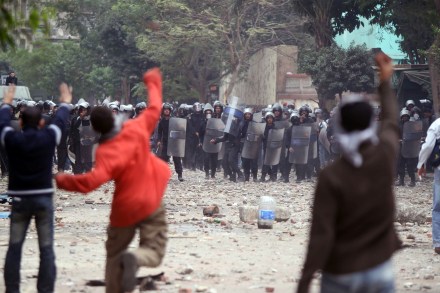
Alastair Beach is on the ground in Cairo. Here is his report for Coffee House: As the imam rounded off his midday Friday sermon, the ring of more than three hundred riot police encircled the worshippers. It was no ordinary congregation. A stellar assortment of Egyptian directors, actors and political bigwigs were assembled in an enormous crowd on the pavement outside the Mustafa Mahmoud mosque in Mohandiseen, Western Cairo. Over the loudspeaker, the imam drew polite applause from the listeners when he praised protestors who had turned out for the initial demonstration in Egypt’s uprising a week last Tuesday. But then he put his foot in it. “Democracy should involve