Islam

Anti-Semitism, Islamism and Islam

From our UK edition

My blog on last week’s bombing in Bulgaria and convictions in Manchester provoked a response from my colleague Martin Bright which I should like to respond to in turn. In his post Martin writes: ‘You won’t hear me say this very often, but I don’t think Douglas has gone far enough. For once, I think even he has pulled his punches. ‘What links these two events across a continent?’ he asks. ‘The answer is ideology. It is an ideology which deliberately targets Jews as Jews.’ I know what Douglas means: that there is a deeply entrenched anti-Semitism at the heart of the politics of extremist Islamism which strips its victims of humanity. We tip-toe around this phenomenon at our peril.

Anti-Semitism: no longer big news

From our UK edition

My fellow Spectator blogger Douglas Murray wrote a powerful post yesterday. Like him, I was disturbed by the way the Bulgarian bus-bombing and the Manchester terror trial were treated in the media. You won’t hear me say this very often, but I don’t think Douglas has gone far enough. For once, I think even he has pulled his punches. ‘What links these two events across a continent?’ he asks. ‘The answer is ideology. It is an ideology which deliberately targets Jews as Jews.’ I know what Douglas means: that there is a deeply entrenched anti-Semitism at the heart of the politics of extremist Islamism which strips its victims of humanity. We tip-toe around this phenomenon at our peril.

An ideological hatred

From our UK edition

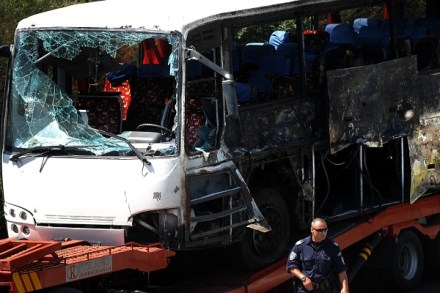
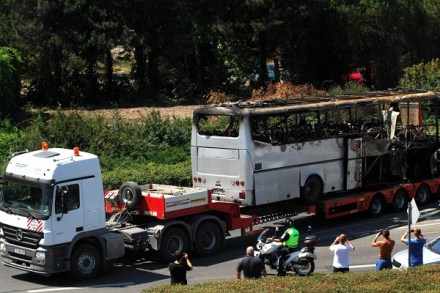
Two events this week have highlighted, from very different places, an identical problem. In Bulgaria on Wednesday a bomb was detonated on a tour bus carrying Israelis. Six people were killed and many more badly injured. On Friday a couple from Oldham, Mohammed Sadiq Khan and Shasta Khan, were sent to prison for attempting to put together an explosive device and planning to attack Jewish targets in Manchester. What links these two events across a continent? The answer is ideology. It is an ideology which deliberately targets Jews as Jews. In the West many people continue to try to pretend that it is not about Jews at all, but about Israel, or about houses in East Jerusalem or the presence of Jewish communities in the West Bank or any other excuse that people can come up with.

The truth about Jesus of Nazareth

From our UK edition

I’ve just received email notification of a debate I sadly missed at the East London Mosque entitled ‘Was Jesus a Muslim Prophet or a Christian God?’ The email came from a thoughtful chap called Abdullah Al Andalusi who informs me that the speakers tended towards the former, rather than latter proposition. Indeed, there was a ‘powerful refutation’ of Christian dogma on the subject. I am genuinely saddened to have missed this debate, as it’s the sort of thing which is always fun to chew over. As a consequence I have it in mind to arrange a similar sort of intellectual pow-wow — a debate which asks the question: ‘Was Mohammed a Jewish haberdasher or a Muslim prophet?

A self-regarding attack on free speech

From our UK edition

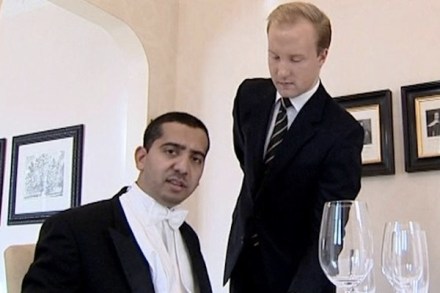
Imbecilic leftie authoritarians are whining again about being called nasty names by people with less power than them. Exhibit A is the fabulously stupid Islamist Mehdi Hasan, once of the New Statesman and now of the Huffington PostUK, whatever that is. Here’s the emetic opening sentence of his article in today’s Guardian (under the headline 'We Mustn’t Allow Muslims In Public Life To Be Silenced.' Yes, he means himself): 'Have you ever been called an Islamist? How about a jihadist or a terrorist?? Extremist maybe? Welcome to my world.' The abuse he gets, he whines, is 'as relentless as it is vicious'. He complains about being called a dangerous Muslim villain, and a cockroach and so on. Aaawwwwwww. Did they upset you, Mehdi? Did they? You poor little poppet.

Plus ça change in Cairo

From our UK edition

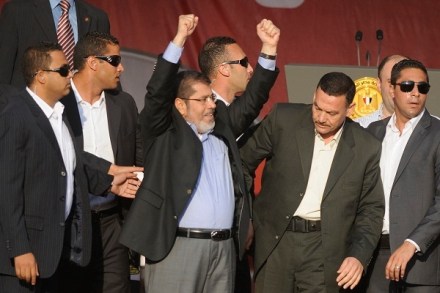
Don’t expect Cairo to become Kabul now that the Muslim Brotherhood’s presidential candidate, Mohammed Mursi, has been sworn into power earlier today. There are real fears, of course, about the future of Egypt under an Islamist president and it’s foolish to whitewash Mursi as either moderate or benign. The Muslim Brotherhood is a deeply reactionary and dangerous group, but Mursi will find it extremely difficult to implement the more radical aspects of his agenda.   Officially, the Brotherhood has said it will respect all existing treaties – a subtle attempt to placate fears about Egypt’s future relations with Israel.

Al Qeada breathes again, but this is no time for dictators

From our UK edition

Two sentences in the speech by the Director General of the Security Service, Jonathan Evans, yesterday evening have drawn particular notice. They are his statement that parts of the Arab world after the so-called ‘Arab Spring’ have become: ‘a more permissive environment for Al Qaeda’ and also that: ‘a small number of British would be jihadis are also making their way to Arab countries to seek training and opportunities for militant activity, as they do in Somalia and Yemen’. Without going over all of the responses to these facts, I would make just one comment.

Euphoria gives way to worry as fog of war descends

From our UK edition

The slaughter of the innocents in Houla, Syria, has concentrated the West’s collective mind. The Times declares (£), not unreasonably, that there is a desire to stop what the UN, while making Robert Mugabe its tourism envoy, has tepidly described as ’18 months of violence’. The paper adds that 'all options are on the table'. Western voices are emitting decibels of disgust. Secretary of State Clinton has castigated the Russian regime for its intransigence in the Security Council, and has said that Russia’s policy will ‘contribute to a civil war’. Meanwhile, Senator John McCain has repeated his view that the Obama administration's inaction on Syria denies what it is to be American.

Euphoria gives way to worry

From our UK edition

The slaughter of the innocents in Houla, Syria, has concentrated the West’s collective mind. The Times declares (£), not unreasonably, that there is a desire to stop what the UN, while making Robert Mugabe its tourism envoy, has tepidly described as ’18 months of violence’. The paper adds that 'all options are on the table'. Western voices are emitting decibels of disgust. Secretary of State Clinton has castigated the Russian regime for its intransigence in the Security Council, and has said that Russia’s policy will ‘contribute to a civil war’. Meanwhile, Senator John McCain has repeated his view that the Obama administration's inaction on Syria denies what it is to be American.

When spring doesn’t turn into summer

From our UK edition

A high-ranking member of Hosni Mubarak’s disgraced government, or someone from the Muslim Brotherhood? It’s hardly an enviable choice — but that is the choice facing Egypt in next month’s Presidential election, after the official results of the preliminary vote were released yesterday. For obvious reasons, neither candidate much appeals to the freedom-loving younger generation that set the country’s revolution a-rolling in the first place. So, overnight, we’ve seen a return to protests, anger, fire, etc. This is still an immensely divided polity. As grim as the situation is, it will come as little surprise to Spectator readers (or to anyone, really).

Sarkozy shows extremists the door

From our UK edition

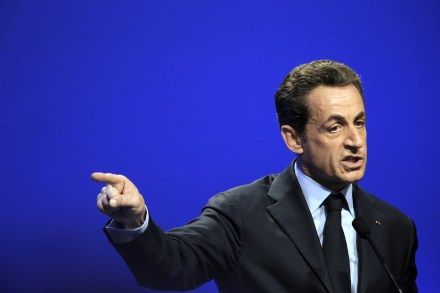
Who on earth does Nicolas Sarkozy think he is? The answer, of course, is President of the French Republic. And from that position — and propelled by the Toulouse shootings and doubtless by the imminent election — he has chosen to expel a number of people from the Republic whose views, actions and teachings are deemed inimical to the State. Sarkozy gave the order yesterday and a couple of hours later the men were on planes back to their countries of origin. As the Times reports, the Algerian Islamist Ali Belhadad was flown back to Algiers and Almany Baradji, an imam, was sent back to Mali. The French Interior Ministry explains that Baradji ‘preached anti-Semitism and the rejection of the West’. Neither man was given any time to appeal.

Galloway and religion

From our UK edition

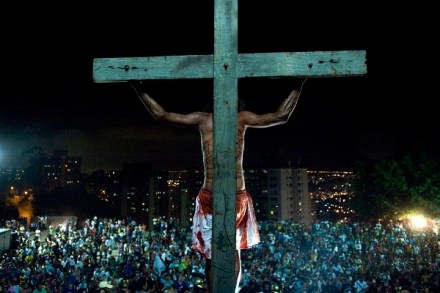
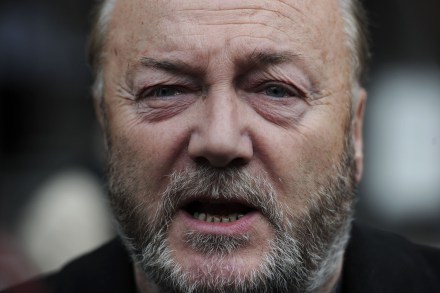
A few years ago, The Spectator, in an inspired notion for the Easter issue, asked a number of prominent individuals whether they believed in the Resurrection. And among the surprises was George Galloway, who replied emphatically in the affirmative: ‘Yes, I believe in the Resurrection. I believe God restored the life of Jesus of Nazareth and took him to his bosom. The example of suffering and sacrifice followed by vindication is central to my religious belief.

Prophetic times

From our UK edition

The subject here is colossal, covering a substantial stretch of the later Roman empire, the last years of the Persian empire, the conversion of the Arabs, the spread of Christianity and what happened to Judaism. The time span runs, effectively, from the death of Jesus to the moment in the eighth century when the Abbasids acquired through violence the vast empire of the Umayyads, stretching from the Loire to the Hindu Kush, and founded Baghdad. The title of Tom Holland’s book is rather studiously general, but his central topic is unmistakable: the founding and establishment of Islam and its political and martial setting. If Holland didn’t want to make a point of this in his title, one couldn’t blame him.

A man surrounded — and some assumptions exposed

From our UK edition

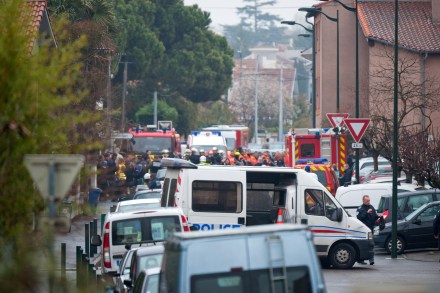
There was an element of bafflement in the early BBC coverage this morning of the welcome news that police have identified and surrounded the suspected killer of seven people, including Jewish children, in Toulouse. To some people's surprise, the BBC correspondent remarked in the early reports, the suspect turned out to be a Muslim, Mohammed Merah. So the entire tone of the Corporation's coverage of the killings turns out to have been misplaced. Ever since the dreadful news that a gunman had attacked a Jewish school in Toulouse after killing three French soldiers, the overriding assumption on the part of the Corporation was that, unless the killer was merely unhinged, the suspect must be a far-right extremist, animated by a hatred of minorities.

Defecting to what?

From our UK edition

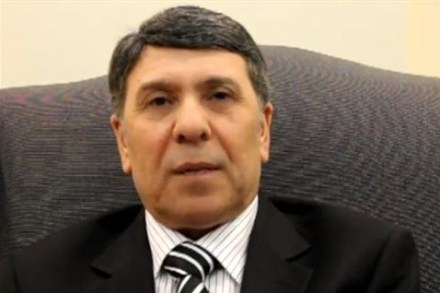
The wires are ablaze with the news that Syria's deputy oil minister, Abdo Hussameldin, has switched sides to the country's opposition. His is, after all, the most high-ranking defection so far, and he doesn't have any kind words for his former employers. As he puts it in a video that has been posted on YouTube, the current regime are ‘not friends of the Syrian people but partners in the killing of the Syrian people’. We shouldn't, however, get too excited just yet. This could be a significant moment, not least because it suggests that Assad's hold over his own government is beginning to weaken. But it's also worth remembering that Hussameldin is only one of dozens of deputy ministers in Syria.

What the Taliban want

From our UK edition

How go those talks with the Taliban in Doha? Quietly, that's how — although there's a report in yesterday's The Hindu that could reveal some of what's being said, and is worth the time reading because of it. According to the paper's diplomatic sources, the Taliban want Mullah Mohammed Omar installed as ‘supreme religious and political leader’ of Afghanistan. And, yes, that is the Mullah Omar who sheltered Al Qaeda when he actually was in charge of Afghanistan, and whose policy agenda included the death penalty for those converting to another religion, as well as the general subjugation of women, gay people, individuality, etc. He's currently wanted to the tune of $10 million by the US State Department.

Cameron’s ECHR problems won’t end with a Qatada deal

From our UK edition

The news that Theresa May will fly to Jordan to continue talks about Abu Qatada shows how close the government thinks it is to a deal with the Jordanians that might satisfy the European Court of Human Rights and allow his deportation. One government source explained to me earlier that the problem is the Jordanians are offended by being asked to provide these guarantees about a fair trial and no evidence being obtained by torture. For this reason, there needs to be a fair amount of diplomatic stroking. A deal with Jordan on Abu Qatada is becoming increasingly necessary if Cameron is get out of this bind on the ECHR, with the Lib Dems on one side and the Tory right on the other.

Why Baroness Warsi has it wrong

From our UK edition

For someone who has profited so well from her religion, it is particularly striking that Baroness Warsi should claim today that our societies are suffering because of ‘a militant secularisation’ which she claims is ‘taking hold.’ And worse, she says, that ‘one of the most worrying aspects about this militant secularisation is that at its core and in its instincts it is deeply intolerant. It demonstrates similar traits to totalitarian regimes.’ Not merely ‘militant’ and ‘worrying’, but ‘similar traits’ to those of ‘totalitarian regimes.’ Before addressing the numerous ways in which Warsi is wrong, I should note the one point on which I think she is right.

Making a call on Qatada

From our UK edition

The Prime Minister, we are told, has been trying to reach the King of Jordan to see if some kind of arrangement can be made so that Abu Qatada can be deported legally and that no forms of torture-gained evidence will used against him in a Jordanian court. This seems like a sensible thing to do. But it is important that the government balances its counter-terrorism policy with its foreign policy.   Here is what I mean. Jordan is a friend of Britain, but the King is under tremendous pressure to reform. There are daily demonstrations against his rule and the protests are gathering pace. His reforms, meanwhile, have been limited and the country is running out of money. It is no longer unfeasible that Jordan could face what many other countries in the region has seen.

Our enemy’s enemy

From our UK edition

It’s unusual for The Guardian and The Spectator to agree on anything, but Seamus Milne and our own John R Bradley are sceptical about these Syrian rebels whom we’re being invited to support. Bradley was alone in predicting the Egyptian revolution, and argues in today’s magazine that the conventional wisdom is once again wrong. Who’s backing the rebels? The Qataris, keen to depose the last secular regime in the Arab world. And the Saudis and Israelis, whose hatred of Iran eclipses all other considerations: this isn’t about the Syrian people, but about depriving the ayatollahs of an ally. Some in the West also take the view that the enemy’s enemy is my friend — so the rebels must be good eggs.