Islam

Party conferences: a vapid kind of hell

From our UK edition

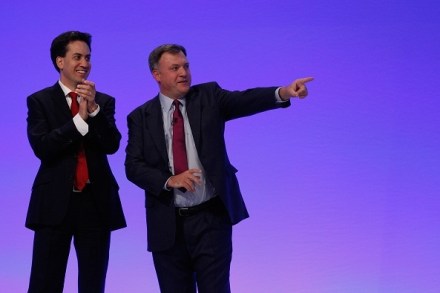
As I may have intimated last week, political conference season is a particular kind of hell. Most of us just are not diverted by faked class warfare or efforts by Ed Balls to be more ‘butch’ than David Cameron. Anyhow – whilst the few remaining members of political parties come together to remind the rest of us why we want nothing to do with them, here are some things that are actually happening. 1).

Freedom betrayed

From our UK edition

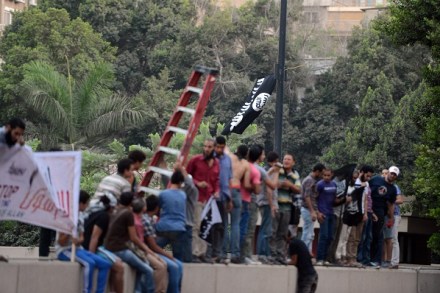
I have a piece in the magazine this week on the disgraceful behaviour of Hillary Clinton and other US officials in the latest round of cartoon wars. During the last week the US Secretary of State turned into a film critic, the Chairman of the Joint Chiefs of Staff – head of the most powerful and expensive military in history – relegated himself to a telephone-salesman offering up his country’s founding principles at a knock-down price, and White House Press Secretary Jay Carney decided that his job included condemning the work of amateur directors. But it gets worse. The same Jay Carney has now decided that his remit extends to commenting on what French journalists should or should not publish.

No surrender for Salman

From our UK edition

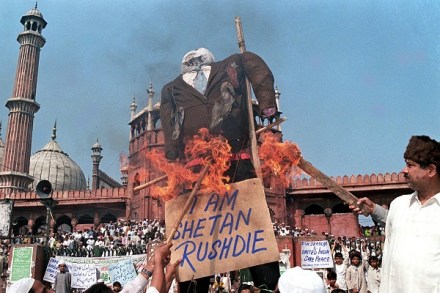
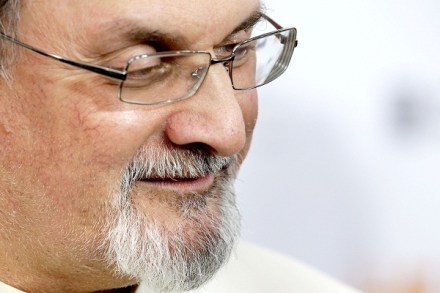
As the Middle East reels and Parisian satirical magazine Charlie Hebdo up their security, one man who knows more than most about the absurd over-reaction of vast swathes of the Arab world has offered some advice. Speaking to Sky News, Sir Salmon Rushdie is not backing down: ‘To tell you the truth, I’m a little tired of religion demanding special privileges. I have all sorts of people attacking me, it doesn’t inspire me to go out and commit an act of violence.’ Rushdie points out that any other idea can be discussed, satirised or taken seriously. ‘It’s very important in England, and Europe and America, where we are fortunate enough to have our say without fear of arrest or worse, we need to stand by that. That’s what you do in a free society.

Joseph Anton, a brilliant and important book

From our UK edition

I’m halfway through Joseph Anton, Salman Rushdie’s memoir of what it was like to be given a death sentence by medieval religious savages. I’m reviewing the book for next week’s magazine. We were, as a country, rather less than unequivocal in our determination to protect Rushdie for his right to exercising free speech; plenty of people who should have known better gave succour to his persecutors. I don’t know if the oleaginous Labour MP Keith Vaz falls into that category, mind; his support for the howling mob was, I suppose, predictable. It’s a brilliant and important book. And there is a surprising amount of humour in it. So I’ll leave you with a puzzle.

Britain should call for reform of existing blasphemy laws

From our UK edition

Around the time that speculation was mounting about Tony Blair's possible return to British politics last month, I went to a public discussion about faith and public life by the man himself and Rowan Williams in which Charles Moore was both participant — or should I say, combatant — and moderator. It was, as you’d expect, a lively affair in which the two Catholic converts took radically dissimilar views on most things, and Islam in particular. In retrospect, one of the remarks that strikes me as remarkable was Mr Blair’s throwaway contention that inter-faith discussion should be conducted on terms agreeable to the faiths in question.

Salman Rushdie’s ‘The Satanic Verses’ revisited

From our UK edition

The publication of Joseph Anton (tomorrow), Salman Rushdie’s much anticipated memoir, has given newspapers cause to revisit The Satanic Verses. The commentary focuses on the bloodthirsty and backward response that the book continues to provoke. The novel has become a totem in various political and religious ‘debates’ (a word that is hopelessly misplaced in this perverse context of fatwahs and feeling). It is appropriate that Rushdie is celebrated as a champion of liberalism and rationality. There is no doubt that The Satanic Verses is among the most important books ever written. But, is it one of the finest? Despite the reams of brilliant and brave writing on the Rushdie affair, the question is seldom asked.

Film protests in Middle East

From our UK edition

It’s about time we revamped the rather stale format of the BBC film review show, the one that has that Nina Simone signature tune and was presented by Barry Norman and more latterly Jonathan Ross. I don’t even know if the programme is still extant. Anyway, my idea is for a new review show which would be set in a branch of the KFC franchise and presented by fundamentalist Muslims. Any film they didn’t like they’d burn down the restaurant and decapitate the manager, or manageress. Are these people running riot in Khartoum, Cairo and Tripoli just very stupid, or mentally ill? Or both?

Salman Rushdie: He’s still here

From our UK edition

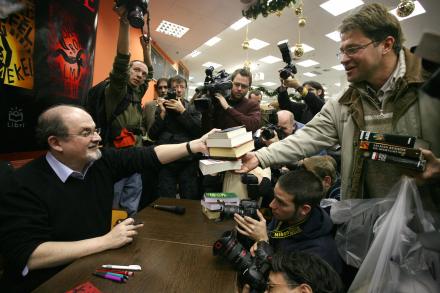
Until the launch party for Salman Rushdie’s autobiography, the best story I’d heard about the forced marriage of literary London and the Special Branch came from the night of the 1992 general election. Melvyn Bragg was hosting a party to watch the results. The guests were overwhelmingly left-leaning writers and intellectuals, and had gathered to celebrate an apparently certain Labour victory that would end 13 years of Tory rule. Yet as the evening wore on, nothing went according to plan. Neil Kinnock’s Labour was winning a few seats, but John Major’s Tories were doing far better than the polls predicted. The chatter subsided. Apprehension replaced expectation.

The Muslim Brotherhood’s rank hypocrisy

From our UK edition

Western media and governments which are currently white-washing the Muslim Brotherhood should take note of the following, a classic example of the organisation’s traditionally forked-tongue way of working. Ahram Online carries the story which relates the recent rioting across North Africa and the Middle East. After the attack on the US Embassy in Cairo on Tuesday, the Muslim Brotherhood’s official English-language twitter yesterday tweeted: ‘We r relieved none of @USEmbassyCairo staff were harmed & hope US-Eg relations will sustain turbulence of Tuesday’s events.’ The US Embassy tweeted their thanks in the following way: ‘Thanks.  By the way, have you checked out your own Arabic feeds?  I hope you know we read those too.

General Dempsey’s disastrous intervention

From our UK edition

When the Danish Cartoons affair broke in 2005-6 there was considerable pressure on the Danish Prime Minister, Anders Fogh Rasmussen, to issue a condemnation and apology. Demonstrating considerable statesmanship he nevertheless repeatedly said that ‘You cannot apologise for something you have not done.’ When so-called ‘community leaders’ insisted on seeing him he refused because he, as the Prime Minister, was not responsible for the contents of a Danish newspaper. The Danish press is not only free, but separate, from the Danish government. Rasmussen’s belief was that the sooner anybody who was unaware of this became aware of it the better. Fast forward to 2012 and we seem to have yet another set of eruptions in the cartoon/film/book wars.

Salman Rushdie, A Hero for Our Time – Spectator Blogs

From our UK edition

It's twenty years since I read The Satanic Verses. I didn't much care for it back then, chiefly, as I recall, because Rushdie's satirical and comic scenes left me untickled. But today - especially today - is a good moment to read the New Yorker's excerpt from Rushdie's forthcoming Fatwa Chronicle, Joseph Anton. If you can't read it today, read it tomorrow. But do read it. Among other things, it made me want to go back and re-read The Satanic Verses. There are many dates you could choose from which to start a chronicle of our times but, at least in terms of one big question, Valentine's Day 1989 is as good as any and better than most places from which to begin.

Channel 4 cancels Tom Holland’s history of Islam, but the extremists will not win

From our UK edition

In what may prove to be the most depressingly predictable story of the year, we learn that Channel 4 has chosen to cancel a screening of Tom Holland's programme 'Islam: the untold story' tomorrow night  because of threats to the author and presenter. If there is a reason why so many stories and facts to do with Islam remain 'untold' it is simply because of this. None of the people who threatened Tom Holland even have to mean it — the threat is enough to ensure that Channel 4 don't go ahead. I don't blame them, and have seen this happen too many times, in too many different countries, to be surprised.

Citizen Khan says absolutely nothing new

From our UK edition

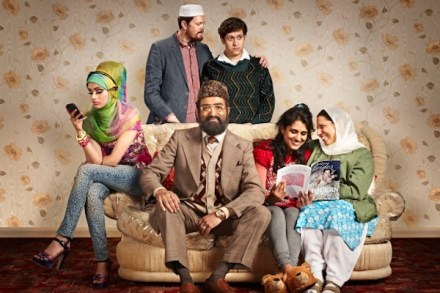
I took the opportunity yesterday to catch up with the BBC’s new comedy ‘Citizen Khan’. Focusing on a Muslim family based in my hometown of Birmingham, it lampoons the trials and tribulations of the self-appointed, self-important, and self-obsessed Mr Khan. Anyone with even a cursory knowledge of British Muslim communities will recognise the basic truths on which the programme’s characters are premised. Alia, daughter of the eponymous hero, seems to have provoked the most controversy. Alia is a shrewd young girl, doting before her parents but defiant behind their backs. There are complaints she portrays a disrespectful daughter, affronting not just her myopic parents but also a stylised vision of ‘British Islam’.

George Galloway’s awfulness

From our UK edition

George Galloway's awfulness falls into two categories. First there is the serial dictator-licking. This is a man so profligate, not to say promiscuous, in his affections that he has in succession fawned over Saddam Hussein, Bashar al-Assad and Mahmoud Ahmadinejad. Then there is the personal vileness — pretending to be a dirty cat on live television (still, after all these years, impossible to watch), explaining his curious notions of when rape is, and is not, rape, and using vulgarly dismissive terms about disabled people. The strange thing about this is that though the former is, I suggest, in the great scheme of things the worse stuff, it is always the latter that gets him into trouble.

The history of Islam is not off-limits

From our UK edition

I’ve only just got around to watching Tom Holland’s documentary for Channel 4 from earlier this week: ‘Islam: the untold story.’ It had some good things in it, despite suffering from the two problems all documentaries now suffer from: attention-grabbing statements at the end of segments which are not followed up on, and endless shots of the presenter doing strangely unconnected things (travelling on an elevator, sitting on a bed etc.) But Holland was an engaging and pleasant presenter, and the documentary was something of a landmark in that it finally brought to wider public attention a subject which has been almost completely off-limits in recent years.

The marriage plot: The Newlyweds by Nell Freudenberger reviewed

From our UK edition

Few could accuse literary fiction of not doing its best to perk up the US export sector recently. It has been a truly remarkable year. A quick glance at my shelves reveals some wonderful new finds: The Art of Fielding by Chad Harbach, We the Animals by Justin Torres, Seating Arrangements by Maggie Shipstead and recently Leaving the Atocha Station by Ben Lerner. Joining them this summer – although a second novel rather than a debut like the above – is Nell Freudenberger’s The Newlyweds. Exactly like the others, however, The Newlyweds comes already wreathed with praise from across the pond. And well deserved too.

Chariots of fire

From our UK edition

When the contestants were lining up for last night’s sensational 5,000 metre race, both of the American contestants waited until the cameras were on them, then crossed themselves and held their hands in prayer. It’s quite some sight to secular Brits, where religious language (even ‘God bless’) and mannerisms have dropped out of our national life and vocabulary. But to quite a few of the Olympians, their faith is of crucial importance, which we have seen this year through their Twitter feeds. Mo Farah, a Muslim, prayed on the track after winning both of his Golds. After Usain Bolt broke the Olympic record for the 100 metres, he did likewise.

Memoir of an Islamist

From our UK edition

It was a surreal experience to meet Maajid Nawaz for the first time. I had known of him for years and admired his bombast. He was a hero — not just my hero — but a hero to hundreds of young Islamist radicals. 'Woah, this is the brother in Egypt, isn’t it?' said an erstwhile comrade, listening to a cassette in my badly beaten Peugeot 106 as we drove through Bradford. That brother was Nawaz and it explained why neither of us had met him at that time. In late 2001 Nawaz had travelled to Egypt to learn Arabic as part of an undergraduate degree at SOAS but was now being detained in one of Mubarak’s notoriously brutal political prisons.

RIP Robert Hughes: Enemy of the Woozy

From our UK edition

Few books have had a greater effect on me than Robert Hughes’ Culture of Complaint. The clarity of Hughes’ style in his dissection of the discontents of the 1980s was enough to make me love him. In his political writing, histories and art criticism he never descended into theory or jargon, but imitated his heroes, Tom Paine, George Orwell and EP Thompson, and talked to the reader without condescension or obscurantism Critics denounce and admirers celebrate the ‘muscular style’, but I find it more courteous than macho. Hughes tackled hard and often obscure subjects, the rise of modern art, the penal colonies in early Australia, and made a deal with the reader.

Peter Hitchens vs Mehdi Hasan

From our UK edition

A fascinating column in yesterday’s Mail on Sunday by Peter Hitchens asks ‘Am I an “animal”, a “cow” — or just another victim of BBC bias.’ The spur for asking this otherwise surprising question is a BBC radio programme presented by the former New Stateman writer, Mehdi Hasan. While presenting ‘What the Papers Say’ a couple of weeks ago Hasan found the opportunity to misquote a column by Hitchens, who promptly complained to the BBC. For its part, the BBC seems to have accepted that the quote was doctored and has tried to make up for this. But now Hitchens asks some questions about Hasan’s own opinions.