Islam

Ignore the European Court and deport Abu Qatada tonight

From our UK edition

The Al-Qaeda preacher Abu Qatada is a Jordanian national who is in the UK illegally (having come here in 1993 on a forged United Arab Emirates passport). The headache he has caused successive UK governments looks like finally reaching a peak. But there is a simple solution to the problem he poses. Last month, not only for the first time in the decade-long Qatada process, but for the first time ever in an extradition case, the European Court of Human Rights cited Article 6 ‘rights to fair trial’ to ensure that Abu Qatada could not be returned to Jordan. The Court had previously played around in the Qatada case only with Articles 2, 3 and 5.

Cameron’s coming battle over the ECHR

From our UK edition

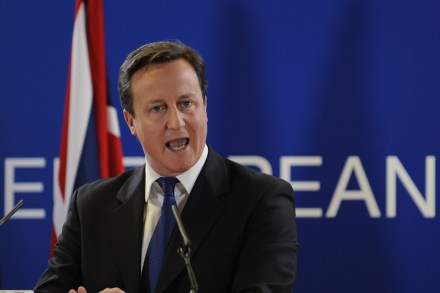
The coming release of Abu Qatada on bail is going to put bellows under the whole debate about the European Court of Human Rights. In his recent speech to the Council of Europe, David Cameron rightly protested about a situation with terror suspects in which ‘you cannot try them, you cannot detain them and you cannot deport them.’ We will now find out how quickly Cameron is prepared to act on this issue. If Cameron wants to makes changes to the Courts and the Convention, then he is going to have to get agreement from every member of the Council of Europe. There’s no guarantee that he’ll be able to get this and it will take an awfully long time.

We must be honest about honour killings

From our UK edition

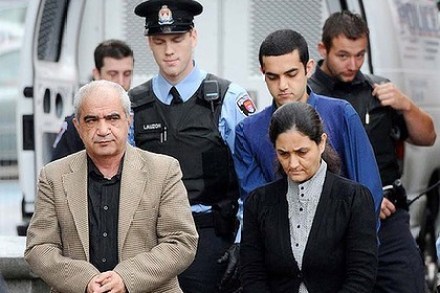
White guilt has terrible consequences. This was made profoundly clear in Canada during the three month trial of Mohammad Shafia, his wife Tooba Yahya and their son Hamed. They were convicted a week ago of the first-degree murder of Zainab (19), Sahar (17) and Geeti Shafia (13), and 50-year-old Rona Amir. The three teens were Mohammad Shafia and Tooba Yahya’s daughters, Hamed’s sisters. Rona was Mohammad Shafia’s first wife. The four women had been drowned in their car in June, 2009. The killers had chosen a canal in Kingston — a university town half-way between Toronto and Montreal — because they assumed that the local police would be less sophisticated and able than those in a larger city.

Holy law

From our UK edition

In the autumn of 1347, the Black Death arrived in Egypt. In the 18 months that followed, mosques turned into mortuaries across North Africa and the Levant. By the time the pestilence had subsided, up to a third of the Muslim world lay dead. Theologians delved into their books and found a comforting spin: infection was a blessing from God, they pronounced, and all believers touched with it were bound for paradise.  The hordes who fled their villages to escape the disease were apparently unconvinced. So too was an Andalusian scholar named Ibn al-Khatib, whose observations showed it to be spread by human contagion, not the hand of the Almighty. Proof taken from the traditions, this man retorted to the jurists, had to yield to the perception of the senses.

Person of the year: The Islamist?

From our UK edition

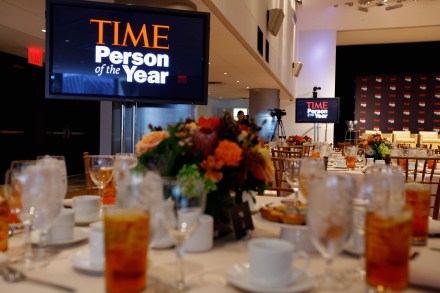
Last week, Time Magazine named ‘The Protestor’ as its Person of the Year. Myself, I'd be tempted to bestow the honorific upon ‘The Islamist’. For, in the spirit of the Time award, it is the Islamists, rather than the revolutionaries, who are now in the ascendancy in the Middle East. Governments in Morocco, Tunisia, Libya and Egypt are all now partly ruled by democratically-elected, if relatively moderate, Islamists. Next year will be about how they manage their newfound power. It will be not about ‘political Islam’, but ‘governmental Islam’. Many wonder if there is such a thing as moderate Islam, and whether all Islamist governments tend towards theocratic rule. Now we are in a position where time will tell.

Learning to live with Islamists

From our UK edition

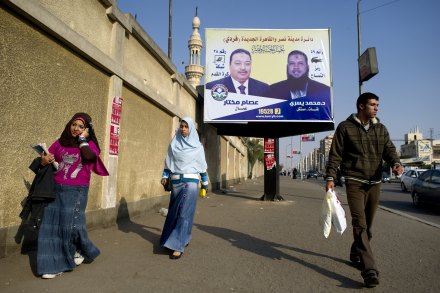
Islamists have won a landslide in Egypt, with the Muslim Brotherhood and the ultra-Conservative Al Nour party winning some 60 per cent of the votes cast. Future rounds of elections may benefit them further, as they take pace in more rural and conservative areas. Their success should be a surprise to nobody. Egypt is a conservative Muslim society. Islamists have been far better organised than the ragtag revolutionaries that ousted Hosni Mubarak, having run million-person charities for decades. They also benefit from being seen as un-corrupt and having been opposed to Mubarak for years. Further, they have been able to run on a simple slogan ‘Islam is the Solution’ without having to demonstrate why.

Worrying developments in the Middle East

From our UK edition

It’s been an eventful , if worrying afternoon in the Middle East. First, the initial Egyptian election results confirm the expectation that Islamist parties would dominate the first round of elections: they've taken more than 50 per cent of the vote. Douglas Murray wrote a Spectator cover story two weeks ago on how the Arab Spring is turning to winter; it is required reading. Events in Iran are much more disturbing, though. Iran claims to have shot down an US drone in the east of the country and added further threats about further retaliation for the incursion.

Mubarakism after Mubarak

From our UK edition

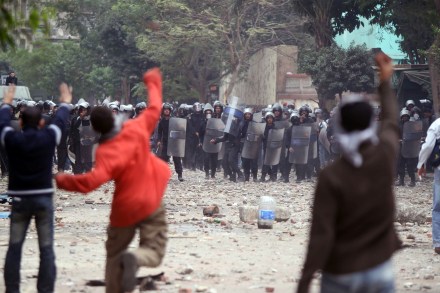
The future of Egypt has been hanging in the balance since Hosni Mubarak was toppled. Now there is real cause for concern, as scores of protesters clash with state security forces. The problem, above all, is military overreach. Stuck in a 1960s view of itself, and keen to preserve their money, status and power, the military has been thwarting the process of change. Since Mubarak's fall they have continued behaving how they always have and worse — arresting protesters, muttering about US-led conspiracies, demanding extra-constitutional rights and clamping down on dissent. Worst of all, the West has been all to willing to take them at their word.

Ibrox: A Broader Church Than You Might Think

From our UK edition

This case looks as though it belongs in some Chris Morris show or something: A Muslim Rangers supporter who chanted sectarian remarks at a game at Ibrox Stadium has been fined £600. Abdul Rafiq, 41, the only Muslim member of the English Defence League, was arrested at Rangers friendly game with Chelsea on 6 August. [...] Fiscal depute Seana Doherty, prosecuting said: "The accused was standing in the Govan front stand wearing a flag around his shoulders bearing the Red Hand of Ulster logo. "He was wearing an umbrella stand hat which was red white and blue and also had the Red Hand of Ulster logo on it, and carrying a blue Rangers backpack. "He was seen by three police officers to stand up from the seat and chant sectarian phrases.

The worst form of censorship

From our UK edition

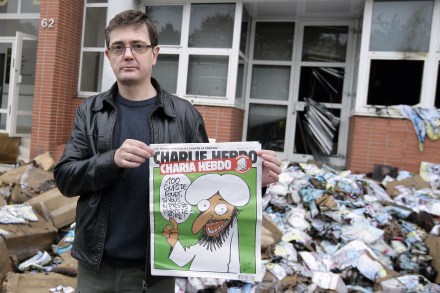
A week ago, the offices of the French satirical paper Charlie Hebdo were burned down. This attack came after it advertised the founder of Islam, Muhammad, as 'editor-in-chief' of the new issue. The move was a light-hearted response to the very serious matter of the election of an Islamist party (the Ennahda party) as the leading party in Tunisia (a result which, incidentally, appears not to have greatly bothered most European media). As the staff of Charlie Hebdo contemplated the ruins of their magazine, a much grander and richer magazine, Time, ran one of those pieces which have become familiar whenever there is an Islamist assault against free speech.

An assault on humour

From our UK edition

On Tuesday night the French satirical newspaper Charlie Hebdo was firebombed, presumably by Islamic terrorists, for naming the Prophet Mohammed its editor-in-chief. Nobody was hurt in the attack but the newspaper's offices have been destroyed. They still managed to see the light side, running a commentary saying "After Greece, save Charlie". The left-wing paper has never been as popular as its main rival Le Canard Enchaine but its outrageous cartoons and caricatures are a staple of French kiosk fronts. Naming Mohammed editor may be one of the more tame things the newspaper has done. But whether it is tasteless or not, the magazine's right to publish, insult and ridicule is fundamental to democracy. What's so amazing is how limited the reaction has been outside of France.

Do Muslims vote Islamic?

From our UK edition

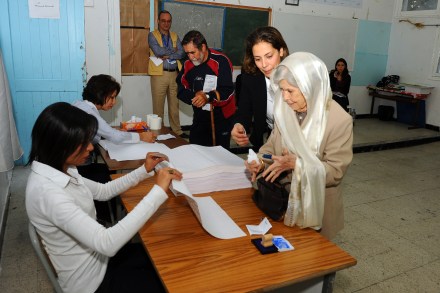
The electoral success of Tunisia's Islamist Ennahda party and the likelihood that the Muslim Brotherhood will do well in Egypt's forthcoming elections has heightened fears in many quarters. Will Islamic parties always dominate such contests in the Middle East? The electoral success of the Islamic Salvation Front in Algeria, the Justice and Development Party in Turkey and Hamas in Palestine suggest the answer is yes. But looking at a broader data set – that is, the entire range of elections in which Islamic parties have taken part – reveals a different picture. Islamic parties have stood for elections in more than 90 elections in more than 20 countries. But as scholars Charles Kurzman and Ijlal Naqvi argue in a fascinating study entitled "Do Muslims Vote Islamic?

Libya’s revolution, deflated

From our UK edition

Gaddafi was buried this morning, but Libya's problems remain firmly above ground. The news emerging from the country is mostly grim: a possible massacre by anti-Gaddafi fighters; the hint of complicity on the part of Libya's new leadership; Saif Gaddafi's continuing elusiveness, and so on. Revolution and civil war are never done cleanly, sure. But just because the current situation is unsurprising doesn't make it any less shocking. Unsurprising yet shocking. Much the same could be said of Mustafa Abdul-Jalil's declaration that Islamic Sharia law would be the "main source" of all legislation in Libya from now on. Unsurprising, because Libya is, on the whole, a conservative Muslim country.

Iran crosses a line

From our UK edition

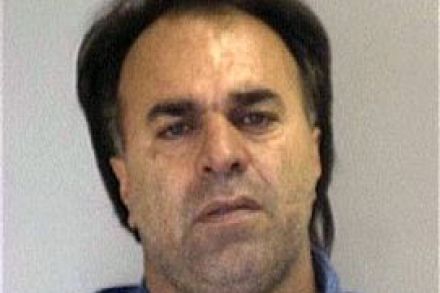
A flurry of news yesterday evening, among it Slovakia's rejection of the euro bailout and even more ado about our Defence Secretary. But nothing nearly as striking as the alleged Iranian plot to murder the Saudi ambassador to Washington. Drugs, money, geopolitics, potential mass slaughter — this is a web of the most tangled and terrifying kind. And, according to US officials, it all leads back to Tehran. Assuming that that's the case, there can few more alarming reminders of the threat posed by Iran. Here is a regime that is bent on terror and destabilisation — and bent, also, on acquiring a nuclear weapon. Little wonder why politicians from Tony Blair to, yes, Liam Fox are waving red flags about the situation. But what will it all come to?

Mullen adds to the tension between the US and Pakistan

From our UK edition

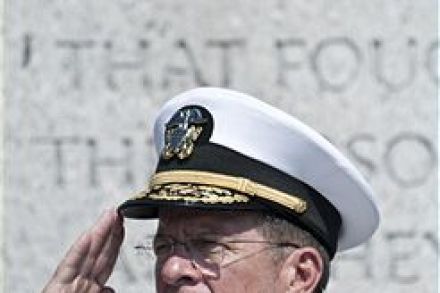
US-Pakistani relations will deteriorate even further following today’s claims by Admiral Mike Mullen, the outgoing chairman of the Joint Chiefs of Staff, that the Pakistani ISI aided and abetted the attack on the US embassy in Kabul. Mullen told a Senate panel that, "With ISI support, Haqqani operatives planned and conducted a truck bomb attack, as well as the assault on our embassy." This charge was part of broader criticism of what Washington sees as Pakistan’s strategy of exporting its internal problems.

The randomness of al-Qaeda’s evil

From our UK edition

After all the nerves and security in New York, Washington and London, the only attempted terror plot on the anniversary of 9/11 appears to have been foiled outside an arts centre in Gothenburg. The Swedish press says that the four people arrested on Saturday night are believed to belong to a cell linked to al-Qaeda. There are no more details yet, but it's a reminder that the al-Qaeda threat has not gone away. Its Arabian Peninsular division is still active, responsible for the underpants bomber and the bomb bound for Detroit, intercepted in London. This is also a reminder of how chillingly random its attacks are.

Cameron winning over the Libya doubters

From our UK edition

"They'll like us when we win," the West Wing's Toby Ziegler said of the Arab world. David Cameron might have said the same when public opinion was turning against the intervention in Libya. And, judging by today's YouGov poll, he'd have been right. Public support for military intervention has mirrored the public’s view of how well the action is going. In the first two weeks, when optimism prevailed, the public were largely in favour. However, as that optimism wore off and people increasingly doubted that the rebels could succeed, more and more began to oppose our involvement. Before the weekend, just 26 per cent thought the intervention was going well, and only 31 per cent were in favour of it.

A grateful nation

From our UK edition

This picture from Libya is doing the rounds on the internet this morning. Italian, French and British flags are also being hoisted in Benghazi. This spontaneous display of gratitude suggests that some of the Libyan rebels won't forget who saved them from annihilation. It's something of a PR coup for NATO; a sign that there is life in the alliance and that it can still be a force for good.  On the other hand, reservations about the character of the Libyan rebels as a whole and the fragility of the present political situation remain. John R. Bradley has a piece in today's Mail, reiterating the points he made in the Spectator some time ago.

An encouraging start for the new Libya

From our UK edition

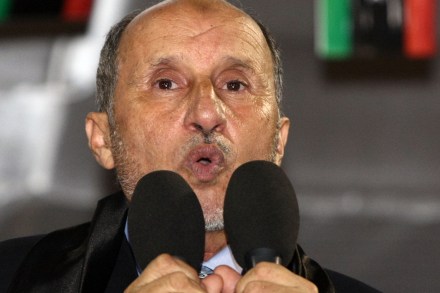
The press conference by Mustafa Abdel Jalil, the head of the National Transitional Council, was encouraging. Jalil stressed that he wished Libya to be a country governed by the rule of law and urged his supporters not to indulge in revenge attacks. He also stressed that Gaddafi will be given a ‘fair’ trial. In an echo of the text message that the rebels sent out last night, Jalil encouraged Libyans to protect both private and public property. There is clearly a desire to avoid the kind of post-liberation looting that was so corrosive to public order in Baghdad. In terms of the broader political framework, Jalil emphasised that he wanted Libya to be a democratic state with equality under the law but within a moderate Islamic framework.

Tensions rise in the Middle East

From our UK edition

The escalating crisis in Gaza and Sinai is worrying. Egypt is to recall its ambassador to Israel after 3 security personnel were killed in confused scuffles after an Israeli bus was bombed near the Sinai border; the Israeli embassy in Cairo has also been the scene of ill-tempered demonstrations and vandalism. Israel denies responsibility for the three deaths. Meanwhile, the Egyptian army is also conducting operations against Islamist militants in the increasingly lawless Sinai desert. Finally, the Arab League has called an emergency meeting after Israel retaliated to 30 rocket attacks by launching stiff operations in Gaza.