Islam

A black anniversary

From our UK edition

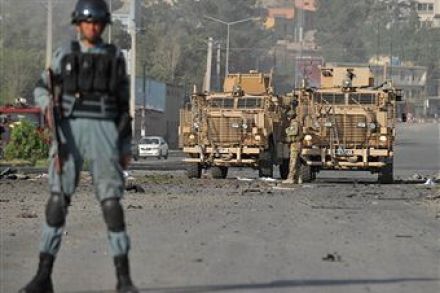
Even after 10 years, Afghanistan still has the capacity to shock. Details of the attack on Kabul are vague, but it seems that a posse of Taliban fighters dressed in “military garb” walked into the offices of the British Council and the United Nations; three people were killed in the ensuing explosions and fire-fights between security forces and insurgents. As I write, reports suggest that one Islamist is still alive and shooting in the British Council, while other explosions have been heard across the capital this morning. Taliban spokesmen have confirmed that they had carried out the attack to mark the 92nd anniversary of Afghanistan’s independence from Britain.

The revolution remains on track

From our UK edition

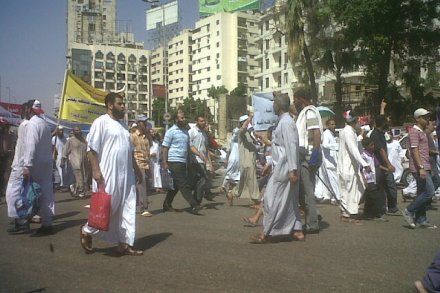
The Egyptian revolution has pulled itself back from the brink in a quite an extraordinary way. Everyone feared a clash in Tahrir Square today but, so far, a deal struck between the Muslim Brotherhood, the Salafists, the pro-democracy activists and the military is holding. Tahrir Square is teeming with white-clad Hajis. But everything is calm. The military gave into to a number of key demands from the protesters, including making some changes in the newly-promulgated electoral law. The Muslim Brotherhood feared being blamed by the military for a confrontation and being seen as too close to the Salafists. And the Facebook liberals wanted to keep the revolution united for now.

The threat to the Egyptian revolution

From our UK edition

The Egyptian revolution may be in for its greatest challenge yet. Last weekend saw clashes between different groups of protesters, as one group sought to march on the Supreme Military Council. Now Salafists have promised to occupy Tahrir Square on Friday, seeking to turf out the broad-based group of revolutionaries that have occupied the square for a number of weeks. Many people fear a bloodbath. The military, meanwhile, is benefitting from a fracturing of the revolution. Some even see an explicit (if short-term) agreement between the military and the Muslim Brotherhood and the Salafists which will allow the military to push against the liberal Tahrir Square activists.

Bomb blast near the Norwegian Prime Minister’s office

From our UK edition

  A reportedly enormous bomb blast has shaken the PM's office and the oil ministry in Oslo, the Norwegian police confirm. Reports have confirmed that the Norwegian Prime Minister is safe, but it's not clear if he's un-injured. Early reports suggested that this might be a gas explosion, but those were discounted because there is no mains gas supply in Oslo. Norway's state broadcaster has confirmed that one person has died, with more than 8 injured. Fortunately, it is the height of Norway's holiday season and there were few people about. The Norwegian police, however, warn that there are other casualties being treated. Details remain vague.

Making the peace is a risky business

From our UK edition

The UN has lifted sanctions on 14 Taliban leaders, the strongest indication yet that the international community is opening a negotiated settlement with elements of the Afghan insurgency. Indeed, Germany’s UN ambassador said the move “sends a strong signal: the Security Council and the international community support the efforts of the Afghan government to engage reconciled Taliban in a political dialogue in order to achieve peace and security in Afghanistan.” There are serious concerns about engaging with the insurgency, which, though amorphous, shares common ground in its unreconstructed religious extremism. Renowned war correspondent Dexter Filkins has written of the resilient Taliban’s mounting aggression.

Britain’s ill-defined counter-terror strategy exposed by America’s clarity

From our UK edition

In a post over at the Staggers, defence and security expert Matt Cavanagh has compared and contrasted Barack Obama’s review of US counter-terrorism policy and the coalition’s recent update of the Prevent strategy, together with David Cameron’s professed ‘muscular liberalism’. Here are his insights: ‘The new (American) strategy contains a fairly detailed discussion of the Arab Spring, arguing for applying "targeted force on Al Qaida at a time when its ideology is under extreme pressure" from events in North Africa and the Middle East.

A fierce debate on a religious matter

From our UK edition

The Spectator hosted a debate at the Royal Geographic Society yesterday evening with a rather meaty motion: “Secularism is a greater threat to Christianity than Islam”. We have two reviews of the occasion. The first, by Kate Maltby, is below. Lloyd Evans' can be found here. Last night’s Spectator debate on the motion “Secularism is a greater threat to Christianity than Islam” was marked by a highly personal level of investment from the speakers, a sudden swing in the vote, and the uncharacteristic sight of Chair Rod Liddle acting as the most conciliatory person in the room.

What will emerge from the ashes in Afghanistan?

From our UK edition

On Monday, James drew attention to Dexter Filkins' stark assessment of the situation in Afghanstan and of the strength of the Taliban. Today, the attack on a hotel in Kabul gives that assessment a fresh and tragic resonance. What we seem to be witnessing is the Taliban, or at least elements of them, flaunting their murderous intent as the West prepares to leave the country. From the assassination of General Daud to this Mumbai-style raid, their methods are becoming more ambitious, more headline-grabbing. Around ten innocents are said to have been killed this time around, along with six to seven of the Islamist militiamen.

Afghanistan: The worries mount as the West prepares to drawdown

From our UK edition

Dexter Filkins is one of the great war correspondents of the post 9/11 world. So it is particularly sobering to read his assessment of the Afghan situation as the West prepares to drawdown. Filkins reports that: "According to American officers, the level of violence in Afghanistan this year is fifteen per cent higher than it was at this time last year. The insurgents, far from being degraded, appear to be as resilient as ever. And their sanctuaries in Pakistan, where the Taliban leadership resides mostly unmolested, remain more or less intact." Compounding this problem is that the levels of corruption in the Afghan government are continuing to alienate the population.

Could Warsi’s next job be High Commissioner to Pakistan?

From our UK edition

Sayeeda Warsi’s upbraiding of Pakistan for not living up to Jinnah’s ideals is another sign of how the government believes Baroness Warsi to be uniquely able to speak to Britain’s most difficult ‘ally’. David Cameron and his circle were thoroughly impressed by how Warsi managed to cool tempers in Islamabad following the Prime Minister’s criticism of Pakistan, in of all places India, for facing both ways in the war on terror and have been using her since to speak to the country’s leadership.

Erdogan’s immediate dilemma

From our UK edition

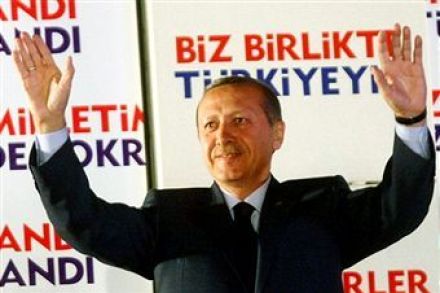
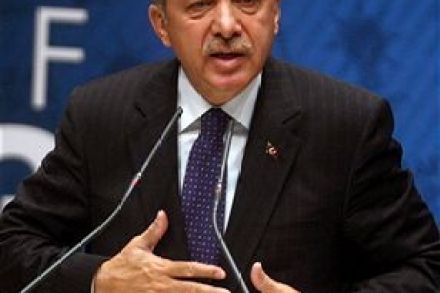
It seems that everyone won the election that was held in Turkey this weekend. Prime Minister Erdogan's Justice and Development Party (AKP) officially won, taking some 50 per cent of the vote, which is enough to secure him a third term in office, but not sufficient to enable his party to make changes to the constitution. As the BBC's Gavin Hewitt notes, ‘Prime Minister Recep Tayyip Erdogan of Turkey stands out. He is genuinely popular. He is socially conservative, but he has tapped into the aspirational mood of Turkey’s middle class.’ But although the opposition party, Republican People's Party (CHP), lost the election they actually polled about a quarter of the votes, the best result it has had for three decades.

The mystery of modern Turkey

From our UK edition

What does Turkey actually think? That's an issue that has been occupying many Europeans, as the vital NATO ally heads to the polls. On the one hand Turkey has in the last 10 years become more like the West: globalised, economically liberal and democratic. Turkey’s economy is now the world’s 16thlargest, the sixth largest in Europe. But, at the same time, questions arise about its recent policies: will it consolidate its democratic achievements, or is it threatened by a populist tyranny or even authoritarian rule? Certainly, many fear that Prime Minister Recyp Erdogan's behaviour is moving Turkey away from the West, both in terms of internal policy and external alignmen.

Attention shifts to Yemen

From our UK edition

Since last week’s attack on Yemen’s President Saleh and his subsequent flight, Sana’a has been on the cusp of anarchy. Perhaps as many 400 people were killed in riots last week and the killing continues. Western diplomatic services fear for the safety of their citizens in Yemen. The MoD has been preparing contingencies. Forces and materiel deployed in the Libya are moving east. Two fleet auxiliary ships, equipped with helicopters and landing craft, and 80 Royal Marines have been stationed off the Yemeni coast. Should the 800 or so British nationals in Yemen need to be evacuated, the marines will secure a bridgehead. A further detachment, currently on exercises in Albania, is poised to join the task force.

The need for a strong man to strong-arm the new counter-terror policy

From our UK edition

If the counter-terrorism strategy the government is announcing today is to succeed, it will have to overcome bureaucratic opposition and institutional inertia. As Dean Godson writes in The Times today (£), senior civil servants in the Office of Security and Counter-Terrorism are highly reluctant to accept the government’s new, more muscular approach to this issue and will go back to the old, failed way of doing things if given the chance. If the Prime Minister’s writ is going to run across government on this issue, he is going to need someone working from the centre with Cameron’s explicit backing whose sole role is to supervise the implementation of the policy — the Home Secretary has too much on her plate to expect her to do this task alone.

Counter-terrorism means stopping dealings with extremists

From our UK edition

The coalition’s counter-terrorism strategy will be published tomorrow. This rather delayed review has been the subject of some semi-public wrangling, Cameron and Clegg have given speeches setting out very different visions for it. But one thing to remember is that the test of the review's robustness isn’t just whether it stops government money going to extremists groups. It also has to lead to government, at all levels, stopping dealings with these groups, denying them the oxygen of recognition. Today’s Telegraph notes that 20 groups will lose their funding because the views they espouse are antithetical to British values. This is to be welcomed.

The spectre of jihad in Libya

From our UK edition

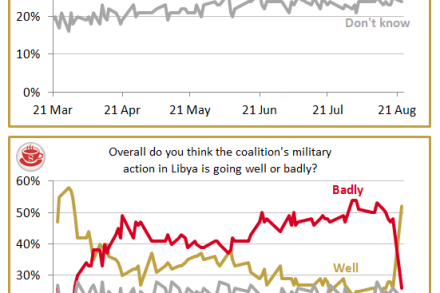
While Britain agonised over deploying attack helicopters to Libya, the conflict seems to have escalated of its own accord. Noman Benotman, a former member of the Libyan Islamic Fighting Group, has described the current dispositions for the Times this morning (£). He has learned that many of Gaddafi’s military leaders are planning a coup to save their skins; Colonel Gaddafi is reluctant to arrest their nascent treachery for fear of triggering open rebellion. Other officers are following the example of civilian administrators like Moussa Koussa, feeling that now is the time to cut and run. News of Gaddafi’s withering power will please NATO, even if it is exaggerated. However, Benotman’s other revelations will unnerve the alliance.

Egypt’s revolution – six months on

From our UK edition

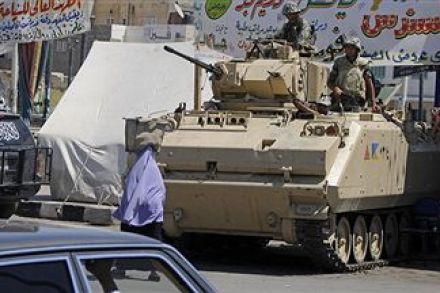
I'm back in Cairo to find out where the revolution of 25 January has got to. Nearly six months after Hosni Mubarak's downfall, the transition from authoritarianism is well under way. There is one immediate difference from my last visit: the absence of army check-points. Police officers in new white suits stand on street corners but the heavy military presence from before has gone. The Cairo police, who were absent after the revolution, have returned in new white uniforms. However, the military – or SCAF, as it styles itself – is very much still in charge, dictating how the democratic process will continue.

The ISI chief must be sacked

From our UK edition

The US-Pakistani relationship has always been fraught, but it is particularly fractious right now. It is highly likely that the US will conduct more Abbottabad-type raids following the killing of Osama Bin Laden. According to sources in the US government, several locations were under surveillance alongside Bin Laden's compound. And that was before the CIA snatched the "motherlode" of information from the Bin Laden raid, which will give hundreds of new leads. People like Ayman al Zawahiri, Abu Yahya al Libi, and Saif al Adel will be sleeping a little less soundly these days. Regrettably, the Pakistani government has done little to prepare its population for the likelihood of new raids, preferring to blow off steam over the US violation of Pakistani sovereignty.

Bin Laden strikes from beyond the grave

From our UK edition

And so it starts. The news that suicide bombers have attacked the military base at Shabqadar, northern Pakistan, sounds a chilling note. The Pakistani Taliban has claimed responsibility for the attacks, committed in retaliation for the assassination of Osama bin Laden. Security experts and politicians warned that it would be so. It is, we are told, inevitable that similar atrocities will be attempted closer to home. There will also be concern that this may aggravate the already strained relations between the US and Pakistan, which would only strengthen the terrorists. Perhaps Bin Laden has become a more potent force since his death. The sight of a squalid man sitting in exile watching videos of his bygone glories was almost pitiful.

Osama bin Laden Was Not America’s Useful Enemy

From our UK edition

The Guardian is a great newspaper but, lord, does it ever print some claptrap. Via Messrs Geras and Worstall comes this dreadful piece by Adam Curtis. The headline, for which Mr Curtis is not responsible, is a warning of the nonsense to come: For 10 years, Osama bin Laden filled a gap left by the Soviet Union. Who will be the baddie now? From the off we're supposed to appreciate, I think, that bad as bin Laden certainly was, he was never as bad as you were led to believe and, gosh, certainly not as bad as the people for whom he was a useful, even necessary, enemy. The world, you see, is complicated and if you think al-Qaeda are the bad guys you've been duped my friend. Seriously.