Isis

‘They pull a gun, you pull a hashtag’ – the ridiculous debate over what to call Isil

From our UK edition

‘They pull a knife, you pull a gun. He shends one of yoursh to the hospital, you shend one of hish to the morgue.’ Thus Sean Connery in The Untouchables, explaining how you fight a war ‘Chicago-style’. How would you adapt that, do we think, for our collective response to the Paris attacks? ‘They pull a gun, you pull a hashtag. They send 132 of yours to the morgue, you start calling them a slightly rude name.’ As they say on the internet: srsly? Imagine you’re in Raqqa, having at last made hijrah from the family semi in Dudley. You’re chillaxing, maybe having a bit of a kickabout with the head of an apostate, when your friend calls you over to his laptop. ‘Look, brother.

Military action against Isis needs a coherent strategy. . . . here it is

From our UK edition

Like most British soldiers of my generation, I fought in Iraq and Afghanistan. Few would now justify the reasons for invading Iraq; most of us who fought there at first recognised the amateurish nature of the strategy and its lack of realistic political objectives. But in 2007, under General Petraeus, the coalition adopted a new strategy that was underpinned by coherent policy. This stemmed from the recognition that unless common cause was found with moderate Sunnis, a workable Iraqi polity could never be established. The rapid improvements that flowed from this change were impressive but disgracefully shortlived.

The pretend war: bombing Isil won’t solve the problem

From our UK edition

[audioplayer src="http://rss.acast.com/viewfrom22/thegreatfakewar/media.mp3" title="Andrew J. Bacevich and Con Coughlin discuss the West's war with Isis" startat=35] Listen [/audioplayer]Not so long ago, David Cameron declared that he was not some ‘naive neocon who thinks you can drop democracy out of an aeroplane at 40,000 feet’. Just a few weeks after making that speech, Cameron authorised UK forces to join in the bombing of Libya — where the outcome reaffirmed this essential lesson. Soon Cameron will ask parliament to share his ‘firm conviction’ that bombing Raqqa, the Syrian headquarters of the Islamic State, has become ‘imperative’. At first glance, the case for doing so appears compelling.

What Muslims think

From our UK edition

Do you have sympathy with young Muslims who leave the UK to join fighters in Syria? It’s a hard question to answer: perhaps you’d wonder who the ‘fighters’ were. Or whether the ‘young Muslims’ were 14-year-old girls, groomed by fanatics to be jihadi brides. But if you answer ‘yes’, you may be surprised to find yourself described as having ‘sympathy for jihadis’. Such are the perils awaiting British Muslims who respond to opinion poll questions. The Sun this week found itself in a row about a front-page headline: 1 IN 5 BRIT MUSLIMS’ SYMPATHY FOR JIHADIS.

You can’t forget what Will Self says – even if you wish you could

From our UK edition

It lasted for just a few seconds but was such a graphic illustration of the statistics behind the bombing campaign in Syria — and not a word was spoken. Martha Kearney called it an ‘audio graphic’ on the World at One on Monday and explained how Neal Razzell and James Beard for the World Service had been monitoring the number of US combat missions on Islamic State targets in Syria, hour by hour, 24/7, and comparing them with earlier bombing campaigns. Each electronic beat we heard represents one hour, Razzell told us; each beep represents the launch of one combat mission. For Syria, the electronic beeps between each beat were quite far apart — clearly distinguishable. The sound we heard represented two raids an hour, he explained, every day for 450 days.

How can we defend our liberal heritage by abandoning its values?

From our UK edition

Yusuf, when I last saw him, was still smiling, a middle-aged man with the greying pony-tail of a rock roadie. He described himself as a feminist: he met his wife through work, where, he told me proudly, she was a better computer engineer than he. Yusuf had the stoop of a tall man who’d spent most of his life under ceilings too low for him, and the corrugated iron hut his family now called home was no exception. So we sat cross-legged on the floor, while I asked him about religious tensions in a southern Turkish refugee camp. 'If you want to know, I’m an atheist. I mean, in Damascus, my friends all were - it’s not like you’re living in a village, your grandfather checking you’re in mosque. I don’t believe in any of it. But I never shouted about it.
C’est magnifique, mais ce n’est pas le journalisme

From our UK edition

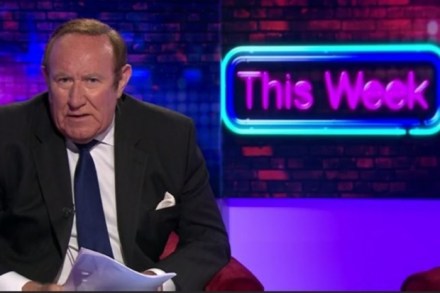
Andrew Neil is the best political interviewer in Britain. I am not just saying that because he is so high up here at The Spectator, although that helps. I am not saying it because he once bought me lunch, although he did his cause no harm there either. I am saying it because he is one of the few broadcasters who makes me stop what I am doing and listen. God help the interviewee who goes on his programme unprepared. If he or she has not thought through every flaw in their argument, they will find that Neil has done their thinking for them. He will expose their contradictions on live television. He will have a list of the inconvenient facts they forgot or never took the trouble to find in the first place, and will broadcast them to the nation.

Britain should be proud of its role in spreading universal morality

From our UK edition

I promised to provide, in this space, a forum for thinking about ‘what we believe’. We the West. There are two articles worth noting in the last few days. Toby Young, right here in The Spectator, wondered how liberal values can be sexed up. Should we hope that potential Islamists will be won over by ‘a crash course in the virtues of limited government and the rule of law, drawing on the writings of John Locke, Immanuel Kant and Thomas Jefferson’? He goes on: ‘Liberalism offers its adherents peace and prosperity – it appeals to man’s desire for comfortable self-preservation, as Nietzsche pointed out.

Cameron to make his case for war to the Commons next week

From our UK edition

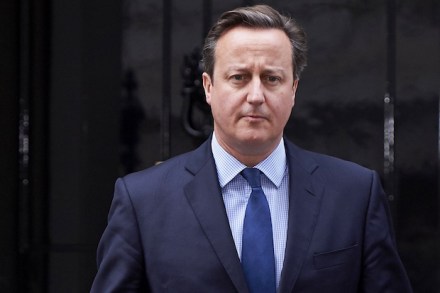
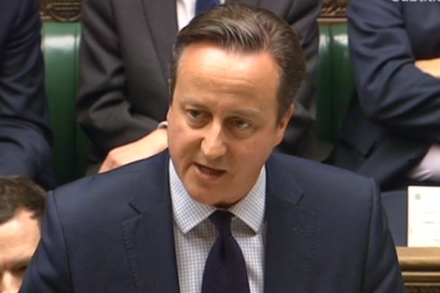
David Cameron will set out his case for air strikes against IS in Syria to the Commons late next week. Cameron is, as I say in my Sun column today, immensely frustrated by the current British position of only bombing Islamic State in Iraq and not Syria. But he knows that it would be politically back breaking for him to lose another Commons vote on a matter of war and peace, so is proceeding cautiously.   But last night’s UN resolution has strengthened Cameron’s hand. Even before that, 30 Labour MPs were certain to back Cameron on this issue and another 30 were highly likely to. With a UN resolution now in place, these numbers are only likely to increase.

Cameron: UN resolution shows world uniting against Islamic State

From our UK edition

The UN Security Council this evening unanimously approved a resolution calling on all countries that can do so to fight Islamic State in Syria and Iraq. David Cameron welcomed it as a sign that ‘the world has united against Isil’. It will likely form a key part of his case for British involvement in military action against Islamic State in Syria, and in his statement, the Prime Minister said: ‘Today’s vote shows beyond doubt the breadth of international support for doing more in Syria and for decisive action to eradicate ISIL. Britain will continue to support our allies who are fighting ISIL in Syria.

Western weakness presents Putin with an opportunity in Syria

From our UK edition

The West has failed in its principal, post 9/11 objective: to deny terrorists sanctuary. Islamic State is a terrorist enclave in the heart of the Middle East. Yet, the West’s response to this has been strikingly, and shockingly, lacklustre, I argue in the magazine this week. Barack Obama’s main preoccupation seems to be stressing that US ground troops will not be sent in to destroy Islamic State. While the British response is even feebler, to bomb Islamic State—but only on one side of the Iraqi/Syrian border. Even, the French who are hitting IS on both sides of the border, aren’t sending in ground troops. This lack of Western leadership is creating an opportunity for Vladimir Putin.

Why do we assume our western good life will last for ever?

From our UK edition

The slaughter in Paris is a catastrophe for the victims and their families, but the usual hysterical response across the media reminds us, yet again, what an extraordinary achievement it is that we Westerners simply assume the world owes us a life lived to the full, in comfort and security. From the ancient world until relatively recently, there was little sense that the world owed us anything. About half of Romans would not make the age of five; probably a third would not make three months. War was commonplace, as deadly for civilians as soldiers, as were disease and famine. The destruction of Pompeii by Vesuvius was greeted with relative indifference. Ancients simply accepted that this sort of thing was bound to happen.

Portrait of the week | 19 November 2015

From our UK edition

Home After the killings in Paris, David Cameron, the Prime Minister, said that seven terrorist attacks on Britain had been prevented in the past six months. He met President Vladimir Putin of Russia at a G20 meeting at Antalya in Turkey. Mr Putin said: ‘We should join efforts in preventing terror. Unfortunately our bilateral relations are not of the best.’ Mr Cameron said in the Commons: ‘Raqqa, if you like, is the head of the snake… we need to deal with it not just in Iraq but in Syria too.’ He said funds from maintaining defence spending at 2 per cent of GDP would go to special forces, drones and fighter aircraft. MI5, MI6 and GCHQ would be able to recruit an extra 1,900 officers to their 12,700 staff.

On Question Time, will someone please ask Mehdi Hasan about his views on infidels?

From our UK edition

Various readers have been asking if I am doing Question Time, This Week or Any Questions this week. It's not the BBC's fault but I'm not able to be in the country at the moment. I am particularly sorry not to be able to do Question Time now that I learn that the line-up includes Mehdi Hasan and Anna Soubry. So could someone else on the panel or in the audience please point out that Mehdi Hasan has expressed similar contempt for us infidels as Isis have?

Has ‘Islam’s reformation’ really begun?

From our UK edition

Usama Hasan, an imam attached to the Quilliam Foundation, argues in the Times that Islam is steadily adapting to modernity. It has been doing so since the nineteenth century, when the Ottoman Empire launched certain reforms. Islam should not be judged by a few marginal hiccups in this process. ‘Isis follows a fundamentalist and selective reading of scripture which is ahistorical and heretical. They are linked to Islam and the Koran in the way the Ku Klux Klan and Anders Breivik are linked to Christianity and the Bible.’ This is not helpful. For extremely reactionary Christians have not gained power in a large proportion of the traditionally Christian world.

Western liberalism is no match for the Islamic Game of Thrones

From our UK edition

As a graduate student in the Harvard Government Department in the late 1980s, I became slightly jaded about the number of visiting professors who warned about the imminent demise of the West. The thrust of their arguments was nearly always the same. The secular liberal values we cherish, such as freedom of speech and the separation of church and state, won’t survive in the face of growing, religious disenchantment with modernity unless they’re rooted in something more meaningful than rational individualism. They were talking about Islamic Fundamentalism, obviously, although sometimes they threw in Christian Fundamentalism as well in order not to seem 'Orientalist' or 'ethnocentric'.

France’s civil war…

From our UK edition

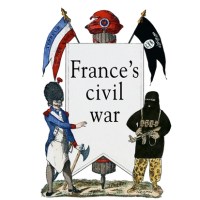
In the wake of the massacre in Paris, President François Hollande said that France was ‘at war’ — and that it must be fought both inside his country and outside in the Middle East. As the French air force began dropping bombs on Raqqa in Syria, another operation was under way in towns and cities across France: 168 raids in two days. A battle on two fronts has begun. Chartres cathedral is one of the great monuments of western civilisation, but Chartres was also home to one of the Bataclan theatre suicide bombers. A man from the same area died last summer in Syria, fighting for Isis. In Lyon, theraids turned up a rocket launcher. On Tuesday night, a large-scale counter-terror assault was launched in St Denis in Paris.