Isis

Benghazi notebook

From our UK edition

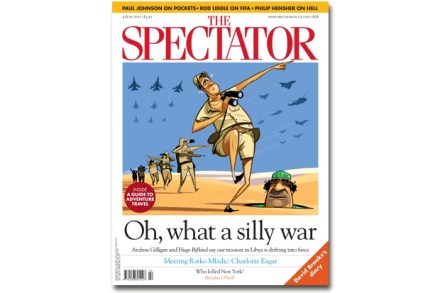
In their interview in the Christmas edition of The Spectator, Fraser Nelson and James Forsyth asked the Prime Minister whether he now considered that his intervention in Libya had been a mistake. David Cameron accepted that matters could have gone better since the fall of Gaddafi, but insisted that ‘what we were doing was preventing a mass genocide’. Like Saddam Hussein’s weapons of mass destruction, Gaddafi’s genocide seems to have been a fiction. It was reiterated over and over again by government and in the media in order to whip up support for the imposition a no-fly zone in March 2011. However, there was never any convincing evidence.
Lessons from Utopia

From our UK edition

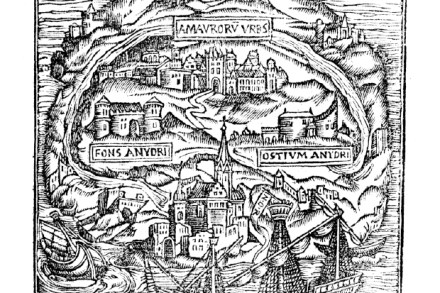
As anniversaries go, the timing could hardly be more apt. As Europe braces itself for the next Islamist attack, the next assault on our civilisation, a season of events marks the 500th birthday of a book that outlined an enlightened vision of the ideal society. Utopia 2016 is a year-long celebration of Thomas More’s Utopia at London’s Somerset House, where the Royal Society and the Royal Academy used to meet. Somerset House is a building that encapsulates the free-thinking values of the Enlightenment, and More’s Utopia is a book that encapsulates the Renaissance sensibilities that built it. We all know what sort of society Isis wants (the clue’s in the name), but what sort of society do we want? What rights are we defending?

Letters | 10 December 2015

From our UK edition

Just call them Daesh Sir: I was interested to read Sam Leith’s article in which he appears to argue that the language we use to describe those engaged in terrorism or the conflict in Syria doesn’t matter (‘Daesh? Sheesh!’, 28 November). I wholeheartedly believe that the words we use are important, and they are particularly vital in the current bid to combat terrorism. If we are to succeed in tackling the extremist threat, we must do all we can to cut it off at source. To do this, we must undermine the legitimacy Daesh needs to maintain a steady flow of recruits.
 Referring to this group as Islamic State, Isil or Isis gives a veneer of authority to a brutal terrorist cult.

Portrait of the year | 10 December 2015

From our UK edition

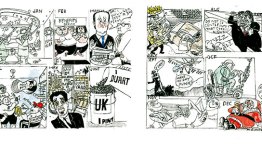
January David Cameron, the Prime Minister, said that only electing the Conservatives could ‘save Britain’s economic recovery’. Labour unveiled a poster saying: ‘The Tories want to cut spending on public services back to the levels of the 1930s,’ and Ed Miliband, the party leader, said he would ‘weaponise the NHS’. Two male ‘hedge witches’ were wed under the equal marriage law in a pagan ceremony in Edinburgh. Alexis Tsipras became prime minister of Greece, heading a Syriza coalition. In Paris, gunmen murdered 17 people, 11 at Charlie Hebdo, the magazine that had published cartoons of Mohammed. The price of Brent crude oil dipped below $50 a barrel, down from $107 a year earlier.

Hug, hold hands . . . then stampede to the right

From our UK edition

What a pleasure it was to see two socialist parties triumph in the most recent elections. First, Labour increased its share of the vote in Oldham — and then, last weekend, the Front National became France’s most popular party, securing almost 30 per cent in the first round of the country’s regional elections. Labour’s win was, I suspect, a bit of a false dawn. For a start, the party did an un-usual thing and fielded a sentient and likeable candidate, something which most of the time it successfully avoids doing. But even then, it was at least partly dependent upon Asian men hauling large sacks of votes from illiterate and non-English-speaking residents into the local post office.

Faith is left, right. . . and central

From our UK edition

There was, of course, something very special about the House of Commons debate on Syria earlier this month. The moral challenge of how to face those who embrace evil without limits, the long shadows and sombre memories generated by military actions past, the divisions within parties and between friends, the wrestling with conscience that brought good men and women close to tears. The importance of what the House of Commons was being asked to authorise inspired outstanding speeches, most notably of all, Hilary Benn’s. While I was listening to the shadow foreign secretary, I noticed a hunched figure in the gallery also held spellbound by the speech, his head occasionally nodding in silent and respectful appreciation. The attentive listener had, himself, spoken earlier in the day.

The ground forces problem

From our UK edition

As the row over David Cameron saying that the Joint Intelligence Committee estimate there to be 70,000 potential anti-Islamic State fighters in Syria showed, the big question mark about the West’s anti-IS strategy is who will provide the ground troops for it. The Kurds will only fight in their own area and so far, there is little sign of a credible Sunni force emerging to take on Islamic State. While working with Assad has its own drawbacks. (In many ways, the existence of IS--albeit, in weakened form--suits his interests.) David Ignatius details just how wrong US efforts to train up Sunni fighters have gone in the past year in Washington Post: In Iraq, U.S.

European countries are now united by the war against Isis

From our UK edition

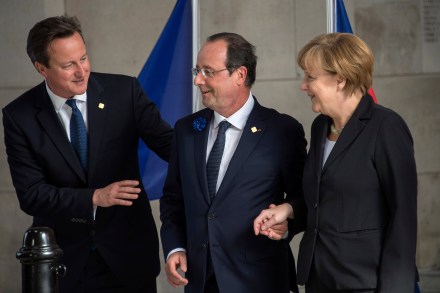
If anything positive comes out of the Syrian crisis, and I appreciate it’s like looking for silver linings in the Great Storm of Jupiter, it is that it has brought the European nations together as never before. Perhaps the last time that England, France and Germany fought in a major campaign together was the Third Crusade in the 12th century, a military adventure in the Middle East. Okay, so it ended disastrously, and ended up costing the English treasury about four year’s worth of taxes, but let’s hope history doesn’t repeat itself. Part of me does wonder whether the Germans, having now engaged in military action again, will suddenly find something triggered in their brains. (‘Zis feels gut ja, Gunter?

Letters | 3 December 2015

From our UK edition

Bombers without borders Sir: To define this week’s debate as being about ‘bombing Syria’ (‘The great fake war’, 28 November) is ludicrous. That’s not what it’s about. It’s about fighting Isis. Whatever you call them, and wherever they are. The current deal, under which we bomb Isis in Iraq but not in Syria, is as if we are content to fight them in Yorkshire but not in Lancashire. If people do not think we should be engaging Isis at all, that’s a different argument. But I would ask, ‘Where do they need to get to before you would engage them?’ Two years ago, we had a similar situation to today. The vote was similarly not about ‘bombing Syria’. It was about fighting and punishing Assad, which was a bad idea.

It is time to join the fight against IS in Syria

From our UK edition

The Islamic State is as monstrous an enemy as we have seen in recent history. It crucifies and decapitates its victims, holds teenage girls in slavery and burns captives alive. It is wrong to call it a medieval force, because such institutionalised barbarity was seldom seen in medieval times. As far as five centuries of records from the Ottoman Empire can establish, stoning was authorised only once. Isis now regularly stones suspected adulterers to death. It is not seeking inspiration from the Middle Ages. We are witnessing a modern form of evil — and it is spreading fast.

After Labour’s Syria shambles, step forward Major Dan

From our UK edition

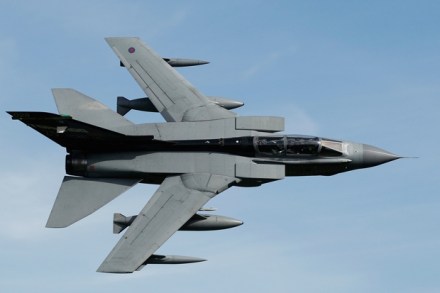
[audioplayer src="http://rss.acast.com/viewfrom22/thegreendelusion/media.mp3" title="James Forsyth and Fraser Nelson discuss Labour's civil war over Syria airstrikes" startat=700] Listen [/audioplayer]It makes no sense for Britain to bomb Islamic State in Iraq but not Syria. Attacking a group that does not respect international borders on only one side of a border makes no strategic or military sense. From the Prime Minister down, government ministers are acutely aware of this absurdity. That is why they have been so keen to gain the Commons’ permission to extend the strikes to Syria. Yet this week Westminster has been gripped, not by the strategic case for taking the fight to Islamic State in Syria, but by the effect that this debate has had on the Labour party.

Commons votes to bomb Islamic State in Syria

From our UK edition

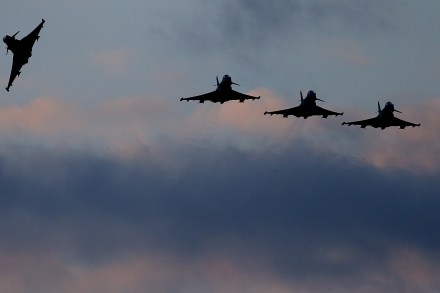
British airstrikes against Islamic State will be extended to Syria after the House of Commons voted strongly in favour of the government ‘s motion tonight. The government had a majority of 174, enabling David Cameron to claim that he has the consensus backing for bombing IS in Syria that he has long craved. 67 Labour MPs voted in favour of strikes, which was higher than expected this morning. But Hilary Benn’s remarkable impassioned speech, the finest I’ve heard in the Commons, swayed at least one wavering Labour MP—Stella Creasy voting for, having previously been undecided and facing huge constituency pressure against action. Thought, it was worth noting that the government would have won even if no Labour MPs had voted with it.

Airstrike debate sketch: terrorist sympathisers, anti-Semitism and a basket of old ribbons

From our UK edition

Bomb Syria. That was Cameron’s priority today as PMQs was sidelined in favour of the debate on airstrikes. His opponents’ strategy was ‘Bomb Cameron.’ They demanded a withdrawal of his remark that any opponent of bombing must be a ‘terrorist sympathiser’. The snarliest words came from Alex Salmond whose grey jowls jiggled with rage as he shouted, ‘apologise for these deeply insulting remarks.’ Cameron offered a correction but no contrition: ‘There’s honour in voting for; honour in voting against.’ He didn’t hold back when describing Isil. ‘Women-raping, Muslim-murdering medieval monsters,’ he said. And he set out the case for extending the bombing from Iraq into Syria.

‘National security’ has become our main justification for war

From our UK edition

I’ve been in touch with Anisa for just over a year, ever since I met her in a dingy refugee compound on the outskirts of Amman. She’s a super-educated young woman from Damascus (most of the early wave of refugees were) and she’s never had much time for self-styled IS ('none of them are actually Syrian, they’re invaders,' she insists). Today Anisa is more depressed than ever. If Britain joins the coalition of airstrikes against IS territory in Syria, it will largely be symbolic, as The Spectator’s leader explains. The US has already been bombing Raqqa for nearly a year and a half.

Why it’s time for Britain to join our allies in their fight against the Islamic State

From our UK edition

The Islamic State is as monstrous an enemy as that has emerged in recent history. It crucifies and decapitates its victims, holds teenage girls in slavery and burns captives alive. It is wrong to call it a medieval force, because such institutionalised barbarity was seldom seen in medieval times. As far as five centuries of records from the Ottoman Empire can establish, stoning was authorised only once. Isis now regularly stones suspected adulterers to death. It is not seeking inspiration from the Middle Ages. We are witnessing a modern form of evil — and it is spreading fast.

As we fret about Syria, the Islamic State is moving into Libya

From our UK edition

What is it about war that makes normally sensible politicians prone to hype and exaggeration? No10 is today briefing that Cameron has instructed the RAF to 'decapitate' the leadership of the Islamic State in Syria – as if the thought hasn’t occurred to the Americans, who have spent the last 17 months (and $11 million-a-day) bombing Isil positions in Raqqa. 'We’ve got to go out and kill the bastards,' the Prime Minister is quoted as saying. An admirable sentiment: the Islamic State is as barbarous a group the Middle East has ever known, so there should be no qualms about striking it. The only problem is whether we do so as an act of anger, or whether we do with a strategy and a purpose.

Yes, there are 70,000 moderate opposition fighters in Syria. Here’s what we know about them

From our UK edition

Yesterday David Cameron told Parliament that there are ‘about 70,000 Syrian opposition fighters on the ground who do not belong to extremist groups’ who could help fight Islamic State.  The Prime Minister’s number was the result of an internal assessment made by the Joint Intelligence Committee (JIC), backed up by serving British diplomats overseas whose jobs focus on the Syrian opposition. Such a large number struck many as political exaggeration. The chairman of the Defence Committee, Julian Lewis, said he was 'extremely surprised'. Labour leader Jeremy Corbyn may issue a formal demand for clarification. So do these fighters exist and who are they?

It is political correctness, not maniacal bigots, that will end civilisation

From our UK edition

What does one do, attend or refuse a party after a tragic event such as the recent Paris outrage? My son happens to live next to Place de la République, where the massacre of innocents by those nice Islamists showing off their manhood took place. He was having dinner with his two little children when the shooting started. Luckily, they’re all OK, but I spent a terrible couple of hours trying to get through after the news came over the TV screens. The next evening in New York, at the Metropolitan Museum of Art, the Costume Institute was celebrating The Art of Style with a black-tie dinner honouring Jacqueline de Ribes, the international style icon whose dresses are being exhibited there. I was of two minds, then decency prevailed and the whole thing was called off.

Diary – 26 November 2015

From our UK edition

Scientists are experimenting with growing replacement vocal cords in the lab, as well as transplanting them from dogs. That was the Sun’s imaginative angle on my somewhat croaky debut as a Today programme presenter (only one of mine is working properly). It led me to ponder which species of donor would be fitting for my new role. Rottweiler? Too aggressive. Terrier, perhaps? Annoying after a while. Maybe a shepherd or a pointer would fit better with the mission to explain? All suggestions gratefully received. Bar one, that is. Husky is out. If my first programme had not been dominated by events in Paris, I had planned to talk about the world’s greatest city. I speak of Manchester, of course.

Cameron insists the UK must attack IS in Syria, but only with a ‘clear majority’ in the House

From our UK edition

David Cameron came to the Commons today to make the case for the UK extending its bombing campaign against Islamic State to Syria. His tone was as emollient as possible, as he responded to the Foreign Affairs Select Committee report which argued that the UK should not do this. He said that the UK could provide unique capabilities and that there are 70,000 non-extremist, Syrian fighters who could act as a ground force to support the bombing campaign. He stressed that as long as the Islamic State ‘Caliphate’ exists, it would act as a rallying cry for Islamist extremists around the world and that it had ‘repeatedly’ tried to attack the UK.