Isis

Cameron’s Syrian stew

From our UK edition

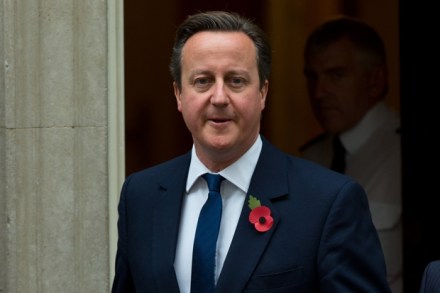
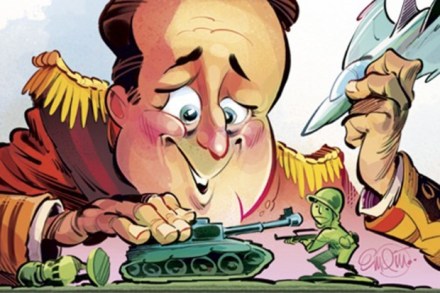
[audioplayer src="http://rss.acast.com/viewfrom22/civilwarinthecatholicchurch/media.mp3" title="Fraser Nelson and Isabel Hardman discuss whether MPs will ever vote to bomb Syria" startat=864] Listen [/audioplayer]David Cameron doesn’t do regret. It is not in his nature to sit and fret about decisions that he has taken and can now do nothing about. But there are still a few things that rankle with him. One of those is the House of Commons’ rejection of military action in Syria two years ago. This defeat was a personal and a political humiliation for Cameron. For months, he had been pushing for action against Assad. President Obama had finally accepted that something must be done following the Syrian regime’s use of chemical weapons.

Britain’s armed forces no longer have the resources for a major war

From our UK edition

[audioplayer src="http://rss.acast.com/viewfrom22/civilwarinthecatholicchurch/media.mp3" title="Con Coughlin and Tom Tugendhat debate the state of Britain's armed forces" startat=1561] Listen [/audioplayer]This Sunday, David Cameron will lay a wreath at the Cenotaph to commemorate those who made the ultimate sacrifice during two ruinous world wars. People will say ‘Never Again’ and Cameron will agree. But then, thanks to the drastic cuts he has made to the strength of our armed forces, the Prime Minister need not worry himself unduly about Britain’s involvements in any future conflicts.

Russia’s dramatic new policy towards Assad is very revealing

From our UK edition

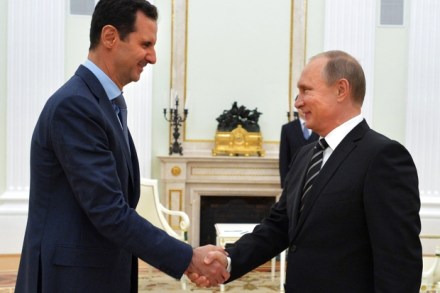
Yesterday I argued that if it became clear that the Russian plane was brought down over Egypt by a bomb, Vladamir Putin may be forced to reassess his Syrian campaign – especially in light of a strong counterattack by Islamic State on the ground in Syria. Today, as the bomb theory became the only plausible explanation for the catastrophe, the Kremlin is strongly hinting that such a radical reassessment is already underway. Maria Zakharova, a Russian foreign ministry spokeswoman, has today said on a Russian radio station it is no longer 'crucial' that Syrian President Bashar al-Assad stay in power. 'Absolutely not, we've never said that,' she insisted when pressed, adding that Moscow only opposed 'regime change'.

No10 insists that Cameron may still seek vote on bombing Syria

From our UK edition

Number 10 is this morning pushing back against the reports that David Cameron has abandoned a vote on extending British military involvement in action against Isis to Syria. Sources insist that they do not recognise the stories that have appeared in a number of papers and that nothing has changed. Those reports suggest that Cameron was struggling to persuade sufficient numbers of Labour MPs to back his stance. This is not particularly surprising given it was always going to be difficult to be confident that MPs from another party would definitely do as they said. The Tory whips can hardly apply the same methods to those MPs in the Opposition party as they do to those on their own side. Cameron has always said he will not bring a vote until there is consensus.

The Russian plane crash could undermine Putin’s Syria strategy

From our UK edition

It now seems fairly likely that an explosion brought down the Russian passenger airline over Egypt's Sinai Peninsula over the weekend. One Metrojet official has already suggested that the 'only explainable cause is physical impact on the aircraft' and they have ruled out technical failure or human error. If the ongoing investigation proves that to be the case, it will obviously have an immediate and catastrophic impact on Egypt's already decimated tourism industry. A jihadist would have been able to infiltrate one of the country's supposedly most secure airports to plant a sizeable explosive device on a specific airline.

Of gods and men

From our UK edition

Over the stupefyingly long course of Egyptian history, gods have been born and they have died. Some 4,000 years ago, amid the chaos that marked the fragmentation of the original pharaonic state, an incantation was inscribed on the side of a coffin. It imagined a time when there had been nothing in existence save a single divine Creator. ‘I was alone in the emptiness,’ the god proclaimed, ‘and could find no place to stand.’ Nevertheless, beside him, he could feel the gods that were yet to exist. ‘They were with me, these deities waiting to be born. I came into being and Becoming became.’ The gods emerged, to reign first on earth and then in the heavens, and history began.

William Shawcross is right: Islamists are skilled at lawfare

From our UK edition

Regular readers may recall the charming group ‘Cage’. This is the organisation which made headlines earlier this year when Mohammed Emwazi (aka ‘Jihadi John’) was outed as one of their associates. The response of ‘Cage’ was to extol what a ‘beautiful’ young man Jihadi John was, and claim that if it weren’t for Britain’s security services their friend would never have thought of cutting off infidel heads in the Syrian desert. After that PR low, the Charity Commission suggested that UK charities like the Joseph Rowntree Charitable Trust might be unwise to continue shelling out hundreds of thousands of pounds to the group. There are strict rules in the UK about the activities of charities.

Portrait of the week | 15 October 2015

From our UK edition

Home Two groups were launched, one in favour of remaining in the European Union and the other in favour of leaving. Vote Leave drew support from Conservatives for Britain, from Labour Leave and from Business for Britain. Lord Rose, chairman of the new group Britain Stronger in Europe, said: ‘To claim that the patriotic course for Britain is to retreat, withdraw and become inward-looking is to misunderstand who we are as a nation.’ The Metropolitan Police withdrew officers stationed outside the Ecuadorean embassy in London where Julian Assange sought refuge in 2012, a watch that had cost £12.6 million. Marlon James from Jamaica won the Man Booker Prize for A Brief History of Seven Killings, based on an attempt to assassinate Bob Marley in the 1970s.

Is the West arming the Syrian People’s Front or the People’s Front of Syria?

From our UK edition

The United States has abandoned training rebel forces on the ground in Syria but not equipping them, or at least some of them, and over the weekend its military cargo planes dropped 50 tons of ammunition to rebel groups in the north of the country. All apparently reached their intended target: yet another hastily formed alliance intent on fighting both the Islamic State and the Assad regime. Alas, despite being created just days ago, in keeping with Syrian rebels' almost constantly shifting alliances, it confusingly already has two names: the Democratic Forces of Syria and the Syrian Arab Coalition. The former includes both Arab groups and the Kurdish YPG militia.

Isis takes its British schoolgirl jihadis seriously. Why don’t we?

From our UK edition

When the first schoolgirls ran away to Isis I had some sympathy for them — at least, I could see how they’d been suckered in. The girls were young, daft, desperate for a cause. They’d nosed about online, and found the Twitter feeds of jihadi wives who sell Syria as a teenage paradise: all fast food, deathless love, martyrdom and shopping. Because I felt for those first schoolgirls, I kept following their progress, checking for them online as they set up in Syria, married, and began to tweet themselves. But as I followed them on social media, my sympathy soon turned to disgust. ‘Happy #9/11’ wrote young Zahra Halane, one of the twins from Manchester who fled to Isis last year. ‘Happiest day of my life. Hopefully more to come. InSha Allah #Is.

‘Health and safety concerns’ are now being used to censor anti-Isis artwork

From our UK edition

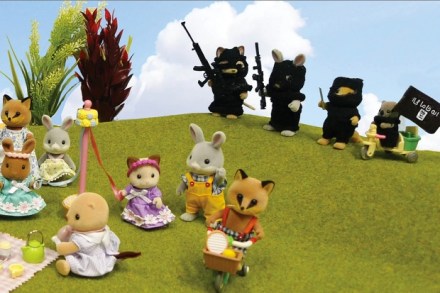
On Saturday I wrote a blog recommending readers catch the ‘Passion For Freedom’ festival’s final hours in London.  Thank you to all the readers who did and helped make it a packed-out show.  One further detail about the show came up afterwards in the Guardian and I mentioned it at the start of my talk at Denmark's free speech conference on Saturday. That is the fact that one of the artist’s work was removed from the show on the advice of the British police.  The work in question – entitled 'Isis Threaten Sylvania', featuring the children's toys Sylvanian Families - is certainly anti-Isis, but it is hard to see it as ‘potentially inflammatory’ as the police insisted.

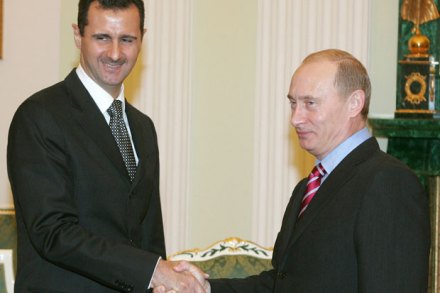
Why Putin backs Assad

From our UK edition

At the outset of Syria’s brutal four-year civil war, I was an almost unique voice in the British media deploring the push to depose the secular dictator President Bashar al-Assad, especially in the absence of a genuinely popular uprising against him. Here in The Spectator I tried to point out that such a short-term strategy would have devastating long-term consequences. Assad, I argued, would not fall, because the people of Damascus would not rise up against him. The so-called secular rebels were in fact vicious Islamists in disguise. Western interests in the region would be dramatically undermined by Saudi and Iranian militias, who would fight a devastating proxy war. Syria’s extraordinarily diverse population risked annihilation as a result.

The fog of law

From our UK edition

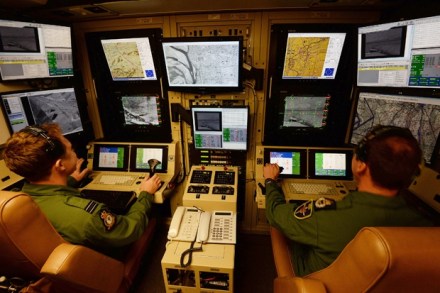
Not even Jeremy Corbyn lamented the death of Reyaad Khan, who was killed by an RAF drone in Syria after joining the Islamic State. He was a straight-A student from Cardiff who had the freedom to do anything with his life, but chose to turn his back on Britain and join a band of Islamofascists. He had been working hand-in-glove with Junaid Hussain, a talented computer hacker from Birmingham who fled to Syria; the two of them had been making detailed plans for attacks on Britain. But the RAF’s involvement in the strike marks a new chapter in British warfare. The motive for the action was simple: Khan was planning to inflict great harm on British people, and in the absence of alternatives, the RAF struck when they had the chance.

The Foreign Office’s anti-Isis video may be inept but at least it’s a start

From our UK edition

The Foreign and Commonwealth Office is taking the fight against Isis online. @UKAgainstISIL, a new Twitter account operated by the FCO, is providing 'updates on the UK Government’s ongoing work to defeat ISIL'. Since 2014, Isis have been a feature of online life. Their supporters and affiliates use the internet to communicate with each other, radicalise their sympathisers, host content and spread fear. Digital terrorism is a new phenomenon, and one that is proving difficult to counter. Twitter has been a staple of Isis propaganda exercises since the start and @UKAgainstISIL is the latest attempt at resisting this, but it isn’t without its problems. The most striking contrast is the quality of the content. See for yourself.

Merkel’s folly

From our UK edition

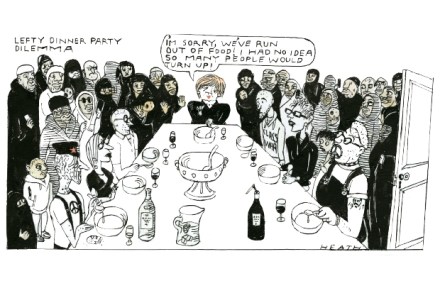
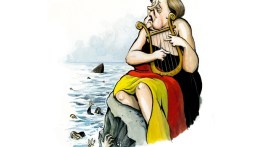
[audioplayer src="http://rss.acast.com/viewfrom22/merkelstragicmistake/media.mp3" title="James Forsyth and Holly Baxter debate Merkel's offer to Syrian refugees" startat=38] Listen [/audioplayer]Of all the irresponsible decisions taken in recent years by European politicians, few will cause as much human misery as Angela Merkel’s plan to welcome Syrian refugees to Germany. Hailed as enlightened moral leadership, it is in fact the result of panic and muddled thinking. Her pronouncements will lure thousands more into the hands of unscrupulous people-traffickers. Her insistence that the rest of the continent should share the burden will add political instability to the mix. Merkel has made a dire situation worse.

Monumental heroes

From our UK edition

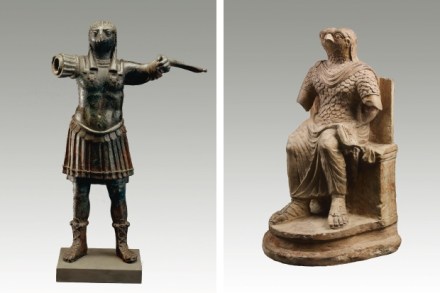
Leptis Magna was deserted when I last visited — no wonder. Tourists daren’t visit Libya these days and so I had the ruins to myself. I climbed the steps of the vast Roman theatre, looked out to where the Wadi Lebda meets the sea, then stopped. Men with AK-47s. My immediate fear was that they were Islamic State. Isis move closer to Leptis Magna every day and it would make sense for this most spectacular site to be next on their hit list. Their last great coup was on the other side of the Med, when they blew up the Temple of Baal Shamin in Palmyra, known as ‘the Pearl of the Desert’. It’s part of their cultural jihad, but they also do it for the global outrage that follows. No such thing as bad press for Isis.

Drone assassination is addictive. Is Britain now hooked?

From our UK edition

With the drone killing in Syria of Reyaad Khan and Ruhul Amin, Britain joins an exclusive club. Only Israel and the United States publicly admit to carrying out targeted killings – assassinations – away from the hot battlefield. Yet as both of these nations have already found, a single killing today can lead to a conveyor belt of death further on. The challenge for the UK is whether it can do things differently. Israel targeted and killed hundreds of alleged militants in the West Bank and Gaza during the Second Intifada using snipers, booby-traps and drones. Indeed it was Israel which coined the term ‘targeted killing’ – a more palatable euphemism for state-sanctioned hits. Tel Aviv had always clandestinely assassinated its enemies.

Portrait of the week | 20 August 2015

From our UK edition

Home Andrew Burnham described calls from Yvette Cooper, a rival candidate for the Labour leadership, for him to withdraw from the contest as ‘quite strange’. The problem was how to prevent Jeremy Corbyn, a left-winger, from being elected by the alternative vote system by 610,000 party members and registered supporters. Gordon Brown, the former disastrous Labour prime minister, contributed by making a 50-minute speech in a small room at the Royal Festival Hall, during which he paced up and down continuously for an estimated 1 mile 1 furlong 5 chains and did not mention Mr Corbyn’s name. Kezia Dugdale, a Member of the Scottish Parliament, was elected leader of the Scottish Labour party; the party has only one seat in the Parliament of the United Kingdom.

Who’s running Libya?

From our UK edition

When I covered Libya’s revolution in 2011, I had a driver named Mashallah. Mashallah was a decent and stoical man with an interesting propensity for malapropisms. He was regarded with fondness by us journalists — so when I decided to return to Libya recently, I sent him an email: did he want to work for me again? Unfortunately, replied Mashallah, he was in Paris. This seemed strange. How would he have got a French visa? I emailed again suggesting another week and received another profound apology. That week he was going on to Ankara and Istanbul. A quick look online solved the mystery.

Portrait of the week | 6 August 2015

From our UK edition

Home Tom Hayes, aged 35, a former City trader who rigged the Libor rates daily for nearly four years while working in Tokyo for UBS, then Citigroup, from 2006 until 2010, was jailed by Southwark Crown Court for 14 years for conspiracy to defraud. The government sold a 5.4 per cent stake in Royal Bank of Scotland, for 330p a share, against the 500p or so that it paid six or seven years ago to save the banking group; the government now owns 73 per cent of RBS. Monitor, the regulator for health services in England, sent out letters ‘challenging the plans of the 46 foundation trusts with the biggest deficits’. Kids Company, the charity founded by Camila Batmanghelidjh, appeared likely to close.