Iraq

Letters: We must sing again

From our UK edition

Growing pains Sir: James Forsyth (‘Rewiring the state’, 4 July) shocked this loyal Spectator reader with the following: ‘Even before Covid, this country was in a productivity crisis and it’s nigh-on impossible to improve productivity without government involvement. Increasing productivity requires improvements to be made to physical and digital infrastructure and to the skill base, and those need public investment.’ James clearly has not studied the sources of productivity growth (or lack of it). In the 50 years to 2008, the UK experienced around 2 per cent p.a. growth in real Gross Value Added per hour worked — which is what politicians generally mean when they talk about productivity. Since then, productivity growth has effectively stalled.

Letters: Why Hugh Dowding deserves a statue

From our UK edition

Police relations Sir: As a former Met Police officer, with a similar background to Kevin Hurley, I was surprised how much I disagreed with his article (‘Cop out’, 27 June). Central to this was the lack of emphasis he placed on the attitude of police officers. The emphasis on violent gang crime undoubtedly leads to a distortion in how young black men are perceived by the police, and this in turn can quickly lead to confrontation on the street. The attitude of young police officers is key to avoiding an escalating reaction between them and members of the public. Senior officers need to develop more holistic ways of addressing crime, and acknowledge that the police cannot arrest their way to safer communities. Communities need to be integral to policing solutions.

What is the US Navy doing in the Persian Gulf?

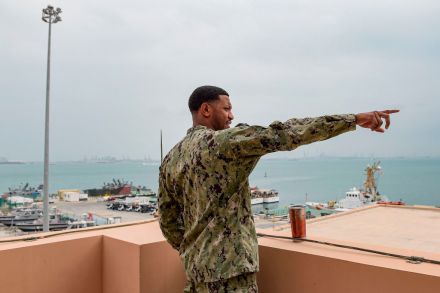
American alliances and security commitments tend to live on long after the world has changed. Many of our far flung military bases are legacies of a Cold War that ended decades ago. With the collapse of the Soviet Union, the Nato alliance became all but obsolete, so it eagerly embraced conflicts in the Balkans, Libya, Syria and other locations far from the Central European theater it was originally designed to protect. However, none of these holdover security commitments seem as absurd as US military operations in the Persian Gulf during a COVID-19 oil market.As recently as last month, the United States was keeping two aircraft carrier battle groups deployed near the Persian Gulf.

navy persian gulf

Will coronavirus lead to a US war with Iran?

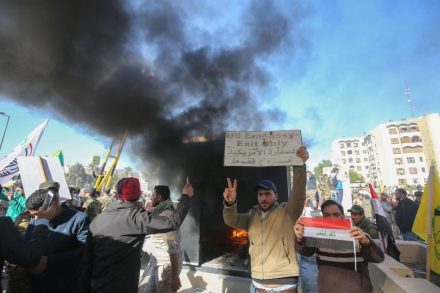
In a roundabout way, coronavirus may have been responsible for the deaths of two American service personnel and a British soldier in a rocket attack in Iraq on Wednesday. This triggered a prompt US military retaliation — American forces launched strikes at five sites in the early hours of this morning — and the prospect now is of an escalation while the rest of the world is consumed with a global health crisis. What's going on? It was Gen. Qasem Soleimani’s birthday on Wednesday and a Shiite militia — probably Kataib Hezbollah — chose to mark the occasion by firing Katusha rockets at Camp Taji, the US base just north of Baghdad.

war with iran coronavirus

The Shia Krays: The whole of Iraq is being held to ransom

From our UK edition

It’s been only six weeks since the death of the Iranian general Qassem Soleimani, but already there are a number of local hardmen vying to take his place. Most notable are his sidekicks, the Kray twins of the Shia world: Qais al-Khazali and his brother Laith. Qais and Laith who? Unless you’ve scanned Washington’s latest list of designated global terrorists, these two names won’t be familiar. Yet when I mentioned the brothers in a Baghdad teahouse a few weeks ago, folk lowered their voices and looked surreptitiously around, as if discussing the Krays in a pub in 1960s Bethnal Green. The Khazalis lead an Iran-backed Shia extremist group called the Asaib Ahl al-Haq, or League of the Righteous.

The Middle East mess has nothing to do with Donald Trump

Last week, like millions of others across the globe, I emerged blinking and stumbling from my fallout bunker to assess the destruction wrought by World War Three. There were a few surprises in store. Nukes had failed to rain from the sky. Critical infrastructure remained intact. Rationing was not yet in force. People still weren’t going to see Cats. World War Three, historians will note, consisted of: an assassination, a poorly organized funeral, the histrionic launching of a few sketchy rockets, an Everest of bad tweets and the downing of a passenger plane. But one thing remained as permanent as the second law of thermodynamics: all of this was Donald Trump’s fault.

middle east messs

So much for de-escalation

‘We are not looking to start a war with Iran,’ said defense secretary Mark Esper today. ‘We are looking to finish one.’ Iran just replied by firing off at least a dozen missiles at American targets in Iraq in an effort supposedly dubbed Operation Martyr Soleimani. It doesn’t mean all out war yet — but all the Trump administration’s talk about ‘de-escalating’ the situation sounds like hot air. As I write, the details of Iran’s retaliation are unclear — we don’t know if the strikes were aimed at American troops or infrastructure. Is it a face-saving measure? A decoy? Why did Iran attack Erbil and Al-Asad, rather than more obvious US bases? Have the fortified American defenses at these bases worked?

de-escalation al asad iran
fierce revenge

Iran begins its ‘fierce revenge’

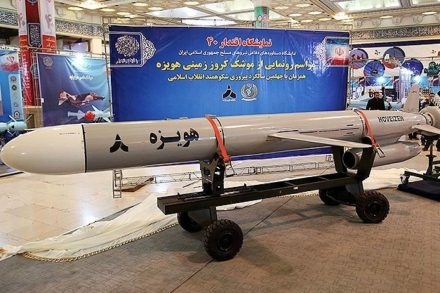
Details are still coming in as I write and the facts have not been confirmed, but it seems that ballistic missiles have been fired from inside Iran at US military targets in Iraq. A statement on Iran's official news media said: 'The fierce revenge by the Revolutionary Guards has begun.’ It went on to say that ‘tens’ of ground-to-ground missiles were fired in what the Iranian military is calling ‘Operation Martyr Soleimani’. That is of course a reference to the US assassination of Qasem Soleimani, head of Iran’s Quds Force and the country’s most popular general. ABC News quoted a US official as saying that the facilities hit included a base in Erbil in northern Iraq and Al Asad Air Base in western Iraq.

My clash with Alastair Campbell convinced me it’s time to hug a remainer

From our UK edition

I confess I had butterflies doing the first BBC Politics Live of 2020. It felt like the first day back at school. Beyond Twitter spats and Christmas family banter, the festive period had been politics-free. Would I be rusty, especially as one of the other panelists was the formidable Alastair Campbell? As a former People’s Vote heavyweight, Campbell is something of an arch nemesis who has a reputation for taking no prisoners. But regardless, one of my new year resolutions is to not dwell on past enmities. I am keen to build some unity, in order to make Brexit as productive as possible.

Mike Pompeo’s dishonest Iran defense

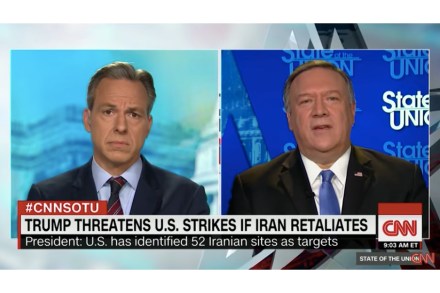
P.G. Wodehouse once described a character as so crooked that he sliced bread with a corkscrew. Secretary of state Mike Pompeo’s behavior on the Sunday morning television shows brings to mind Wodehouse’s description. No, Pompeo wasn’t toting a corkscrew or a loaf of bread, but he offered a study in deceit. Pompeo didn’t merely reiterate the wafer-thin claim that Iran was about to pose an 'imminent' threat to American interests in the Middle East, but also claimed that President Obama and his aides had essentially been in league with the mullahs of Tehran.In responding to Jake Tapper of CNN, Pompeo was unable to explain how blowing Qasem Soleimani to kingdom come would enhance the safety of America.

pompeo

Ten handy phrases for bluffing your way through the coming Iran crisis

From our UK edition

That gathering drumbeat you hear could be the sound of World War III, or it could be 10,000 journalists still Googling facts about Iran following the assassination of Qasem Soleimani. The internet is a bluffer’s paradise, but it also means that everybody— not just the hacks — now feels a strong impulse to talk knowledgeably about the Middle East when news happens. You have to know your Shiite, as they say, your IRGC from your Kataib Hizbollah. Don’t muddle Khamenei with Khomeini. But more importantly don’t be afraid! The Spectator is here with some handy phrases to get you through any difficult Twitter spat or pub chat. 1) Say ‘Iran’s proxies in the region’ a lot The word ‘proxies’ is bluffer gold-dust so sprinkle liberally.

How will Boris Johnson respond to Qassem Soleimani’s killing?

From our UK edition

President Trump’s decision to assassinate Qassem Soleimani accelerates perhaps the most important post-Brexit decision faced by Boris Johnson: whether to stand with the US or the EU at moments of potentially acute global crisis. What happens next will largely be conditioned by how Iran responds and retaliates. But all Western governments are examining their options. In particular, France’s president Macron will be working hard to forge a coordinated EU and European response, not least because through the G7 over the summer he endeavoured to engineer a dialogue between president Trump and Iran. Those close to Macron say he admires Johnson. But there are members of the government who harbour the traditional British mistrust of a strong French president.

Trump’s foreign policy isn’t working

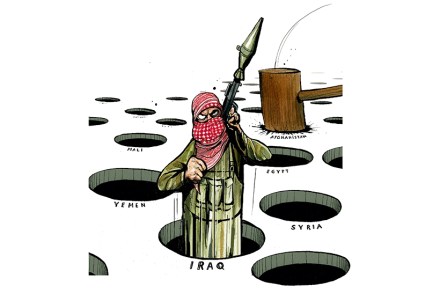
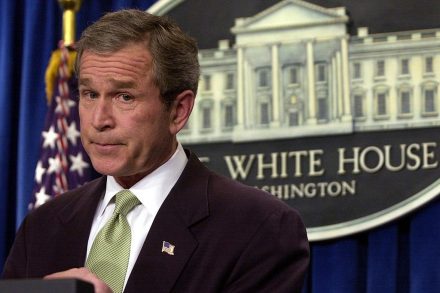
An end to endless wars? Get real. America’s foreign policy since the end of the Cold War is a never-ceasing tragedy. One front improves, another worsens. On Sunday, it emerged that the Taliban council had agreed a ceasefire in Afghanistan, a development that could at last end America’s longest war, its 18-year military engagement in the graveyard of empires. Maybe President Donald Trump really could make good on his promise to end America’s hopeless and destructive foreign entanglements. At the same time, however, Iraq has fallen into greater chaos again — because America can’t stop meddling. George W. Bush’s other great disaster continues. The failure cycle whirs.

baghdad iraq foreign policy

What could go wrong for Donald Trump in 2020?

What are the four things that can go blooey for President Trump in the next year? First, he can get mired in a new Middle East war — the very thing he promised to avoid. The much-ballyhooed pullout from Syria turned out to be none at all. Now turmoil in Iraq, not a North Korean nuclear launch, turns out to be the Christmas present Trump didn’t want to receive. American strikes against the Kataib Hezbollah militia have got Iraq and, by extension, Iran, in a hugger-mugger. Trump could be on a slope toward further escalation with Iran that is as slippery as an oil slick. The hawks in Trump’s administration will exult; his nationalist followers, blanch. Second, there’s the economy. So far it’s humming along on a sugar high of tax cuts and deficit spending.

wrong

The surrealism of war against Isis

From our UK edition

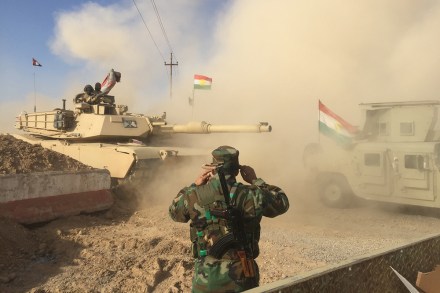
The campaign against Isis was pretty big news for most of 2016. But by the time the final showdown got under way in Mosul, it was late October. Western journalism was already departing on a bold new chapter, with great new villains much closer to home. For news consumers, one tableau of confusion and anxiety cross-dissolved into the next. Fortunately, James Verini, a reporter for the New York Times magazine, was on the ground in Mosul, still working to bring closure to the previous nightmare. But that’s no easy task when ‘you’re usually sitting in some house or truck, or squatting behind some berm, listening to the destruction’, as he confides early on in They Will Have to Die Now. ‘Experientially, war is mainly sound.

Demining at the foot of Mount Sinjar

Sinjar, Iraq, December 2015. Major Adel Sleman poured more sweet tea into a small glass. It was cold outside the half-built shed we were sitting in, and we inched closer to the jet-black stove. Kurdish men stood next to small mattresses they had arranged on top of cinder blocks around the stove. Each man seemed to have a different style of camouflage. The pot-bellied major with his loose-fitting fatigues looked dressed ready to blend into a jungle. His colleague Major Hussein Yusuf wore forest green. Even though it was cold, the two men didn’t put on coats.  ‘I’ve spent 19 years working in demining,’ said Sleman. Born in 1963 in northern Iraq’s Kurdish region, he had been a Peshmerga, or Kurdish soldier, since the 1990s.

iraq demining

Trump is right to brand the IRGC terrorists

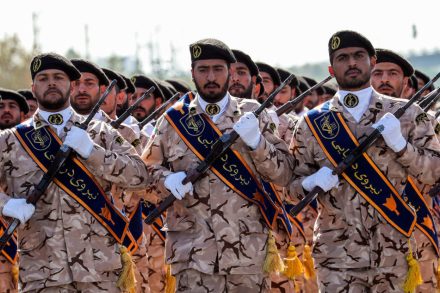
Donald Trump is a master of the obvious. This is why his foreign policy keeps surprising the status quo powers of American politics: the media, the bureaucrats, and the elected officials. Today, these wise monkeys are reeling at the news that Iran’s Revolutionary Guard Corps is a ‘foreign terrorist group’, and that the IRGC ‘actively participates in, finances, and promotes terrorism as a tool of statecraft’. Here’s something else that’s obvious. Since 9/11, the United States has staggered from one fiasco to another in the Middle East: the invasion of Iraq, the endorsement of the Muslim Brotherhood in Egypt, the trashing of Libya, the incoherent response to the Syrian civil war, the humiliation of an effort to get out of the region through the ‘Iran Deal’.

irgc

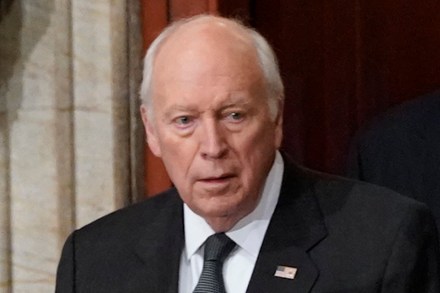
Vice vs vice: Cheney barbecues Pence in Georgia

It was no cakewalk for Vice President Mike Pence. He had showed up in Sea Island, Ga., reckoning that he would schmooze with the wealthy donors to the American Enterprise Institute and answer some prearranged questions from Dick Cheney aka Vice. No dice. Cheney, the wily veteran, took a look at the parvenu occupying his old office and decided to go off script. Where were all the ‘softball’ topics, Pence remarked. Cheney was having none of it. There wasn’t much gratitude for the administration that had finally gotten around to pardoning his former aide I. Lewis ‘Scooter’ Libby. Instead, Cheney breathed fire.

dick cheney

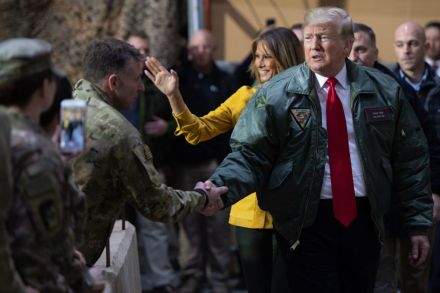
Why has Trump followed his impulses to Iraq?

Better late than never. On the day that the New York Times unearthed the Queens podiatrist who, in exchange for favors from Fred Trump, had diagnosed young Donald as suffering from bone spurs in 1968 that precluded military service in Vietnam, he finally visited a war zone. Trump didn’t seem to be suffering from any overt infirmities as, together with Melania, he mingled with troops in Iraq, where he seems predisposed to maintain a military presence. Keeping armed forces in Iraq will allow him to up the pressure on Iran if he chooses and to launch commando missions into Syria. To the probable relief of his aides, his trip also gets him out of the White House, where he was fulminating about the refusal of Democrats to pay for a border wall.

iraq
carve

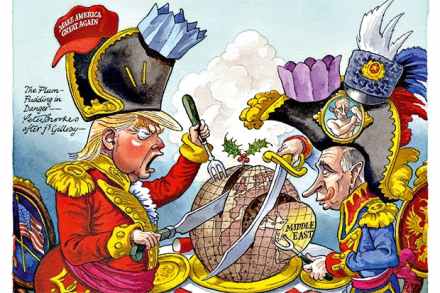
Trump’s Mideast carve-up

If any other president than Donald Trump had announced the withdrawal of American troops from Syria, he would be lauded for a strategic wisdom rare among American presidents, and for that even rarer achievement, fulfilling a campaign promise. Instead, he is attacked by Democrats and Republicans alike. That alone suggest that he is doing something right. The truth is, American foreign policy experts have been consistently wrong about the Middle East for decades. Who, apart from the culprits of George W. Bush’s wars, seriously believes that Iraq ever was a nation, rather than a cobbled-together state? Who, apart from the apologists of Obama’s appeasement, seriously believes that Iran has no ambitions as a nuclear-tipped empire?