Iraq

The West has shamefully abandoned its Kurdish allies

From our UK edition

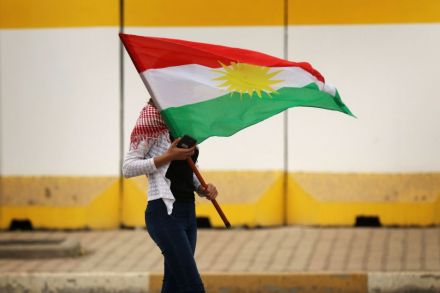
Not for the first time, Kurds in Iraq and Syria are facing an uncertain future. In Syria, an estimated 150,000 people were displaced by fighting in the mostly Kurdish region of Afrin in the space of a few days this month. When the Turkish army, backed by Syrian rebel allies, rolled into the city of Afrin, Kurds fled in trucks and cars, their belongings piled high. For many it conjured up the memories of Kurdish suffering which some hoped was a thing of the past. In March of 1988 and 1991, Kurds fled Saddam Hussein’s brutal oppression, often seeking refuge in Turkey and Iran. The loss of Afrin marks a major setback for Kurdish aspirations that had grown in the last years as Kurdish forces helped defeat Islamic State.
Britain has turned its back on its Kurdish allies

From our UK edition

The Kurdish people are facing a deep crisis. Nowhere is their desperate situation clearer than the way an official visit by the Kurdistani PM, Nechirvan Barzani, to meet Emmanuel Macron in Paris has been seen as revolutionary. The meeting broke Iraq's diplomatic blockade on the Kurds, and is part of France's bid to kickstart a diplomatic demarche between the Kurds and Baghdad. The breakdown in relations was triggered as a result of September's referendum, when a resounding 93 per cent of Kurds backed independence. Since then, Iraq has spurned all Kurdistani requests for talks to resolve their political differences. For his troubles this week, Macron was accused of meddling in Iraq's affairs by Iraqi vice president Nuri al-Maliki.

The next Iraq war

From our UK edition

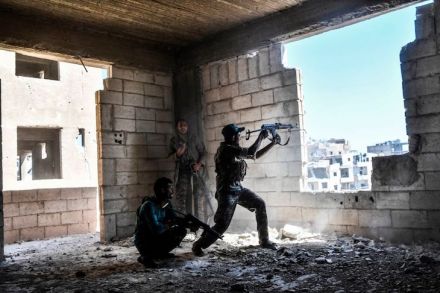
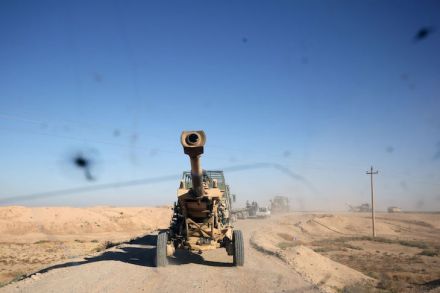
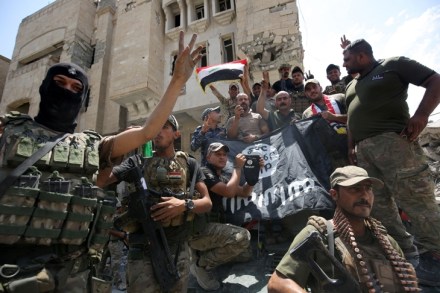
After the most intensive street-by-street combat since 1945, Isis’s so-called caliphate is no more. Last weekend, the Iraqi government won what should be the final battle and is now preparing to say that the war is ended. The jihadis still have the odd redoubt — but they have been forced out of Mosul and Raqqa after an intensive coalition campaign led by America and Britain. Donald Trump is unlikely to emulate his predecessor-but-one by appearing in front of a banner saying ‘Mission Accomplished’. Theresa May probably won’t deliver such a statement either. Indeed, the war against Isis has barely been mentioned by either politician, even though our involvement has been larger than expected.

The Kurds are on their own

From our UK edition

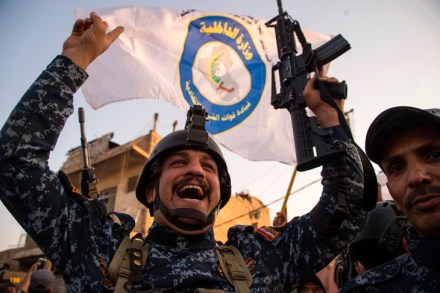
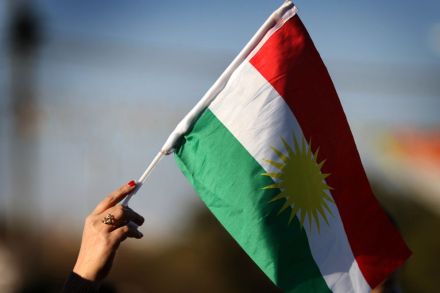
The routing of Isis in northern Iraq ought to be a time of international celebration, but as ever in the Middle East, there is no such thing as a straightforward victory. No sooner had Isis been driven away — though not quite vanquished — than the next great struggle commenced, this time between the Iraqi government and the Kurdish forces who for the past three years have been holding back Isis from the city of Kirkuk and its surrounding oilfields. This week, Iraqi forces stormed into Kirkuk and raised the country’s official flag, removing the Kurdish flag which was raised there in 2014.

Kurdistan defies the threats to hold its referendum vote

From our UK edition

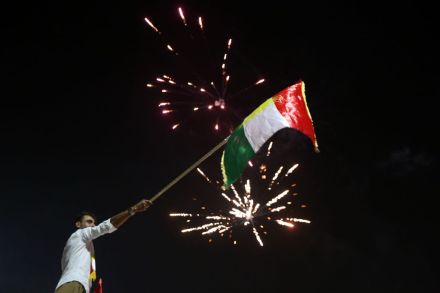
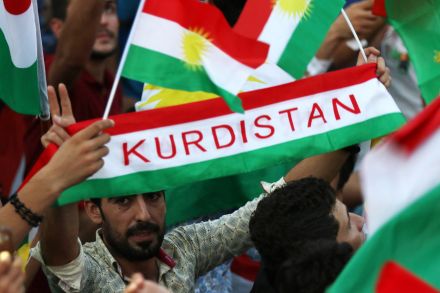
The Machko teahouse in the centre of Erbil, the capital of the Kurdistan region of Iraq, has seen much of the area’s history. Founded in 1940, it survived Saddam Hussein’s oppression and years of privation. On September 25th, it was packed with patrons gathering to watch the latest chapter in the Kurdish region’s long history unfold. Since June, when Kurdistan Regional president Masoud Barzani announced a referendum on independence, the eight million residents of this autonomous part of northern Iraq have been waiting to see if the vote would take place. On September 25th, it happened. Initial figures showed a 76 per cent turnout.

‘Kurdexit’ would make Brexit look strong and stable

From our UK edition

Last week, American, British and UN diplomats tried to persuade the Kurds in Iraq to delay their referendum on independence. This high-profile intervention came amid a swirl of fiery rhetoric from other actors, especially Iran. The diplomats haven't convinced the Kurdistani leadership, however, and so the vote will happen a week today – barring some last minute deal. The diplomats argued that the referendum will divide those fighting Daesh and destabilise the region. The Kurds argued that political divisions at home or with Baghdad have not hampered fighting Daesh. Besides, Kurdistani leaders are seeking a popular mandate for negotiating an amicable divorce with Baghdad over five or even ten years, rather than a sudden unilateral declaration of independence.

The Brexit referendum joins Iraq and Suez on my list of political disasters

From our UK edition

To the Business School at the University of Edinburgh to be interviewed on the theme of ‘Great Political Disasters’. Main criteria for inclusion: decisions, often taken for short-term reasons, whose unforeseen consequences have echoed down the ages. Everyone will have their own little list, but mine included the Balfour declaration, Partition, Suez, Wilson’s failure to devalue in 1964 (which haunted subsequent Labour governments), Denis Healey’s IMF loan in 1976 (which he later admitted had been unnecessary and which led to the Winter of Discontent and the election of Margaret Thatcher), the poll tax, Iraq and the Brexit referendum (yes, I realise that the jury is still out on that last one).

Don’t forget the Yazidis

From our UK edition

As the floodwaters subsided, the Ark drifted across northern Iraq. Finally, with a crunching jolt, it hit dry land. Its timbers had scraped the peak of a mountain range called Sinjar. Water began to pour in. Fortunately, a black serpent, its coils as thick as an arm, moved to plug the breach. The Ark did not sink. Noah, his family, and all the various animals on board survived to repopulate the earth. This story, so familiar, so strange, can be seen illustrated in a shady courtyard that also boasts, just for good measure, the very spot where Adam is claimed to have been fashioned from dust. Lalish, a magical compound of domes, towers and stairways, stands in a valley in Iraqi Kurdistan.

For Iraq’s Kurds, independence looks tantalisingly close

From our UK edition

Next month, Iraq’s Kurds head to the polls in an eagerly-awaited independence referendum. Ahead of the vote, on September 25th, the country’s Kurdistan Regional Government is searching for inspiration from abroad. Brexit, unsurprisingly, is an obvious pick; many Kurds are hoping that Kurdexit could – as with Britain’s shock departure from the EU – finally become a reality. Yet for all the parallels between the two movements, the champions of Brexit are lukewarm in their support for the Kurdish cause. Boris Johnson said that Brexit was ‘about the right of the people of this country to settle their own destiny’. He was somewhat colder on the issue of Kurdish independence.

The Yazidis’ desperate struggle is far from over

From our UK edition

Three years ago, international attention was drawn to the desperate plight of Iraq's Yazidis, a largely unheard of ethnic and religious minority. As Isis rampaged across their homeland of Sinjar in Northern Iraq in the summer of 2014, thousands of Yazidi women were kidnapped and taken hostage to serve as prized sex slaves by Isis members. Many of them still remain in Isis-held territory across the border in Syria. Children were brainwashed and recruited to fight for the jihadists, while adults were massacred and left in the mass graves which now litter the mountainous northern districts of Iraq.

The victory over Isis has left Mosul at risk of more brutality

From our UK edition

A grainy video posted to Twitter shows a bearded man, his hands raised, on his knees, pleading for his life. A few seconds later, a soldier in desert fatigues, and allegedly from the Iraqi Army's 16th Division, enters the frame and pushes the petrified man over the edge of a cliff on to the banks of a river down below. The man appears alive, just, but as he attempts to slither to cover, the soldier unleashes a volley of a dozen or so rounds, leaving his bloodied body lifeless. His crime is unclear, though without jury nor trial his tormentors have accused him of being a member of Isis. It is barely two weeks since Iraqi Prime Minister Haider Al-Abadi declared Mosul officially liberated from Isis.

Hope in Mosul

From our UK edition

For the title of world’s most benighted city, Mosul takes some beating. Liberated from Saddam Hussein by US forces in 2003, the ancient Assyrian town was pummelled by years of insurgency before being seized by Isis in 2014 and its population subjected to militant theocracy. It has no water supply, no infrastructure, it has been gutted by occupation and there are some 850,000 displaced citizens. The Iraqi government’s long and bloody battle to regain what remains of Mosul culminated this week in a visit by Prime Minister Haider al-Abadi to declare victory. Many will find it hard to see anything to celebrate, given the destruction that has been wrought in the nine-month campaign to free the city from Isis control.

Moment of truth | 18 May 2017

From our UK edition

Two extremes of the listening experience were available on Monday on Radio 4. The day began conventionally enough with Start the Week, chaired by the deceptively genial Amol Rajan (now in charge of The Media Show), whose warm, inviting voice fronts a keen, intense intelligence. He guided his guests through a conversation about our post-truth world which, apart from the subject-matter, could have graced the airwaves in the 1950s. This was a masterclass in elevated discussion, so graceful were the exchanges, so theoretical the ideas, yet so clear the meaning.

Can Iraq’s Christians ever recover from Isis?

From our UK edition

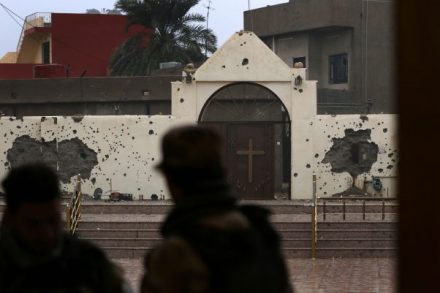
Since June 2014, when Islamic State attacked northern Iraq, the desks at Mar Ephrem seminary in Hamdaniya, a city 18 miles southeast of Mosul, have stood empty. Today, they are dusty and rooms once teeming with priests and nuns in training are dark; student ID cards, with titles such as 'Syrian Catholic: Parish of Bashiqa, Iraq', litter the floor and a statue of the Virgin Mary lies smashed. Now, Isis are gone. But in their wake an eerie quiet remains and the path of destruction is a visible reminder of their legacy, with thousands of houses destroyed in the fierce battle to retake the city last October.

Kaiser Donald

From our UK edition

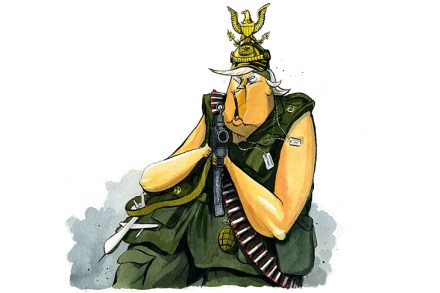
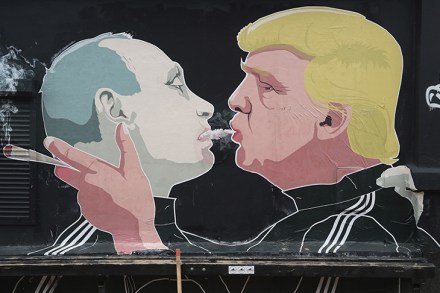
 Massachusetts All politicians wear masks. Donald Trump’s favourite is that of Maximum Leader. It was on display during this past week. ‘If China is not going to solve North Korea, we will,’ he said at the weekend, ahead of his meeting with Xi Jinping — a throwaway comment that could end up causing mayhem in the Far East. Next, his reaction to news of a chemical bombing in Syria. Trump blamed the atrocity on his predecessor’s ‘weakness and irresolution’, suggesting that he is keen to show the world what strength and resolve look like. The President, it seems, is not too dissimilar to the nightmare his political enemies warned us about: a nuclear-armed hothead itching to show the world how tough he is.

Persecuted Iraqi Christians ‘supported Trump 100 per cent’ because they felt betrayed by Obama

From our UK edition

There's an extraordinary moment in this week's Holy Smoke podcast when the aid official supervising the resettlement of 12,000 Iraqi Christians says that the latter supported Donald Trump '100 per cent' in the US elections because they felt betrayed by the Obama administration. Stephen Rasche, legal counsel and head of resettlement programmes for the Chaldean Catholics of northern Iraq, confirms that this community – now on the verge of extinction, and due to run out of medicine in 45 days – has received no help from US aid agencies or the United Nations. We recorded the episode on Friday, the day after Rasche had addressed MPs and peers in Parliament. One hopes they listened carefully, having themselves just been the targets of an Islamist attack.

High life | 23 March 2017

From our UK edition

A cloudless sky, crunchy spring snow, longer, warmer days. I’ve finally got in some good skiing, twisting around moguls like an arthritic champ. It’s all in the mind, as my old wrestling coach used to tell me. If you think the other guy’s better, you’re bound to lose to him. The same goes for the slope. If it scares you, stay in the club and have another drink. Otherwise, attack it with gusto and feel like a champ again. The same applies to the fairer sex. If you’re too nervous to speak to her, keep moving. We have four of the prettiest young women at The Spectator, all taken alas, and I’ve managed not to make a fool of myself with any of them (well, a tiny bit with one of them, but what the hell, no one’s perfect).

The Spectator podcast: Isis’s last stand

From our UK edition

On this week's podcast, we discuss what the end of Isis means for a fragile Middle East, debate whether John Bercow should be packing his bags, and ask if the days of the Bullingdon Club have finally ended. First, the attempt by ISIS to establish a Caliphate has been on the rocks for some time, and with President Trump now at the tiller of the US military, its days may be numbered. Trump wants to retake the Syrian city of Raqqa quickly, but, in order to do so, he might have to rewrite the cautious approach of his predecessor, Barack Obama. Paul Wood writes about the situation in this week’s magazine cover piece, and he joined the podcast from Washington, along with the Conservative MP and Iraq War veteran, Tom Tugendhat.

‘Isis? Bomb those suckers’

From our UK edition

These are the last days of the ‘caliphate’. The place Isis made their capital, Raqqa, in Syria, is encircled and cut off. They have already lost half of Mosul in Iraq, their largest city. Really, what did they expect? This was inevitable from the moment Isis declared war on everyone not in Isis. Defeat was even foreseen by one of the group’s leading thinkers, Abu al-Farouq al-Masri. ‘Announcing enmity to the world will strangle the caliphate in its cradle,’ he said last year. ‘This will bury our project alive.’ Al Masri (the ‘Egyptian’) is or was an elderly cleric and he was delivering a sermon in Raqqa meant as a warning to the leadership.

Rules of engagement

From our UK edition

The BBC foreign correspondent Hugh Sykes was meant to be talking about how music has shaped his life with Sarah Walker on Essential Classics last week (Radio 3, Friday), but their conversation actually gave us far more crucial insights into why he has won awards for his work, reporting from troubled places such as Tehran, Baghdad, Belfast, Berlin and Islamabad. He stressed the importance of checking your facts, ‘Verify, verify, verify’, and especially now that the demand for instant news coincides and conflicts with the torrents of information flooding the internet. ‘Never report anything until you’ve got at least two sources,’ Sykes insisted. He also explained how easy he found it to get people talking. ‘I’m holding a microphone. I ask a question.