Iraq

Brown’s betrayal of Basra is the real issue here

Might Gordon Brown get away with it at the Chilcot Inquiry today? I suspect so. The media seems obsessed with the run-up to war, whereas the real crime was the betrayal of Basra. Brown made false claims to Parliament about the fall of violence in the city which, as he would have known, was being left in the hands of Shiite death squads. He would have known that, as the Chilcot Inquiry established, we had just a couple of hundred soldiers trying to keep peace in a city of millions. He misled Britain out of Basra as knowingly and mendaciously as Blair led Britain into Iraq - leaving the people of Basra at the mercy of the militiamen. That is, until the Iraq army (with US support) invaded the city again, and expelled the murderous regime to whom Britain had, under Brown, handed power.

Brown faces his interrogators

Tick, tick, tick ... there's only an hour or so to go before Brown's appearance in front of the Chilcot Inquiry.  And, athough I generally feel that this whole process is a waste of time, effort and newsprint, there's still something grimly fascinating about today's proceedings. Brown has, after all, always tended to keep a low profile when it comes to Iraq.  Let's see whether Chilcot & Co. can trudge their way through the murk of tractor statistics and other obfuscations. We all know, broadly, what they'll be asking.  How did Brown feel about the Iraq War?  And did he, as Chancellor, provide enough money for it?  In which case, there's a sense that Brown has set himself up for a fall today.

Blair on Chilcot…

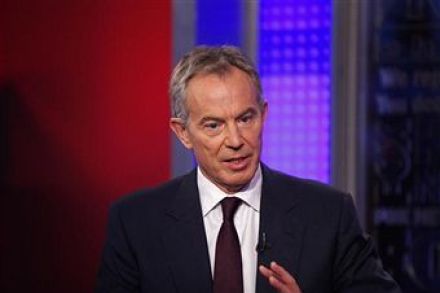
...well, sorta.  5:25 into his interview with Mike Huckabee, our former PM gives his take on the constant stream of Iraq inquiries: You can certainly see his point. Although I doubt the government will be too impressed with Blair trawling through all the Iraq stuff on American television, only weeks before he hits the campaign trail for Labour.

Beyond doubt

For a moment, Andrew Marr had Alastair Campbell by the short and curlies. Marr attacked (that verb is not an exaggeration) Campbell over his clarification to the Chilcot Inquiry, the phrase ‘beyond doubt’ and the possibility that Blair knowingly misled parliament over the strength of WMD intelligence.   Marr was at his incisive and dramatic best. It was the first time I’ve seen Campbell under pressure and he wobbled, his lower lip did so markedly. Perhaps I do him a disservice, but I didn’t buy Campbell’s blubbing act; it was just theatre. His defence of Blair and himself rested on the tried and tested refrain that Tony’s a pretty straight kind of guy, and what he described as the “careful and meticulous” case that both prepared.

Brown and Blair, together again

Strange that there's really only one major political point arising from Gordon Brown's interview in the Standard today.  But, then again, maybe that is the point.  Like the PM's interview with the News of the World a few weeks ago, the emphasis is far more on the personal than anything else: his relationship with Sarah Brown, the death of his daughter Jennifer, his upbringing, and so on.  We even learn why his handwriting is so bad ("due to the way he was taught to write at school," apparently).  And with a TV appearance alongside Piers Morgan in the schedules, it does seem that Brown is keen to present a more human front. As for that political point, it's Brown's confirmation that Tony Blair will play a "major role" in Labour's election campaign.

The Iraq War may or may not have been a crime – but was it in the national interest?

If you read the press after Clare Short’s testimony to the Iraq inquiry you would be forgiven for believing that there are only two ways to judge the Iraq War – whether it was legal or not, and whether Tony Blair lied. But while these are important issues, they get in the way of another key question: was it in Britain’s interests? There are many problems with looking simply on the issue of legality. First of all, international law is not domestic law. It is a framework without an overarching "sovereign", so "enforcement" of international law is different than in the domestic context. International law is also based, at least in part, on norms. But norms change – thus changing what the law means.

Brown meets his Waterloo

Lord Guthrie had it right with his well-directed expletive: Gordon Brown just doesn’t get defence. His record, both as Chancellor and PM, leave him vulnerable to criticism on the subject; but today, Brown has been confronted by a khaki-clad nightmare. After suffering his first reverse at PMQs for months, beaten decisively by a beautifully executed Tory plan, former permanent secretary at the MoD, Sir Kevin Tebbit, informed the Chilcot Inquiry that Brown ‘guillotined’ the defence budget with annual reductions of £1bn. Geoff Hoon’s testimony disclosed the full effects of Brown’s single act of stringency. The timing could not be better for the Tories, who have been intent on self-destruction of late.

Stop these excuses: someone dig up Robin Cook

So there we have it, straight from the horse’s mouth, and to round off a sentence of tired clichés all that needs to be said is that Clare Short was “conned”. Everyone was in fact: “We were in a bit of a lunatic asylum… I noticed Tony Blair in his evidence to you kept saying, ‘I had to decide, I had to decide.’ And indeed that’s how he behaved. But that is not meant to be our system of government.” The sofa was barred to all except Bush and the Cabinet exercised collective ignorance. Even Brown was left to brood over cups of coffee and macaroons with Clare Short. Short’s evidence must not be entirely discounted.

Will Brown’s election chances be Chilcot’s premier victim?

Giving evidence to the Chilcot inquiry, Tony Blair said: “I never refused a request for money to pay for arms and equipment during my time as Prime Minister.” The panel did not take the bait, but they will have to following Lord Walker’s evidence today: "There was indeed a list of stuff that we were having to make decisions about and I think we drew a line somewhere halfway down the page and said, 'if you go any further than that you will probably have to look for a new set of chiefs'." The disclosure has the iron-cast hand of Brown upon it. The PM’s decision to give evidence may prove a ruinous act of hubris. Voters and commentators may not comprehend the subtleties of deficits, but all can see when a politician has neglected serving British troops.

Because of Blair, Britain will now be shaped by the world

It's striking how Tony Blair, the most successful election winner in Labour party history, is now so despised in the country that gave him three landslides. This matters politically, because he has - I fear - poisoned the cause of liberal interventionism. I look at this in my News of the World column today. Blair's Chicago speech of 1999 laid out what I regarded as a bold and coherent foreign policy case. It was time to stop letting genocides happen because they take place within the borders of sovereign states protected by the UN Security Council. I agreed with him when he said that, if the Rwandan genocide happened again, we would have a moral duty to act there. But if it happens again, what are the chances of Britain joining a multi-national coalition? Pretty close to zero.

Could Jacques Chirac add to the Chilcot inquiry?

The Iraq inquiry is making the political weather, much more than Gordon Brown expected. By the time of the general election, every key diplomat, soldier and politician involved in the war will have given evidence. But there are people that have played pivotal roles who should be given the chance to put their views across - not about the war as such but about Britain's diplomatic and war record. I'm thinking of senior US officials, from President Bush down the hiearchy but also then-French President  Jacques Chirac, former UN chief Kofi Annan and so on. I'm not suggesting Sir John Chilcot broaden his inquiry to nor that 'W' would come to give evidence.

Blair vs Chilcot vs his Critics

I've a piece up over at the Daily Beast on Blair's appearance before Chilcot yesterday during which he showed, once again, that he's the last member of the War Party capable of explaining and selling the mission. All the others have fallen silent (Bush, Aznar) or been discredited (Cheney, Rumsfeld). Only Blair remains. The build-up to Tony Blair's appearance on Friday before the Public Inquiry investigating the Iraq War was dominated, above all else, by two things: a palpable thirst to see the Prime Minister publicly humiliated and a nagging sense that Blair's testimony would be anti-climactic. Both expectations proved ill-founded. Protesters outside the Queen Elizabeth II Conference Center chanted "Tony Bliar! [sic] War Criminal!

I bear a charmed life, which must not yield to one of woman born

If Tony Blair were to go to the newsagents to day to see how his performance is being reported on the front pages,  he'd be in for a pleasant surprise. He does not feature - certainly not in the biggest sellers. The extra-curricular activities of John Terry make the the lead story on the Mail, the Sun, the Daily Telegraph and the Daily Mirror. Blair himself is relegated to the inside pages on most.  Of all today's press coverage, The Times is probably the most damaging. "Tony Blair was branded a murderer and a liar last night,". But even Blair-hating papers like the Daily Mail find it hard to compete with the John Terry story, which journalists have known about for days but been unable to report (I gather that there are more explosive revelations to come).

Tony Blair: The Next Labour Prime Minister?

There has been a general consensus that Tony Blair was a class act in front of the Chilcot Inquiry. Even those who see him as a liar and a war criminal must have been impressed by the way he handled himself - although choosing to show no contrition in a room of people that included the bereaved parents of fallen soldiers was a mistake.  I was not a supporter of the war. Like most people in the country I was an agnostic: I hoped the removal of Saddam would lead to a democratic domino effect across the middle east, but I thought it probably wouldn't. I thought it far more likely that an invasion would lead to the three-way split of the country into Kurdish, Sunni and Shia enclaves. I wasn't entirely right about that either.

Blair wants to tell Iranian tales

Iran. That’s the news story which poor Mr Blair is trying to spin to the panel – but they don’t pick up on his hints. It would have all been all right in Basra – he’d like to say - if it hadn't been for those pesky Iranians. As Prime Minister, if he blamed Iran in public then that would have had implications. He’d have had to follow up on it. But now he wants to tell us, or he would if those chaps on the panel would kindly probe him on it. When he was talking to Baroness Prashar he tried to start: “If what you’d ended up having was an indigenous violence or insurgency, or criminality and looting and so on…” She wasn’t interested “We’ll come to that later…” and handed over to Chilcot.

Blair on the rack

Not so good for John Rentoul: it’s WMD time and Blair’s body language spoke volumes. His movements were almost involuntary. The glasses were on and off, the brow furrowed, the head wagged and jagged in the manner of an amphetamine junky going cold turkey, and the hands were more intrusive than Andrew Marr’s. In round one, Blair was as languid as Dirk Bogarde; he was more like Daniel Day-Lewis second time round. That said, the line holds. As Iain Martin notes, it is extraordinary that Blair “didn’t focus a great deal” on the intelligence he received.

Blair, the Special Relationship and the Clash of Civilisations

So far so good for John Rentoul: Blair’s walking it, but there have been intriguing moments. The suggestion that Blair’s foreign policy was motivated solely by vanity is false. The former Prime Minister’s thinking is extremely coherent. That is not to say that he is right nor to deny his obvious vanity, or to overlook that this may simply be Blair in matinee idol mode. But he subscribes to an ideology. He stated, once again, that he saw 9/11 as an attack on “us”, not just America. The language is redolent of Samuel P. Huntingdon’s Clash of Civilisations. Blair perceives a band of religious fanatics and a crucible of oppresive rogue states which desire the West’s destruction.

A composed and calculated Blair takes round one

So, what do we make of round one? Blair looks younger, in a strange way. A shorter haircut. But all those thespian mannerisms that I had forgotten about are still there - and are being used to full effect. A complete mastery of his facial expressions – which, for Blair, do the communicating. He can torn on anxiety, bemusement etc on tap.The quizzical look, the mock concern. The pause, as he thinks about something (or pretends to). It wouldn’t surprise me if he was faking the slight shaking of the hands which Joey Jones at Sky has just picked up.   We have seen the usual Blair lawyerly hair-splitting habit: “regime change” is not the same as wanting to “remove” Saddam – etc. Blair will, today, throw up something for a headline.

There were real, human costs to containment

On Today this morning, Nick Robinson said that Tony Blair would point to improvements in infant mortality and the like. Today then cut back to the studio where a reporter analysed this claim. The reporter disputed the validity of this claim and said that sanctions had ‘skewed’ the numbers. But the sanctions were a consequence of Saddam being in power. As long as he was there, there were going to have to be sanctions to contain his ambitions. Dennis Halliday, a UN official who resigned over sanctions, said that four to five thousand children a month were dying because of sanctions. There are intellectually respectable arguments on both the pro and anti-war sides. But to claim that the containment status quo was cost free is simply not accurate.