Iran

How the Islamic Republic tried – and failed – to destroy Iranian culture

The Islamic Republic in Iran is not only at war with the United States and Israel. For years, the country’s government has been waging war on Iranian culture. Music, poetry, storytelling, dogs, dancing, singing, art, dice and card games, romance, tolerance and the honoring of women are central to Persian culture and its ancient history. Yet under the Islamic Republic, these cherished expressions are banned or stigmatized, especially when pursued by women. The departure of Iran’s enlightened and educated from the country they love is one of the most poignant brain drains in history In the dark, dystopian times immediately following the Islamic Revolution in 1979, couples holding hands or

The right’s Israel fracture

As the joint American-Israeli military campaign in Iran continues, President Trump’s coalition is starting to exhibit some cracks. The war in Iran has emerged as a proxy battle over a broader, long-simmering conflict within the right about Israel. And the fight over Israel is, in some important ways, a proxy battle about Jews in general. Big picture, what we’re seeing now is that the traditional divisions on the right between paleoconservatives and neoconservatives, between hawks and doves, are being reshaped into a battle over Israel specifically. It’s a very difficult subject; this issue has become highly emotional and personal for those on both sides, and even in my world, it’s

The Iran war has exposed the world’s maritime chokepoint

The war with Iran is exposing a vulnerability at the heart of the global gas market: the extraordinary concentration of liquefied natural gas supply in the Persian Gulf. Qatar alone accounts for roughly a fifth of global LNG exports, almost all of it passing through the narrow Strait of Hormuz. The conflict has illustrated how easily a single maritime chokepoint could interrupt a significant share of the world’s gas trade. Even if the war ends soon, the vulnerability it has exposed will not disappear President Donald Trump has suggested the conflict may soon end, describing the campaign as largely achieved and possibly over “very soon.” The Gulf monarchies also appear eager for a quick

‘We don’t know what’s going on or why we’re doing this’: how Trump’s Iran gamble backfired

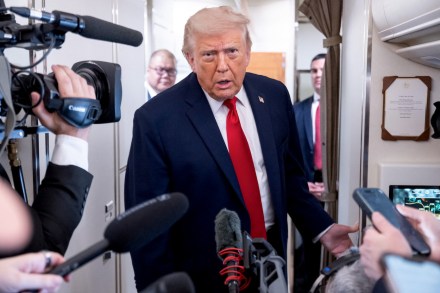
“Donald Trump is a complicated person with simple ideas,” said Kellyanne Conway, the former White House senior counselor. “Way too many politicians are the exact opposite.” It’s a good way of understanding the 45th and 47th President and his extraordinary success. His turbulent personality causes mayhem, yet his political aims have remained constant, straightforward and popular. Decades ago, as a New York tycoon with a keen eye on international affairs, he identified three priorities for America: tackle the nation’s trade imbalances, force NATO allies to spend more on defense, and destroy terrorists. When it comes to realizing those simple ideas, however, his more complex attributes emerge. Trump believes in mixing

Australia finally did right by Iran’s brave women’s soccer players

In 1989, as tanks rolled into central Beijing to crush the pro-democracy protest in Tiananmen Square, Australia’s then prime minister, Bob Hawke, spontaneously offered asylum to all Chinese citizens who happened to be in Australia. Thousands took up his offer and made lasting contributions to the country that gave them shelter. Last Tuesday, the women showed personal courage by taking a silent but very public stand against a regime that stops at nothing to punish open disloyalty On Tuesday, Hawke’s successor, Anthony Albanese, granted five women of Iran’s national soccer team asylum, and offered it to all those in the team’s party. Unlike Hawke, however, Albanese did the right thing

australia iran

Revenge of the cheese-eating surrender monkeys

French President Emmanuel Macron’s approval rating rose by six points last week. It will likely continue to climb following his visit to the Charles de Gaulle aircraft carrier on Monday. The pride of the French navy recently arrived in the eastern Mediterranean to protect Cyprus, and Macron was in his element as he strode across the deck of the carrier. A photograph of the occasion appeared in the New York Times underneath the headline: “France Is Sending a Large Naval Force to the Middle East.” The last time there was a great conflagration in the Middle East, France was very much on the sidelines Macron was helicoptered onto the Charles

Trump has been caught flat-footed on Iran

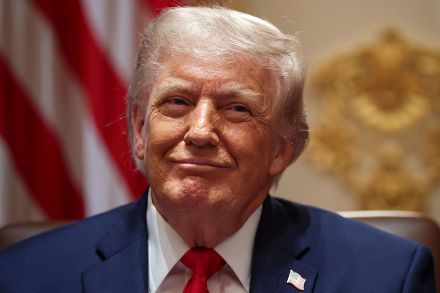
Donald Trump has become something of a sole man. His cabinet members and White House visitors report that the president has developed a penchant for handing out $145 Florsheim shoes in an effort to up their sartorial game. In his Life of Johnson, Boswell reported that Dr. Johnson recoiled at an “eleemosynary supply” of shoes as an impecunious student at Christ Church, Oxford and threw them away with indignation. Trump’s followers have no such freedom of action. “All the boys have them,” one official told the Wall Street Journal, which ran a picture of his administration leaders obediently lined up and wearing the same shiny black leather numbers. The war increasingly resembles a prolonged exercise in folie de

The Iran war is just what Putin’s depleted coffers need

Of all the parties watching the chaos in the Middle East unfold, one should be rubbing its hands together with particular satisfaction. Russia has not fired a shot in this conflict, lost no allies it cannot afford to lose and has so far gained rather a lot, with more to come. A cynic might call it the perfect war for Vladimir Putin. Moscow’s public reaction has been characteristically theatrical. The Foreign Ministry denounced American and Israeli actions as a “reckless step” and a “dangerous adventure.” Things have gone no further. There has been no announcement of political or military support for Iran from the Kremlin – nor is there likely

putin

Putin is enjoying the Iran war

After Iran unleashed a torrent of missiles against its neighbors – including those with whom it had enjoyed friendly relations such as Turkey and Azerbaijan – few regional leaders are in the mood to congratulate the new Supreme Leader Ayatollah Mojtaba Khamenei. Few, but not none. “At a time when Iran is confronting armed aggression, your work in this high office will undoubtedly require great courage and dedication,” wrote Vladimir Putin in an official message of congratulation to Khamenei Junior. “I am confident that you will honorably continue your father’s legacy and unite the Iranian people in the face of these severe trials.” Putin was also at pains to “reaffirm our

neocon

I spent 25 years fighting neocons. Then Trump became one

Like everyone, I’m glued to the news coming out of Iran. I’m experiencing some depression, as one might, upon realizing that much of what one has worked on for 25 years has suddenly gone up in smoke, destroyed when Donald Trump discovered he was pretty much a neocon after all. Like everyone else, I have no idea what will happen in Iran, whether Trump’s bombing and perhaps breaking apart a very unpopular regime will lead to something better, or just chaos, a failed state spitting out a cohort of embittered men. But one can’t help but acknowledge the American right really likes bombing foreign countries, despite what had seemed an

Will the war in Iran really weaken China?

Analogies in international politics are tricky and easily abused, yet they remain irresistible because they can illuminate patterns that are otherwise hard to see. Consider the present moment.  Just as Ukraine has become a growing burden for Washington and its Western allies, Iran is now a strategic burden for Moscow and Beijing. The US, particularly under the Trump administration, appears to be placing less emphasis on supporting Ukraine. Something similar may be happening in reverse with Iran.  Moscow continues to provide Tehran with assistance – most notably intelligence on US military targets – but the broader pattern suggests caution rather than deep commitment. Beijing, despite its close ties with Iran,

China Iran
MAHA

MAHA, stay in your lane

MAHA (“Make America Healthy Again”) is not a foreign policy doctrine, nor should it become one. Nevertheless this week the movement experienced a split with some members urging Congress to introduce a war powers resolution to curb US military action in Iran. But they should be aware that mission creep – the gradual expansion of objectives beyond the original scope – has derailed many well-intentioned efforts in Washington. For MAHA to entangle itself in the complexities of the Iran war risks diluting its message and alienating supporters who joined for healthier schools, cleaner water and safer vaccines. In fact, MAGA leaders should be creating deliberate distance from the President on

If only Britain was as important as Iran thinks it is

I am becoming rather fond of Prime Minister Starmer’s major foreign policy announcements. In early January, after US forces swooped into Venezuela and took President Maduro to New York to face trial, Keir Starmer was keen to get straight out in front of the cameras. There he said that he wanted to stress that “the UK was not involved in any way in this operation.” As though the whole world had been expecting to hear that the British armed forces were indeed central in snatching the narco-terrorist from Caracas. This week it was again Starmer’s turn to stand behind a podium, British flags behind him, and deliver another statement that

britain

The Iran war has exacerbated the failure of European energy policies

The history of the global trading system is a story of narrow and vulnerable waterways: the Suez and Panama Canals, the St. Lawrence Seaway, the Straits of Dover and the Skagerrak, which defends the entrance to the Baltic. But none has the power to seize up the global economy as much as the Strait of Hormuz. Barely 30 miles wide at the narrowest point and bounded on one side by the state of Iran, this passage is used for a quarter of the world’s oil supplies and a fifth of its liquified natural gas (LNG). As we have now discovered, the consequences of disruption are severe: on the day that

energy

Trump isn’t the greatest threat to the Special Relationship

Britain’s refusal to fully back the United States over strikes on Iran has triggered an unusually public transatlantic row. It has also revived an old question about the future of the so-called “Special Relationship.” When Donald Trump returned to the White House last year, many in Westminster doubted Keir Starmer could build a workable relationship with him. The two men could hardly be more different in temperament or politics, and predictions of an early rupture were widespread. For a time, however, Starmer appeared to defy those expectations. Britain weathered Trump’s latest tariff wars better than most countries, and the Prime Minister seemed to have found a cautious way of managing

special relationship

Israel wants to destroy Hezbollah once and for all

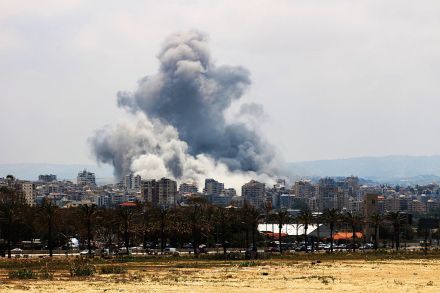
At around 2:30 a.m. on March 2, Israel bombed Beirut’s mostly Shia southern suburbs in response to a Hezbollah rocket attack on northern Israel. The road heading into Beirut from South Lebanon and the city’s southern suburbs was jammed with cars filled with Lebanese fleeing further reprisals. Some 52 civilians were killed and 154 injured, a hefty butcher’s bill even in this part of the world. Most Lebanese are happy Hezbollah has been defanged, even if they wish it wasn’t thanks to Israel Hezbollah’s actions were a demonstration of their ongoing support for Iran, but goading Israel was a cataclysmic miscalculation. Not only did it guarantee that the Jewish state

Is it wise for Spain to goad Donald Trump?

Spain’s refusal to allow the United States to use its military bases at Morón de la Frontera (Seville) and Rota (Cádiz) for its war on Iran, arguing that the US-Israeli attacks are “unilateral military actions outside the United Nations charter” has brought the simmering conflict between Pedro Sanchez, Spain’s socialist Prime Minister and President Trump to a head.   Sanchez’s carefully calculated strategy has been to position himself as one of Trump’s leading opponents on the world stage On Wednesday Sanchez followed up by delivering a stunning rebuke to Trump. Speaking for ten minutes on national television, he said that his government’s position could be summed up in four words:

neoconservative

America’s last war in the Middle East

Win or lose, Donald Trump has begun the last war the United States is ever likely to fight in the Middle East. That might sound wildly optimistic, but what it really means is that war with Iran has been decades in the making. If the mission succeeds, it will mark the end of an era. And if it fails, this war will have exhausted what’s left of America’s willingness to remake the region by force. It’s not just that Iran puts the case for regime change to the ultimate test. America’s relationship with Israel is also on trial. That relationship has been strained lately by the war in Gaza –

Does Trump really have ‘whatever it takes’ to win in Iran?

With Operation Epic Fury in its sixth day, it is hard to tell how long the current United States military campaign against Iran will last. It may not be swift; yesterday, the Senate rejected a resolution to halt further action. Meanwhile, President Trump has been alarmingly indifferent to the question: Whatever the time is, it’s OK, whatever it takes. Right from the beginning we projected four to five weeks, but we have the capability to go far longer than that. We’ll do it. Secretary of Defense Pete Hegseth struck a different note with reporters: “This is not Iraq, this is not endless.” Yet he has refused to rule out deploying

iran