Iran

Boris is gone. What now for Nazanin Zaghari-Ratcliffe?

What’s one woman’s life worth as the great battles about Brexit rage? Nothing at all, apparently, as Boris Johnson’s indifference towards the fate of Nazanin Zaghari-Ratcliffe shows. The British mother is, you will recall, being held in an Iranian prison on trumped up spying charges. She says she was just visiting Iran, and there is no reason to disbelieve her. Johnson took it upon himself to risk provoking the country's religious dictatorship into extending her sentence when he told a parliamentary committee that she had been in Iran to train journalists. He later apologised in the Commons, retracting ‘any suggestion she was there in a professional capacity’.

Erdogan, Trump and other fragile egos: Theresa May’s unenviable foreign policy dilemmas

Given the way her Cabinet ministers are behaving at the moment, Theresa May is really rather used to dealing with fragile egos. This will come in handy over the next month when the Prime Minister has to go from what promises to be an extremely tricky Nato summit straight into Donald Trump's visit to the UK. As James says in his politics column this week, the challenges of these events, along with the ongoing problems both in the Cabinet and Parliament over Brexit, will make July one of the hardest months of May's premiership to date. But trying to tell her warring ministers to shut up seems easy compared to the foreign policy challenges that the Prime Minister is facing. They would not be easy for any leader.

The Spectator’s Notes | 28 June 2018

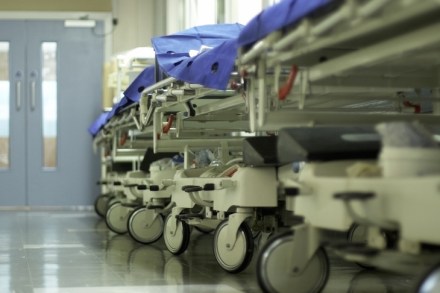
Gordon Brown, echoing Aneurin Bevan, says that the greatest gift that the NHS brings to people is ‘serenity’. He is surely right that this is what it brought 70 years ago — for the simple, important reason that people would no longer need to say of treatment, ‘I just can’t afford it’. But comparable ‘serenity’ is provided, in different ways, in, for example, Germany, the Netherlands and Australia. Defenders of today’s NHS have to explain not why it is more serene than pre-1948, but whether it matches the current arrangements of comparable countries. ‘Serenity’ is not the word one would apply to many British hospitals today. In these Notes last week, I mentioned the fear felt by the old.

Putin says he’s making Russia great again. In reality, it’s crumbling

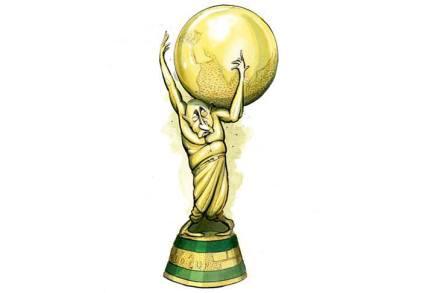
This is Putin’s time. Next week, the Fifa World Cup kicks off in Moscow, and the Kremlin has spared no expense to showcase Vladimir Putin’s new Russia as a vibrant, safe and strong nation. Half a million visitors will be welcomed — with the Russian press reporting that the notorious ‘Ultra’ hooligans have been officially warned to behave themselves or face the full wrath of the state. Despite four years of rock-bottom oil prices, Putin has nonetheless found the cash to build or refurbish a dozen new stadiums. Moscow has undergone a two-year city-wide facelift that has left it looking cleaner, fresher and more prosperous than any European capital I have seen.

Putin’s rot

This is Putin’s time. Next week, the Fifa World Cup kicks off in Moscow, and the Kremlin has spared no expense to showcase Vladimir Putin’s new Russia as a vibrant, safe and strong nation. Half a million visitors will be welcomed — with the Russian press reporting that the notorious ‘Ultra’ hooligans have been officially warned to behave themselves or face the full wrath of the state. Despite four years of rock-bottom oil prices, Putin has nonetheless found the cash to build or refurbish a dozen new stadiums. Moscow has undergone a two-year city-wide facelift that has left it looking cleaner, fresher and more prosperous than any European capital I have seen.

The Spectator Podcast: The Italian Job

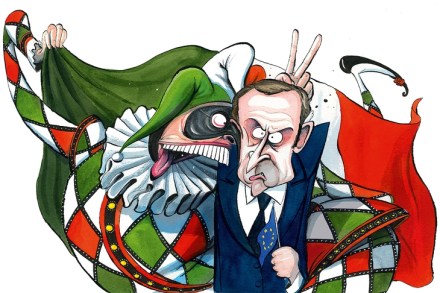
In this week’s episode, we talk about Italy’s new coalition – what will the Five Star and Lega partnership mean for Italy and for Europe (00:35)? Journalist Peter Oborne and politician Stephen Crabb also get in a fiery debate about whether Conservative Friends of Israel are a little too friendly (12:00). And, on a slightly different note, we get a dominatrix to explain why powerful men loved to be spanked…(26:30) Italy is forming a government. In the March elections no single party received more than 40% of the vote, leaving the most successful party – the Five Star Movement – forming a strange coalition with the party Lega.

The sense of an ending | 17 May 2018

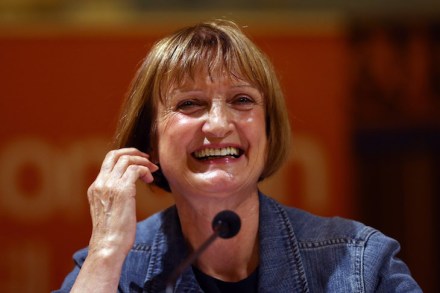
The timing of the Today programme’s series about hospices could not have been more apt, coming as it did so soon after Tessa Jowell’s death was announced with its array of tributes and the poignant interview with her husband and one of her daughters. In themselves such personal testimonies are not always that helpful — everyone’s situation is individual and the actual outcomes necessarily different. But what Jowell’s family said about her last hours and their evident acknowledgment and acceptance of their situation gave a real sense of purpose on Monday to Zoe Conway’s report from the North London Hospice. This was part of the Dying Matters campaign, urging us to think more about death and end-of-life care.

Donald Trump is right to take on Iran’s mullahs

The point behind the argument about the Iran nuclear deal goes beyond precise nuclear facts. It is like the row over SALT II when Ronald Reagan succeeded Jimmy Carter as US President in 1981. SALT (the Strategic Arms Limitation Treaty) was not formally junked, but it did not operate because, after the Soviet invasion of Afghanistan at the end of 1979, the Americans felt the necessary trust was absent. Better times, including the coming of Mikhail Gorbachev, allowed Reagan to pursue negotiations which culminated (under his successor, the first George Bush) in START I (the Strategic Arms Reduction Treaty) being signed in 1991. By then, the United States and its Nato allies had backed huge changes in the Soviet bloc and won the Cold War.

Europe’s leaders need Trump more than they wish to admit

From our US edition

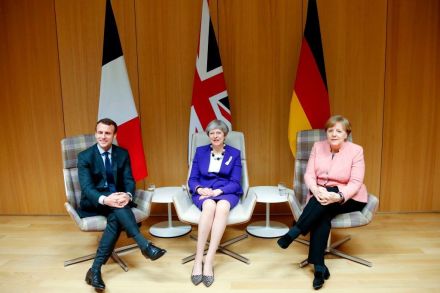
America, meet your European allies in the effort to contain Iran: Emmanuel Macron of France, Theresa May of Britain, and Angela Merkel of Germany. Think of them as the Three M’s. Or perhaps the Three Wise Monkeys. Or even, as the Wise Monkeys are sometimes known, and would probably prefer to be called, the Three Mystic Apes. For each of these three European leaders is affecting a posture of simian ignorance about Iran’s nuclear ambitions, and presenting this unwillingness to accept reality as philosophical wisdom.Emmanuel Macron sees no evil in the Iranian regime’s anti-Western, terrorist-sponsoring Islamist millenarianism, because global security must come second to getting the French economy into gear.

The Spectator Podcast: Trump vs Iran

What comes after the end of the Iran nuclear deal? Is Donald Trump an expert diplomat worthy of a Nobel Peace Prize, or a maniac let loose? Why don’t ethical millennials care about the moral cost of their drug habits? And are emojis ruining children’s abilities to communicate? Find out about all this and more in this week's Spectator Podcast. On Tuesday, President Trump announced his decision to take the US out of the Iran nuclear deal. The decision has come despite appeals from Angela Merkel, Emmanuel Macron, and even our own Boris Johnson, for the US to stay in the deal. Christopher de Bellaigue writes in this week’s magazine that this was a gross miscalculation, but Dominic Green can understand why Trump did it.

Israel vs Iran: will the conflict escalate further?

Jerusalem It’s a sunny day in Jerusalem where Israelis are waking up to fresh conflict on the country’s border with Syria. I’m in town as part of a Bicom delegation and the picturesque scenes give little indication of the events of the night before which saw 20 rockets fired by the Iranian Revolutionary Guards at Golan Heights overnight. In response, Israel upped the ante and sent more rockets back - targeting Iranian weapons depots, logistics sites and intelligence centres. This marks a serious ratcheting up of tensions between Israel and Iran following increasing unease about Iranian presence in Syria and Donald Trump’s decision to pull out of the Iran nuclear deal on Tuesday. It is the first time Iranian forces have fired directly on Israeli troops.

America goes rogue

For the past year or so, in speaking to groups, I’ve ventured to suggest that Donald Trump will ultimately rank among the least consequential presidents in U.S. history. I did not intend that to be a laugh line. Trump, I argued, was likely to end up being to the 21st century what James Buchanan was to the 19th and Warren G. Harding to the 20th – someone who, after occupying the White House for a time, departed and left nary a trace. In the end, Trump’s defining traits -- vulgarity, meanness, self-absorption, and apparently compulsive dishonesty -- would count for little in the scales of history. So I believed. Let me confess that I have now begun to entertain second thoughts.

Iran shows that even Trump can get things right

An unexpected downside of Donald Trump's presidency is the rare occasion on which he makes a wise call. Trump's decision to withdraw from the Iran deal is wise and demonstrates a clear understanding of Tehran's motives and tactics. The Joint Comprehensive Plan of Action (JCPOA) was Barack Obama’s signature foreign policy achievement, and it was sold as a tough but realistic settlement that would normalise relations with Iran while frustrating its desires to become a nuclear power.  The JCPOA was an attempt to translate Obama's campaign idealism into hard policy. He won in 2008, in part, by promising a new way forward on American engagement with the world, one humbler and less hawkish than the Bush administration.

Hectoring Trump on Iran has done Britain and France no favours

Three years ago when the Iran nuclear agreement was signed there was massive political resistance in Washington. Notably – but not solely – from Republicans.  In London, by contrast, there was almost nothing. As Catherine Ashton and co worked away with the Iranians there was next to no resistance from the UK political class and very little pushback from the British media. Considering that the deal delivered an astronomical cash-infusion to the Mullahs and only stood at best to delay their nuclear ambitions, this was striking. At the time I asked one Parliamentarian why there had been such silence in Westminster and was told ‘When the White House wants something this much it probably isn’t worth standing against it.’ Well now the boot is on another foot.

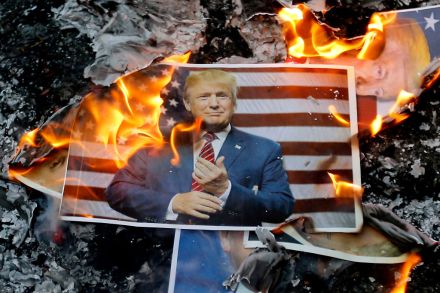
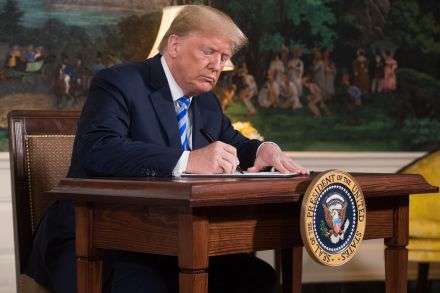
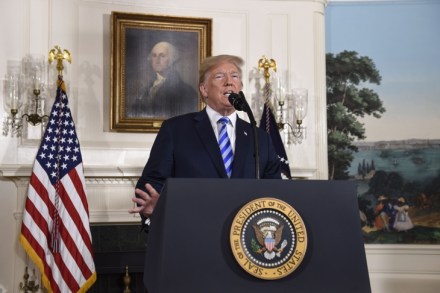
Donald Trump pulls out of the Iran deal. Is anyone surprised?

Did anybody really think President Donald J Trump wasn’t going to pull out of the Iran deal? He’s said all along he would and this Commander-in-Chief’s number one public image rule is that, unlike most politicians, he honours his word. Trump’s other big rule is that anything Obama has done he’ll undo. And Obama’s biggest achievement, according to his admirers and former staffers, was the Iran deal, which – in theory anyway -- stopped Tehran from acquiring nukes while strengthening democratic forces within the troubled Muslim state. The pride with which Team Obama held up the deal was precisely why Team Trump wanted to destroy.

Sorry, Boris, President Trump doesn’t have an Iran plan

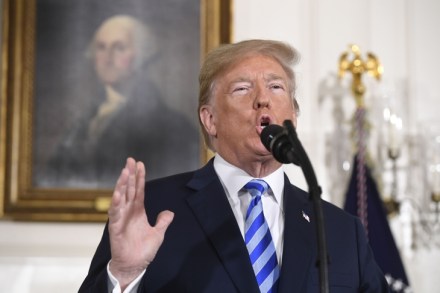
Washington, DC. With Donald Trump’s decision to withdraw from the Iran nuclear deal, American foreign policy is getting radioactive. “We cannot prevent a nuclear bomb under the decaying and rotten structure of the agreement,” Trump declared with his habitual understatement. The only thing missing was another shot at Barack Obama for bothering to negotiate with the mad mullahs. Trump had no time for Europe, either. All the air kisses in the world from his French coeval didn’t stop Trump for a second from bidding au revoir to the deal. Nor did the administration pay any heed to dire warnings from Russia or China. Instead, Trump’s terse speech in the White House suggested that the spirit of George W. Bush has once more begun to inhabit the White House.

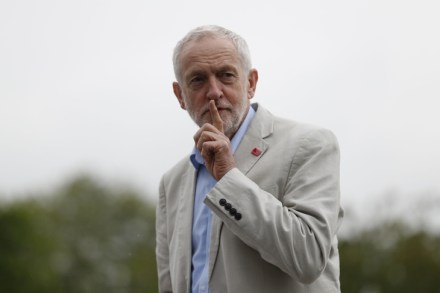
The truth about Iran is now of little importance to Jeremy Corbyn

If any further evidence was needed about the disingenuousness of Jeremy Corbyn and the dangers a government led by him might pose internationally – not just for Britain but also for Britain’s Nato allies – it is worth watching Corbyn’s interview on Iran with the BBC’s Andrew Marr yesterday. ‘You've been very reluctant to condemn the government of Iran. Can I read you what Amnesty International has said about Iran… ?’ began Marr yesterday, to which Corbyn interrupted him with the extraordinary response: ‘I think that actually, if I may say so, you're spending too much time reading the Daily Mail, do you know that?

Jeremy Corbyn’s short-term memory on Iran

It's happened. Jeremy Corbyn has finally broken his silence on Iran. To be fair, he was rather forced into doing so when Andrew Marr raised the topic live on air this morning. Marr put to the Labour leader – who says ‘to stay neutral in times of injustice is to side with the oppressor’ – that he had gone rather quiet on Iran after over 20 people died and more gone missing following clashes between protesters and security forces.   https://twitter.com/BBCNews/status/957555007414444033 Corbyn started of by saying Marr had been reading the Daily Mail too often. “I did some programmes for Press TV”  he said. “I ceased to do any programmes when they treated the Green Movement the way that they did.” This is flatly untrue.

Diary – 4 January 2018

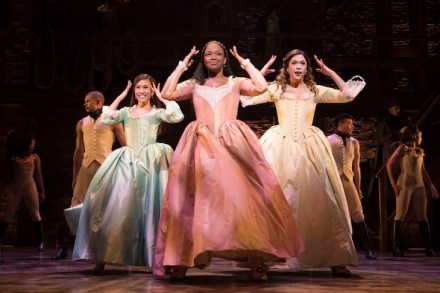
Owing to the spectacular uselessness of Ticketmaster, my son missed out on his birthday treat, seats for Hamilton at the newly refurbished Victoria Palace Theatre. Our show was cancelled — just one of a total of 16 — and our allotted replacement date clashed with an immovable engagement. By the time the rusty wheels of Ticketmaster’s nonexistent customer service had ground into action, the entire run was sold out. I asked the boy’s godfather to accompany him in my place. Turns out even that’s verboten. Such is the hype that tickets are non-transferable — and require you to show a printed email confirmation, your original payment card and a photo ID on arrival at the theatre.

Portrait of the week | 4 January 2018

Home In a message for the New Year, as though it were an immemorial custom, Theresa May, the Prime Minister, said: ‘Most people just want the government to get on and deliver a good Brexit, and that’s exactly what we are doing.’ It seemed a long time since, just before Christmas, Damian Green had resigned as the First Secretary of State, in a letter beginning, ‘I regret that I’ve been asked to resign’ and going on to ‘accept that I should have been clear in my press statements that police lawyers talked to my lawyers in 2008 about the pornography on the computers [in his parliamentary office], and that the police raised it with me in a subsequent phone call in 2013. I apologise that my statements were misleading on this point.