Iran

Could this be the beginning of the end for Iran’s mullahs?

From our UK edition

It is easy to construct a scenario in which tit for tat actions by the Americans and Iranians lead to all-out war, close off the Gulf, send oil prices soaring, crash the global economy – and, if you are really going to go for it, end in nuclear conflagration. But what about the alternative outcome: that conflict between Iran and the West precipitates a counter-revolution against the mullahs and leads to and end to the 40 year Iranian theocracy? The overthrow of the Iranian regime is the black swan event – or maybe it ought to be called a white swan event – which no-one is talking about, which is odd given that there have been plenty of indications over the past couple of years that ordinary Iranians are finally growing fed up with their regime.

The downing of a civilian jet only adds to Tehran’s desperation

From our UK edition

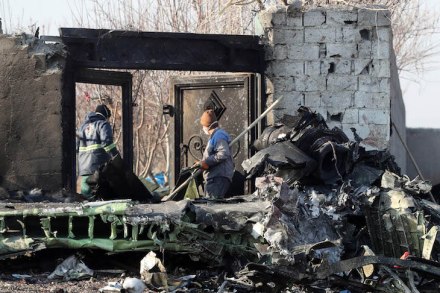
Drama and tragedy continue to envelop Iran. Just hours after the regime struck two US bases in Iraq on Wednesday, Ukraine International Airlines flight PS752 crashed after taking off from Tehran en route to Kyiv. All 176 passengers and crew members on board were killed. Iran almost immediately claimed that the plane had suffered a technical malfunction but this was greeted with scepticism. The aircraft was a Boeing 737-800 - one of the international airline industry's most widely used and reliable models. Dozens of Canadians were on board and on Thursday Canadian Prime Minister Justin Trudeau said evidence indicated that an Iranian missile had brought down the aircraft by accident.

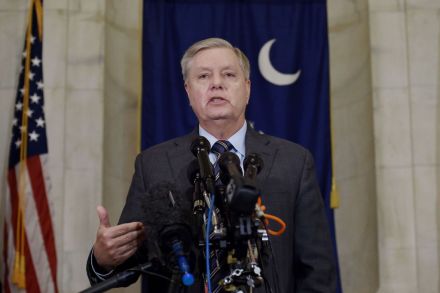
Few have ‘empowered’ Iran more than Lindsey Graham

When Republican senators Mike Lee and Rand Paul walked out of a military briefing Wednesday over the recent US attack that took out top Iranian general Qasem Soleimani, they were not happy about how that exchange went.Sen. Paul said the briefing was 'less than satisfying', blasting the meeting as 'insulting to logic and the Constitution'.A fiery Sen. Lee elaborated further. 'I had hoped and expected to receive more information outlining the legal, factual, and moral justification for the attack,' Lee said. 'The briefing lasted only 75 minutes, whereupon our briefers left. This, however, is not the biggest problem I have with the briefing, which I would add was probably the worst briefing I've seen, at least on a military issue, in the nine years I've served in the United States Senate.

lindsey graham

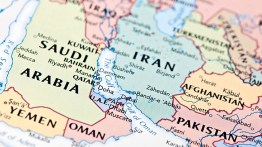
All forecasts are off if Iran shuts the Strait of Hormuz

Just when you thought it was safe to go back in the water…late last year, a range of forecasts suggested that the likelihood of recession in the US, with knock-on effects for the rest of the developed world, had significantly diminished. Last summer, many economists were putting the chance of a substantial downturn at 50 percent but by November, Goldman Sachs had marked it down to 24 percent and Morgan Stanley to ‘around 20 percent’. Underlying this shift were strong corporate earnings and consumer spending, plus rising hopes of a settlement of US-China trade tensions. Last month saw a sell-off of safety-first government bonds reflecting the mood, and the FT’s end-of-year forecasts included a confident ‘No’ to ‘Will the US go into recession?

hormuz

The Middle East for dummies

From our UK edition

Gstaad   The French have a saying: ‘Il n’y a rien de plus bête que le sourire du gagnant.’ In other words, gloating is for dummies. Hence I won’t be doing it, despite the drubbing handed to the Bercows of this world by so-called common folk. Mind you, at a lunch in a gentlemen’s club in the Bagel on the very day the drubbing was being administered, an Anglo-American friend, Bartle Bull, asked me what I thought would be the outcome: ‘Hung parliament,’ answered the great electoral expert, ruining Bartle’s lunch and driving the rest of the guests to more drink. A month down the road, everything’s hunky-dory, at least for those of us who don’t like to be told what to do by Brussels-based bureaucrooks.

Portrait of the week: Crisis in Iran, fires in Australia and Manchester rapist jailed

From our UK edition

Home Dominic Raab, the Foreign Secretary, who had not been told in advance of America’s killing in Iraq of Qassem Soleimani, the leading Iranian military leader, said that America ‘had a right to exercise self-defence’. British troops were put on standby to be sent to the region, and the frigate Montrose and the destroyer Defender sent to the Strait of Hormuz. Boris Johnson, the Prime Minister, returning from holiday in Mustique, said: ‘Given the leading role he has played in actions that have led to the deaths of thousands of innocent civilians and western personnel, we will not lament his death.’ England secured a 189-run victory over South Africa on the fifth day of the second Test in Cape Town, levelling the series 1-1.

Is there method – or madness – behind Trump’s actions in Iraq?

From our UK edition

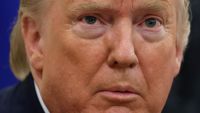
Leaders are often accused of escalating a conflict abroad in order to distract from headaches at home. On Tuesday, before Iran’s missiles were fired, Donald Trump seemed to be doing the opposite. He and his media surrogates started their now all-too-familiar yabbering about impeachment and the Democrats. It felt as if they were trying to move the news cycle away from the Iran crisis. We’re in an election year after all, and the polls suggest a large majority of American voters don’t want more war. Then Tehran launched what it is calling ‘Operation Martyr Soleimani’, which at first prompted a rare nervous silence in Washington. The White House led reporters to believe the President would gravely address the nation that night, but he postponed.

Donald Trump has just blown up his goal of isolating Iran

From our UK edition

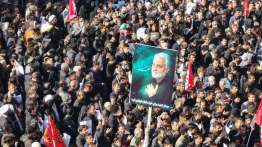
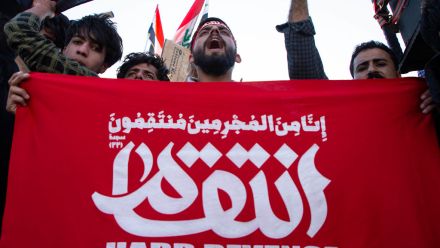
A blood red flag was raised over the Jamkaran mosque in the Iranian holy city of Qom last week, one normally reserved to commemorate the death of martyrs. This time, it was intended as a call to arms. ‘We have unfurled this flag so that all [Shia] believers in the world gather around it to avenge Qassem Soleimani’s blood unjustly shed,’ said the mosque’s leader. In Tehran, there were calls for bloody retribution for the air strike that killed Iranian general Soleimani — and everywhere, talk of all-out war. If it was also intended to strike the fear of Allah into the hearts of Iran’s Sunni Arab enemies, it certainly succeeded. In Riyadh, there was panic.

This bungling Iranian regime is a threat only to the Iranian people

From our UK edition

If this is the start of the third world war, as some quivering liberal commentators seem to believe, then my suspicion is that it will be over quite quickly, such is the majestic impotence of our opponents. I realise it is unwise to underestimate one’s enemy, but come on. In the immediate aftermath of the killing of Iranian military commander Qassem Soleimani, a couple of cheap rockets were lobbed in the direction of the US embassy in Baghdad — they missed, succeeding only in causing a handful of casualties including, presumably, similarly foam-flecked anti-American residents, i.e. people on their own side.

All forecasts are off if Iran shuts the Strait of Hormuz

From our UK edition

Just when you thought it was safe to go back in the water… Late last year, a range of forecasts suggested that the likelihood of recession in the US, with knock-on effects for the rest of the developed world, had significantly diminished. Last summer, many economists were putting the chance of a substantial downturn at 50 per cent but by November, Goldman Sachs had marked it down to 24 per cent and Morgan Stanley to ‘around 20 per cent’. Underlying this shift were strong corporate earnings and consumer spending, plus rising hopes of a settlement of US-China trade tensions. Last month saw a sell-off of safety-first government bonds reflecting the mood, and the FT’s end-of-year forecasts included a confident ‘No’ to ‘Will the US go into recession?

Time for Tulsi

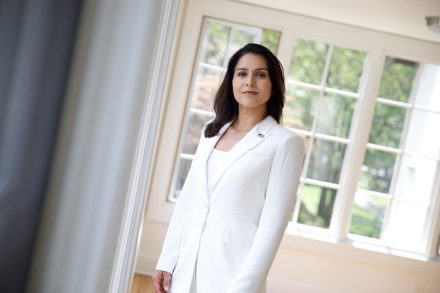
Tulsi Gabbard is looking pretty good right now. I mean, even better than usual. The veteran and Hawaii congresswoman has stood out from the crowded Democratic field with her peacenik foreign policy-focused campaign. And now President Trump, with his impulsive killing of Qasem Soleimani, has become the Big Bad Hawk Gabbard has described him as all along. When she entered the race in February of last year, Gabbard pledged to strike out against the military-industrial complex: 'We must stand up.

tulsi

Trump’s Iran strategy has finally won over the ‘Never Trumpers’

From our UK edition

As a general rule, neoconservatives and hawkish Republican foreign policy officials don’t respect President Donald Trump’s capacities as commander-in-chief. They view him as impulsive, unwise, short-sighted, and buffoonish—the kind of guy who doesn’t do his homework, spends more time on Twitter than reading briefing books and would rather pull up America’s drawbridge than act as the leader of the free world. This crop of foreign policy intellectuals are quick to refer to Trump as an 'isolationist', a favourite pejorative of the Washington policy elite, who is shattering Washington’s superpower status into a million different pieces.

Soleimani’s assassination has exposed the EU’s big weakness

From our UK edition

What a difference a day makes. When I went to bed on 2 January what seemed to be the most important issue in the Middle East was the long-term impact of the brave – if desperate – mass protests in Lebanon, Iraq and Iran. Many were trying to extract some positive meaning: were they the precursor of a renewed popular drive for better governance in some of the key states of the region? Could they shake the stability of the Islamic Republic of Iran and its grip on the greater Levant? Or would they be suppressed and ignored, only to recur more virulently, as had happened so many times before? When I woke up on 3 January, the world had changed.

Could Iran’s retaliation against the United States lead to war?

From our UK edition

So it happened. Iran has just struck back against the United States for its killing of Quds force chief Qassem Soleimani on 3 January. The Iranians had vowed to retaliate from almost the moment that their most potent – and famous – commander was killed. Iran’s leader Ali Khamenei had vowed a “severe revenge.” Now it has come. And while it may not so far be “severe “exactly, it was undoubtedly swift and it was bold. Details are still pouring in about the strike but it is clear that Iran has struck two bases housing US and coalition forces in Iraq with more than a dozen missiles.

So much for de-escalation

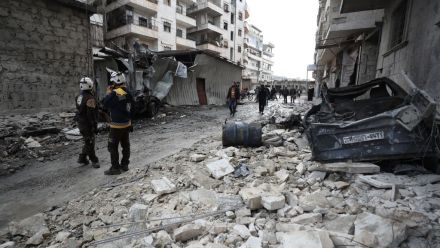
‘We are not looking to start a war with Iran,’ said defense secretary Mark Esper today. ‘We are looking to finish one.’ Iran just replied by firing off at least a dozen missiles at American targets in Iraq in an effort supposedly dubbed Operation Martyr Soleimani. It doesn’t mean all out war yet — but all the Trump administration’s talk about ‘de-escalating’ the situation sounds like hot air. As I write, the details of Iran’s retaliation are unclear — we don’t know if the strikes were aimed at American troops or infrastructure. Is it a face-saving measure? A decoy? Why did Iran attack Erbil and Al-Asad, rather than more obvious US bases? Have the fortified American defenses at these bases worked?

de-escalation al asad iran
iranian

Exclusive: the Iranian cultural sites Trump will bomb

Hours after Donald Trump tweeted a threat to target ‘52 Iranian sites’, some of them ‘at a very high level & important to Iran & the Iranian culture’, Cockburn met an Iranian exile source at the Moby Dick House of Kabob, Connecticut Avenue, Washington, DC. The source took Cockburn’s order and then slipped a tiny piece of paper no bigger than a grain of rice into Cockburn’s baghali polo. As baghali polo is a rice dish, Cockburn didn’t know this until he’d eaten it. It took 24 hours to recover the message. When Cockburn read it, he realized that he was holding the president’s target list.The first five targets are listed here.

My clash with Alastair Campbell convinced me it’s time to hug a remainer

From our UK edition

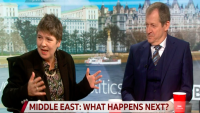
I confess I had butterflies doing the first BBC Politics Live of 2020. It felt like the first day back at school. Beyond Twitter spats and Christmas family banter, the festive period had been politics-free. Would I be rusty, especially as one of the other panelists was the formidable Alastair Campbell? As a former People’s Vote heavyweight, Campbell is something of an arch nemesis who has a reputation for taking no prisoners. But regardless, one of my new year resolutions is to not dwell on past enmities. I am keen to build some unity, in order to make Brexit as productive as possible.

Boris Johnson’s dismal response to Qasem Soleimani’s assassination

From our UK edition

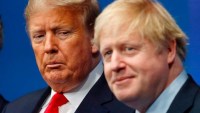
Two weeks ago, I asked what kind of prime minister Boris Johnson might be and whether he could be ‘the great disruptor’ on foreign policy, defying standard practices and elite assumptions as Donald Trump has. I think I might have my answer. On Trump’s decision to take out Iranian terrorist-in-chief Qasem Soleimani, the Prime Minister was silent for two days. When he finally spoke, it was hardly worth it. Of course Johnson was right to say, given the Quds Force head’s role in the killing of thousands of civilians, ‘we will not lament his death’. He was right too to warn Tehran against escalation.