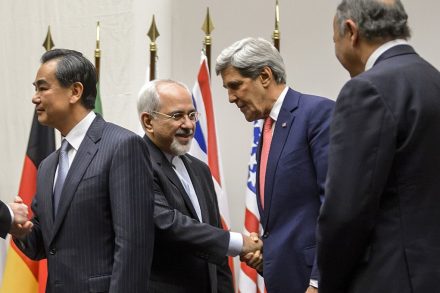
Iran

Can Iran help keep King Bibi in power?

From our UK edition

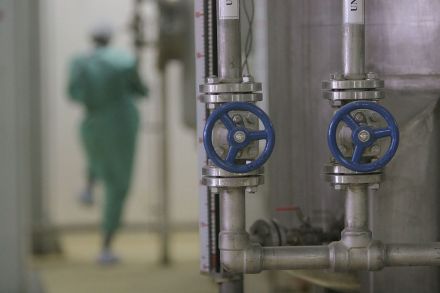
Benjamin Netanyahu has a problem: he doesn’t have sufficient support to form a coalition. With 20 days left to complete this near impossible task, he is desperate; and, when backed into a corner, Netanyahu looks to Iran as his saviour. The timing of the recent explosion in Iran’s Natanz’s nuclear facility – and particularly the fact that Israel has done little to dispel the notion that it was to blame – suggests that the motivation was at least partially political.  This isn't to say the attacks on Iran aren’t normally motivated by interests of national security. The threat of a nuclear-capable Iran is substantial: according to Iran, the Natanz nuclear site holds thousands of advanced centrifuges.
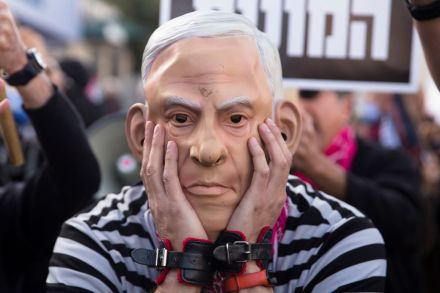
Israel’s shadow war with Iran explodes into ‘nuclear terrorism’

From our UK edition

If time flows at an even pace, then history does not. Joe Biden may still be new in the job, but he finds himself at the centre of a war between Israel and Iran in everything but name. After a comparative lull, events are not so much accelerating as whirling around the president, drawing him inexorably in. Last night, Iranian officials reported that the Natanz uranium enrichment plant – a lynchpin of its nuclear programme – had been the victim of what they described as 'nuclear terrorism'. According to US officials quoted in the New York Times, an explosion destroyed the independent power system that supplied the centrifuges for enriching uranium.

The West’s shameful Iranian capitulation

From our UK edition

On a sweltering day in July 2018, German police pulled over a scarlet Ford S-Max hire car that was travelling at speed towards Austria. The driver, Assadollah Assadi, the third secretary to the Iranian embassy in Vienna, was arrested at gunpoint and taken into custody. Although unusual, there was a good reason for detaining the diplomat: Assadi had used his immunity to smuggle a bomb on a commercial airliner from Tehran to Austria, intending to carry out what would have been one of Europe’s worst atrocities in recent years.

Back to tit-for-tat in the Middle East

Plus ça change, plus c'est la même chose. President Biden may have promised that ‘America is back’, but the United States’ decades-long shadow war with Iran never left. Last month’s reciprocal strikes in Iraq and Syria, and a further 10 rockets launched at a US base in Anbar Province last week, were notable only for their normalcy. Far from being Biden’s ‘Hour One Crisis’, this kind of geopolitical hair-pulling via high explosives is all too normal in the post-Iraq War, post-Arab Spring hash of the Middle East. Two American contractors and at least one Iraqi Shia militiaman are now dead. More casualties are likely to come in the weeks ahead. This first Biden counter-strike was no more than violent messaging, perhaps primarily to a domestic audience.

iran tit-for-tat

Iran doesn’t hate Israel

From our UK edition

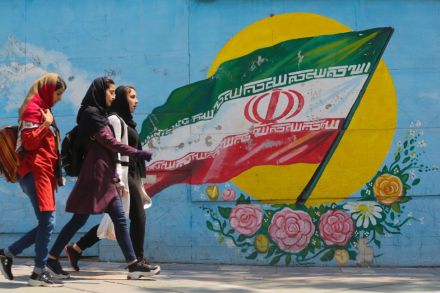
The decades since the Islamic revolution have weighed heavy on the people of Iran. Living in fear, under extreme levels of surveillance and oppression, ordinary citizens have seen their quality of life plummet and their horizons shrink, as their country became an international pariah. Those who dared to protest have been brutally repressed by regime goons with knives, axes and heavy weaponry. And while forced to suffer the deprivation of draconian sanctions, hardworking families could only look on as their despotic leaders splurged billions of dollars on military meddling overseas. When the senior Hamas leader Mahmoud al-Zahar boasted in December that the regime had given him £15.8 million of government money, Farsi social media lit up in rage.

Iran’s missile diplomacy

From our UK edition

It’s a time for delivering messages in the Middle East, where messages rarely come without their near constant attendant: violence. On Monday night a volley of rockets struck a base hosting US troops in Erbil, the capital of Iraqi Kurdistan. International media reported that one rocket landed in the base and another on residential areas nearby; one civilian contractor was reportedly killed, and six others were wounded, including a US service member. At least five Iraqi civilians were also injured, with one in a critical condition. The militia group Saraya Awliyah al-Dam has claimed responsibility for Monday’s attack. The group remains, superficially at least, a mystery.

Revealed: how Mossad eliminated Mohsen Fakhrizadeh

From our UK edition

The Mossad is not known for its touchy-feely approach. Whether it was the kidnap of Adolf Eichmann in the sixties, hunting down and executing the Black September terrorists in the seventies and eighties, or dispatching a Hamas chief while disguised as tennis players in a Dubai hotel in 2010, the agency has built a reputation as the most feared secret service in the world. Yet its underlying moral imperative in this most morally difficult of professions must not be overlooked. Former Mossad chief Meir Dagan used to show spies about to embark on a mission a photograph of his grandfather kneeling in front of Nazi soldiers before they shot him. This sense of ethical purpose has always been at the heart of the agency, even when it has been driven to play dirty.

Al Qaeda and Iran’s chilling new alliance

From our UK edition

What does the world’s foremost Shia power and the most notorious Sunni terror group have in common? Given that the two great branches of Islam rarely see eye to eye, the layman would be forgiven for thinking that the answer is ‘not much’.  It isn’t just the layman who has concluded that Iran and Al Qaeda are oil and water either. When reporting on the assassination of an Al Qaeda chief in Tehran last year, the New York Times remarked: ‘That he had been living in Iran was surprising, given that Iran and al-Qaeda are bitter enemies.’ Surprising to the New York Times, perhaps. But not surprising to the intelligence community, which has been tracking the development of this dangerous collaboration for 30 years.

Iran’s people will pay a heavy price for Khamenei’s vaccine politics

From our UK edition

The Middle East is changing. Israelis now splurge at Gucci and Rolex in Dubai. Saudi women speed down desert highways; and once again Turkish leaders kneel before the call to prayer. One thing, however, remains unchanging: the Iranian government’s ability to find new and evermore sadistic ways of persecuting its own people. Yesterday, Iranian Supreme Leader Ayatollah Ali Khamenei announced on live TV that Iran would reject the American BioNTech-Pfizer and British Oxford-AstraZeneca vaccines. 'Imports of US and British vaccines into the country are banned. I have told this to officials and I'm saying it publicly now,' he said. This statement is typical in that it both defies belief and is yet utterly unsurprising. Coronavirus hit Iran hard.

Iran vs the rest: the Middle East has reached a tipping point

From our UK edition

Last year, in the cigar bar of an opulent London hotel much favoured by visiting Arabs, an interesting conversation took place. My friend was rich enough to have two private jets and claimed to be doing private shuttle diplomacy between Israel and one of the Gulf states. Smoke curled around our heads and a young Qatari in Gucci trainers passed by with a woman my friend assured me was a Russian prostitute. My friend’s phone was out now and he was on a video call with a man he said was a senior official in the Iranian Revolutionary Guard. He asked him about a drone strike on Saudi Arabia’s two biggest oil refineries. The man chuckled. ‘Ah yes, that was us.

Why does Britain refuse to swap hostages?

From our UK edition

In the last days of November, Dr Kylie Moore-Gilbert was released from Tehran’s Evin prison and flown back to a welcome in Australia. A dual Australian-UK national, she had served two years of a ten-year sentence for espionage — pronounced after a secret trial. She had been in Iran for a conference and was detained as she was about to leave. She had strongly protested her innocence. So why, many Britons might ask, is the Australian-British academic suddenly free after two years in which the Iranian security services tried in vain to 'turn' her — while the UK-Iranian dual national, Nazanin Zaghari-Ratcliffe, remains under house arrest in Tehran, with the prospect of another trial and a return to prison.

Why this Iranian assassination is all about Trump

From our UK edition

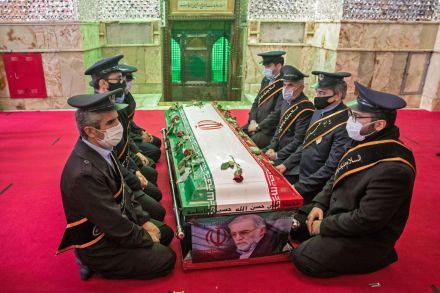
The news that Iran’s top nuclear scientist, Mohsen ‘father of the bomb’ Fakhrizadeh-Mahabadi, met his end in a hail of bullets near Tehran today comes as no surprise. As with so many things these past four years, this is all about Trump. Whoever carried out the hit, it is all but certain that Trump gave it the nod. Once again, he is trying to put a stamp on the Middle East that Biden will find difficult to scrub out. His actions would hardly be without precedent; Obama, Clinton and Reagan all made last-gasp moves in the region to shape it in their image. But none of these Presidents were anywhere near as belligerent or pro-Israel. First there was intense speculation that Trump was building up to a last-minute attack on Iran.

Biden would be a fool to reverse Trump’s foreign policy wins

From our UK edition

‘We’re going to be back in the game,’ our presumptive and somewhat previous new president tells us. ‘It’s not America alone.’ But America was never out of the game under Donald Trump and never alone. Look who is also back in the game: Tony Blinken, Barack Obama’s deputy secretary of state, will be Biden’s secretary of state. Jake Sullivan, once one of Hillary Clinton’s closest aides, is going to be Biden’s national security adviser. John Kerry, the disastrous diplomat who gave us the Iran nuclear deal, is Biden’s climate emissary. And it was all going so well.

Will Israel attack Iran before Trump leaves office?

We should pay attention when someone like H.R. McMaster, the former national security adviser, says that ‘it’s a possibility’ Israel will attack Iran’s nuclear facilities before President Trump leaves office. McMaster was using a television interview to tell a future Biden administration it would be a mistake to revive the Iran nuclear deal, which he said had been ‘a political disaster masquerading as a diplomatic triumph’. Israel’s prime minister, Benjamin Netanyahu, has always argued that the agreement — ‘based on lies’ — gives the ayatollahs cover to build a nuclear bomb.

iran

Is AppleTV’s Tehran the new Fauda?

From our UK edition

If you love Fauda — and of course you do — you’re in for a long wait for season four, which isn’t due to arrive on Netflix till 2022. That’s why I had such high hopes for Tehran, which is written by one of Fauda’s co-authors Moshe Zonder. What, after all, could there possibly be not to like about a hot female Mossad agent struggling to survive after a botched mission in the hostile Iranian capital, where all Israelis are seen as emissaries of ‘Little Satan’? It starts promisingly, once you’ve got over the technical difficulties of signing up to Apple TV. (For some reason, my characters now speak with English subtitles but in German. The other options it gives me are all the Latin languages but not English.

Pompeo’s principles

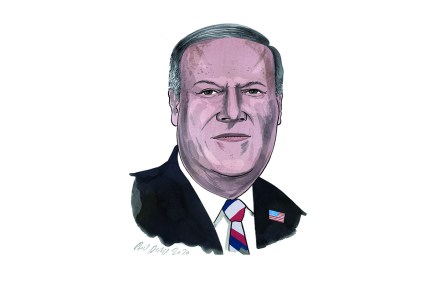
‘Come in.’ Burly, brisk and maskless, Mike Pompeo indicates a chair before the marble fireplace. ‘It’s all right if we’re six feet — or two meters — apart.’ We are meeting at the State Department the day after Pompeo’s return from Qatar, where US negotiators have opened discussions with the Taliban and other Afghan factions on an end to the war in Afghanistan. It’s also the day before the signing of the Abraham Accords between Israel and the UAE and Bahrain. Cheerful and perhaps a little tired, Pompeo exudes forceful confidence: a man who knows what needs to be done. As Secretary of State since 2018, Pompeo has been the strategist who has translated Trump’s generalities into the specifics of policy.

What Bahrain’s deal with Israel really means

On September 15, representatives from the oil-rich Kingdom of Bahrain will meet Israeli leaders at the White House to sign a historic peace deal. It will normalize relations between the Muslim state and the Jewish one, not long after the United Arab Emirates concluded a similar pact. Expect more such 'normalization deals'. They supplement other White House initiatives, such as the deal it brokered between Serbia and Kosovo, which includes both countries establishing closer relations with Israel. The deals are significant for several reasons. First, they represent a common regional front against the Iranian threat, which has been developing beneath the surface for some time.

bahrain

Sources: Atlantic editor Jeffrey Goldberg weeps in his office ‘all the time’

This week, the Atlantic’s Jeffrey Goldberg dropped what could be his biggest piece since he won a major award for drawing bogus links between Saddam Hussein and al-Qaeda. The piece claims that during a 2018 visit to France President Trump canceled a visit to an American war cemetery, dismissing the dead who lie there as 'suckers' and 'losers' unworthy of passing beneath his presidential shadow. Outsiders have expressed skepticism of the story for many reasons. For starters, in Goldberg’s account, Trump also questioned America’s pointless and enormously costly involvement in World War One. If Trump really said that, it would be an unprecedented display of historical knowledge and insight on the President’s part.

The Foreign Office has lost the plot in the Middle East

From our UK edition

Last Friday the UN Security Council rejected any extension of the arms embargo on Iran. That embargo — imposed in 2007 — began to get phased out after the 2015 Iran nuclear deal. But a ‘snapback’ provision was put in place intended to allow the return of all such sanctions should Iran violate the terms of the deal. Iran has been violating those terms for some time, but on Friday, when the United States hoped that its allies would join it in deploring this fact, only the Dominican Republic voted with it. The UK, like France and Germany, chose to abstain. On the question of whether Russia and China should once again start selling arms to Iran, this country apparently takes no view. It would be nice to be able to say that this was peculiar. But it isn’t.

Get ready for the return of the Iran Deal

The Trump administration has the first successful foreign policy of any administration since that of George H.W. Bush. It must be stopped.This, incredibly, is the message from the Democrats. And that, disastrously, is what will happen if Joe Biden wins the elections. Get ready for the revival of the failed foreign policy of the Obama administration, and brace yourself for the return of the Iran Deal.Visionaries like Obama, Susan Rice and Ben Rhodes thought it would be smart to have the Muslim Brotherhood in charge of Egypt. They thought it would be strategic to smash up Libya because the French asked nicely. Obama reckoned he had ‘bonds of trust’ with Recep Tayyip Erdogan of Turkey, an Islamist and neo-Ottoman imperialist.

iran deal