Iran

Oil on troubled waters: the US-Saudi alliance is crumbling

From our UK edition

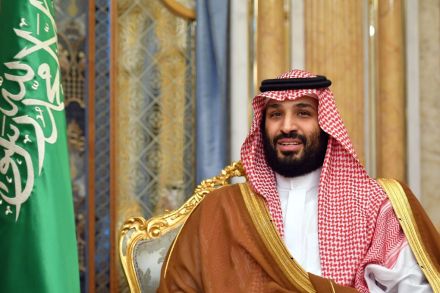
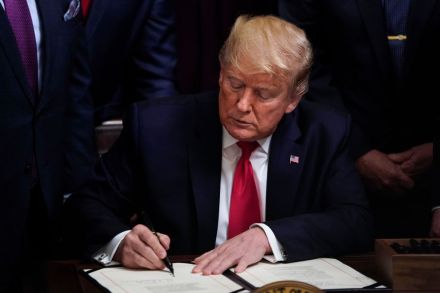
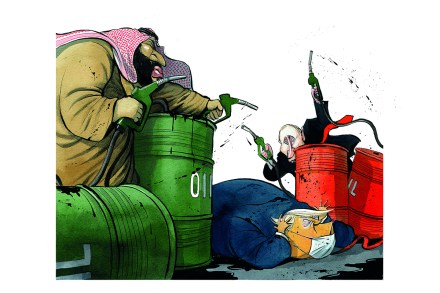
Donald Trump said in October 2018 that the Saudi royal family ‘wouldn’t last two weeks’ without American military support. Last week, on the back of the collapse of the US fracking industry, he finally acted on his long-standing anti--Saudi instincts. He ordered the immediate withdrawal of two patriot air defence batteries, sent to defend the kingdom’s oil infrastructure in September after a missile attack blamed on the Iranians. He also recalled hundreds of US troops and said the US Navy presence in the Persian Gulf would be scaled back. Leaving with the ships were dozens of US fighter jets, which would have been crucial for defending against any full-scale Iranian assault.

Could President Trump lose the oil war?

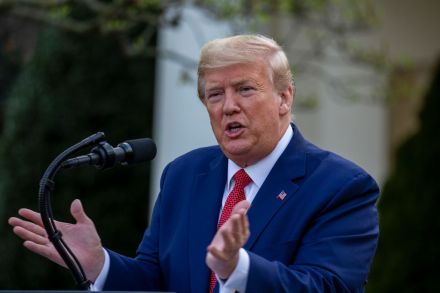
In a cover story for The Spectator that appeared just after Saudi Arabia launched an oil war against Russia in March, I wrote: 'One wonders how Donald Trump — who hates personal disloyalty more than anything — will react when he wakes up to the fact that the Saudi leader he has stuck with through thick and thin is now out to destroy the domestic industry Trump is most proud of.' Well, now we know. By the first week of April, Trump was so concerned about the impact of dramatically lower prices on the domestic fracking industry that he called the Saudi leaders and gave them a stark ultimatum. Unless they pressured OPEC members to cut oil production, he would be powerless to stop lawmakers from passing legislation to withdraw US troops from the kingdom.

oil

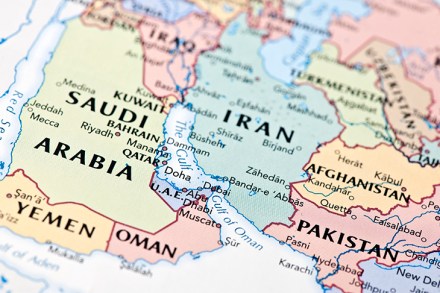
What is the US Navy doing in the Persian Gulf?

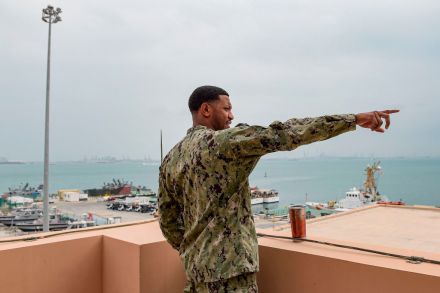
American alliances and security commitments tend to live on long after the world has changed. Many of our far flung military bases are legacies of a Cold War that ended decades ago. With the collapse of the Soviet Union, the Nato alliance became all but obsolete, so it eagerly embraced conflicts in the Balkans, Libya, Syria and other locations far from the Central European theater it was originally designed to protect. However, none of these holdover security commitments seem as absurd as US military operations in the Persian Gulf during a COVID-19 oil market.As recently as last month, the United States was keeping two aircraft carrier battle groups deployed near the Persian Gulf.

navy persian gulf

The next American revolution will be televised

Is America becoming a developing country? We’re seeing increasing evidence of reverse convergence. We used to think that the developing world would in time become like America, but it now seems that the United States has developed an emulation complex of its own. What has not been explained are the reasons. In some fundamental areas America does resemble a traditional society, with its belief in transcendence and its quaint ways of enforcing justice and delivering public goods. The US executes prisoners on a scale matched only by China, Iran and Saudi Arabia. Guns are more readily available than in Pakistan and more than half of Americans pray every single day. No other state spends so much money on health care, yet Americans’ life expectancy keeps falling.

trump television

The director of Persepolis talks about her biopic of Marie Curie: Marjane Satrapi interviewed

From our UK edition

The problem with making an accurate film about science is that science is rarely exciting to watch, explains director Marjane Satrapi. Movie convention tends to insist on the climax of the eureka moment and the fiction of the solitary male genius, who doggedly closes in on his discovery in the same way that a detective might doggedly close in on a killer. ‘It doesn’t happen this way,’ says Satrapi. ‘It’s a result of lots and lots of work, which most of the time is repetitive and most of the time you know you don’t know where you’re going, and it’s lots of collaboration.’ Satrapi studied mathematics in her birthplace of Iran, and has a scientist’s intolerance for dramatic licence.

Will coronavirus lead to a US war with Iran?

In a roundabout way, coronavirus may have been responsible for the deaths of two American service personnel and a British soldier in a rocket attack in Iraq on Wednesday. This triggered a prompt US military retaliation — American forces launched strikes at five sites in the early hours of this morning — and the prospect now is of an escalation while the rest of the world is consumed with a global health crisis. What's going on? It was Gen. Qasem Soleimani’s birthday on Wednesday and a Shiite militia — probably Kataib Hezbollah — chose to mark the occasion by firing Katusha rockets at Camp Taji, the US base just north of Baghdad.

war with iran coronavirus

The Shia Krays: The whole of Iraq is being held to ransom

From our UK edition

It’s been only six weeks since the death of the Iranian general Qassem Soleimani, but already there are a number of local hardmen vying to take his place. Most notable are his sidekicks, the Kray twins of the Shia world: Qais al-Khazali and his brother Laith. Qais and Laith who? Unless you’ve scanned Washington’s latest list of designated global terrorists, these two names won’t be familiar. Yet when I mentioned the brothers in a Baghdad teahouse a few weeks ago, folk lowered their voices and looked surreptitiously around, as if discussing the Krays in a pub in 1960s Bethnal Green. The Khazalis lead an Iran-backed Shia extremist group called the Asaib Ahl al-Haq, or League of the Righteous.

How far will Trump go in Iran?

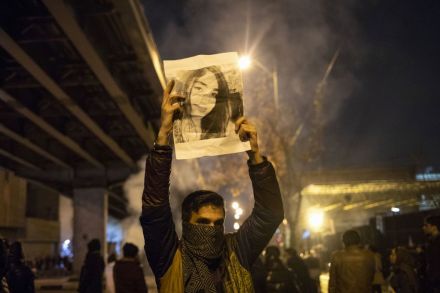
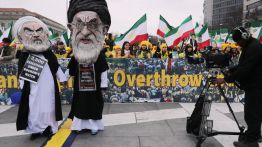
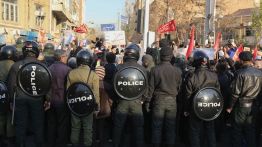
This article is in The Spectator’s February 2020 US edition. Subscribe here. ‘Get lost ayatollahs!’ ‘Death to Khamenei!’ The bravery of the anti-government demonstrators in Tehran is incredible, each one knowing that their actions could end with a bullet or a noose. I reached one through their favored encrypted app, Telegram, the interview arranged by a leading Iranian opposition group outside the country. ‘Elias’ — not his real name of course — is 25 and a postgraduate politics student in Tehran. The security forces were everywhere, he told me; everyone was very afraid. Still, he went on, ‘There is only one way this ends: toppling the regime.

iran

Shaken Saudis hedge their bets on détente with Iran

After the assassination of General Qasem Soleimani a month ago, Iran offered Saudi Arabia and its Sunni Gulf allies a stark choice. Stick with your newfound ally Israel and risk having your cities bombed to smithereens in the event of military escalation with the United States, or work on a peace deal with Tehran and stay out of the fray. The Iranians had already proven their ability to launch devastating missile strikes against Saudi Arabia's oil facilities, and the ineffectiveness of the US defensive anti-missile systems supposedly protecting them. Now it is clear that the shaken Saudis have decided to hedge their bets on détente with Iran.

saudis

Donald Trump, president of peace

This article is in The Spectator’s February 2020 US edition. Subscribe here. Groupthink is the last thing a country needs when debating questions of war and peace. But groupthink is what America’s pundits have succumbed to once again. In 2003, voices of opposition to the Iraq War struggled to be heard, with even the progressive cable news channel MSNBC silencing its most outspoken critic (Phil Donahue) and telling a right-wing dissenter from President Bush’s war (Pat Buchanan) that he was expected to represent Republican opinion — which is to say, pro-war opinion. So much for press freedom. Today, groupthink is on the side of peace, or rather on the side of caricaturing President Trump as a warmonger.

peace

The ‘Iran Spring’ delusion

What a difference a week makes when it comes to the western media narrative on the Middle East. When countless millions were mourning Gen. Qasem Soleimani in what was possibly the biggest funeral in history, we were told that Iran and its leadership had never been more united. Now, amid smaller protests inside the country against the mistaken downing of a Ukrainian airliner with mostly Iranian students on board, we are told that the Iranian people are rising up en masse to overthrow their hated leaders. Have the famously sophisticated Iranian people really become so absurdly fickle overnight? There is another explanation for the self-contradictory nonsense we are being told. Whatever happens in the Middle East, there is only one constant.

iranian

The Middle East mess has nothing to do with Donald Trump

Last week, like millions of others across the globe, I emerged blinking and stumbling from my fallout bunker to assess the destruction wrought by World War Three. There were a few surprises in store. Nukes had failed to rain from the sky. Critical infrastructure remained intact. Rationing was not yet in force. People still weren’t going to see Cats. World War Three, historians will note, consisted of: an assassination, a poorly organized funeral, the histrionic launching of a few sketchy rockets, an Everest of bad tweets and the downing of a passenger plane. But one thing remained as permanent as the second law of thermodynamics: all of this was Donald Trump’s fault.

middle east messs

Iran’s mullahs are right to be rattled about what is unfolding on the streets of Tehran

From our UK edition

On the streets of Tehran the real story from inside the Islamic Republic is being written. And Iran's Mullahs are worried. The people are rioting, as they have for the last year. And as commentators struggle to project their own views onto Iranians, Iranians themselves are finally making their voices heard. Events following the assassination of Qassem Soleimani has shown us the ability of some Western commentators to make any drama in the region about themselves. As each stage of the crisis has developed, they have assured us of impending consequences that suit their own agendas rather than any reality on the ground. We were told that Soleimani's killing would bring war to the region, as if Soleimani had not already been inflicting war on the Syrian people.

Corbyn’s Stop the War protest speech was his worst yet

From our UK edition

About a hundred Stop the War activists gathered outside BBC Broadcasting House on Saturday to protest against a possible conflict with Iran. They were the usual ragbag of idlers, dreamers, misfits and malcontents. Many of these people are unable to grasp the illogicality of their political positions. A chap selling the Socialist declined to give me a copy for free. ‘In future everything will be shared,’ I said, ‘so start with this paper.’ ‘I’ll share it with you,’ he smiled, ‘after you’ve shared your pound with me.’ I paid up and pointed out that the transaction had merely strengthened capitalism. ‘No, it’s building a system that will overthrow capitalism.

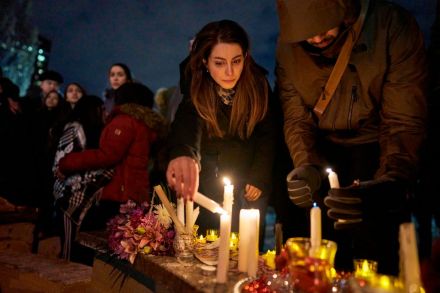
In pictures: Iran’s anti-government protests

From our UK edition

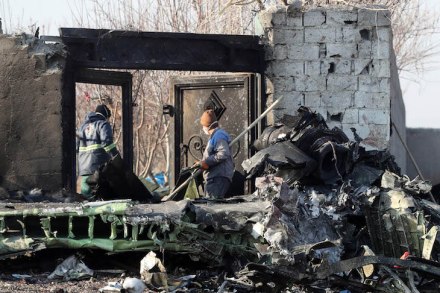
The Iranian government has faced growing internal pressure following the downing of a civilian jet last week. The Ukraine International Airlines flight was shot down on Wednesday shortly after takeoff, killing all 176 passengers on board. The regime has since taken responsibility for the deaths, blaming 'human error' amid rising tensions with the US following the assassination of Qasim Soleimani. Some have suggested that the regime's tragic error could signal the beginning of the end for Iran's theocratic dictatorship as increasing numbers of Iranians take to the streets. Over the weekend, the British ambassador was arrested while attending a vigil for those who died on the Ukrainian flight, including four Brits.

Iran must pay the families of flight 752

After the Ukrainian crisis and the Iranian crisis, we now have the Ukrainian-Iranian crisis. For the second time in six months, Ukraine finds itself inexplicably — and inextricably — in the midst of a world-historical crisis that it had no part in crafting. As it was with Trump’s inquiries into Hunter Biden’s business activities, Kyiv is marooned politically and facing difficult and even unpalatable choices between warring opponents, neither of whom it wants to antagonize. The American airstrike that killed Qasem Soleimani had threatened to set off a conflagration which many observers — 99 percent of them never having heard of the most interesting man in the Middle East — histrionically predicted as ‘World War Three’. Blessedly, that did not happen.

flight 752

Could this be the beginning of the end for Iran’s mullahs?

From our UK edition

It is easy to construct a scenario in which tit for tat actions by the Americans and Iranians lead to all-out war, close off the Gulf, send oil prices soaring, crash the global economy – and, if you are really going to go for it, end in nuclear conflagration. But what about the alternative outcome: that conflict between Iran and the West precipitates a counter-revolution against the mullahs and leads to and end to the 40 year Iranian theocracy? The overthrow of the Iranian regime is the black swan event – or maybe it ought to be called a white swan event – which no-one is talking about, which is odd given that there have been plenty of indications over the past couple of years that ordinary Iranians are finally growing fed up with their regime.

The downing of a civilian jet only adds to Tehran’s desperation

From our UK edition

Drama and tragedy continue to envelop Iran. Just hours after the regime struck two US bases in Iraq on Wednesday, Ukraine International Airlines flight PS752 crashed after taking off from Tehran en route to Kyiv. All 176 passengers and crew members on board were killed. Iran almost immediately claimed that the plane had suffered a technical malfunction but this was greeted with scepticism. The aircraft was a Boeing 737-800 - one of the international airline industry's most widely used and reliable models. Dozens of Canadians were on board and on Thursday Canadian Prime Minister Justin Trudeau said evidence indicated that an Iranian missile had brought down the aircraft by accident.

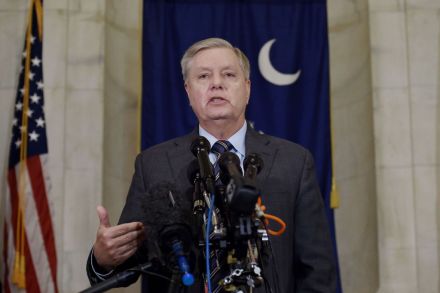
Few have ‘empowered’ Iran more than Lindsey Graham

When Republican senators Mike Lee and Rand Paul walked out of a military briefing Wednesday over the recent US attack that took out top Iranian general Qasem Soleimani, they were not happy about how that exchange went.Sen. Paul said the briefing was 'less than satisfying', blasting the meeting as 'insulting to logic and the Constitution'.A fiery Sen. Lee elaborated further. 'I had hoped and expected to receive more information outlining the legal, factual, and moral justification for the attack,' Lee said. 'The briefing lasted only 75 minutes, whereupon our briefers left. This, however, is not the biggest problem I have with the briefing, which I would add was probably the worst briefing I've seen, at least on a military issue, in the nine years I've served in the United States Senate.

lindsey graham
hormuz

All forecasts are off if Iran shuts the Strait of Hormuz

Just when you thought it was safe to go back in the water…late last year, a range of forecasts suggested that the likelihood of recession in the US, with knock-on effects for the rest of the developed world, had significantly diminished. Last summer, many economists were putting the chance of a substantial downturn at 50 percent but by November, Goldman Sachs had marked it down to 24 percent and Morgan Stanley to ‘around 20 percent’. Underlying this shift were strong corporate earnings and consumer spending, plus rising hopes of a settlement of US-China trade tensions. Last month saw a sell-off of safety-first government bonds reflecting the mood, and the FT’s end-of-year forecasts included a confident ‘No’ to ‘Will the US go into recession?