Iran

Can America avoid the next crisis in Iran?

After meeting with his Israeli and Emirati counterparts on October 13, Antony Blinken emerged from behind closed doors with a message for Iran: you are running out of time to negotiate a return to the 2015 nuclear deal. “We are prepared to turn to other options if Iran doesn't change course,” the secretary of state told reporters. US envoy to Iran Robert Malley exhibited similar frustration on October 25, saying US officials, in coordination with its partners in the Middle East and Europe, have “given a lot of thought to what we will do if Iran doesn’t go back to the table.” The Iranian government appears to have gotten the message, at least to a degree. Ali Bagheri Kani, Iran’s chief nuclear negotiator, has said talks will resume on November 29.
iran

Iran, a dammed nation

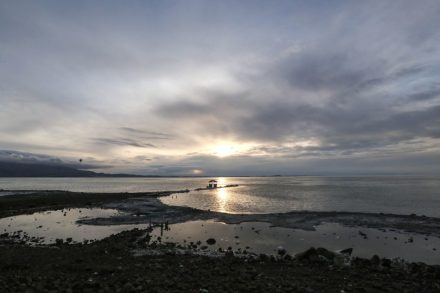
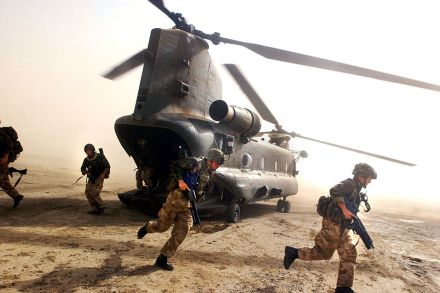
The recent events in Afghanistan have made us think we know what regime collapse looks like. Militias roaming the streets, soldiers scrambling to helicopters, up against the clock to escape the anarchy below. But in some instances, the reality can be far more mundane. Across from Afghanistan’s own border, another Islamic theocracy — Iran — is struggling to manage a dangerous water shortage. As one hardline Muslim regime arose in Central Asia this year, another could yet be at the very beginning of its fall. In July, during the worst drought in half a century and scorching heat of over 120°F, protests erupted in the oil-rich province of Khuzestan as a water crisis that has been slowly bubbling for decades hit boiling point.

dammed water

Biden stole Trump’s foreign policy

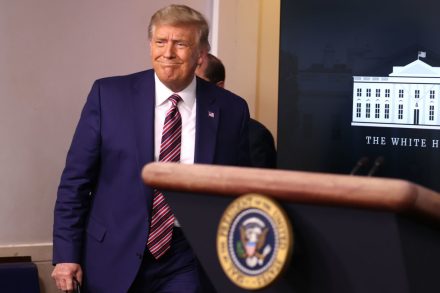
When President Donald Trump in 2020 signed a trade deal with China after years of escalatory tariffs, then-presidential candidate Joe Biden blasted the agreement. 'China is the big winner of Trump’s "phase-one" trade deal with Beijing,' Biden said after the agreement was finalized. He wasn’t alone. Many trade experts at the time believed the purchasing targets Beijing was required to meet were highly unrealistic. Sure enough, China’s compliance has been less than ideal. According to the Peterson Institute for International Economics, China is roughly 70 percent of the way there with two months left to go. Yet despite Biden’s past comments about the accord, not to mention the tariffs that set the stage for the deal, the White House isn’t fully breaking with the pact.

foreign policy

Exclusive: the New York Times stole my story

Question: When is a New York Times exclusive not a New York Times exclusive? Answer: On Sunday, when America’s paper of record stole my scoop. It sounds bizarre, but it’s true. Last February, I revealed top-secret details of the killing of the Iranian nuclear scientist Mohsen Fakhrizadeh in the pages of London’s Jewish Chronicle, the world’s oldest Jewish newspaper. Among the revelations — given to me by impeccable sources that I know well — were that the top Tehran official had been killed by Mossad using a remote-controlled gun that weighed one ton and had been smuggled into Iran piece by piece over several months.

new york times

Iran is an immediate winner of the Taliban takeover

From our UK edition

A staple of observing politics is watching rhetoric curdle into reality. Operation Enduring Freedom, thought up and slapped together in the wake of 9/11, was supposed to put down the ‘global terror threat’ and bring freedom to the subjugated peoples of Afghanistan and the Middle East. It ended last week with images of despairing Afghans tumbling to their deaths from the undercarriages of fleeing US planes. The rights and wrongs of leaving are sundering US foreign policy elites, but leaving the United States is most certainly doing. So what next? When the United States high-tails it out of the region you can be sure that everyone around is watching — no more so than in neighbouring Iran. Iran has a peculiar relationship with the Taliban.

Iran’s ‘Ghost Armada’ and its secret alliance with China

From our UK edition

When a British security guard was killed in an Iranian drone attack last month, the response from the government was robust. Boris Johnson warned that Iran will have to ‘face up to the consequences’. But has the West fully grasped the reality of what Iran and its 'Ghost Armada' is really up to at sea? And how can Britain deal with Iran's silent partnership on the waves with China? Back in March, the two countries signed a 25-year, £300 billion trade and military partnership which included Chinese investment in exchange for regular, heavily discounted oil and a strengthened cooperation between the military, security and defence departments. China is investing in Iran for the long haul because it is key to its Belt and Road Initiative (BRI).

Can Iran’s ‘butcher’ president make peace with the Saudis?

From our UK edition

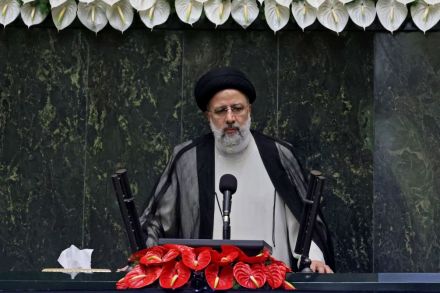
It’s official: after eight years of a relatively pragmatic administration, Iran is now under new management. Ebrahim Raisi, a disciple of Supreme Leader Ayatollah Ali Khamenei and the former judiciary chief, was inaugurated this week as Iran’s next president. Clad in a white shirt, black robe and thin-framed glasses, Raisi accepted a task that will likely prove to be his toughest assignment in a decades-long career serving the Islamic Republic system.  Protests over poor public services, like water shortages, are becoming more frequent. While the International Monetary Fund projects Iran’s economy to grow at 2.5 per cent this year, the country is in the midst of a highly fractious period.

Will America rescue the mullahs?

‘Death to Khamenei. Death to the dictator.’ Iran’s new president, Ebrahim Raisi, is sworn in today against a backdrop of protest, the sound of chanting echoing in his ears, whether literally or figuratively. The chants are often about the Supreme Leader, Ali Khamenei, but are also directed at the regime as a whole. ‘Clerics get lost’ is another favorite. Street demonstrations began three weeks ago in the province of Khuzestan but spread to many other places, including the capital, Tehran. People are angry about water shortages and the wretched, broken state of the economy. The question now is whether the protests will build and, if so, whether Raisi will live up to his terrifying reputation and crush them.

iran mullahs

Why Iran is stepping up its maritime piracy

From our UK edition

On Tuesday there was an attempted hijacking of a tanker in the Gulf of Oman. According to the UK Maritime Trade Operations (UKMTO), nine armed men boarded a Panama-flagged tanker before leaving several hours later – reportedly after the ship’s crew sabotaged the vessel’s engines. The UK believes this attempted hijacking was the latest in a string of maritime attacks perpetrated by Iran or one of the several militant groups it backs in the Middle East. The failed hijacking follows a drone attack last week on the tanker Mercer Street in the Arabian sea, which is owned in part by the Israeli shipping magnate Eyal Ofer. This attack claimed the lives of British and Romanian nationals onboard the ship.

Why is the EU attending the butcher of Tehran’s inauguration?

From our UK edition

At the beginning of the year Donald Trump’s Secretary of State, Mike Pompeo, was forced to hastily cancel a diplomatic trip to Europe, reportedly after top EU officials refused to meet with him following the storming of the US Capitol building. In the aftermath of the event, Luxembourg’s foreign minister suggested that Trump was a ‘political pyromaniac’ and Pompeo soon found that the United States was no longer a welcome presence in the hallowed halls of Brussels. If that was how the European Union admonished America – arguably the most important democracy in the world – one can only imagine the treatment it planned to dole out to the world’s tyrants and dictators this year.

Iran is running out of water

From our UK edition

It’s far from an exact science, but if you want to get a sense of where the world is heading in terms of resource scarcity then you could do worse than considering the cost of a litre of oil versus a litre of water. These days a litre oil of crude is worth around 45 US cents (33p); a litre of bottled water in the UK will generally set you back around 65p. Oil has dropped around 100 per cent since its high in 2008 while water’s value has held firm, and even risen across the Middle East and Asia. This is probably unsurprising. Right-thinking opinion now considers oil an anathema while water is drying up almost everywhere — and nowhere more so than Iran.

Tehran is repeating the Shah’s mistakes

From our UK edition

The Iranian province of Khuzestan is oil-rich but water-poor. At the best of times, the southwestern region is a problem for Tehran. On the border with Iraq, it’s home to an Arab minority that has long been targeted. The province has separatist inclinations, which led to a failed uprising in 1979 and sees the occasional attack continue to this day. Unsurprisingly, it is not favoured by central government. It’s impoverished and lacks many basic services; quality of life is poor. Khuzestan is now in its sixth straight day of protests after water shortages in its major cities.

raisi

Iran’s president is a mass murderer

The US and other western countries are faced with a dilemma: how to bring to justice a man with the blood of thousands on his hands when you have to do business with him. Ebrahim Raisi’s path to the presidency of Iran is strewn with corpses. He comes to office this month already under American and European sanctions for the mass murder of prisoners in 1988. Some 5,000 may have been killed, though we can only guess at the true number of dead. It was a crime against humanity in the strict legal meaning of that term. At an earlier stage in his career, Raisi is said to have personally supervised the torture of dissidents, but in the 1988 case his responsibility was bureaucratic. He was a grim fanatic, eager to carry out orders. He was — and remains — Iran’s hanging judge.

The Afghan withdrawal will only embolden the West’s enemies

From our UK edition

‘How many thousands more Americans, daughters and sons, were you willing to risk?’ Biden asked critics of the decision to withdraw forces from Afghanistan last week. He has the support of the American public – most of whom also wanted to see troops leave Afghanistan after 20 years of fighting and 2,400 fatalities. This risk aversion is one of the reasons America decided to withdraw its forces from Afghanistan. There’s a diminished appetite in the US for prolonged military involvement in the Middle East, especially large-scale deployments of ground troops that inadvertently cost lives.

Raisi’s election confirms the futility of returning to the Iran Deal

The president is a placeholder for the people who really run the country. The elections were rigged. And most of the American media cheers along. No, not the United States: Iran. The peace-loving, centrifuge-spinning, flag-burning regime has a new president, Ebrahim Raisi. The Biden administration did promise us a new era in US-Iranian relations, and here it is: Raisi will be the first Iranian president to take office while under sanctions for mass murder. In the 1980s, Raisi was a young regional prosecutor. He was part of a four-man ‘death committee’ which ordered the disappearance and killing of thousands of the Islamic revolution’s enemies. You may be shocked to hear human rights’ groups claiming that due process was frequently ignored during this judicial massacre.

ebrahim raisi

The dark past of Iran’s new presidential favourite

From our UK edition

'Each vote counts...come and vote and choose your president. This is important for the future of your country.' These were the words of Iran’s Supreme Leader Ayatollah Ali Khamenei this morning as he urged people to make their voices heard in today’s presidential election. Each vote doesn’t count, of course. The regime makes sure of that. Iran ‘manages’ its elections. This year, 600 people registered as candidates, now only seven remain. The unelected Guardian Council, which consists of 12 ‘jurists’ (clerics), is responsible for ensuring all candidates are compatible with 'Islamic values'.

Is the worst yet to come in the Middle East?

From our UK edition

Beirut We can’t say yet if the latest fighting between Israel and Hamas is the start of ‘the big one’, a new Palestinian intifada, or uprising. That possibility was raised by the grandest of Middle East commentators, Thomas Friedman, in the New York Times. Friedman is sometimes mocked for his prognostications. A ‘Friedman’ is defined as six months because of his repeated statements that the ‘next six months’ would be critical for the US in Iraq, the light at the end of the tunnel visible only then. He also praised the ‘new ideas’ of Saudi Arabia’s ruler, Mohammed bin Salman, before it turned out that one of those new ideas was to dismember his critics with a bonesaw.

How are we enjoying the Biden presidency so far?

Well, that didn’t take long. Less than four months into the Biden-Harris deep-state maladministration and we have roaring inflation, the most disastrous jobs report in recent memory, rising unemployment, spiking gas prices, an imploding stock market, devastating cyber attacks on critical infrastructure and a janus-faced crisis on our Southern border in which tens of thousands of disease-ridden illegal migrants are huddled into cages while thousands more fan out across the fruited plain taking jobs from Americans even as they infect us with COVID. Quick work, Joe! And of course that is just the tip of the proverbial North Atlantic iceberg into which His Senileness is steering the ship of state.

biden

Prisoners dilemma: should we pay kidnappers?

From our UK edition

British-Mexican national Claudia Uruchurtu Cruz disappeared on the night of Friday 26 March in the town of Nochixtlan, Oaxaca State, Mexico. Claudia had been seen attending a rally protesting the beating of a local labourer, allegedly by security elements linked to the local municipal president. Unconfirmed witness statements claim she was grabbed and pushed into a red car. Claudia never arrived home and her family and friends have not heard from her since.  What is the right response for the British government? The most debated issue is whether to pay ransoms. Some governments refuse, others pay, or at least turn a blind eye to families that do. In Mali, where British troops are now operating, France has paid millions of dollars to Al-Qaeda in the Islamic Maghreb.

Britain shouldn’t pay out to secure Zaghari-Ratcliffe’s release

From our UK edition

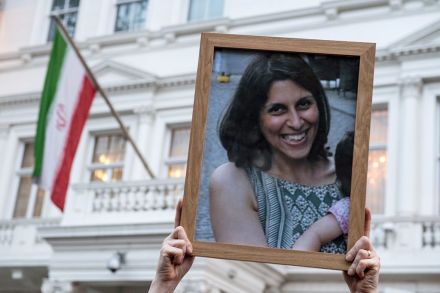
In January 2016, $400m (£290m) was flown by the United States to Tehran in the dead of night. Loaded on to wooden pallets on an unmarked plane, it was the first in a series of instalments to satisfy an unfulfilled American-Iranian arms deal signed in 1979, before the Shah was replaced in the revolution. On the morning after the payment, four American prisoners were released, boarding planes back to their homeland. The White House insisted the payment and the release were coincidental. But General Mohammad Reza Naghdi, a commander in the Islamic Revolutionary Guard Corps (IRGC), took to Iranian state media to proclaim:  'Taking this much money back was in return for the release of the American spies.