Iran

The Russia-Iran axis that’s menacing Ukraine

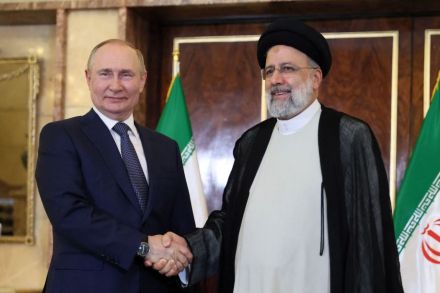
Russia’s brutal war in Ukraine is coming up on its eighth month, and the costs to the Kremlin’s military have been immense. Increasingly isolated on the world stage, Vladimir Putin has joined the world’s club of pariah states, the only group willing to give him support. Chief among his allies is the Islamic Republic of Iran, a state with similarly imperialistic designs and global isolation. This axis has been brewing for some time — the two nations worked together extensively in Syria, for example — but the relationship has reached new heights as the Russian armed forces buckle under the strain of war. Perhaps the most potent symbols of this relationship are the hundreds of Iranian drones flooding into Ukraine to fill a gap in Russia’s weapons inventory.
How the US failed to stop OPEC from cutting oil production

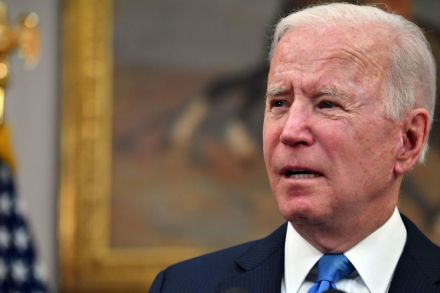
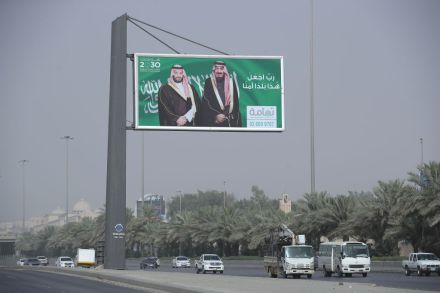
Near the top of President Biden’s to-do list for the past few months has been to keep gas prices down. On Wednesday, this was dealt a likely fatal blow by the Organization of Petroleum Exporting Countries, or OPEC, which, led by Saudi Arabia, agreed to cut its overall production by two million barrels per day. In actuality, the cut will mean a reduction of more like one million barrels per day if it's taken into account that OPEC has been underproducing compared to its previously stated production goals. Still, this is a significant cut, and the effects on oil markets are already being felt.

Don’t expect the protests to topple Iran’s government

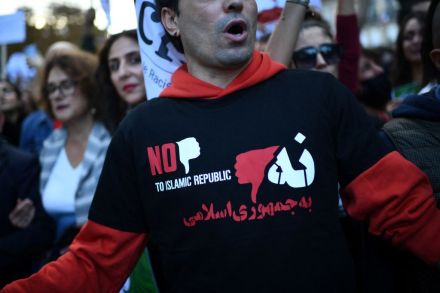
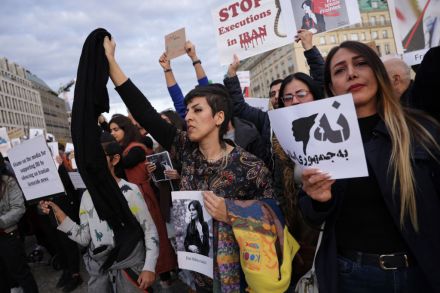
The Islamic Republic of Iran is reeling. Its 43-year-old patriarchal system of bearded clerics is witnessing its biggest nationwide demonstrations in years. Iranians of all classes, regions, and professions are pouring into the streets. All this in the heart of the world’s only theocracy, where voicing any discontent can land you a bloody face and a hefty prison sentence. The protests, which will enter their second full week on Friday, were sparked by a particularly gruesome crime by the Iranian authorities against a young woman named Mahsa Amini, who was detained by the morality police in Tehran for supposedly dressing immodestly.

How two deaths shook Iran to its core

Iran has been transfixed by two deaths: one that didn’t happen and one that shouldn’t have happened. Last week, rumors swept Tehran that Supreme Leader Ali Khamenei had died. Subsequent reporting revealed he may have been gravely ill. He has since made two public appearances, but his health scare was a reminder that the Islamic Republic’s most powerful man has no designated successor. When the old donkey dies, Iran’s factious elite will have to fight it out as to who will take his place. This week, protesters all over Iran gathered to denounce the death of Mahsa (Zhina) Amini, a young woman who died in the custody of Iran’s morality patrols after being picked up for a loose headscarf.

Putin and Xi herald a rising authoritarian axis

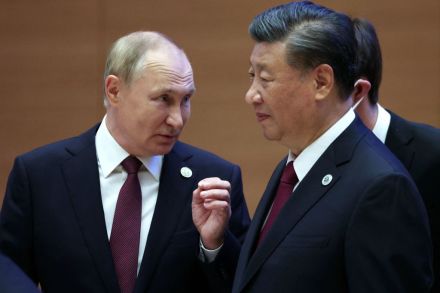
Russian President Vladimir Putin and Chinese President Xi Jinping met in Uzbekistan during this week’s Shanghai Cooperation Organization (SCO) summit — and a lot had happened since their last meeting. With the Russian Army on the back-foot in Ukraine and its economy forecasted to contract by over 4 percent in 2022, Putin is in a far worse position. Whether this impacted the meeting is hard to tell, though Putin indicated that Xi had “questions and concerns about [Ukraine].” Nevertheless, both countries expressed support for one another, touching on their respective concerns. Xi stated that China wanted to work with Russia “to set an example of a responsible world power,” a jab at the Western powers that both countries are positioning themselves against.

The Greatest Living American Writer on Salman Rushdie

In the late 1990s, author Neal Pollack developed an alter-ego character, "The Greatest Living American Writer," for the McSweeneys website, to satirize a generation of pretentious authors, particularly Norman Mailer and Gore Vidal, as well as macho literary journalists. That character formed the basis of Pollack's first book, the cult classic The Neal Pollack Anthology of American Literature. The GLAW has since appeared in numerous other publications,  left- and right-wing and completely apolitical, surfacing and de-surfacing as the times demand. Now he's back in The Spectator World, until we get tired of him.  I have been the Greatest Living American Writer across eight decades of world literature and have seen many shocking acts of violence.

greatest living american writer salman rushdie

Salman Rushdie was never safe

From our UK edition

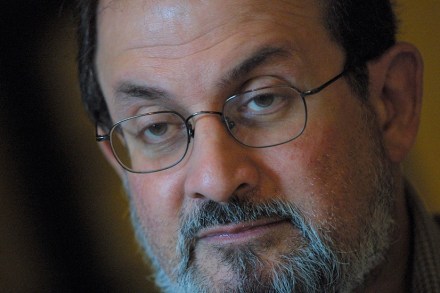
The stabbing of Salman Rushdie sends a renewed message to the world: take Islamism – the transformation of the Islamic faith into a radical utopian ideology inspired by medieval goals – seriously. Ayatollah Ruhollah Khomeini, the most consequential Islamist of the past century, personally issued the edict (often called a fatwa) condemning Rushdie to death in 1989. Khomeini, responding to the title of Rushdie’s magical-realist novel The Satanic Verses, decided it blasphemed Islam and he deserved death. Initially alarmed by this edict, Rushdie spent over 11 years in hiding protected by the British police, furtively moving from one safe house to another under a pseudonym, his life totally disrupted.

The West cannot do business with Iran

From our UK edition

Salman Rushdie's would-be assassin might have been a lone wolf. He might have had no contact with military or intelligence figures. He might never even have set foot in Tehran. But be in no doubt: he acted, in effect, as an agent of the Islamic Republic of Iran. Under the terms of the fatwa issued by Ayatollah Khomeini in February 1989, Rushdie ‘and all those involved in its publication who were aware of its content, are sentenced to death’. Khomeini urged 'brave Muslims to quickly kill them wherever they find them so that no one ever again would dare to insult the sanctities of Muslims', adding: ‘Anyone killed while trying to execute Rushdie would, God willing, be a martyr.

The attack on Salman Rushdie is an ominous warning

The news coming from New York State that the author Salman Rushdie has been stabbed onstage is both frightening and grim. It is frightening because, without full details of how seriously injured Rushdie has been, it is tempting to fear the worst. Media reports initially suggested that Rushdie was well enough to walk off stage, but the news that he has been transported by air ambulance to a hospital after being stabbed in the neck suggests his injuries are severe. It is grim because any violence being done to a public figure is abhorrent, but in the case of Rushdie, it is almost inevitable that this particular incident has been occasioned by one of the most notorious cause celébrès that has ever been seen in the publishing world, namely the publication of The Satanic Verses in 1988.

Iran and Russia: the new Axis of Evil?

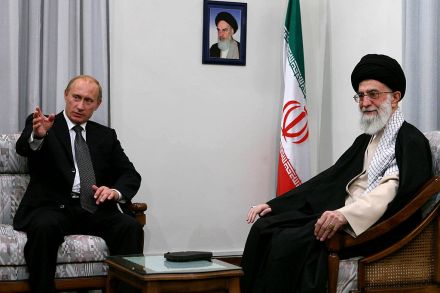
Russian President Vladimir Putin’s visit to Tehran last week brought attention to a growing partnership between Russia and Iran. The Russian shook hands with Iranian Supreme Leader Ali Khamenei, a rare gesture since both men are notorious coronaphobes. The old cleric expressed support for the Russian invasion of Ukraine, while the old KGB man offered Iran supplies of grain. US intelligence even claims Iran will open its drone arsenals to Russia. This strange friendship has its limits, but its growth could spell trouble. History does not suggest this is a natural partnership. The list of grievances between Iran and Russia is long. Great powers are often rough with middle-power neighbors.

Learning to live with a nuclear Iran

A mere four years after President Donald Trump withdrew the United States from the Joint Comprehensive Plan of Action (JCPOA), the international agreement that had constrained Iran’s nuclear program, Iran is closer to building a nuclear weapon than ever before. Both the Trump administration’s pressure and the Biden administration’s diplomatic campaigns have failed to yield Iran’s capitulation, yet still the United States has not changed tack. Instead, it has only raised fears of a cataclysmic clash in the Middle East. To be sure, while the Trump team’s maximum pressure strategy had great success in “crushing” Iran’s economy, it was far less effective in achieving any of its stated objectives.

Don’t expect much from Biden’s Middle East trip

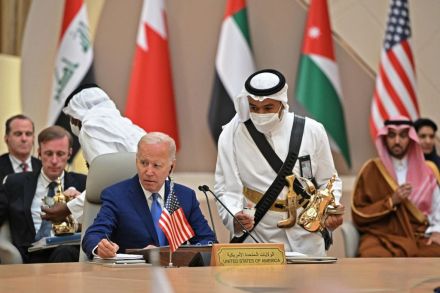
It took Barack Obama less than three months to fly to the Middle East for a visit, landing in Iraq to visit the tens of thousands of US troops stationed there at the time. Donald Trump’s first overseas trip as president was to the Kingdom of Saudi Arabia (also three months into his tenure), where he basked in the limelight, watched in awe as his face was plastered on buildings in Riyadh, and hovered over a glowing orb with King Salman. Now, eighteen months into his presidency, Joe Biden will be spending a few days this week in the region, making stops in Israel, the West Bank, and Jeddah, Saudi Arabia, for a summit of the Gulf Cooperation Council.

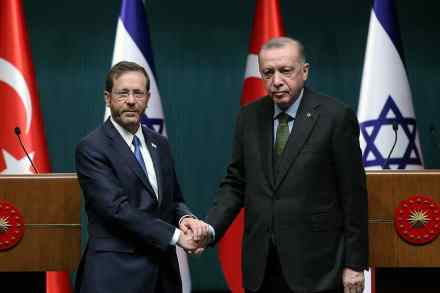
The odd couple: Israel and Turkey’s tentative alliance

From our UK edition

 Jerusalem On Friday night, when the Israeli government usually shuts down for Shabbat, the Prime Minister’s office issued an emergency briefing. An attack on Israeli tourists in Istanbul was ‘imminent’, it said. Israelis in Turkey were ordered to stay in their hotel rooms for fear of assassins, sent by Iran. There was no attack that night, as it happened, but the threat to the many Israelis in Turkey remains. Iran’s Islamic Revolutionary Guards Corps has become increasingly enraged by Mossad’s assassinations of IRGC officers in Iran, and decided that the best and easiest way to get revenge is to target the thousands of Israelis in Istanbul. Both Turkish and Israeli intelligence confirm this. This is not as strange as it might sound.

‘America or chaos’ is a false choice

There is an age-old dogma in the US foreign policy establishment: when America pulls back, chaos ensues. Like an anti-inflammatory that keeps arthritis under control, Washington’s presence in this or that region keeps enemies cowed, partners reassured, and the barbarians at the gates. Of course, just because an argument is popular doesn’t mean it’s accurate. There are several problems with the “America must be everywhere, at all times” line of thinking, the most poignant of which is that it turns the US military into an agency of global rent-a-cops.

The Taliban’s Afghanistan quagmire

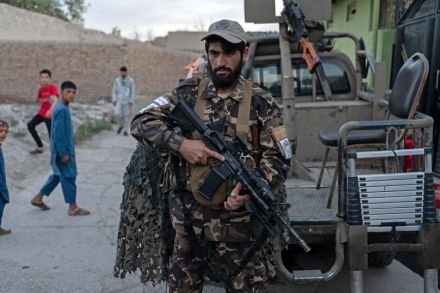
Hibatullah Akhundzada is a secretive man who is only occasionally heard and seldom seen. But on May 1, the Taliban’s supreme leader was delivering a sermon in Kandahar’s central mosque, bragging about his organization’s supposed successes. “Congratulations on this victory, freedom and success,” said the reclusive Akhundzada, surrounded by armed bodyguards. Nine months after the Taliban captured Afghanistan and forced the hapless Ashraf Ghani to flee the country in a helicopter, its chief official remains content with relishing the past. But truth be told, the Taliban has nothing to brag about.

Starmer is playing into Iran’s hands

From our UK edition

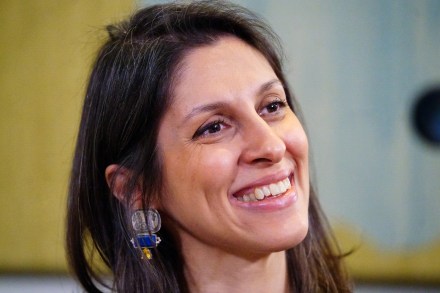
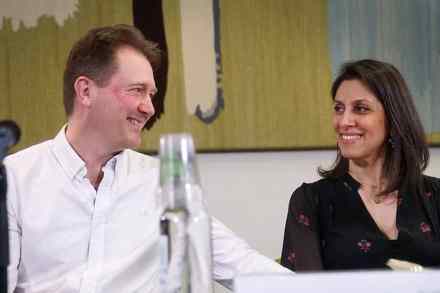
Who was to blame for Nazanin Zaghari-Ratcliffe being held captive in Iran? It shouldn’t take a professor of ethics to answer such a question. Mrs Zaghari-Ratcliffe was being held on trumped-up charges by a despotic regime that has used hostage-taking to advance its agenda ever since its formation in the Iranian revolution of 1979. Back then it was said to be 'students' who spontaneously over-ran the US embassy in Tehran and took more than 50 hostages, holding them for more than a year while the new theocratic government ruthlessly exploited the situation to humiliate the US administration of Jimmy Carter. In the case of Mrs Zaghari-Ratcliffe, at least no pretence was made that anyone other than the government of Iran was behind her detention since spring 2016.

Why is Biden copying Obama’s mistakes with Iran?

From our UK edition

There was a picture taken on Tuesday that says more than just a thousand words. The photograph was snapped in Sharm el-Sheikh and shows Abu Dhabi Crown Prince Mohamed bin Zayed Al Nahyan and Israeli Prime Minister Naftali Bennett seated either side of Egyptian president Abdel Fattah el-Sisi. According to the Egyptian president’s office, they met to discuss ‘the repercussions of global developments, especially with regard to energy, market stability, and food security’ but ‘they also exchanged visions and views on the latest developments of several international and regional issues’. That’s a very wordy way of saying ‘Iran’.

A lesson for those calling Nazanin Zaghari-Ratcliffe ‘ungrateful’

From our UK edition

In the latest installment from the idiot age of Twitter, #ungratefulcow has been trending. The reason? Nazanin Zaghari-Ratcliffe had expressed, mildly and politely, some unhappiness that it had taken Her Britannic Majesty’s Government six years to free her from Iranian captivity. Cue a handful of shallow trolls slagging her off, and a lot of other people slagging them off. I say ‘mildy and politely’ because to my mind, the salient characteristic of Zaghari-Ratcliffe’s comments was its restraint. Most people, I submit, would be furious beyond words to miss most of their only child’s first years of life.

Hacks in uproar about Nazanin briefing

From our UK edition

Welcome home Nazanin Zaghari-Ratcliffe, released after six years imprisonment. The 43-year-old returned to the UK last week after the government settled a historical £400 million debt owed to Iran over a cancelled 1970s order for British tanks.  But it seems the mother-of-one is not done generating headlines yet, after she caused something of a stir yesterday with her comments at a press conference in parliament about her return from Iran. 'How many foreign secretaries does it take for somebody to come home?' she said. 'What happened now should have happened six years ago.' The drama of Zaghari-Ratcliffe's appearance in the Macmillan room though was nothing compared to what was going on outside the room.

How the Foreign Office secured Zaghari-Ratcliffe’s release

From our UK edition

There was a rare display of unity in the Commons chamber this afternoon when Liz Truss gave a statement on the release of Nazanin Zaghari-Ratcliffe. While Labour deputy leader Angela Rayner went on the attack at PMQs, asking whether Johnson's comments when he was Foreign Secretary had made things worse, there was a far more conciliatory tone in the Commons when the Foreign Secretary updated MPs on the 43-year-old British-Iranian dual national's safe return, after being detained in Iran for more than five years on charges of plotting to overthrow the Tehran government.