International politics

Why profiling is essential

It is a truth, yet to be universally acknowledged, that the overwhelming majority of global terrorism is committed by radical Muslims. However, the Guardian reports that Whitehall has reached that conclusion and passenger profiling is “in the mix” of the latest airport security review. Thank God, sense prevails at last. The previous airport review, conducted in the aftermath of the liquid bomb plot, decided against profiling. What followed was a fatuous politically correct concoction. Even pilots’ toothpaste was examined; one pilot commented: “If I want to kill everyone (on board) I don’t faff around with plastic explosives, I point the nose at the ground”. Such determined absurdity should be behind us.
Dealing with China in 2010

The execution of Akmal Shaikh has brought China to our frontpages, and to the forefront of diplomatic thinking, as the New Year begins. The question is not just how to respond to this single and, in many regards, sad event – but how to deal with growing Chinese power more generally. How will we shape our relations with China for this decade and beyond? It would obviously be wrong to end all UK-China links over Akmal Shaikh’s execution. The Labour government's use of pique as a guiding principle of foreign policy had little effect on Russia and will not move China. Nor should anger over the excecution – however righteous or justified – occlude Britain's real interests in cordial Sino-Anglo relations.

The “sleeper issue” of 2010: Yemen

As Melanie Phillips says in her article for this week's issue of the magazine, the case of Umar Farouk Abdulmutallab highlights the role of other, less frequently discussed, countries in Islamist terror. One such country is Yemen, where Abdulmutallab is thought to have trained at an Al Qaeda camp. The US believes there may be a few hundred al Qaeda fighters in Yemen, centered on a group of key network leaders who are operating a number of camps.   Yemen has slowly been getting more international attention. A few weeks ago I was meant to go on Al Jazeera, but my appearance was cancelled at the last minute because, I was told, of other “breaking news”. Curious, I turned on BBC and searched the internet to find out what the headline-grabbing story could be.

2010: my predictions and yours

It’s that time of year – TV and radio are packed with special editions of Dr Who, news reviews and numerous best-ofs. So let me add to the cacophony with a look ahead to next year. Here are thirteen (and a bit) predictions for 2010: 1. The Taliban will mount a Tet-like attack on an Afghan town centre, such as Laskar Gar, prompting the Lib Dems to call for a British withdrawal from Afghanistan. 2. Iran’s regime will arrest and condemn to death one of the contenders in the 2009 presidential election. 3. Brazil will win the World Cup in South Africa. 4. The Pakistani president will be forced from office to be replaced by Nawaz Sharif. 5. Marwan Barghouti is exchanged for Gilad Shalit and subsequently elected Palestinian president. 6.

What will 2010 mean for Iran?

If you're looking ahead to 2010, it's a safe bet that Iran is going to be an even bigger issue than it was this year.  The violence currently rocking the country is an echo of June's presidential election, and a reminder, too, of the continuing internal pressure that the Iranian regime faces.   The question now is whether that will be joined by external pressure of some form.  After provocation after procovation on Tehran's part, it's hard to envision the West keeping its "hand of friendship" outstretched much longer.  But it's also unlikely that  Barack Obama – his eyes on the domestic polls – will want to talk too tough after committing 30,000 more troops to the unpopular Afghan conflict.

Europe: ignoring the Lisbon Treaty when it suits them

Is Greece too big to fail? When the Eurozone project was up and running, its taxpayers were promised: this was not a system where they’d have to bail out a badly-run country like Greece or Italy (or Brown’s Britain, were we members). But this rule (a clause in the Lisbon Treaty) is being torn up with various assurances from Germany and the ECB that they Greece is too big to fail – and they’d rather put their taxpayers’ wonga on the table than risk their precious promise. I made this point in my News of the World column yesterday (that bit not online). Here’s the story: 1. The Eurozone did have a clear ‘no bailout’ promise.

I blame Bono for the Copenhagen failure

So who or what is to blame for the failure of the Copenhagen gathering to achieve what most people hoped for? Polly Toynbee says that the nature of politics is to blame. Personally I blame U2’s Bono. I don’t blame him for the failure of world leaders to agree a legally-binding agreement, of course. But I do blame him for the unrealistic expectations that were raised in the run-up to the meeting. Issue-based campaigning, of which the climate change movement is the latest example, came into its own with the debt-relief campaign of Jubilee 2000, which the Irish singer spearheaded.

The relevance of politics

This morning's papers share a unifying theme: the failure of political leadership to secure a deal at Copenhagen. Now, I applaud politicians for not succombing to enormous pressure and making a series of pledges that would risk grinding the world's poor ever deeper into the dirt. For those who take a different view, it is not that politicians have failed, but that high politics is an irrelevance, a vanity. I know Coffee Housers loathe her opinions, but Polly Toynbee is at her polemical best today. She writes: 'Politics is being weighed in the balance and found wanting. The writing is on the wall. The leadership required within and between each nation is heavier lifting that the weak machinery of governmental power can manage.

Should Prince Charles be getting involved in the Copenhagen debate?

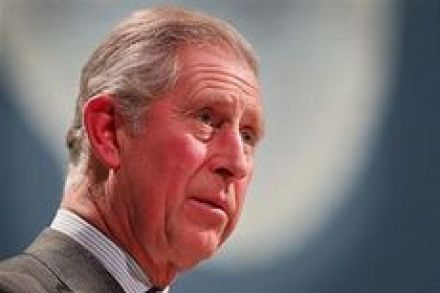
I’m of the view that climate change is happening and that the evidence suggests that man’s actions are playing a significant role in this. I’m even in favour of a carbon tax to deal with the problem. But I’ll admit that this is a political issue as well as a scientific, and one that will become more politicised in the years to come. All of which makes me wonder if it is wise for Prince Charles to have gone to Copenhagen to warn that there are “only seven years before we lose the levers of control”. In his speech, the Prince proposed a series of measures designed to combat global warming and threw his name and position behind the International Investor Statement on Climate Change.

Not Foxy enough

Analysts analyse, reporters report and politicians, well, they are meant to make decisions. When in power, they are meant to decide things; when in opposition they are meant to set our alternatives to government policy. But not, it seems, when it comes to defence policy. Or at least not always. I have just sat down to read Liam Fox’s NATO speech (as I could not attend), which he gave at Chatham House recently. To say that I am disappointed is an understatement. I think Liam Fox is a first-rate politician. His ongoing exposure of the Government’s military under-resourcing has been excellent. On a Tory team that is sometime accused of lacking stand-out talent, he is a national politician with clear views, consistency and a large following.

My week as a climate change denier

The Spectator’s Global Warming special is only in the shops for a couple more days.  If you’ve missed it – or if you still need convincing to buy it – here’s an extended version of the article by Amanda Baillieu from within its pages: When a work colleague sent a tweet to his 2000 followers comparing me to Nick Griffin I realised I was heading for my Jan Moir moment. A few days before, I had written an opinion piece with the rather attention seeking headline Is global warming hot air?  I’d wanted to see if my readers, who are mainly architects, agreed with the line now adopted by the Royal Institute of British Architects (RIBA) that ‘man made’ climate change is the greatest challenge facing the profession.

Copenhagen dispatch

I make my second foray into the climate debate with trepidation. But visiting Denmark a few days before COP 15, it is impossible to escape the subject. Whether I speak to friends, family or strangers on the bus, everyone has a view and wants to share it. TV coverage of the forthcoming climate talks is relentless and there is even a separate passport queue for COP participants at Copenhagen’s stylish airport.   The latest “story” to emerge has pitted the new Climate Change Minister, the former commentator Lykke Friis against the Speaker of Parliament, Thor Pedersen. Though they are both from the same centre-right/liberal party, Mr.

“Saboteur” or realist?

Lord Lawson is Andrew Neil’s guest on this week’s BBC Straight Talk and, among other topics, the former chancellor rebuffs Ed Miliband’s accusation of climate change heresy. Lawson said: “I hope that all parties…take a good hard look at this, we don’t want a sort of Stalinist monolithic line in everything.  But I do think, because of the damage that will be done to the economy, that is why, and for very little good, if any, that is why we have got to take a good hard look at the fact that we can’t get a global agreement on this anyway, as will be seen in Copenhagen…So, I think you have got to go back to the drawing board and have a fresh approach.

Why the Maldives aren’t sinking

The President of the Maldives recently held a Cabinet meeting underwater, saying his islands may be submerged. In an open letter, taken from the climate change supplement in the latest issue of the The Spectator, Nils-Axel Mörner assures him his country is safe: Dear Mr President, You are obviously very concerned about the effect that sea level rises may have on the Maldives. Your Cabinet has been photographed meeting underwater, and you have even declared that ‘we are going to die’ if the climate change summit in Copenhagen fails. I am now writing with what I hope will be some good news. The scientific side of the situation is quite different to that which you imagine. You are, in fact, not going to die. Before I continue, I should perhaps state my credentials.

Countdown to Copenhagen

How seriously are we to take Lord Stern on the economics of climate change? At the LSE yesterday, he rather hysterically claimed that the Copenhagen summit will be "the most important international gathering since the Second World War". Crucially, he added that the cost of dealing with the problem may reach 5 percent of GDP. Even so, "it would still be a good deal," he said. Really? Losing world economic growth condemns millions in the Third World to poverty: the globalisation of the last 15 years has been the greatest anti-poverty tool ever invented. So we should not be blasé about sacrificing growth, as if all it means is smaller cars for the rich. Poverty kills, and so will forfeited economic growth. Stern would argue that climate change also kills.

Welcome to Obamastan

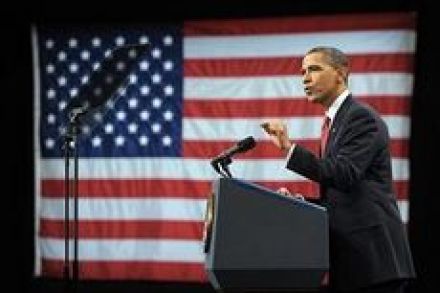
After months of deliberation, endless consultation and reams of paper, President Obama came to the same conclusion that he himself had reached only a few months ago, and that which his handpicked commander, General McChrystal, had arrived at more recently: the US-led intervention is just, right and demands more resources. As usual, Obama's oratory was impressive - though without the personal anecdotes he normally works in. He rejected comparisons with Vietnam and evoked World War II with a reference to President Roosevelt. The West Point cadets added a kind of battle-evoking gravitas that Obama, who has never worn a uniform or been in war, often struggles to evoke.

There are troops – and there are troops

The waiting will soon be over. Later today, the President Obama is expected to order around 34,000 troops into battle, including into Helmand province. This surge will be added to the additional 500 troops Gordon Brown committed yesterday and what sources tell me are cast-iron troop offers by another eight countries, including Turkey, Australia, Montenegro, and Georgia. If all these countries do sign up to send more troops, the credit must primarily go to Anders Fogh Rasmussen, the NATO Secretary-General, who has travelled far and wide in the attempt to drum up more military muscle.

The clock is ticking on Iran

When I visited Israel last year, various sources there were convinced – adamant, even – that Iran was within a year or two of creating an atomic bomb.  That may or may not have been the case, but it's still ominous that that hypothetical timeline is nearly up.  We can all too easily forget that, in the background to all the column inches and comment pieces expended on Iran, there are genuine and pressing concerns that the country is on the cusp of becoming a nuclear power. Which is why the two latest news stories from the country are particularly worrying: the capture of a racing yacht by the Iranian navy and Tehran's plan to massively expand its uranium enrichment programme.

The Iraq inquiry we should be having

Do we still have the will to win in Afghanistan? If so, the question the Iraq inquiry should be asking is not “how did we get into this war” - we have had a number of separate inquiries into that already – but “why were the military defeated on the ground in Basra?”. If the Chilcot Inquiry were to focus on that, it might actually serve a purpose: not just in unearthing new information (which it has signally failed to do so far) but drawing lessons that just might help the troops in Afghanistan. I make this point in my News of the World column today. I am in a tiny minority of people who a) supported the war in Iraq, and b) still admits it. People like me feel every bit as angry as the anti-war people about what happened next.

The case for 40,000

As President Obama continues to consider his options on Afghanistan, The New York Times has a good primer on what the military could do with the various levels of reinforcements being considered. This is what the military believes it could do with an extra 40,000 troops: "Should President Obama decide to send 40,000 additional American troops to Afghanistan, the most ambitious plan under consideration at the White House, the military would have enormous flexibility to deploy as many as 15,000 troops to the Taliban center of gravity in the south, 5,000 to the critical eastern border with Pakistan and 10,000 as trainers for the Afghan security forces.