Hungary

Viktor Orbán is no friend of the West

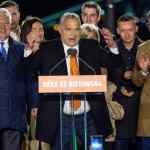
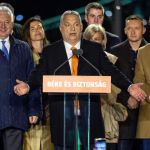
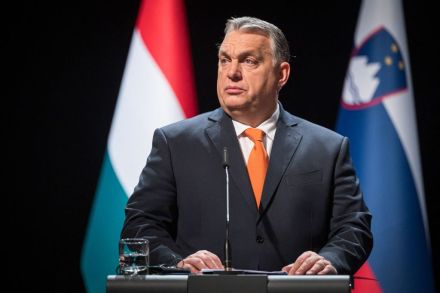
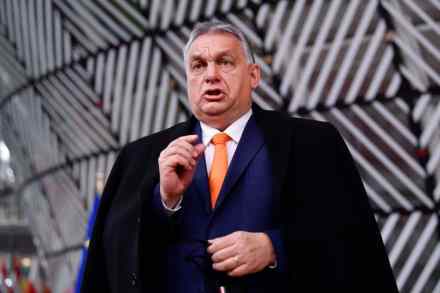
Viktor Orbán‘s victory speech in Budapest on Sunday night took a curious turn. Speaking after a fourth landslide win, he opined: This victory is one to remember because we had the biggest [opponents] to overpower. The left at home, the international left, the bureaucrats in Brussels… the Soros empire... and even the Ukrainian President. Orbán skipped over the challenge to regional stability caused by the Russian invasion of neighbouring Ukraine. Having refused military aid to Kyiv, and having exchanged barbs with President Volodymyr Zelensky, he reassured ethnic Hungarians in West Ukraine: ‘Don’t be afraid, the motherland is with you’.
How many refugees can Eastern Europe take?

From our US edition

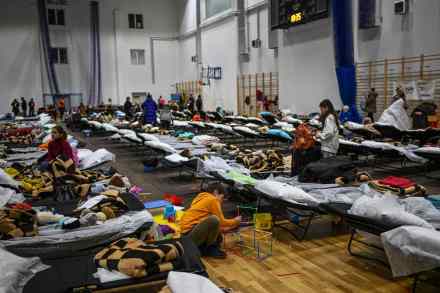
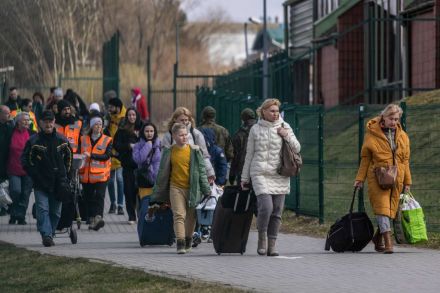
Hundreds of thousands of Ukrainian refugees have already streamed into Slovakia, Hungary and the Czech Republic. Head north to Poland, and the numbers go from the unprecedented to the jaw-dropping: two and a half million refugees have entered the country with a total population of 38 million since the war in Ukraine began. In the Czech Republic, where I live, official estimates put the current number of refugees at over 300,000, a figure expected to rise to between 500,000 and 600,000 in the coming months. In a country of less than eleven million, that’s five percent of the population. In Poland, a proportion closer to ten percent is possible. At the moment, most of the Czech Republic’s refugees are concentrated in Prague.

Why Hungary’s opposition failed

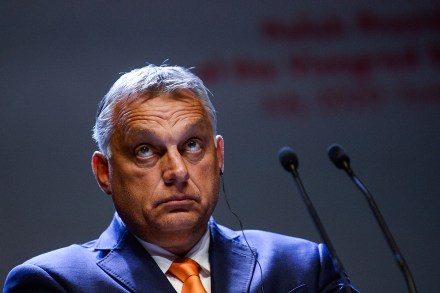
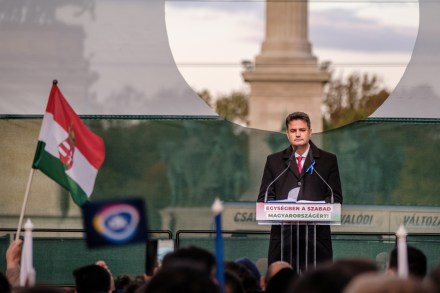
Viktor Orbán has now spent a total of 16 years as Hungary’s Prime Minister but he has not lost his hunger for power. Energetically campaigning across the country, exploiting every advantage of incumbency, and excoriating the incompetent opposition, on Sunday he notched up his fourth landslide victory in a row. Crucially, he maintains the two-thirds majority in parliament that he has held since 2010, allowing him him to amend the constitution whenever he chooses. Predictably, the opposition challenged the legitimacy of the election process even before the votes had been counted. They note that the lion’s share of the media supports Orbán. But this is an excuse, not an explanation.

Hungary’s Orbán remains a thorn in everyone’s side

From our US edition

Viktor Orbán has just won another election. The Hungarian prime minister has secured a hefty majority in his country’s legislative elections, and in his victory speech, Orbán revealed once again that he is a thorn: in the side of Europe most obviously but, if need be, in the side of all. I’ll leave for others the discussion of Hungarian democracy — whether Orbán has so manipulated national life that his continued electoral successes are unimpressive, even fraudulent. But Orbán, in his own mind, thought an “overwhelming force” ranged against him. “We never had so many opponents,” Orbán said.

Where Europe ends and the war begins

From our US edition

On a nondescript bridge in the northeastern Hungarian town of Záhony, the European Union ends and the war begins. Even amid the turmoil in Ukraine, the local border crossing is strangely quiescent. The flood of cars from the early days of the war has slowed to a trickle, and big eighteen-wheelers continue to cross over from Hungary into Ukraine. There are only two signs that something is amiss: a small notice on the door of the nearby Penny Market asking customers to help Ukrainian refugees, and a massive billboard of Hungarian prime minister Viktor Orbán’s stern face, promising voters that he will keep Hungary safe and peaceful.

viktor orban eu hungary

Why is the EU attacking Poland and Hungary in a crisis?

With Russian bombs harassing Kiev and Kharkiv, the two unsung heroes of Europe have been Poland and Hungary. With very little notice, they have between them welcomed, fed and accommodated well over a million refugees from Ukraine. This they have done gladly and without complaint. Yesterday the European parliament passed a ponderous 2,500-word resolution devoted to Poland and Hungary. An appreciation, perhaps, or even a vote of thanks? Not exactly. It was actually a call for the EU to take steps as soon as possible to block payment of EU budget and Covid recovery funds to both countries, and criticising Brussels for not having started the process earlier. Why?

Hungary’s ‘patriotic fight’ with the EU: an interview with justice minister Judit Varga

Budapest is racked with tension. As Russia’s invasion of Ukraine sends a stream of refugees to Hungary’s eastern border, Viktor Orbán’s Fidesz party has scrambled to respond to the humanitarian crisis while turning his back on his previous pragmatic relationship with Moscow. Fidesz’s unequivocal condemnation of Vladimir Putin’s actions will have come as a relief to Brussels. But a bitter argument still rages over Hungary's opposition to the bloc’s new ‘rule of law’ budget mechanism, which allows EU funds to be made dependent on adherence to legal and democratic norms.

America’s long history of sitting out Russian invasions

From our US edition

By now, my colleagues in the media may have convinced you that Russia’s invasion of Ukraine has been a “transformative” event, a challenge by a reactionary dictator to the “liberal international order,” if not an end to one historical epoch and the beginning of a new one. The world has turned upside down, nothing will again be the same, blah, blah, blah. When millennials make such apocalyptic observations, I can understand. Like Founding Father Thomas Paine, they assume that each day marks the “birthday of a new world.” But what about baby boomers like New York Times columnist Tom Friedman, who were in high school in 1956 during the so-called Hungarian Revolution, which was very much like what is happening in Ukraine today?

The crisis in Ukraine is strengthening the EU

The EU has a knack for turning a crisis into an opportunity. The Eurozone crisis led to the centralisation of economic powers in Brussels; Brexit consolidated the Franco-German push for EU integration; and Covid became the pretext for EU funds being made dependent on members adhering to the ‘rule of law’ for the first time. It's looking likely that the bloc will repeat this trick with the war in Ukraine. Prior to Russia’s invasion, the EU was being mocked for its divisions: on Russian gas dependency, on proposed economic sanctions, and on political links with the Kremlin. Now, the bloc is trumpeting its unity.

Even Hungary has soured on Vladimir Putin

From our US edition

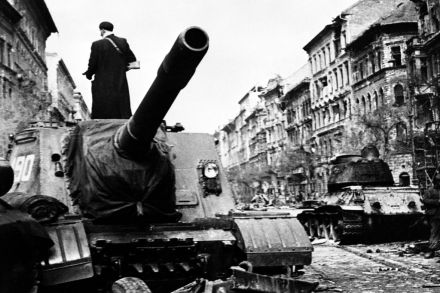
As Russian tanks rolled across the Ukrainian border, the front page of the Hungarian tabloid Pesti Hírlap revived an old rallying cry to capture the national mood. “Ruszkik haza!” (“Russians go home!”) was the headline, with Budapest 1956, Prague 1968, and Kyiv 2022 listed below the fold. The line was borrowed from graffiti scrawled on Budapest street corners during the 1956 anti-Soviet uprising, a heroic but doomed effort that has since entered into Hungarian national lore. Is it 1956 all over again? Despite some eerie parallels, the political geography of Europe has changed considerably since the bad old days of the Cold War. Budapest is two hours from Vienna by train and Prague is actually further West than the Austrian capital.

Viktor Orbán has played a perfect game with Putin

On 3 April Hungarians will have their ninth set of free parliamentary elections since the collapse of the communist dictatorship in 1989. The winner is likely to be Viktor Orbán and his Fidesz-KDNP coalition, which is leading in five of the six major polls. Russia’s invasion of Ukraine will not change that dynamic even though the opposition leader, Péter Márki-Zay has called Orbán a ‘traitor’ for his long-standing friendship with Vladimir Putin. Ever since Viktor Orbán began his second stint as Hungary’s prime minister in 2010, he has repeatedly played the provocateur within the EU, tweaking the eurocrats’ noses with his cultural conservatism and hostility to mass immigration.

The EU is pushing Hungary and Poland to the brink

Storm clouds looming over the EU’s ‘rule of law’ dispute turned a shade darker on Wednesday. The European Court of Justice rejected challenges from Hungary and Poland against a controversial budget mechanism linking adherence to democracy and EU funding.  In an indication of the significance of the ruling for the bloc’s future, the verdict was the first ever to be broadcast live from the court. The European Commission will now come under intense pressure to apply the rule of law mechanism and withhold long-term budget funds for Hungary and Poland, along with the pandemic recovery funds it has already refused to hand over to those states.

Is Orbán serious about leaving the EU?

First the UK decided to leave the EU. Then in Poland, lawmakers started talking about it. Is Hungary now seriously considering Huxit? For the first time ever, Viktor Orbán has insinuated that leaving the union could be a possibility. The Hungarian Prime Minister kicked off his campaign for re-election over the weekend by attacking Brussels’s ‘Jihad’ against his country and suggesting that continued membership of the EU might not be possible. This is obviously an alarming prospect for the EU. Over the course of Orbán’s premiership, Vladimir Putin has brought Hungary into his orbit. The latest step in that process was a 15-year gas deal signed in September. Russia will now supply about half of Hungary’s gas.

Could Viktor Orbán be a peacemaker in Ukraine?

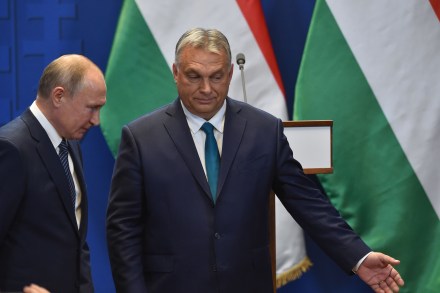
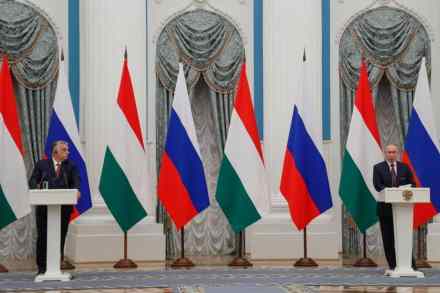
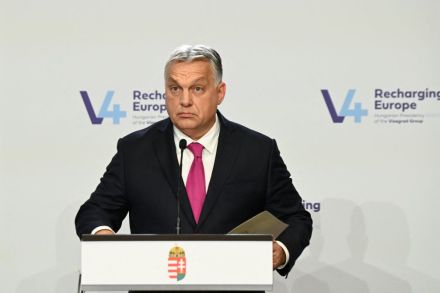
For a politician whose calling card is the struggle for Hungarian national sovereignty, Viktor Orbán and Vladimir Putin’s press conference on Tuesday didn’t look good for the Hungarian leader. Putin abruptly walked off the stage, brusquely beckoning Orbán to follow. The Hungarian strongman dutifully picked up his papers and traipsed across the large, socially distanced podium all alone, apparently flummoxed by whether or not to button up his suit jacket. The unfortunate clip makes Orbán look every inch Putin’s puppet – quite the turnaround for a politician who made his name campaigning against Hungary’s lack of independence as a Soviet satellite state in the dying days of the Cold War.

Viktor Orbán or: How I Learned to Stop Worrying and Love Putin

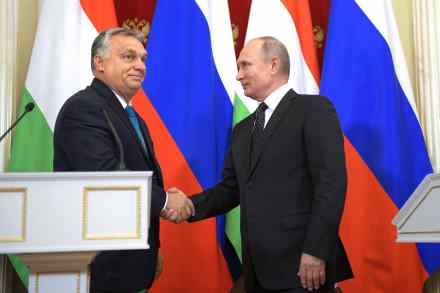
Viktor Orbán first came to prominence when in 1989 he declared on live TV that Hungary must put an end to the ‘Russian occupation’. On the first day of February this year, he held his thirteenth meeting with Vladimir Putin. What’s changed? Like much of his generation, Orbán initially believed that the fall of communism would mean a ‘return to Europe’ — with not only western democracy but also a western standard of living. Yet after a brief and unpleasant stint studying in Oxford, the student politician discovered that Britain’s future elites were ignorant and decadent.

Why Viktor Orbán is fighting a war against ‘LGBT ideology’

‘Do you support the unrestricted presentation of sexual media content that influences the development of underage children?’ In a national referendum likely to be held in the spring, Hungarians will be asked this question and others about the ‘promotion of gender reassignment’ to children, the holding of sexual orientation classes without parental consent, and whether or not they ‘support the display of gender-sensitive media content’ to kids. Parliament approved the referendum on Tuesday; opposition MPs chose not to vote on what they see as an egregious waste of public money.

Can Viktor Orbán’s conservatism work in America?

From our US edition

American conservatives are often accused of narrow-minded parochialism, but in recent years, the right has turned its gaze abroad. The Brexit referendum and the rise of Boris Johnson in the United Kingdom anticipated the potential appeal of conservative populism to working-class voters. Alt-right intellectuals look to Singapore’s curious mix of technocratic managerialism and libertarian economics as a blueprint for governance, while their more extreme (and extremely online) fellow travelers celebrate would-be strongmen like Brazil’s Jair Bolsonaro and the Philippines' Rodrigo Duterte. More recently, the presidential campaign of Éric Zemmour in France has captured the imagination of immigration restrictionists.

The EU doesn’t understand Hungary and Poland

Rather like Germany with its ill-starred 'Drive to the East' in the 19th and 20th centuries, one suspects the EU is quietly regretting its keenness to absorb most of the states of eastern Europe in the early 2000s. If not, events in Poland and Hungary this week may well persuade them. For a long time, national governments in the older EU states have more or less willingly subscribed to two articles of faith: the complete supremacy of EU law over their national law, including their constitutions, and the unchallengeable power of the EU Court of Justice — not only to expound EU law but also to extend and develop it, and to determine conclusively how far the competences of the EU run. There are reasons for this surprising submissiveness.

Out of nowhere: Viktor Orbán’s new challenger

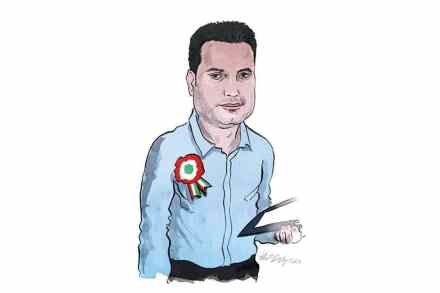
Hungarian politics has a lot to offer: sex tapes, offshore bank accounts, police-dodging MEPs hanging off drainpipes, supposedly left-wing parties cheerfully backing anti-Semitic parliamentary candidates. Nevertheless, most observers would admit that there has been stagnation in the past few years. Hungary’s politics have become a stale exchange of insults between familiar faces. Thank goodness, then, for Péter Márki-Zay, who has opened a window and let in some fresh air. He has been chosen by the opposition to the government as their candidate for prime minister in next year’s general election. And that means practically all the opposition parties in the Hungarian parliament working together.

How to beat Orbán? Copy him

Opposing Viktor Orbán is a formidable task. Support for his coalition hovers at around the 40 per cent mark while the parliamentary system makes it harder for opposition parties to break through. By 2018, all of the opposition parties, most of which are firmly on the left, realised they were individually incapable of breaking through. They began fielding joint candidates and had some early success when Gergely Karácsony won the mayoralty of Budapest. So they agreed late last year to select a common candidate for the prime ministership at next spring’s elections. Last weekend, a political outsider, Péter Márki-Zay, became the candidate.