Human rights

The Human Rights Act Protects the Innocent

Meanwhile, in the day's other Supreme Court judgement, the justices struck down the government's ban on non-EU spouses under the age of 21 coming to live in Britain. This legislation was, it should be noted, well-intentioned and aimed to make it harder to arrange forced marriages in this country. So far so admirable. But, as is so often the case, the law cheerfully entrapped the innocent as well as the guilty. And so, as is so often the case, there's a balance.

The Fox hunt distracts from louring clouds

The furore surrounding the defence secretary is distracting attention from some stories that are threatening the coalition’s tranquillity. Benedict Brogan reports that the Health Bill is being amended out of existence by a cabal of Lib Dem peers, a campaigned that was mooted during the party conference season. The rebellion is apparently aggravating Number 10, which understood that Nick Clegg had secured his party's support for the diluted programme which emerged after the recent "listening exercise". Labour's numerical superiority in the House of Lords means that ministers will have to be at their most mellifluous to bring the errant Lib Dems back to the fold, because Tory backbenchers are clear that they will not stomach further revisions.

Cat-flap, day five

‘Cat-flap’ is the story that just won’t go away. A report in today’s Guardian claims that the whole story may have been lifted from a speech made by Nigel Farage, the leader of the UK Independence Party. One colleague of May’s tells the paper that "Not only has Ms May been caught out making up stories about the Human Rights Act for cheap laughs, she has been plagiarising her clap lines from the UK Independence party." In the grand scheme of things, this is hardly the most serious charge. There’s just enough truth to the cat anecdote for May to have some ground to stand on and most Tories, understandably, want to see the Human Right Act scrapped.

The Cabinet cat-flap continues

The Ken Clarke and Theresa May cat-flap has sparked up again this morning, with the Justice Secretary accusing the Home Secretary of using "laughable child-like examples" to attack the Human Right Act. In some ways, it's hard to take a political row about a cat particularly seriously. But this back and forth between May and Clarke is actually exposing something very important: the Liberal Democrats are not the only brake on Tory radicalism. At the moment, lots of Tory ministers – up to and including the Prime Minister – like to imply that they'd be doing far more on Europe, immigration and the Human Rights Act if it wasn't for the Lib Dems.

Grieve tucks into May

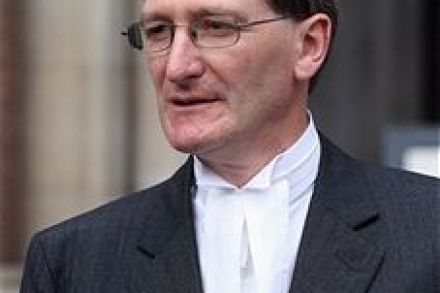
A fringe debate on the Human Rights Act hosted by the Tory Reform Group might not have been a crowd puller. But yesterday’s feline foul-up and the presence of Attorney General Dominic Grieve, a firm advocate of human rights, ensured the event was a sell-out. If Grieve had been advised against deepening internal animosity on the 'cat flap' furore, he ignored the direction. The TRG’s Egremont blog quotes Grieve as saying: "We need to have a rational debate. We must be more productive than just going for the ‘meow’ factor." Then he added: “The judicial interpretation and case workload of the European Court ought to be a concern for the UK and other European countries.

Taking the ‘cat-flap’ seriously

              Today’s ‘cat-flap’ between Ken Clarke and Theresa May exposes one of the largest divides in the Conservative party today. May, along with most Tory MPs, wants to get rid of the human rights act, while Clarke and the attorney general Dominic Grieve want to keep it. May, to the surprise of her colleagues, used a pre-conference interview with the Sunday Telegraph to make clear her desire to get rid of the act. After this, there was always going to be a reaction from Clarke & Co. One ally of the Justice Secretary tells me that his comments today were spurred, in part, by an irritation that he hadn’t seen the text of the Home Secretary’s speech before she delivered it.

May’s cat story is nonsense

If Theresa May took Ken Clarke up on his wager that no one has avoided deportation because they had a cat, as May claimed in her speech earlier, she should pay up. According to the Guardian's Andrew Sparrow, a spokesman for the Judicial Office has explained: 'This was a case in which the Home Office conceded that they had mistakenly failed to apply their own policy - applying at that time to that appellant - for dealing with unmarried partners of people settled in the UK. That was the basis for the decision to uphold the original tribunaldecision - the cat had nothing to do with the decision.' This is backed up by the UK Human Rights Blog run by 1 Crown Office Row.

The Tory split over the ECHR

Ken Clarke is speaking at a Daily Telegraph fringe event and he was quick to play a few of his favourite European games in response to Theresa May’s assault on the Human Rights Act and the European Court of Human Rights. Nick Watt reports that Clarke claims May did not brief of her examples of the HRA being abused. And he cast doubt on their veracity: according to Lucy Manning, Clarke jovially challenged May to substantiate her claim that a criminal was not deported on human rights grounds because they happened to own a cat. This may seem like fun and games, but it reveals the tension over the HRA and the ECHR that exists within the Tory party, in addition to that which dominates the coalition.

The human rights smokescreen

Today’s papers resound with the news that Theresa May is resisting Liberal Democrat opposition to close the loophole over the “right to family life”, Article 8 of the European Convention on Human Rights. This change, it is argued, will ensure that foreign criminals are deported so that the courts protect, as David Cameron put it, “the United Kingdom”.  The announcement is a carefully choreographed step to differentiate the Tories from the Liberal Democrats.

Labour and the forces

The main event at the Labour conference this morning has been a long debate on Britain's place in the world, featuring Douglas Alexander, Harriet Harman and Jim Murphy - shadow foreign secretary, shadow DfID secretary and shadow defence secretary respectively. The debate touched on liberal intervention, soft power and human rights; there was even a video message from Aung San Suu Kyi. But Murphy's extended homily on the military covenant was the centre piece of the discussion. Murphy revealed a plan to allow servicemen to join the Labour party for just £1 and he also pledged to defend the pensions of retired servicemen and their widows from cuts, saying that reducing payments was "simply wrong".

Medvedev clears the way for Putin

President Dmitri Medvedev has named his successor: one Vladimir Putin. Reports from Moscow say that Medvedev will step aside and support the man he succeeded in elections next March. This turn of events is not particularly surprising and Putin is a certain victor: as Pavel Stroilov revealed on Coffee House last week, Putin has been practicing that singularly Russian art of eliminating the opposition. Stroilov also warned Western governments against falling into Putin’s embrace. Russia is forecast to grow very quickly in the next 30-odd years, retaining its spot in the G7 according to PwC’s recent research paper, The World in 2050.

Cameron mustn’t fall further into Putin’s trap

"Russian democracy has been buried under the ruins of New York's twin towers", famous KGB rebel Alexander Litvinenko wrote in 2002. The West, he warned, was making a grave mistake of going along with Putin's dictatorship in exchange for his cooperation in the global war on terror. He would never be an honest partner, and would try to make the Western leaders complicit in his own crimes - from political assassinations to the genocide of Chechens. As a KGB officer, Putin would see every friendly summit-meeting as a potential opportunity to recruit another agent of influence. David Cameron, whose summit-meeting with Putin coincided with the sombre jubilee of 9/11, would be well-advised to remember these warnings.

Getting tough on discipline

A fortnight ago, The Spectator asked if Cameron was fit to fight? We wondered if he had the gumption to use the political moment created by the riots to push through the radical reforms the country needs.  So, it’s only fair to note that the government has today actually done something—as opposed to just talking about—the excesses of the human rights culture. The Department for Education has stopped the implementation of new regulations that would require teachers to log every incident in which they ‘use force’ with children. These new rules would have made teachers record every time they had pulled apart two kids in a corridor or intervened to break-up an over-enthusiastic game of football.

The Lib Dem conference advantage

Traditionally the fact that the Liberal Democrats hold their conference first and still vote on party policy at it has been regarded as a disadvantage. But this year, I suspect that these two things will be in their favour. By going first, they will get to set the terms of debate for conference season. They’ll be able to spike their coalition partners’ guns on a whole variety of post-riots issues. They can make clear that they won’t accept any changes to the human rights act or any government push to encourage marriage. Even better, they can pass motions to this effect. They also will have first crack at setting out on what terms the 50p rate can be ended.

Clegg paints the world yellow

Nick Clegg laughed-off the dousing of blue paint he received in Glasgow yesterday, like one of Noel Edmonds’ unwitting victims. Today, Clegg has turned into the grinning douser: drenching his coalition partners in yellow paint by saying that the European Convention on Human Rights will not be watered down. Writing in the Guardian, Clegg says that the Conservatives are right to seek operational reform of the European Court of Human Rights, but the common ground ends there. He says that “the Human Rights Act and the European convention on human rights have been instrumental” in preventing injustices from council snooping to the misuse of DNA records and that the incorporation of human rights into domestic law was a “hugely positive step”.

Cameron needs to take this opportunity

Libya has elbowed the riots off the front page. But, in the medium-term, how Cameron responds to them remains one of the big tests of his premiership. In the Evening Standard today, Tim Montgomerie vents the frustrations of those Tories who fear that Cameron is missing his chance. Tim’s complaint is that Cameron has actually done — as opposed to said — very little and that the chance to use this moment to push through a whole bunch of big, necessary changes is being missed. With every day that passes, action on — say — the Human Rights Act becomes less likely as the Liberal Democrats become more dug in.

Human rights wrangle

A set-to has broken out this morning over the Human Rights Act. David Cameron has declared that he is going to fight the Human Rights Act and its interpretation. Cameron writes: ‘The British people have fought and died for people’s rights to freedom and dignity but they did not fight so that people did not have to take full responsibility for their actions. So though it won’t be easy, though it will mean taking on parts of the establishment, I am determined we get a grip on the misrepresentation of human rights. We are looking at creating our own British Bill of Rights.

Riot sentencing row brews

David Cameron promised that looters would feel the full force of the law. Courts have been sitting round the clock holding defendants on remand and issuing stern sentences. This is causing disquiet in some circles. Lib Dem MPs complain that the government has overacted, incapable of resisting the temptation to take draconian decisions without adequate scrutiny. Tessa Munt told the Guardian that the government’s approach “smacks of headline grabbing by Conservatives, not calm, rational policy-making.” Lady Hamwee also told the paper that it would be a “great pity if what [the justice secretary] Ken Clarke has been doing – finding a better way of sentencing – was to be undone.

Massacre in Hama hastens the need to tackle Assad

Syrian President Bashar Al Assad has praised his troops for ‘foiling the enemies’ of his country. Some enemies. 140 civilians are said to have died in a pre-Ramadan crackdown on protesters, adding to the toll of 1,600 civilians who have been killed since anti-government demonstrations began in mid-March. Details of the events in Hama are unclear because journalists have been kept out of Syria. But the pattern of events is familiar: protests against the Assad regime emerge; the army moves in to kill demonstrators; more protests then take place, which leads to more killings. Meanwhile, the international community stands by.

Stopping Syria

Syria is still ablaze and the West seems unable to do douse the flames. And the risk of the Assad regime committing even greater violence will increase when the world's media moves on. The reasons for Western impotence are manifold. First, for a long time Western leaders thought they could reason with Assad and therefore shied away from direct pressure. When they decided to act, they discovered that Assad is immune to European pressure because Syria does little trade with Europe. But, crucially, many Syrians are either loyal to the regime or fear triggering disintegration of the sort they have seen in neighbouring Lebanon and Iran. Finally, unlike Libya, the Syrian regime is not hated by fellow Arab states.