Pavel Stroilov

Will Donald Trump dare to challenge Putin over his political prisoners?

From our UK edition

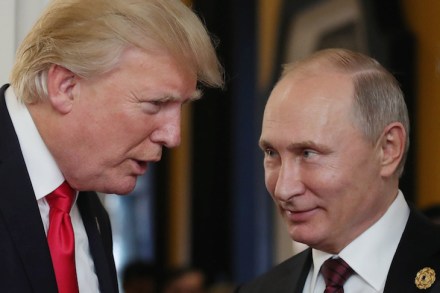
From Nixon’s ‘détente’ to Obama’s ‘reset’, every new US administration makes one attempt at reconciliation with Moscow. Today it’s Donald Trump’s turn, at his summit meeting with Vladimir Putin in Helsinki. At first, such meetings are sensationalised as historic turning points, with the future of the world hanging in the balance. But that view doesn’t usually last long. It only takes a couple of state-sponsored assassinations by Russia, and maybe a small war in addition, for the parties to realise that they are at cross-purposes. And if you are in geopolitics, as a US president has to be, you have to talk to foreign dictators from time to time. That is not a treason in itself, but there are proper ways of going about it.
Revealed: the Kremlin files which prove that Nato never betrayed Russia

From our UK edition

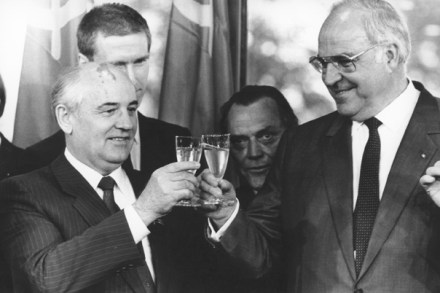
Nato is taken more seriously in Russia than in the West. Here, Nato is largely seen as yet another international bureaucracy, as useless as the rest of them. But to a former KGB officer like Vladimir Putin, the Cold War has never really ended, and Nato is an exceptionally dangerous and perfidious enemy. You may not criticise corruption in Russia, he says, as that would play into Nato’s hands. Putin had no choice but to invade Ukraine — in the Ukrainians’ own interests, to protect them against a Natotakeover. Putin's case against Nato is that it has deceived Mikhail Gorbachev. Gorbachev says he agreed to withdraw from Soviet central Europe only after being promised that ‘Nato would not move a centimetre to the east’.

Exclusive: the Kremlin’s secret Margaret Thatcher files

From our UK edition

‘I like Mr Gorbachev. We can do business together.’ This famous endorsement of the Soviet leader, from Mrs Thatcher, convinced the world that he was a fundamentally different figure from his predecessors. But did she really see in him a kindred spirit? In her memoirs Margaret Thatcher was equally generous about the Soviet leader — magnanimity in victory perhaps. The official Kremlin records, which preserve almost every word the two leaders said to each other, paint a very different picture. The Soviets, like the Nazis, were meticulous note-keepers, and the notes I have seen (and had the chance to copy) show the true nature of the Thatcher–Gorby relationship.

Cameron mustn’t fall further into Putin’s trap

From our UK edition

"Russian democracy has been buried under the ruins of New York's twin towers", famous KGB rebel Alexander Litvinenko wrote in 2002. The West, he warned, was making a grave mistake of going along with Putin's dictatorship in exchange for his cooperation in the global war on terror. He would never be an honest partner, and would try to make the Western leaders complicit in his own crimes - from political assassinations to the genocide of Chechens. As a KGB officer, Putin would see every friendly summit-meeting as a potential opportunity to recruit another agent of influence. David Cameron, whose summit-meeting with Putin coincided with the sombre jubilee of 9/11, would be well-advised to remember these warnings.

Moscow’s jihadi

From our UK edition

The Russian secret service and the new al-Qa’eda commander What do we know about the new head of al-Qa’eda, Ayman al-Zawahiri? Not very much. We know he’s a former ‘emir’ of the Egyptian Islamic Jihad who spent three years in an Egyptian prison after his group assassinated the pro-western President Anwar Sadat. He’s also said to be a qualified surgeon, who became bin Laden’s personal physician and adviser in the late 1980s. But there is one curious fact about him that it would be foolish for the West to ignore: his links with the KGB, and its successor, Russia’s Federal Security Service, or FSB.

The Gorbachev files

From our UK edition

The international stage is dominated by two men this March: Muammar Gaddafi, fighting like mad for the survival of his regime, and Mikhail Gorbachev, celebrated around the world on his 80th birthday for not being a Gaddafi. Nobody knows what will now happen in Libya; but the Gorbachev celebrations will culminate next week in a splendid gala at Royal Albert Hall, with a crowd of celebrities and tickets on sale for up to £100,000. Some 20 years ago the communist dictators faced the same choice as the Arab dictators today: to surrender their regimes or to massacre their people. Some chose massacre, like the Chinese comrades, who slaughtered thousands of protestors at Tiananmen Square in 1989. But Gorbachev rejected such methods, and so the Soviet Union collapsed almost peacefully.

Kinnock and the Kremlin

From our UK edition

In the second part of our investigation into Labour’s dealings with the USSR, Pavel Stroilov reveals the secret Soviet diplomacy behind one leader’s most famous victory Labour leaders, past and present, will be wishing this week that Anatoly Chernyaev had not been such an assiduous diarist. Along with thousands of documents left in the archives after the collapse of the Soviet Union, the diplomat’s personal writings had lain forgotten for more than 20 years. Last week, extracts in The Spectator cast light on Labour’s ‘special relationship’ with the Kremlin and the various officials who begged for its help to fight the Conservatives.

Reaching through the Iron Curtain

From our UK edition

In the pages of the Kremlin’s secret diary, Pavel Stroilov discovers what Labour’s Soviet sympathisers said when they thought no one was listening It is almost 20 years since the fall of the Berlin Wall — and still the truth keeps trickling out of Moscow. The Soviets, like the Nazis, were meticulous note-keepers and there is decades worth of material still to be uncovered. At first, only those who went through the filing cabinets could compile the untold stories of the USSR. But now that these records are being digitised, scrutinising them becomes a lot easier. And this is how I came across the extraordinary diaries of Anatoly Chernyaev. For years he was the Soviet Union’s contact man with the West.