Human rights

China’s human rights crackdown is getting worse

From our UK edition

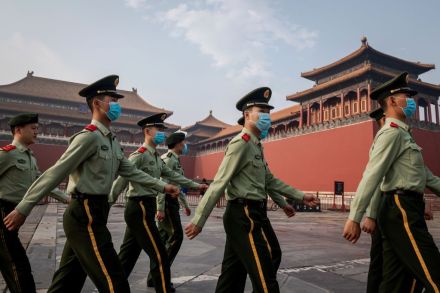
The Chinese Communist Party regime’s repression is pervasive and intensifying. Over the past five years, Xi Jinping’s brutal assault on basic human rights has accelerated with horrifying ferocity and speed.  But while the incarceration, forced sterilisation and enslavement of millions of Uyghurs is increasingly recognised as a genocide, and the dismantling of Hong Kong’s promised freedom and autonomy a grave breach of an international treaty, it is worth remembering that numerous groups in China are under attack.

The anti-Trump protesters forget where Britain’s true friendships lie

From our UK edition

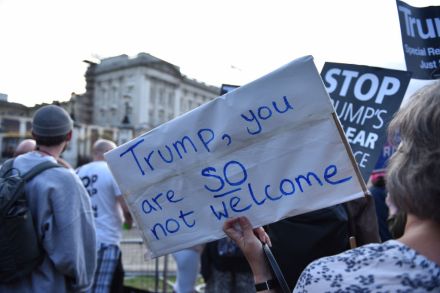
American politics – like our own – is more polarised than ever. More than perhaps any other president in living memory, Donald Trump has divided opinion. To his supporters, he can do no wrong. None of the old political orthodoxies seem to apply. To his detractors at home and abroad, his presidency is an embarrassment, arousing expressions of hatred rarely seen in Western politics. But we would be foolish to muddle a dislike of a particular President with our historic and deep commitment to an enduring, strong, British-American relationship. Even more foolish to presume that everything he says or does has no merit.

The real wizard of Oz

From our UK edition

What makes a barrister famous? At one time, many of the best advocates were also prominent politicians, whose day job was in court and who moonlighted in the Commons — think F.E. Smith. But it is impossible today to double up with any distinction. As long as capital punishment survived, public attention also attached to those great defenders who rescued their clients from the noose — think Edward Marshall Hall. But English judges no longer don the black cap to pronounce the sentence of death. Geoffrey Robertson, the author of this riveting memoir, ticks the boxes which guarantee the reputation of the modern celebrity silk: chiefly, a concentration on the fashion-able area of human rights, with a special interest in press freedom, making him a hero of the left-wing media.

A court’s contempt

From our UK edition

The issue of sovereignty has mysteriously disappeared from the debate over Brexit. Some business-focused commentators even like to assert that in a ‘global, interconnected world’, sovereignty is meaningless. But a court judgment, delivered earlier this month, perfectly illustrates what is at stake. The case is about national security. Specifically, it is about the legality of techniques used to identify and disrupt people intent on unleashing terror: the kind of terror we have seen recently in Manchester, Westminster, Borough Market and Parsons Green. The technique at issue is the bulk collection of communications data (BCD). This data is the ‘who’, ‘where’, ‘when’ and ‘with whom’ of communications, not what was written or said.

Punks vs. Putin

From our UK edition

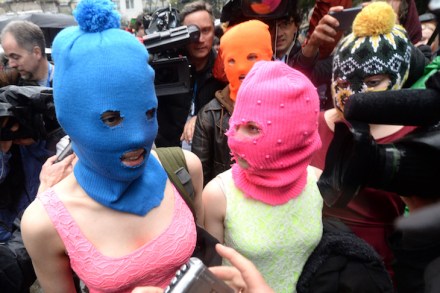
What makes for meaningful political protest? In regimes where ideology was taken seriously (such as the Soviet Union or America during the Cold War), dissidents and dissenters could target rulers’ political ideas, whether communist or capitalist. But in regimes where ideology is used more to distract than indoctrinate (such as Putin’s Russia or Trump’s America), directly opposing the leaders’ ‘narrative’ (one which can change, depending on political expedience) risks playing right into their game.

An untouchable star

From our UK edition

This slight book comes with heavy baggage. In 2009, Rampling handed back a hefty advance for her contribution to a conventional authorised biography, and then used the Human Rights Act to prevent Barbara Victor from publishing anything based on their collaboration, on the grounds that it would violate her right to privacy. The Mail typically demanded to know ‘what can possibly remain untold in her audaciously open life’. What it meant was that, having been so extensively naked on-screen, Rampling had no business pulling down the shutters on her private life. But Rampling’s extraordinary sexiness has always derived from an immaculate meeting of exposure and reserve.

Diary – 16 March 2017

From our UK edition

In the NHS clinic where I work, adults who suspect they may have Asperger syndrome wait almost a year for a diagnosis. The clinic takes referrals from all over Cambridgeshire and Peterborough (a population of 860,000), but we have to see all of them in the hours of a single full-time doctor. And the clinic is not given funds to run a follow-up support service once someone has been diagnosed. These individuals struggle to socialise, are neurologically different, and are overlooked because their disability is invisible. Many have experienced bullying in childhood, underemployment in adulthood and exploitation because of their social naivety. Many are made to feel inferior despite their often considerable talents. No surprise that many develop depression.

War and law

From our UK edition

From ‘The confiscation of enemy property’, The Spectator, 17 February 1917: It is perfectly possible to remove German influences without confiscating German property. This, as far as can be gathered, is the policy which the French have followed, and in their interest as well as in our own we ought also to follow it. The Germans, to give them in this matter the full credit which is due to them, have been very slow to take any steps against British property held in Germany… We do not wish to give them an excuse for fresh crimes. Our business is to punish them as a nation for the crimes they have already committed. In order to effect this object we have to concentrate all our energies upon beating our enemy in the field and on the sea.

It’s time to drop the British Bill of Rights for good

From our UK edition

The Government plans to scrap plans to scrap plans to scrap the Human Rights Act. Here we go again. Following snugly in the footsteps of her two predecessors as Lord Chancellor, Liz Truss has promised to implement the so-called 'British Bill of Rights' in its place. There were never good reasons for this policy, but at one stage there were at least some bad reasons. Now, even they have run out. The European Convention on Human Rights affirms the rights to life, a fair trial and freedom of expression, among others. Until 1998, a Brit who thought their human rights had been violated needed to exhaust all their legal options at home before fighting to take the case to the European Court of Human Rights. On average, that took five years and cost £30,000.

‘I have become their voice’

From our UK edition

When the model and actress Anastasia Lin was crowned Miss World Canada last year, a fairly easy and lucrative career lay in front of her: magazine shoots, sponsorship opportunities and being paid to turn up to parties. She instead decided to use her position to confront the Chinese Communist party and call out its human rights abuses. Her new film The Bleeding Edge is a feature-length dramatisation about the organ trade in China. It might not be in a cinema near you soon, but it does screen in the House of Commons next week, in front of MPs and peers. And this is the audience that 26-year-old Lin is seeking. Her website has the slogan ‘beauty with a purpose’, and Lin has both in abundance. Speaking from Toronto before her visit here, she tells me her unlikely story.

Animal crackers

From our UK edition

The other evening I was driving back in heavy rain from my pilates class when I noticed something rather upsetting in the gated road that goes through our estate. I stopped and got out of the car for a closer look. Yes, as I feared, it was a dead duck. Some bastard had squished her flat. What made me more upset still was that I could see her mate — a mallard drake — swimming forlornly in the ditch next to the road. I loved those ducks like Tony Soprano used to love his ducks. Especially the stupid way they waddled blithely across your path, forcing you to slow down and always making you smile whatever mood you were in. But clearly the tosser who did this was in too much of a hurry: either a van driver or someone in a 4 x 4, I guessed.

Will the human rights industry ever admit that it has Christian roots?

From our UK edition

Helena Kennedy’s two-part radio programme on human rights was very predictable. She did a lot of hand-wringing. She spoke some passionate rhetoric about our common humanity. She quoted Hannah Arendt. She consulted a lot of non-Western thinkers, a lot of fellow human rights lawyers, and a token critic of the concept of human rights. The first part put much emphasis on the ancient global roots of the concept. Look how it is anticipated in this ancient Iranian or Mesopotamian or Buddhist document. I think this is misleading. Though many ancient cultures had impulses in this direction, they were frail. It was the Christian West that gradually heaved such aspirations into politics.

Are Anders Breivik’s human rights really being contravened, or is it simply attention seeking?

From our UK edition

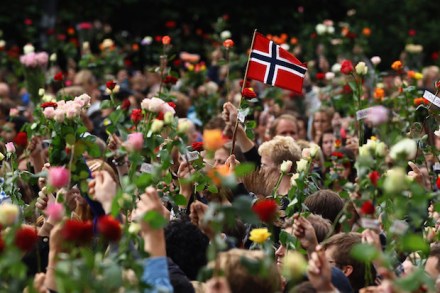
Anders Behring Breivik – the Norwegian extremist who killed 77 people in 2011 – has for the last few days been involved in a human rights trial in his prison in the south of Norway. Many would argue that, for a person in jail, he has a fairly cushy life – particularly given his crime. He is allowed to play video games, read newspapers and have access to a computer, and also has access to three cells, as well as an outside area. He has also been allowed to take university courses at the country’s main university, the University of Oslo, and took part in the prison’s Christmas gingerbread-baking competition. He is not, however, allowed to communicate with other prisoners, and his letters are all monitored and censored. So what more does he want?

Vote for freedom!

From our UK edition

One of the most appealing arguments for Brexit is that it will make British citizens freer than they are now. The greatness of Great Britain lies, after all, in its long history of relative freedom. But now, so the proponents of Brexit like to claim, Britain is shackled by the tyranny of the EU, as though ‘Brussels’ were some alien dictatorship in which Britain plays no part. Columnists huff that Britain is now just a colony of this ‘foreign superpower’. That the EU exists as a superpower would come as news to most people in Brussels — and everywhere else. The European Union has no army and no joint foreign policy, and cannot be described as a state, federal or otherwise.

Turkey’s blackmail

From our UK edition

Looked at from the narrow perspective of how to deal with the lethal business of human trafficking across the Aegean, this week’s deal between the EU and Turkey shows some encouraging signs. Slowly, the EU seems to be realising that the surest way to stop migrants dying in unseaworthy boats is to adopt similar measures to those used by Tony Abbott the former Australian Prime Minister: turn back the boats, and deport those who land illegally. The Australians paid Malaysia to help handle the migrant problem. The EU is paying Turkey more than £4 billion over the next three years to contain 2.5 million refugees. The problem, however, is that Turkey is being offered more than money.

What’s the hold up with the British Bill of Rights?

From our UK edition

Before the election, the Tories talked about introducing a British Bill of Rights in their first 100 days in office. But eight months on from the election, the government hasn’t even started consulting on it yet. Some of this delay is understandable. When Michael Gove was made Justice Secretary, he wanted to work out his own solution to this problem. But the timetable has just kept slipping. After the election, we were told proposals would come in the autumn. Then, it was before the end of the year. Then in December, in the New Year. Yet, we still haven’t seen these proposals—and won’t in the next few weeks either. But, as I write in The Sun this morning, the bill is now pretty much ready.

Rwanda’s new tragedy

From our UK edition

Never lighthearted, my African political exile friend sounded particularly lugubrious on the line from Washington. His voice was low and pensive. For the past few months, he said, he’d been hearing of plans hatched by the regime back home for his assassination. ‘They are very gruesome, very gruesome indeed.’ It was not the first time. In the past he’d always passed the details on to the FBI, which had also called him up several times when they thought he was in danger. This time he hadn’t bothered. ‘I always ask them: ‘What are you doing to protect me?’ and they say, ‘Well, if you see anything suspicious, call 911.

The brutality of China’s one-child policy is still shocking

From our UK edition

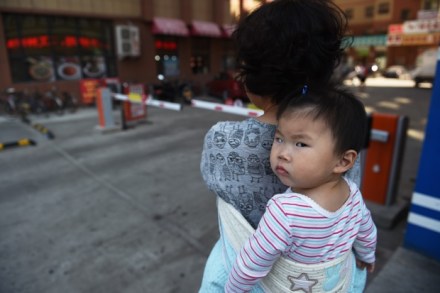
So, China’s Communist Party has radically modified its one-child policy in favour of a one-or-two-child policy. For most politically minded Brits, it was a useful reminder that the policy actually existed. It has, says the Communist party with characteristic opacity, prevented about 400 million births in the decades since its introduction in 1979.  Some 330 million of those births were prevented by abortion. It may be that I somehow missed all the moral outrage over here at this flagrant violation of human rights from feminists and human rights organisations in those three decades. Or possibly there wasn’t much. Maybe there were any number of women’s groups picketing the Chinese embassy about the policy on a 24-hour basis and I just never got to hear about it.

Cameron tells Tories they no longer have to follow international law

From our UK edition

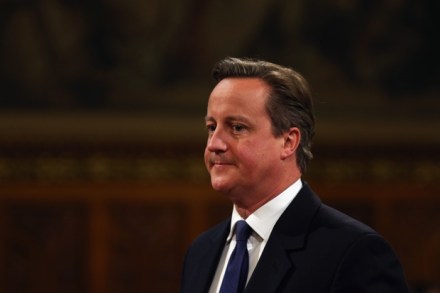
People go on about the awful pressure of 24/7 media on our leaders, and how hard the constant scrutiny must be to bear. But politicians and civil servants know that more means less. As more news sites and tweeters repeat the same stories, and millions of 'diverse' voices say the same thing, the basics of power go unexamined. Take the ministerial code, which guides the conduct of politicians in office. It is one of the fundamentals of public life. The opposition (such as it is) and the media can use it as a stick to beat the government. The prime minister can fire ministers who break it. 'Ministers of the Crown are expected to behave in a way that upholds the highest standards of propriety,' it begins. OK, but how?

The Australian way

From our UK edition

 Sydney Most ordinary Australians are shocked that our immensely civilised country is reviled in polite society here and abroad, when the world has so many blatant human rights abusers. The latest accusation comes from a New York Times article complaining that our policies on asylum-seekers are harsh, insensitive, callous and even brutal, and urges European nations not to copy them. Yet the policies on border protection of Tony Abbott and John Howard before him should be a lesson to Britain. At the heart of the matter is a firm but fair post-war policy that mass migration is conditional on government control over ‘who comes to this country and the circumstances in which they come’, as Mr Howard famously put it.