Human rights

The migrant crisis has presented us with a moral duty that is impossible to fulfil

From our UK edition

The migrant crisis raises the largest questions about our basic public creed, our ideology, secular humanism. Normally we pay little attention to this creed. Yes, yes, we affirm the ideal of universal human flourishing, the equal worth of all human beings, human rights. But do we believe it? This crisis forces us to wonder. As Matthew Parris says here this week, we simply do not know what our moral obligations are in relation to these people. Should we love our neighbour as ourself, and rush off to help them? How can we reconcile our universal humanism with the need to prioritise the welfare of our own tribe? Isn’t Western morality just too demanding? Its excessive demands on us leave us without a sensible, moderate, realistic sense of our moral duty.

Death watch | 27 August 2015

From our UK edition

[audioplayer src="http://rss.acast.com/viewfrom22/thereturnofassisteddying/media.mp3" title="Lord Falconer and Douglas Murray debate 'assisted dying'" startat=42] Listen [/audioplayer]A couple of years ago I contacted Holland’s top pro-euthanasia organisation. Our House of Lords looks likely to approve a bill legalising euthanasia here, I told them. ‘Very exciting!’ came the reply. Next month Parliament will again be discussing ‘assisted dying’, and although the tone of the British debate is not yet quite like the Dutch one, a shift in tone has undoubtedly occurred. In the past few years euthanasia has been renamed ‘assisted dying’ and become part of the ‘progressive’ cause.

Laying down the law

From our UK edition

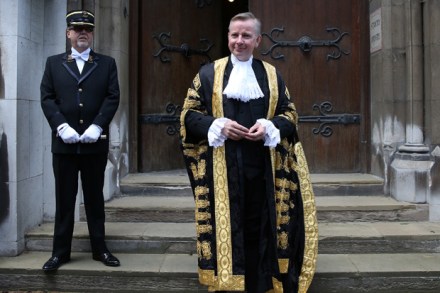
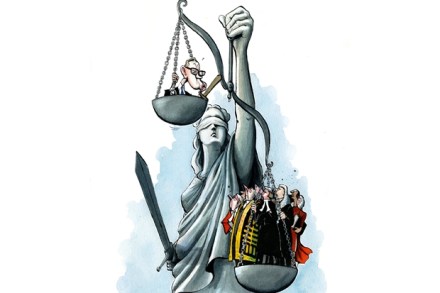
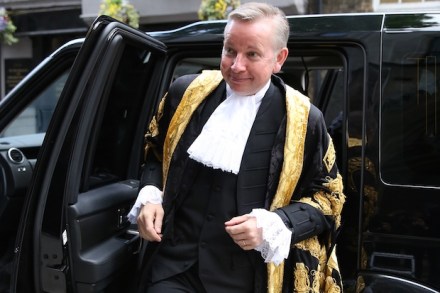
A great test of political leadership is how well you deal with vested interests on your own side. In his first speech as Lord Chancellor this week, Michael Gove has shown himself willing to tackle a profession which has long been comfortable with Conservative governments and whose reform, as a consequence, is long overdue. A legal system designed from scratch would not resemble what we have now. The only thing wrong with Michael Gove’s observation that Britain has a ‘two-nation’ justice system is that he should really have said three nations. Like the central London property market, the courts have become the preserve of the very rich and the very poor. The middle is excluded. The rich can afford to revel in the pantomime.

Barometer | 4 June 2015

From our UK edition

First test The driving test celebrated its 80th anniversary. The first person to take the test, R.E.L. Beene of Kensington, passed. Here is some of the advice given to candidates on a Pathé newsreel: — ‘Don’t flick your cigarette ash outside. It’s very confusing.’ (The driver behind would have been looking for hand signals.) — ‘Never drive on the crown of the road.’ — ‘Don’t look down at the gear lever while you change gear.’ — ‘Don’t be nervous. The examination is not an inquisition but a series of very reasonable tests.

Mass surveillance is being undermined by the ‘Snowden effect’

From our UK edition

We are in the middle of a Crypto war again. Perhaps we have always been in the middle of a Crypto war. Since the 70s, the right and ability to encrypt private communications has been fought over, time and again. Here in the UK, Cameron’s re-election has prompted reports of a 'turbo-charged' version of the so-called ‘Snoopers’ Charter’, extending further the powers of surveillance that the whistleblower Edward Snowden described as having 'no limits'. Two nights ago, the US Patriot Act expired. With it, at least officially, elements of the NSA’s bulk surveillance programme expired too.

Human rights reform: will the Tories end up with the same bill but under a new name?

From our UK edition

Number 10 has not given an official denial that David Cameron has ruled out pulling out of the European Convention on human rights, with the Prime Minister’s official spokeswoman today saying that the manifesto was ‘absolutely’ the best guide to the Prime Minister’s position on human rights reform. This is what the manifesto says on human rights: We will reform human rights law and our legal system We have stopped prisoners from having the vote, and have deported suspected terrorists such as Abu Qatada, despite all the problems created by Labour’s human rights laws. The next Conservative Government will scrap the Human Rights Act, and introduce a British Bill of Rights.

One human right should not be able to extinguish another human right

From our UK edition

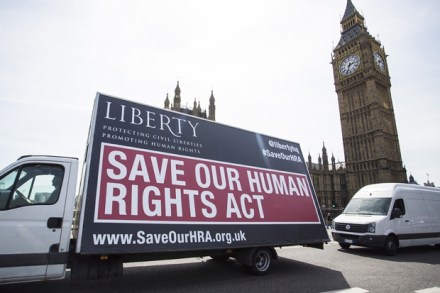
The Human Rights Act (1998) has a big fan base. In legal, political and celebrity circles there is much enthusiasm for it. Yet the law is not giving us the rights and freedoms we need, because each right can be played off against another. We’ve been losing our human rights in the name of human rights. In the mid-nineties I began chronicling and campaigning for a right to free speech while challenging the Human Rights Act. I couldn’t understand why Britain, a country renowned for its tolerance, was clamping down on the right to free speech (Article 10) including what newspapers published, in the name of a right to privacy (Article 8).  The reason was said to be the rise of stories concerning the private lives of public figures.

Tim Farron interview: Lib Dems scared Tories off British Bill of Rights in the Queen’s Speech

From our UK edition

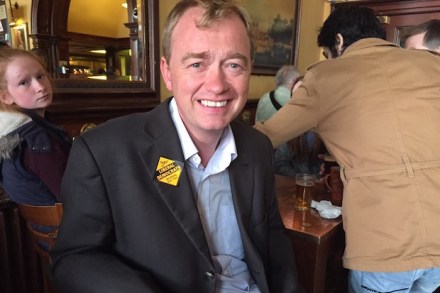
I spotted the Liberal Democrat leadership candidate Tim Farron in a pub on Whitehall, enjoying half a pint of lager and nachos with fellow party activists after marching in defence of the Human Rights Act. He kindly agreed to speak to The Spectator and you can watch above what we discussed. As part of his leadership campaign, Farron, who remains the bookies' favourite, has suggested the party must focus on particular campaigns and causes instead of acting like a traditional small political party.

The Spectator’s Notes | 28 May 2015

From our UK edition

Amnesty International and others have placed a large newspaper advertisement telling Michael Gove ‘Don’t Scrap Our Human Rights’. The ad asserts that ‘A government cannot give human rights or take them away’, which, if true, makes one wonder how it can scrap them. Human rights are philosophically a confused idea; but their political power consists in the fact that anyone questioning them can be made to look nasty. People who love making new laws — particularly new laws that cost money — therefore like to present these laws as human rights. Article 29 of the EU’s Charter of Fundamental Rights, for example, says ‘Everyone has the right of access to a free placement service’.

Portrait of the week | 28 May 2015

From our UK edition

Home A Bill to enable a referendum on whether voters wanted Britain to ‘remain’ in the European Union figured in the Queen’s Speech. Another Bill prohibited any rise in income tax rates, VAT or national insurance before 2020. Tenants of housing associations would be given the right to buy their homes. Provision for Scottish devolution was promised in fulfilment of the recommendations of the cross-party Smith Commission. A ‘powerhouse’ in the north was to come into being through cities being given powers over housing, transport, planning and policing. Laws on strikes would be tightened. Red tape for business would be reduced, and a new quango set up to invigilate late payment to small businesses. Apprenticeships would be encouraged and childcare expanded.

Liberty’s ‘Human Rights’ campaign uses luvvies to spread misinformation

From our UK edition

Does anybody else remember life in Britain before the year 2000?  Despite the distressing increase in the number of walking, talking human beings one meets who were born since the millennium, there must be some other people who remember those times.  Yet what a picture of that era is now being painted. Take the incredibly glitzy and celeb-driven campaign currently running thanks to the campaign group ‘Liberty’.  No less a site than The Spectator has run the ads. And understandably so. For they are not only well-funded but feature the icons of our time.

Cameron will struggle to get human rights reform past parliament at any stage

From our UK edition

David Cameron has decided to stall on human rights reform for now, partly because the Tories couldn’t quite work out how to get the reforms they wanted, and partly because the Prime Minister knew that he had a rebellion in his own party on his hands, opposition from almost all other parties bar the DUP, who Sam Coates explains in the Times have said they are unlikely to give their backing to the bill in the early part of the parliament. Opponents of big changes to human rights legislation within the Tory party are not surprised by the delay. They also don’t think that it is likely to pass at any stage in this Parliament, unless it is dramatically slimmed down to the point that it makes very little difference.

Podcast: Gove’s battle for justice, the perils of a small majority and the Labour leadership contest

From our UK edition

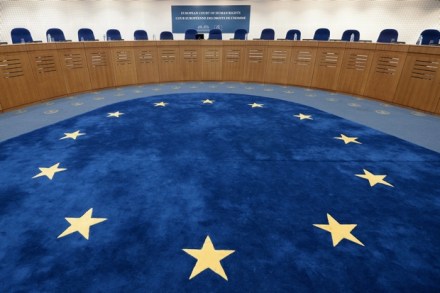
Repealing the Human Rights Act is one of the most difficult tasks the government faces. On this week’s View from 22 podcast, the Conservative MEP Daniel Hannan and barrister Greg Callus discuss how and why Michael Gove intends to break Britain’s link with the European Court of Human Rights. Is it a purely symbolic gesture to repeal the HRA or should ordinary people care about this? Is the legal community generally supportive or against the move? And how does Gove’s personality help this battle? James Forsyth and Isabel Hardman also discuss the perils of a small majority government and how the Tory rebels intend to make life difficult for David Cameron.

A small majority means big challenges

From our UK edition

In ancient Rome, when a general rode in triumph through the city, a slave would stand behind him whispering into his ear, ‘Remember you are mortal.’ Today, there is no shortage of people volunteering to make the same point to David Cameron. First, there are Tory backbenchers with long-standing grudges who are already making clear their desire to cause trouble. David Davis, the man Cameron defeated in the leadership contest a decade ago, didn’t even wait to be sworn in again as an MP before he started warning of rows to come over plans set out in the Tory manifesto to limit the powers of the European Court of Human Rights.

You’ll regret not having a Human Rights Act when a left-wing government returns

From our UK edition

In today’s Guardian, Matthew D’Ancona warns that David Cameron may face a successful rebellion from the 'Runnymede Tories' if he tries to repeal the Human Rights Act, led by David Davis. Not only would that be a major blow to his authority, it would make remaining in the EU a less attractive option in the forthcoming referendum. Human Rights experts insist that the two issues are wholly separate, although that’s open to debate. But there’s no doubt they’re politically linked.

What Michael Gove told his civil servants

From our UK edition

Michael Gove has been keeping a relatively low profile since being made Justice Secretary and Lord Chancellor last weekend. I understand that he is keen to master the brief, and particularly the complexities around the creation of a British Bill of Rights, before he starts hitting the TV studios. But an address he gave to staff at the Ministry of Justice on Wednesday gives some clues as to the direction he is heading in. Interestingly Gove didn’t simply declare that the Tories would be scrapping the Human Rights Act. Instead, he said, ‘We’ll be seeking to ensure that human rights are enhanced and preserved by modernising and reforming the framework of rights in this country’.

Tory rebels wait for first chance to pounce

From our UK edition

That some Tory MPs wouldn’t like the idea of Michael Gove scrapping the Human Rights Act has been known for some time, but there is something else worth keeping an eye out for in the next few weeks as the Tories draw up their proposals. Some Conservatives, like Dominic Grieve, have long been opposed to this sort of reform. But many others are waiting to see the detail before they react - and are still minded to rebel on the legislation. Depending on what Gove and his team produce, they could find themselves with a group of rebels considerably larger than the majority of 12 the government has, who will enjoy the support of Labour and the SNP (oh, and the Lib Dems, but they won’t be necessary, really, will they?) in blocking the legislation.

This new crowdsourcing site allows anyone to use their skills to advance basic human rights

From our UK edition

One of the questions I most often get asked is: ‘What can I do?’  If you agree that actual liberals are the only palatable future in authoritarian societies and also recognise that they are a beleaguered minority, is there anything you can meaningfully do to help? Western governments are generally too busy doing business with authoritarian governments to focus on actual human rights abuses.  Meanwhile many groups at home which claim to care about human rights around the world are too busy attacking the world’s only democracies or defending extremists to have much time left for the real fight. But I have recently been introduced to an initiative which stands a good chance of providing an answer to that difficult readers' question.

Tony Blair spotted fine dining in Burma following his ‘blood money’ Labour donation

From our UK edition

This week Tony Blair donated £106,000 to the Labour Party, with £1,000 going to each Labour candidate fighting for a target seat. Ed Miliband has since faced flak for accepting the 'blood money' funds, due to unease over the source of the cash given Blair’s dealings with dictatorships such as Kazakhstan. Not that any of this is worrying Blair. Mr S hears that the former Labour leader has been busy sunning himself in Myanmar, where human rights are regarded as among the worst in the world. Blair, who has an estimated worth of nearly £100 million, was spied fine dining in the country's capital Naypyitaw. When a journalist inquired as to what he was doing there, they were told that he was in Burma for 'private meetings'.

The dark comedy of the Senate torture report

From our UK edition

Like many journalists, I’m a bit of a know-it-all — when information is touted as ‘new’, especially in government reports, it sometimes brings out in me the opposite of sincere curiosity so essential to my trade. Thus when my French publisher asked me to write a preface to Senator Dianne Feinstein’s report on the CIA’s torture programme, and come to Paris to promote a translated edition, I was reluctant. Hadn’t I already read everything about this? As much as I detest the CIA and love Paris, a book tour to discuss waterboarding and forced rectal feeding struck me as less than appealing. Nevertheless, civic duty spurred me and a lawyer colleague to write the preface.