Human rights

The short, eventful life of George Forster – explorer, naturalist and revolutionary

From our UK edition

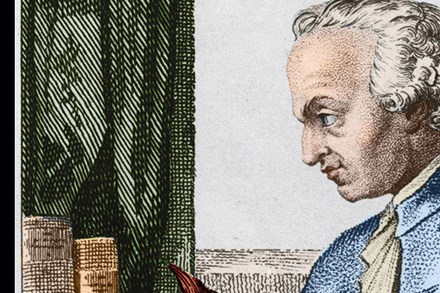
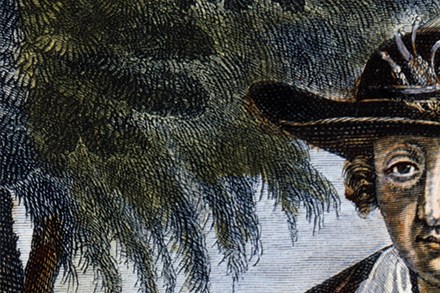
George Forster (1754-94), the German-Polish polymath, was in every sense a late Enlightenment prodigy. He was just ten years old when he accompanied his father, Johann Reinhold, on a scientific expedition to Russia and still in his teens when he sailed with him on Captain Cook’s epic three-year voyage to Antarctica and the Pacific islands. The ensuing book, A Voyage Round the World (1777), largely written by George, became a classic. It established him as one of the most significant naturalists and travel writers of the age, leading to him being elected a Fellow of the Royal Society aged just 22. He was also a very young polyglot, having learnt German, French, English and Russian by the age of 12. (He later added Dutch, Italian, Spanish, Portuguese and Swedish, as well as Latin.

The ancient Greek take on human rights

From our UK edition

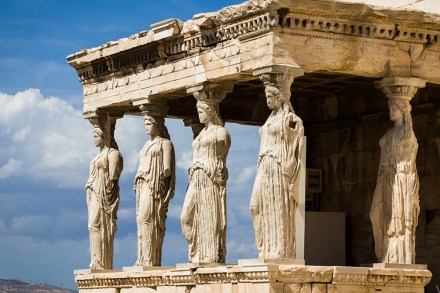
While Greek and Roman thinkers were influential in developing ideas such as citizenship, justice and equality, the notion of universal ‘human rights’ (1948), especially those involving one’s ‘identity’, would have struck them as absurd. ‘Identity’ derives from the Latin idem, ‘the same, unchanged’, via the French identité (14th century). The term has been colonised by many different groups who feel that their specific identity – e.g. colour, sexual preferences, personal beliefs – bestows ‘rights’ upon them to behave or be treated in specific ways, whatever anyone else thinks about it, let alone the law of the land.

Haircuts are a human right!

From our UK edition

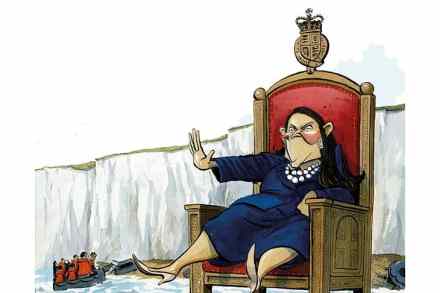
During the immigration deluge in the wake of Russia’s invasion of Ukraine, it seems one Afghan and one Indian national who threw themselves on the mercy of much-besieged Ireland got lost in the shuffle. Fobbed off with €25 vouchers, they were obliged to sometimes sleep rough for two months, without access to food and hygiene and exposed to hardship and fear. They’ve sued the Irish state. Knowing Irish NGOs, I bet they got help. The government has argued that the pressures on Ireland’s hospitality at the time were severe enough to qualify as a force majeure. Their reception centres were full to bursting and there was no room at the inn (and haven’t we heard that before). The Irish High Court sought a ruling from the European Court of Justice.

The radical barristers who really lay down the law in Britain

From our UK edition

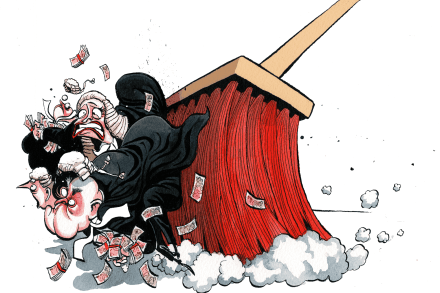
The facade of Garden Court Chambers in Lincoln’s Inn Fields is reassuringly traditional. The barristers who work there occupy buildings which were once home to the Earl of Sandwich and the Tory prime minister Spencer Perceval. If there were any building in London in which wigs and gowns would seem a natural form of dress, it would be here. But the facade is just that. For behind the pedimented Georgian windows there operates arguably the most radically effective cell of left-wing activists in Britain. Barristers are supposed to adhere to the cab-rank principle: they act for the first client who comes calling.

The great betrayal of the SAS

From our UK edition

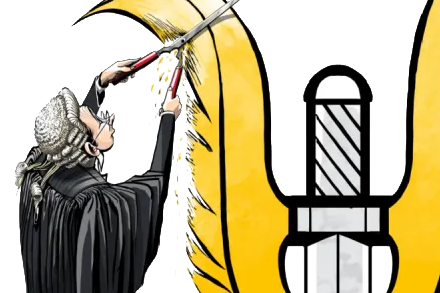
We should all feel scared to our bones about the persecution of the SAS, soldiers harried through the courts for jobs they did many decades ago. It’s not that the SAS should be allowed to behave like trigger-happy psychos, but as Paul Wood wrote in this magazine before Christmas, Special Forces are now being hounded and punished for simply following orders and conducting operations. And what will we soft sofa-sitters do when no one wants to be a soldier any more? Wood described in particular the plight of 12 soldiers of a Specialist Military Unit (SMU) deployed in Ireland in February 1992 to apprehend a gang of IRA terrorists – the East Tyrone brigade of the Provisional IRA (PIRA).

On the ground with drag queens on Capitol Hill

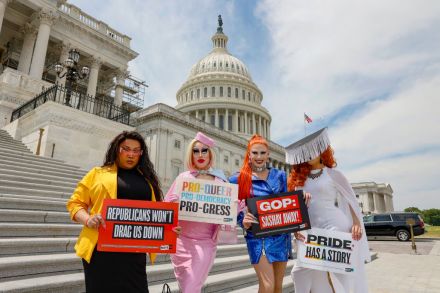
A group of around thirty people gathered on the lawn of the United States Capitol Building to hear speeches from three drag queens on Tuesday. MoveOn Political Action organized the event to champion the Equality Act and the Transgender Bill of Rights. The lobbying day came at the heels of the new polling that a "healthy majority of Americans across the political spectrum support federal legislation protecting LGBTQ+ individuals." Jiggly Caliente spoke first, addressing her gratitude for being on RuPaul’s Drag Race and for the blessing of being able to be your true self. “I have always known that I was living in a shell that didn’t align with my soul,” she said. Jiggly, or Bianca, accused politicians of blocking local and up-and-coming drag queens from making money.

drag queens moveon

Meet football’s Catholic first family

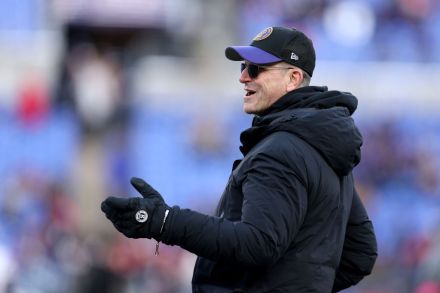
Jim Harbaugh made a surprise appearance at the annual March for Life in Washington, DC last Friday, just a couple of weeks after he won the college football national championship as the head coach of the University of Michigan Wolverines. Harbaugh marched alongside about 100,000 other pro-lifers in the snowy cold and gave an impassioned speech to the crowd while introducing former NFL player Benjamin Watson.   “Thank you all for being here. It’s a great example that you’re setting. It’s testimony for the sanctity of life.” Harbaugh said. “It’s a great day for a march... This is football weather!” “You know, we all talk about human rights.

Oslo Freedom Forum: where dissidents blow off steam

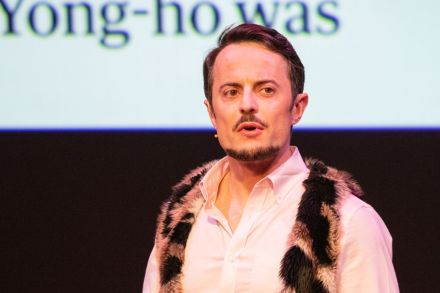
It was on my third glass of James Bond’s favorite Champagne, Bollinger, that I suddenly remembered why I was here in Norway. “I’m going undercover in Russia next week,” a woman told me. I can’t remember her name — and even if I did I wouldn’t tell you. I wished her luck; she looked confused. “I’ve done worse,” she said. This wasn’t her first rodeo that could potentially end in imprisonment or death.  I was at the Oslo Freedom Forum, an annual event put on by the Human Rights Foundation. It’s marketed as a global gathering of human rights and pro-democracy activists.

oslo freedom forum

In defense of America the arms dealer

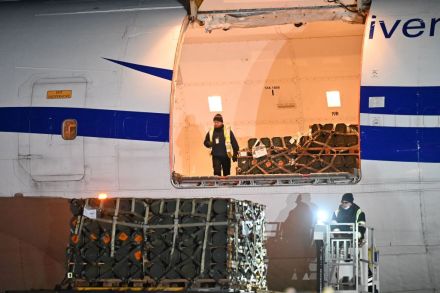
As the world enters a new era of great power competition, countries are arming themselves at a rate unseen since the end of the Cold War. The war in Ukraine, China’s increasing belligerence and angst over rogue states like Iran and North Korea are driving defense spending and weapons purchases the world over. Amid all this, the United States does not have the luxury of being too picky as to who among its friends gets the weapons they need to defend themselves. Nor can Washington continue to avoid drastic reforms to its arms export controls to face the challenges of the twenty-first century. Standards are necessary — they are what should set America apart — but they must not become so onerous that the security of the US and its partners suffer.

The human rights clampdown on free speech

From our UK edition

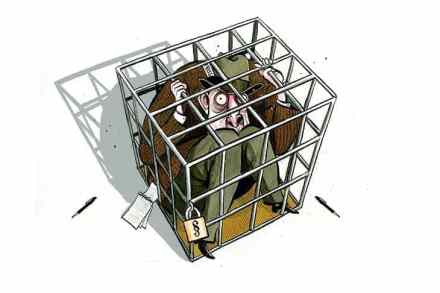
On Wednesday, in a decision that ought to get a good deal more attention than it will, our Supreme Court said that it was unacceptable that the press should be allowed to tell us that someone is being investigated by the police. It confirmed that someone in that position, an international businessman being investigated over alleged serious irregularities and frauds, had rightly been awarded a five-figure sum in damages from Bloomberg when it entirely truthfully pointed out that fact. Known only as ZXC, the man, said their Lordships, had a reasonable expectation of keeping disreputable matters like that quiet, even if they became known.

The crazy, corrupt world of the Beijing Olympics

From our UK edition

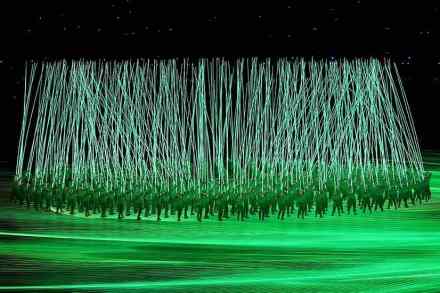
Gstaad OK sport fans, have you been enjoying the concentration camp Olympics? I’m sure the Uighurs in the Chinese gulag are riveted, especially watching the downhill, the trouble being that most of the one million Muslim prisoners have been issued with Equatorial Guinea-made TV sets, apparatuses that only show crocodiles swallowing humans. Joe Biden, in the meantime, has steered clear of the Games and has sent a message via pigeon to the Chinese: ‘You’re way out of line as far as King Kong is concerned and unless you sign the Schleswig-Holstein agreement do not expect any Americans to attend the première of Madame Butterfly.

Will the human rights industries finally stand up for Christians?

From our UK edition

A Christian-owned bakery harried through the courts for refusing to produce a cake endorsing same-sex marriage and a nurse driven out of her job for wearing a small cross. The two are apparently unconnected but have found themselves in the same news cycle this week. The ‘gay cake case’, as it’s invariably billed, has been trundling along since 2014, when gay rights activist Gareth Lee commissioned Belfast-based Ashers Baking Company to produce a cake featuring the slogan ‘Support Gay Marriage’, the logo of the organisation QueerSpace, and Bert and Ernie, two Sesame Street characters ‘shipped’ as gay by some fans of the children’s TV series.

Have we reached peak human rights?

From our UK edition

After the Colston debacle, you might be forgiven for having missed the other legal story that broke this week. The European Court of Human Rights has dismissed the complaint in the Ulster 'gay cake' case, so the decision in favour of the baker will stand. In case you need reminding, seven years ago a Belfast gay rights activist called Gareth Lee asked Ashers, a high-class bakery, to produce a cake inscribed with the phrase 'Support Gay Marriage' for an event he was organising. The bakery owners refused, citing Presbyterian religious scruples, whereupon Lee sued for discrimination. He lost.

The burden of being a Newcastle United fan

From our UK edition

The second thing I learned about football, after moving to London, is that you can never, ever switch your allegiance. That was unfortunate, because the first thing I discovered was that I liked Newcastle United and had already chosen them as my team. It’s been fairly relentless pain ever since. In 2016, I watched Newcastle get relegated. They bounced back to the Premier League the next season, but it’s been utter mediocrity ever since. I’ve followed them from stadium to stadium, unwavering in my support, cheering on often extremely boring and disappointing football. I like the idea of loyalty in sports; to ditch a team because they depress you would show weakness of character. It doesn’t matter how awful Newcastle are, I thought, nothing could put me off.

How the ancients handled refugees

From our UK edition

Hardly a day goes by without headlines about immigrants, asylum-seekers and refugees. In the ancient world, movements of people were also very common (state boundaries did not exist), often because war, famine or exile left them with no option. So how did refugees try to win acceptance? In Homer’s world of heroes (c. 700 bc), a man indicated he was harmless by kneeling before his (proposed) helper, perhaps touching the knee, and appealing for aid in the name of Zeus, god of suppliants. He expected a welcome into the household as a guest, and becoming part of that household, or being helped on his way. When Athens was a democratic city state (c.

Iran’s president is a mass murderer

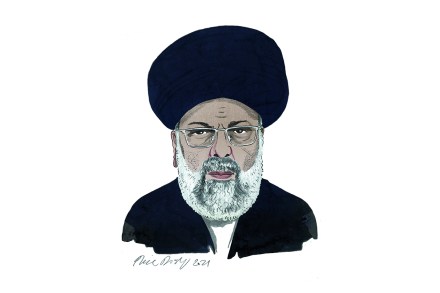
The US and other western countries are faced with a dilemma: how to bring to justice a man with the blood of thousands on his hands when you have to do business with him. Ebrahim Raisi’s path to the presidency of Iran is strewn with corpses. He comes to office this month already under American and European sanctions for the mass murder of prisoners in 1988. Some 5,000 may have been killed, though we can only guess at the true number of dead. It was a crime against humanity in the strict legal meaning of that term. At an earlier stage in his career, Raisi is said to have personally supervised the torture of dissidents, but in the 1988 case his responsibility was bureaucratic. He was a grim fanatic, eager to carry out orders. He was — and remains — Iran’s hanging judge.

raisi

Is Ireland cosying up to China?

From our UK edition

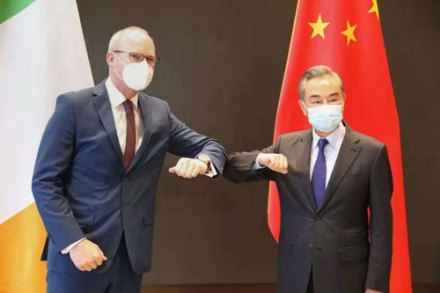
In 2019, the then-deputy prime minister of Ireland Simon Coveney spoke at the UN Human Rights Council, where he underlined Ireland’s commitment to defending human rights – which he said was strengthened by his country’s membership of the EU. As he told the summit, freedom and justice are: woven through our foreign policy, through our bilateral engagement and through our determined and committed membership of the European Union. The speech came in the midst of the Brexit negotiations, where Ireland were keen to be portrayed as noble victims of the Brexit vote, pitted against an isolationist, knuckle-dragging UK. How times change.

Why does China think it can bully backbench MPs like me?

From our UK edition

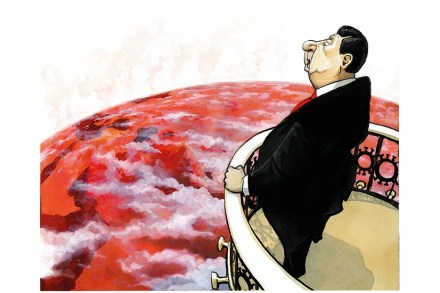
Does the Chinese Communist Party understand how our parliamentary democracy works? The evidence from the last 24 hours suggests not. Along with some of my Conservative colleagues in the House of Commons – Sir Iain Duncan Smith, Tim Loughton, Tom Tugendhat and Neil O’Brien – as well as two peers, a QC and an academic, I have been banned from entering China, had any assets in China frozen (not that I have any there) and have had Chinese citizens and institutions prohibited from doing business with me. All because I have voiced well-evidenced concerns about the persecution of the Uyghur Muslim minority by the Chinese government.

Meghan Markle and the trouble with human rights law

From our UK edition

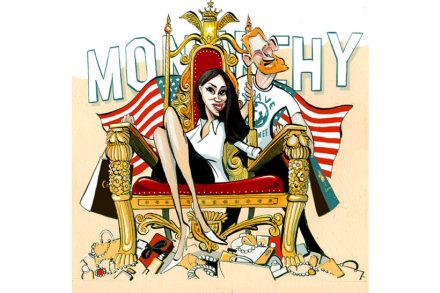
Meghan Markle hailed her victory in a high court privacy case as a 'comprehensive win' over the Mail on Sunday’s 'illegal and dehumanising practices'. But is that right? If you dig beneath the headlines and read the judge's ruling, it becomes clear that her victory has much to do with a burgeoning expansion of privacy rights based on human rights law. This change in the law has taken place with little fanfare and the victim – the press – generate little sympathy. Yet it is something that should worry any supporter of free speech. Until about twenty years ago, the English courts were pretty robust about celebrities’ privacy suits, then known as actions for breach of confidence.

What the West can do about China’s Uyghur labour camps

From our UK edition

Coca-Cola’s most controversial bottling plant is a huge factory located in an industrial zone just outside the city of Urumqi in western China. Logistically, the factory is well situated: the international airport is a short drive away, as is the high-speed train station close to the fashionable Wyndham hotel. But the problem for Coca-Cola — and other western companies such as Volkswagen and BASF, which operate plants in the same region — is the existence of hundreds of facilities not mentioned on any official map. The Cofco Coca-Cola plant, a joint venture with a Chinese state company, is surrounded by prisons and re-education camps in which China suppresses local ethnic minorities, according to human rights experts.