House of lords

The Lobbying Bill is bad for liberty

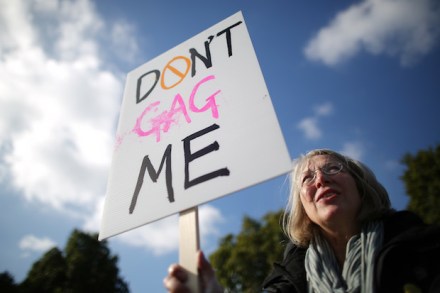
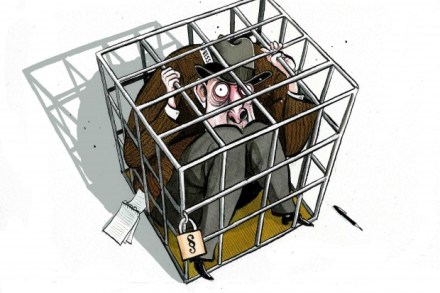
The Prime Minister was on to something when as Leader of the Opposition he said that lobbying was ‘the next big scandal waiting to happen.’ But the Lobbying Bill’s methods are suspect. It would silence grass roots campaigners while allowing politicians to dictate the terms of debate. It would limit the activity of civil society organisations that stand between the power of the state the freedom of the individual. The Lobbying Bill might be good politics but as it stands it would be bad law. The bill places a national cap on campaign expenditure from any one non-party organisation or coalition of organisations. It places a constituency-specific cap of £9,750

The Quiet and Sorry Death of Liberalism, Part CCXXXIV

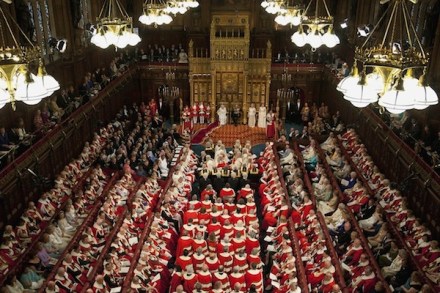
The whole point of the House of Lords is that it lacks democratic legitimacy. This, as they say, is a feature not a bug. A damn good feature too. It is – or can or should be – a valuable cooling saucer into which ploys devised by the lower, popular, house are poured until such time as they congeal to be revealed in all their unappetising horror. From time to time the will [sic] of the people, as expressed by Her Majesty’s Government, jolly well should be frustrated or otherwise suppressed. Take this headline, for instance: Peers block law on being annoying in public.  That’s from the BBC not The Daily Mash though

Exclusive: John Nash is the new schools minister

The new schools minister is John Nash. He succeeds Lord Hill who has gone off to replace Tom Strathclyde as leader of the House of Lords. Nash, a venture capitalist, is the sponsor of Pimlico Academy, one of the original Adonis academies, and has been a non-executive member of the Department for Education’s board for the past two years. This means that he already knows both the academy and departmental ropes. Given that he is close to Michael Gove and the other key figures in the department and part of what they are trying to do, there shouldn’t be much lost in transition. I suspect that there’ll be a media squall over the

If you think the House of Lords is bad for democracy, try the Irish senate

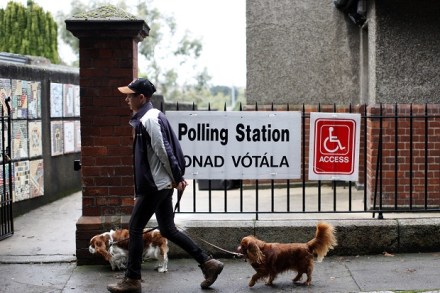
Waves of apathy, a tsunami of indifference, engulfed Ireland for today’s constitutional referendums. When I was over there last week, I was more interested in the thing than anyone I met; the turnout in some places was one in ten – miles lower than in high-octane votes, like the ones affecting the EU. The main issue is the government’s proposal to do away with the upper house, the Seanad, or Senate, which reached its zenith of interest and relevance when WB Yeats was a member (his views on contraception and divorce make notable reading) and has failed ever since to capture the remotest public affection. If you think the House

Whisper it, but the big banks are finally getting their houses in order

By and large it was a good week for the big banks — underpinned by encouraging news from the wider economy, in which every little uptick brings a few more zombie borrowers back to the land of the living. Lloyds returned to profit, promised to start paying decent dividends again and declared itself oven-ready for return to the private sector, with the market anticipating an immediate sale to institutions of a first tranche of the taxpayers’ 39 per cent stake. HSBC reported varied performance around the world but still clocked up a fat result for the half-year — and asked the Vatican to close its account as part of a

When is corruption not corrupt? When the establishment says it isn't

Mr Justice Tugendhat delivered a ferocious verdict last week. Undercover reporters from the Sunday Times claimed they had found Peter Cruddas, co-Treasurer of the Conservative Party, offering influence in return for wodges of cash. With damning language, the judge found against the paper, leaving it with costs and damages of around £700,000. I don’t want to discuss the merits of the case. Cruddas, who had to resign when the story came out, may have been unjustly maligned. Conversely, the Sunday Times is going to the Court of Appeal, so it may be that the paper is the true victim. I want to look at the judge’s reasoning instead, because it

Working peerages – a win for UKIP?

UKIP is up in arms about the new working peers (or at least it’s pretending to be). The Greens get a peer and the Lib Dems get many peers; but UKIP gets none, despite its healthy polling. There are very good reasons for this. The Greens and the Lib Dems are powers in certain parts of the land, while UKIP only has what Nigel Farage recently described as ‘clusters’ of councillors here and there. In other words, the Lib Dems and Greens wield some legislative power; UKIP doesn’t. The upper house ought to reflect that. But, these facts suit UKIP. The party’s shtick is that it is an insurgency of outsiders

New working peers announced

Here is the list of new working peers. It features a number of donors and cronies, which is not remotely surprisingly. And yesterday’s party hacks get gifted a tomorrow – Annabel Goldie being the most conspicuous example. There are one or two interesting names, though – Doreen Lawrence and Daniel Finkelstein, for instance. No UKIP peerages, you’ll note.   Conservative party Richard Balfe – former MEP and Conservative Party Envoy to the Trade Unions and Cooperative movement Sir Anthony Bamford DL – Chairman and Managing Director of JCB Nicholas Bourne – former Leader of the Conservative Group in the National Assembly for Wales Matthew Carrington – former Conservative MP Daniel Finkelstein OBE – Associate Editor of The Times and former Head of Policy for the Conservative

Rumpus on the red corridor

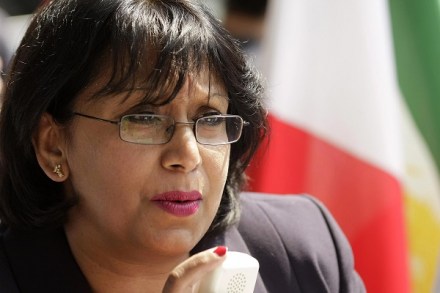
The House of Lords’ committee rooms are not ordinarily the setting for a ruckus; but there was rumpus in the Moses Room on Tuesday night, when the greybeards were musing over the Energy Bill. A witness tells me that Baroness Worthington of Cambridge, also known as the environmental campaigner Bryony Worthington, who was elevated from relative obscurity to a Labour peerage in 2011, ‘exhibited appalling behaviour.’ Worthington was ‘screaming, gesticulating wildly, referring to the minister (Baroness Verma) as ‘you, you, you’, whilst pointing in her face,’ says my man in ermine. At the end of the outburst, it is claimed that Worthington’s ‘Labour colleagues were hanging their heads in shame

'If only people could see the real Margaret Thatcher': Lords pay tribute

Today’s debates in Parliament about Baroness Thatcher were supposed to be a tribute to the first female Prime Minister. If you were looking for the most faithful rendition of this, you should have been sitting in the House of Lords, not the Commons this afternoon. In the Other Place, the debate is always rather more civilised and measured, though it has grown rather rowdier in recent years. But today the speeches painted a fascinating picture of Margaret Thatcher, not least because many of them came from those who worked with or in opposition to her when she was in power. Some were notable by their silence: Lord Howe arrived with

'Small-scale' bloggers hear the chimes of freedom

Bloggers of the United Kingdom rejoice – an exemption from the all-new press controls looks to be on the way. We are waiting today to see if any of the amendments tabled on Friday will pass but the Financial Times reports (£) that cross-party talks over the weekend will result in a successful amendment on blogging: ‘Tri-party talks took place over the weekend to agree a wording for an amendment to the crime and courts bill which will be discussed in the House of Lords on Monday.’ At some point, that is. The amendments are being considered in the Lords right now but there has been no sign of anything

Oona King’s return to the spotlight

The Lords’ terrace was transformed into a theatre yesterday evening to stage an adaptation of Blair Babe Oona King’s House Music diaries, which recount her career as MP for Bethnal Green and Bow between 1997 and 2005. Many of New Labour’s faded hopes, like Ruth Kelly, turned up to roll back the years and remember the good times; although those wanting to catch a glimpse of Gordon had to make to do with an actor, because, of the Great Man himself, there was no sign (again). Ed Stoppard and comedian David Schneider were treading the makeshift boards in this dramatisation. They nailed compelling impersonations of Brown, Blair and George Galloway (King’s

Leveson Royal Charter plan remains uncharted territory

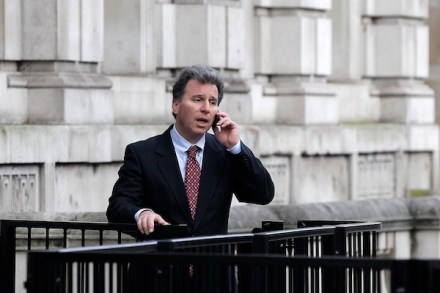
Strong words in the Lords today about the media and the government’s stance on Leveson, but what are the discussions like between the three parties behind the scenes? Though they started off with some similarly stern words, the cross-party talks on the response to the Leveson report have, all sides agree, been progressing well. Far from the communication breakdown that some envisaged, there has been a relatively pleasant atmosphere. The Lib Dems and Labour, though they disagree with the Conservative line, are both keen to praise Oliver Letwin in particular for the way he is conducting the discussions, and for going away and working on the details discussed in each

Lessons from the Lords on Leveson

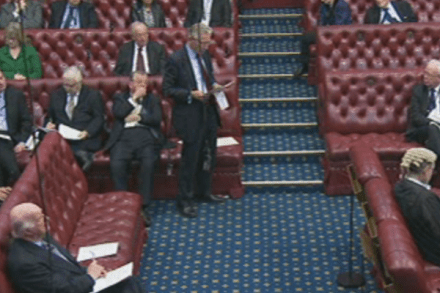
Peers are spending today debating the Leveson report. They’ve been at it for an hour and a half, and will continue debating until 5pm, but the first few speeches have yielded some interesting points to chew on. Labour’s Baroness Jones of Whitchurch devoted a great deal of her speech to the damage that the ‘dark arts’ of the media had done both to private individuals and to celebrities. She described the distress of the victims going through the inquiry, and contrasted it with the response of the government in rejecting calls for statutory underpinning. The terrible treatment of those experiencing terrible bereavement was the reason the Inquiry was set up,

Lord Strathclyde resigns over frustration with Lib Dem peers

Lord Strathclyde was a skilful leader of the House of Lords. An immensely charming man, he was — generally — able to coax legislation through a chamber where the government has no majority. But he was becoming increasingly frustrated at the behaviour of some Liberal Democrat peers. Shortly before Christmas and as Liberal Democrat Lords rampaged against the Cameron-Clegg compromise on secret courts, he remarked to one colleague that the ‘coalition had already broken down’ in the House of Lords. The lack of a government majority in the Lords and the fact that Liberal Democrat peers tend to hail from the left of the party means that even with Lords

Government could face another welfare rebellion in the Lords

Remember those rebellions in the Lords on welfare earlier this year? Well, the fight hasn’t disappeared entirely from the Upper Chamber. Secondary legislation filling in the detail of the Welfare Reform Act is the new battleground, and I understand another uprising could be on the cards over regulations affecting disabled people. Baroness Thomas of Winchester, who regularly cropped up on the Naughty List last year when peers revolted on the welfare reform primary legislation, is calling on the Government to think again about its regulations for the mobility component of the Personal Independence Payment, the benefit replacing the Disability Living Allowance. A last minute change to the regulations means that only

Will the Lords really slay the gay marriage bill?

Think the Commons is in uproar at the moment over gay marriage? Just wait until the legislation makes its way into the House of Lords. The received wisdom is that equal marriage will go into the upper chamber, but never make it out alive after a savaging from socially conservative peers. But is that true? If it’s uproar you’re looking for, then you’re unlikely to be disappointed, but the chances of angry words in the chamber translating into embarrassing defeats for the government aren’t quite so high. Remember that after 13 years of Labour in power, the House has a large liberal-leaning majority. There are 224 Labour peers and 90

Oxford students: Chris Patten needs to devote time to being our Chancellor

As students at Oxford University, we are told repeatedly by tutors, proctors, and the Chancellor himself that we’re not allowed to do much outside our degree. We cannot do more than eight hours of paid work a week, and extracurricular activities are monitored carefully by colleges, who can revoke your right to do them at any time. Any major positions at the student union or Oxford Union require you to take a year out. And, as we can vouch for, taking on an editorship of a student newspaper isn’t exactly welcomed by teaching staff. We’ve handed (nearly) all our essays in on time; but Lord Patten has arguably spread himself

Cameron and Clegg locked in staring contest on boundary reforms

Nick Clegg and David Cameron still can’t agree over the future of the boundary review, and their continuing stalemate led to legislation on individual voter registration being shelved indefinitely in the House of Lords. An amendment to the Electoral Registration and Administration Bill tabled by Labour’s Lord Hart and backed by Lib Dem Lord Rennard would have delayed the changes until 2018 – in line with Nick Clegg’s pledge of revenge this summer that the review be delayed until after the 2015 election. The problem is that Cameron didn’t know about the amendment until his staff read about it on Paul Waugh’s blog, and he apparently lost his rag with

Government defeated on 'poll tax mark two'

The government suffered an awkward defeat in the House of Lords this afternoon on its changes to council tax benefit. Rebels on an amendment to the Local Government Finance Bill calling for an independent review of the changes to be carried out within three years of their introduction included 16 Liberal Democrats. Labour has dubbed the changes, which will mean councils will have to design their own local schemes to help low-income households with council tax bills, the ‘poll tax mark two’ because two million families will have to contribute towards their council tax for the first time. Liberal Democrat Lord Shipley told the Chamber: ‘The problems for individuals could